

TL;DR
Here are the top eight electrician CRM software options covered in this guide, with the type of electrical business each one fits.
- Followup CRM: Best for commercial electrical contractors tracking bids and pipeline.
- ServiceTitan: Best for high-volume residential and commercial service operations.
- Jobber: Best for small electrical service businesses.
- Housecall Pro: Best for residential service electricians.
- Simpro: Best for electrical businesses managing jobs and inventory together.
- FieldEdge: Best for dispatch-heavy service teams.
- Pipedrive: Best for electricians running a standard sales pipeline.
- Salesforce: Best for enterprise electrical contractors customizing their CRM.
What Is Electrician CRM Software?
At its core, Electrician CRM software holds the customer database: contact details, job history, communication history, and notes from calls and site visits. The goal is to keep customer relationships organized and make previous conversations available to anyone handling the next interaction.
The term covers two different kinds of products. The first is a dedicated CRM. It focuses on lead management, follow-ups, and sales pipeline control. It tracks an opportunity from first contact through estimate, proposal, and close.
Commercial electrical contractors tend to use this type because their sales cycle runs through bids and takes weeks or months.
The second is field service management software with CRM features built in. This type combines project management, job scheduling, dispatching, invoicing, and customer records in one platform.
Service history sits next to the job details, so a technician can see what was done on the last visit before heading out. Residential service businesses and commercial service businesses that run on service calls usually fall into this group.
Neither type is better. The right choice depends on whether the business sells through bids or through service calls, which is the question the rest of this guide answers.
What to Look For in CRM Software for Electrical Contractors
Start with the sales process. A bidding contractor needs a bid log, a digital bid calendar, and a clear view of which estimates are due and who owns each follow-up.
The logic behind the construction bid boards applies here too: every open bid, its due date, and its stage should be visible without opening a spreadsheet. A service shop needs a different front end, such as online booking, call intake, and quick quoting.
Next, check how office and field teams share information. A mobile app matters for electricians on job sites, but the bigger question is whether field data flows back into the same customer record the office uses.
If a technician’s notes live in one system and the sales history in another, the customer database splits in two.
Integrations are the third test. Accounting is the usual starting point, with QuickBooks Online being common for smaller companies and enterprise resource planning (ERP) systems for larger ones. Estimating and project management tools come next.
Also, look at reporting. Actionable insights on close rates, pipeline value, and technician productivity show an owner where the business is winning and where it is leaking money. A CRM that stores data but cannot report on it is a filing cabinet.
Top 8 Electrician CRM Software Options in 2026
The eight tools below are grouped by the type of electrical business they serve. Read the “Best for” label first, then the entry, and skip anything that sits in the wrong lane for how your company sells.
1. Followup CRM: Best for Commercial Electrical Contractors Tracking Bids and Pipeline
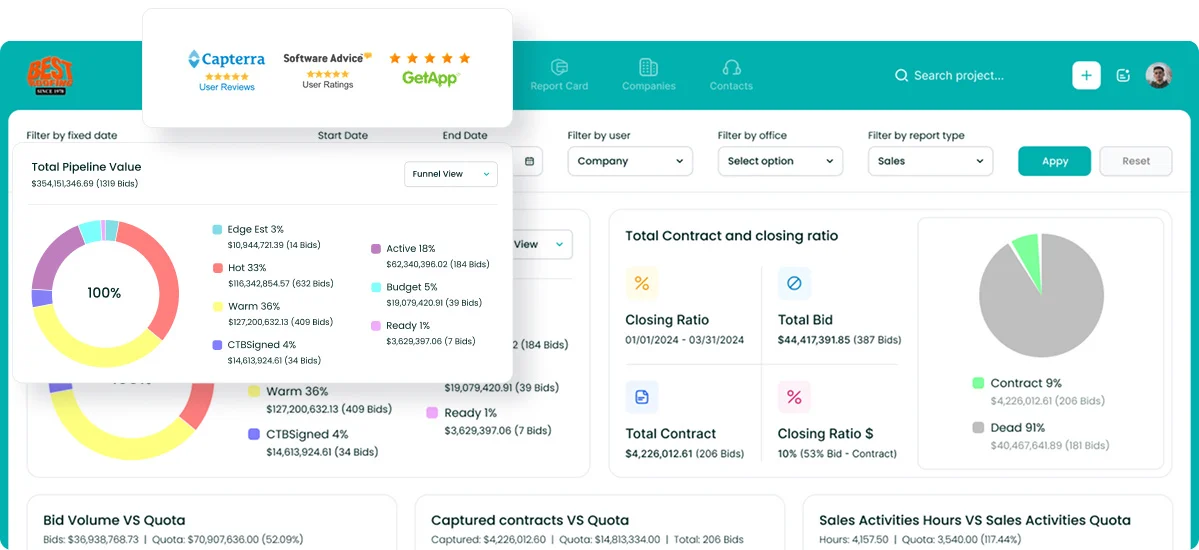
Followup CRM is a construction-specific sales CRM built for commercial and specialty trade contractors, with electrical as one of its core verticals.
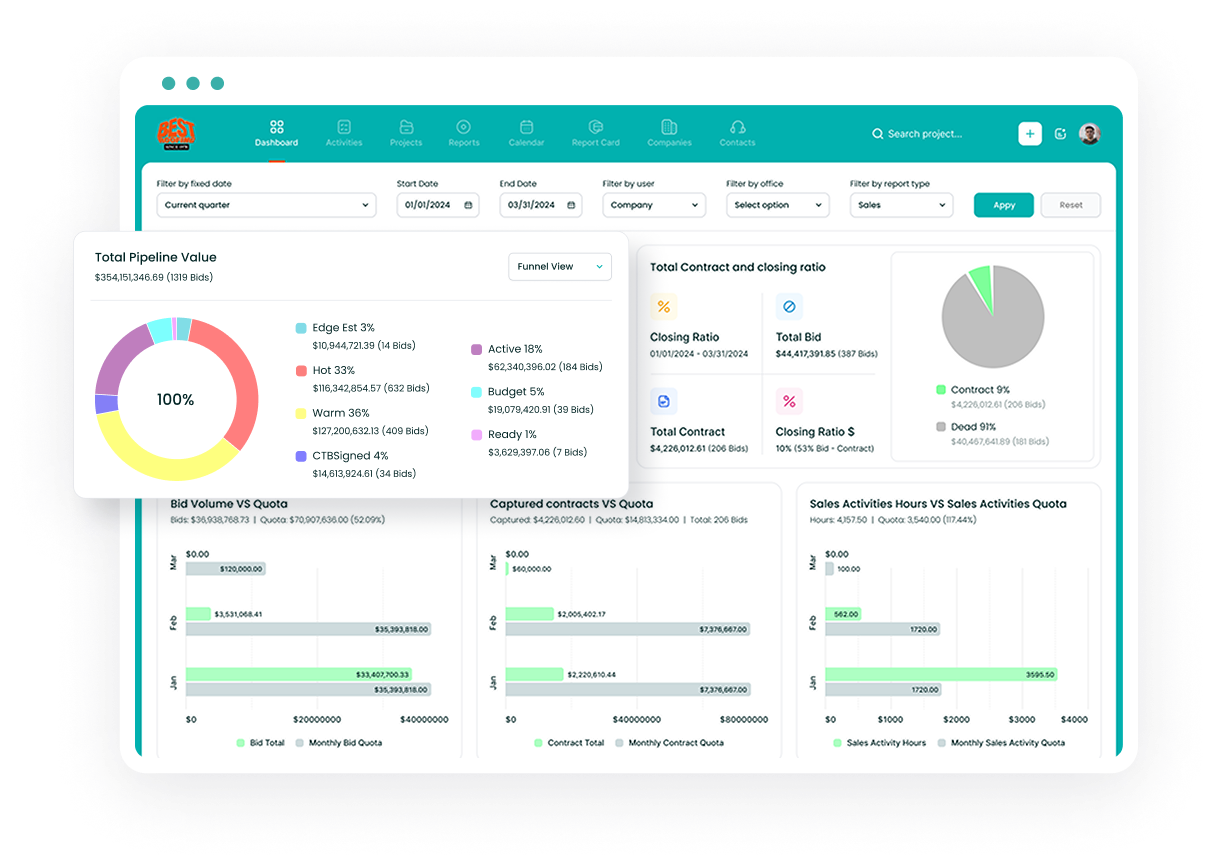
It covers the full sales cycle: lead intake, bid tracking, estimate, proposal, follow-ups, and close. Every bid sits in a shared pipeline with its due date, stage, and owner, so the sales team can see what is due this week without opening a spreadsheet.
That visibility is the main reason electrical contractors move to it. Goforth Electric gained a clearer view of its pipeline and a more consistent follow-up routine after adopting Followup CRM in 2026.
Isaac Electric switched over from Monday.com after dealing with scattered bids, missed bid deadlines, and double entry into its accounting system.
Customer interactions stay attached to the deal because the Outlook and Gmail integration logs emails against the right contact.
The proposal generator builds branded proposals and sends them for e-signature. Voice AI lets a salesperson describe what happened on a call and have the data entry handled.
Integrations include Foundation, Vista, Sage, QuickBooks, Procore, BuildingConnected, STACK, and CompanyCam, covering ERP, accounting, job costing, estimating, and project management.
Followup CRM is used by 4,000+ construction professionals and is sold through a demo rather than a self-serve signup.
Key Features
- Lead and bid tracking with a shared digital bid calendar.
- Sales and estimating dashboards with close-rate and team-performance reporting.
- Proposal generator with e-sign.
- Outlook and Gmail integration that auto-logs email activity.
- Voice AI for hands-free data entry.
- Two-way ERP integration with construction accounting systems.
Book a demo to see Followup CRM in action today.
2. ServiceTitan: Best for High-Volume Residential and Commercial Service Operations

Image source: servicetitan.com
ServiceTitan is an all-in-one field service platform with CRM functionality built in, aimed at electrical companies that run a steady volume of service calls.
Its own positioning covers residential, commercial, and construction electrical work, but the product is at its most useful for service businesses where scheduling, dispatching, invoicing, and payments happen many times a day.
The CRM layer stores customer records, job history, and equipment details, and the Atlas AI assistant answers questions about customers, jobs, and equipment from inside the platform.
Recurring service agreements help companies organize maintenance visits, renewals, and billing.
A proposal builder lets technicians present branded options on site, and client pricing tools keep price books current when supplier costs move.
On the back end, job costing reports cost at the job level, and the accounting module syncs financial data with QuickBooks Online and QuickBooks Desktop.
Technicians use the ServiceTitan Mobile app on iOS and Android to access job details, take payments, and update records from the field. Reporting is handled through custom reports and dashboards.
ServiceTitan is a good fit for larger electrical service businesses with the staff to run a platform of this size. Pricing is quote-based and not published.
Key Features
- CRM with customer records, job history, and equipment tracking.
- Automated service agreements for recurring maintenance work.
- Proposal builder and client pricing tools.
- Job costing and accounting with QuickBooks integration.
- Mobile app for technicians with on-site payment processing.
- Custom reports and dashboards.
3. Jobber: Best for Small Electrical Service Businesses
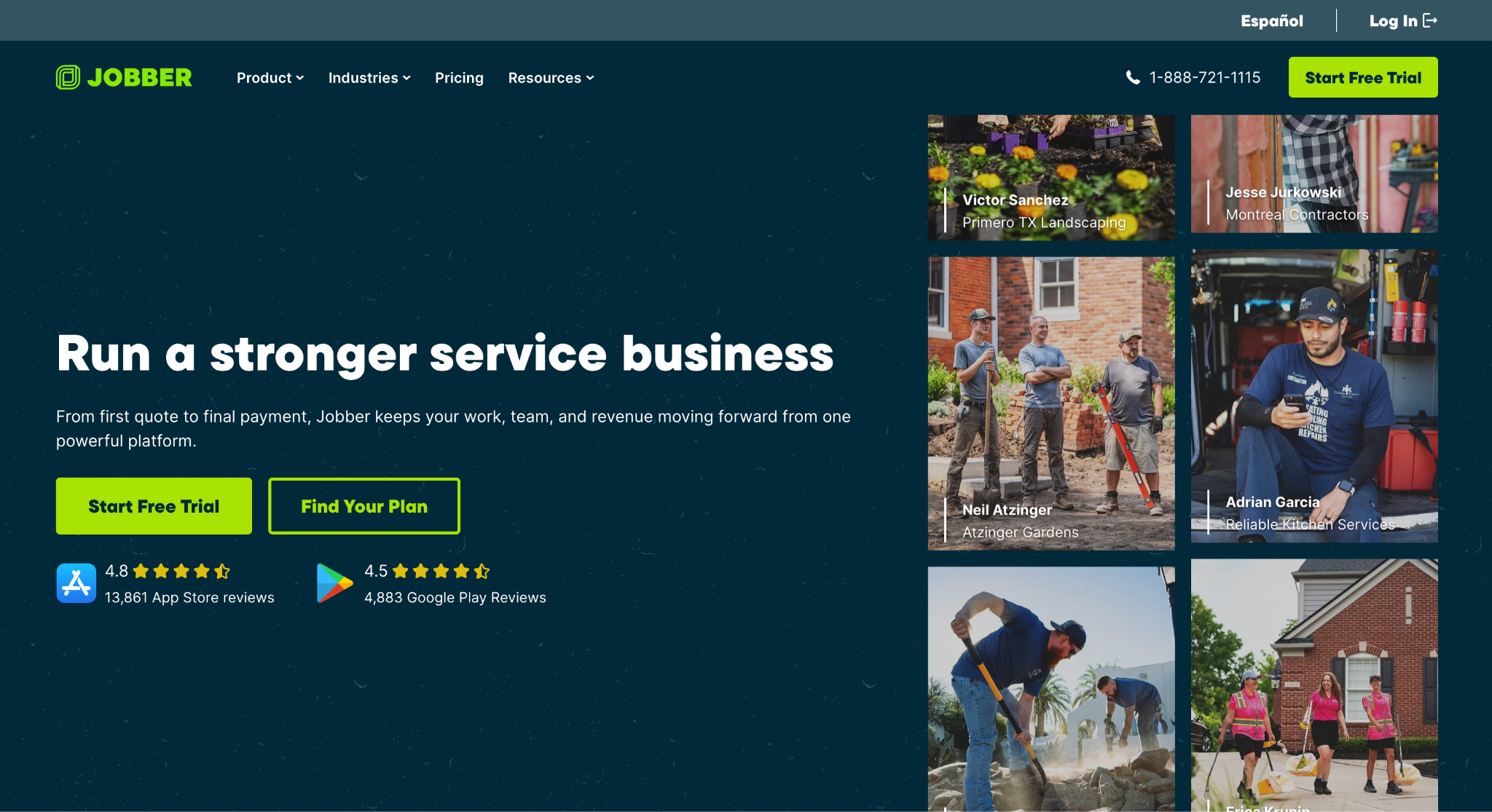
Image source: getjobber.com
Jobber is a job management platform for home service companies, and its electrician CRM is built around the day-to-day work of a small service team.
Each client record holds customer details, property information, and a full history of requests, quotes, jobs, and invoices, with the last message sent to the client visible on the profile. Leads can be tagged and tracked until they turn into booked work.
The workflow runs from quote to payment inside one system. Technicians receive job details on the Jobber mobile app, send “on-my-way” texts, and get automatic notifications when the schedule changes.
Invoices go out with payment reminders, and customers can pay by card or apply for consumer financing. A self-service portal, called the client hub, lets users approve quotes, check appointments, and pay invoices without calling the office.
Jobber syncs approved timesheets to QuickBooks Online for payroll and connects to more than 2,000 other apps through automation triggers. Reporting covers the basics of jobs, revenue, and outstanding balances.
Jobber is a suitable choice for electrical businesses with a handful of technicians that need scheduling, quoting, and invoicing more than a deep sales pipeline. It offers a free trial, and pricing is tiered by plan and number of users.
Key Features
- Client records with request, quote, job, and invoice history.
- Scheduling and dispatch with automatic customer notifications.
- Quoting and invoicing with card payments and consumer financing.
- Client hub for customer self-service.
- QuickBooks Online sync and app integrations.
4. Housecall Pro: Best for Residential Service Electricians
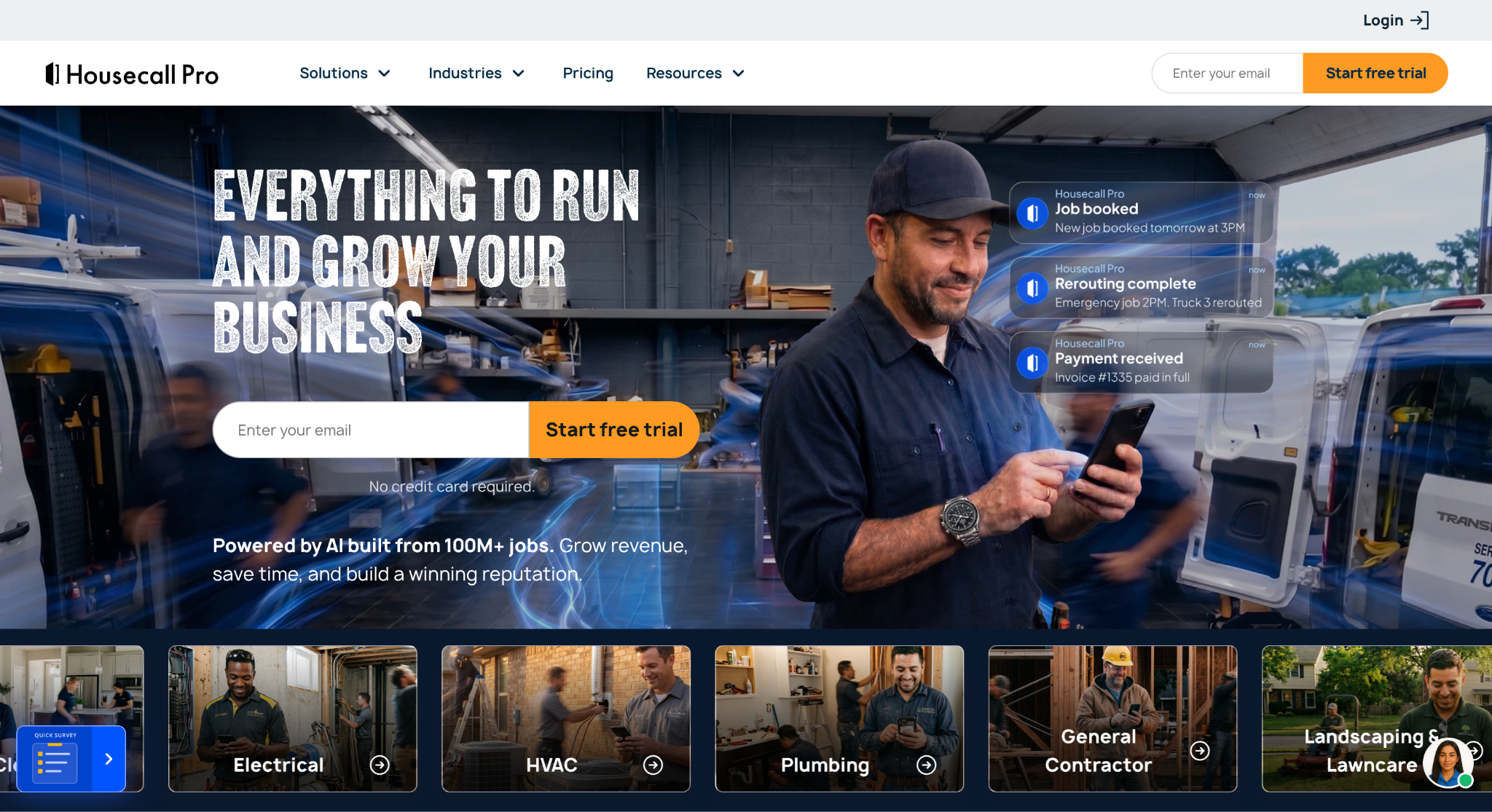
Image source: housecallpro.com
Housecall Pro is home service software with CRM features aimed at residential service electricians.
The customer profile stores contact details, private notes, and a record of past jobs, and a shared inbox keeps text and email conversations in one thread so the office can see what was said to a homeowner before the next visit.
Lead handling happens on a pipeline board that gives a visual overview of every opportunity by stage. Online booking with custom intake forms lets homeowners request service from the website, and automated follow-ups keep quotes from going cold.
For the recurring side of the business, service agreements can be sold and scheduled to build predictable revenue from maintenance visits.
Operations run on a drag-and-drop calendar. Office staff set up new and recurring jobs, dispatch technicians and estimators, and manage time cards.
Technicians use the mobile app to update job details, record job completion, send custom texts, and collect payment on site.
Housecall Pro is a good fit for electrical companies whose work is mostly service calls to homes and whose customer data lives alongside scheduling and invoicing. A free 14-day trial is available, and plans are tiered.
Key Features
- Customer profiles with notes, job history, and a shared inbox.
- Pipeline board for lead tracking.
- Online booking with custom intake forms.
- Service agreements for recurring maintenance revenue.
- Scheduling, dispatch, and on-site payment processing.
5. Simpro: Best for Electrical Businesses Managing Jobs and Inventory Together
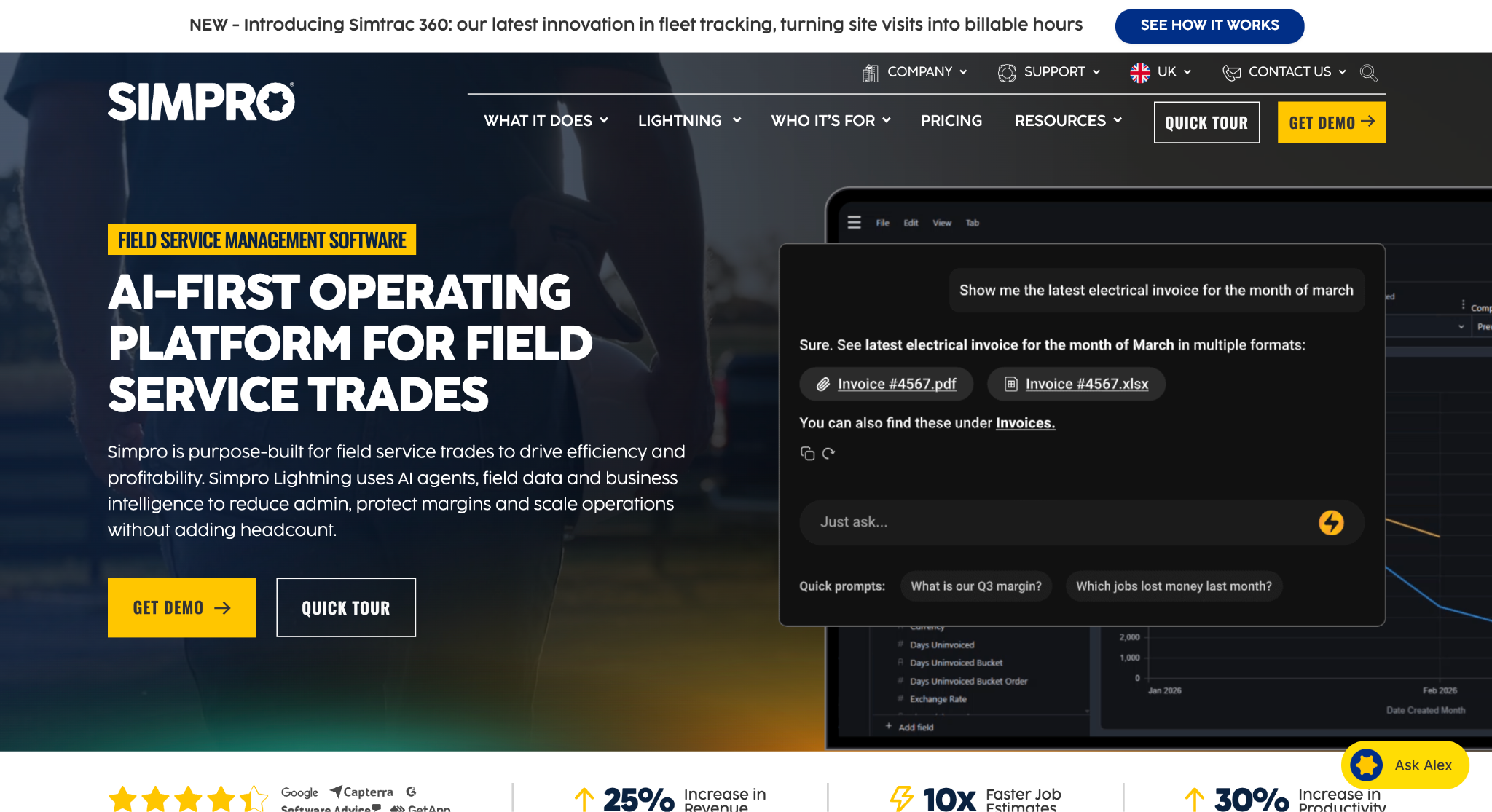
Image source: simprogroup.com
Simpro is field service and job management software for trade businesses, and its own positioning for electrical contractors is a mix of reactive service, planned maintenance, and multi-stage project work.
The CRM sits inside the job workflow, so a customer record carries the quotes, jobs, assets, and invoices attached to that customer rather than living in a separate sales tool.
The distinguishing piece is inventory. Simpro tracks stock in warehouses and on vehicles, links purchasing to jobs, and connects to electrical wholesalers such as Rexel and ADI Global so materials ordered for a job flow into job costing.
That makes it suitable for electrical companies where material cost is a large share of every job, and nobody wants to reconcile supplier invoices by hand.
The rest of the platform covers estimating and quoting, takeoffs, scheduling and dispatching, mobile digital forms, maintenance planning for recurring asset work, invoicing, payments, and reporting with business intelligence dashboards.
Office and field teams work from the same record through the field mobile app. Accounting integrations include QuickBooks, Xero, and MYOB, and SMS messaging is built in for customer communication.
Simpro is sold through a guided demo with an implementation program, and pricing is quote-based around package scope.
Key Features
- Customer records tied to quotes, jobs, assets, and invoices.
- Inventory management for warehouses and vehicles with wholesaler integrations.
- Estimating, quoting, and takeoffs.
- Scheduling, dispatching, and maintenance planning.
- Job costing, invoicing, payments, and reporting.
6. FieldEdge: Best for Dispatch-Heavy Service Teams
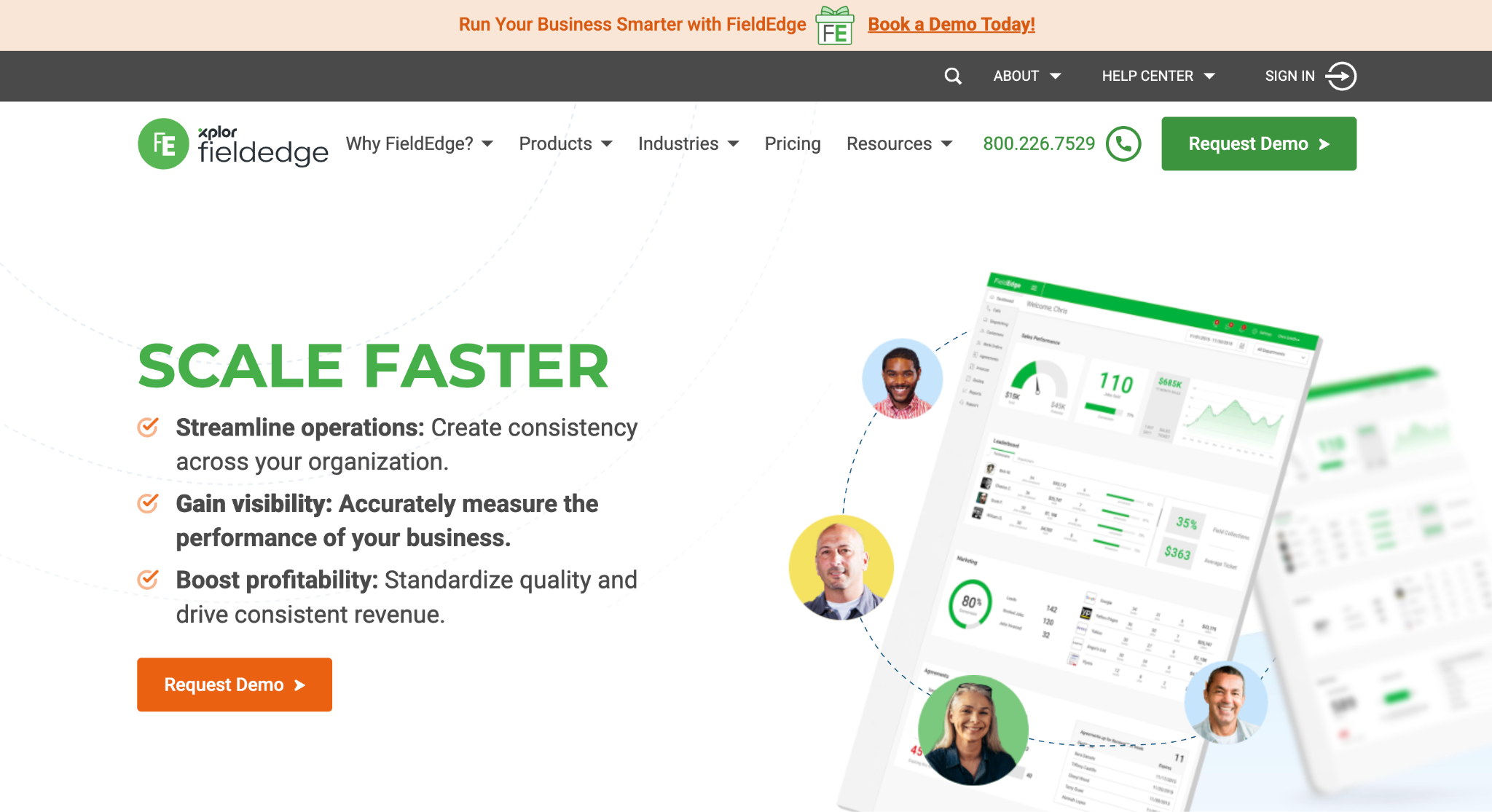
Image source: fieldedge.com
FieldEdge is field service software built for multi-truck electrical service operations, and dispatch is the center of the product.
A centralized dispatch board assigns the right electrician to each service call based on skills, location, and availability, and GPS tracking shows where every truck is during the day. Companies running several business units or locations can coordinate them from the same board.
Customer management stores complete work order histories, invoices, quotes, and service agreements, so an electrician arrives with the customer history needed for the visit.
In the field, the mobile app lets technicians update work orders, capture photos, add notes, present Good-Better-Best options through Proposal Pro, and invoice and collect payment on site. Flat-rate pricing tools keep pricing consistent from one electrician to the next.
On the office side, FieldEdge syncs financial data with QuickBooks in real time to remove double entry.
Dashboards report job-level profitability, electrician efficiency, and revenue by business unit, and the MarketingEdge add-on connects marketing spend to revenue and supports upselling service agreements.
FieldEdge may do well for established service companies whose daily challenge is keeping many trucks moving. It is sold through a demo, and pricing depends on the number and type of licenses.
Key Features
- Centralized dispatch board with GPS tracking.
- Customer histories with work orders, quotes, and service agreements.
- Mobile app with on-site invoicing and payment processing.
- Proposal Pro and flat-rate pricing tools.
- Real-time QuickBooks sync and profitability dashboards.
7. Pipedrive: Best for Electricians Running a Standard Sales Pipeline
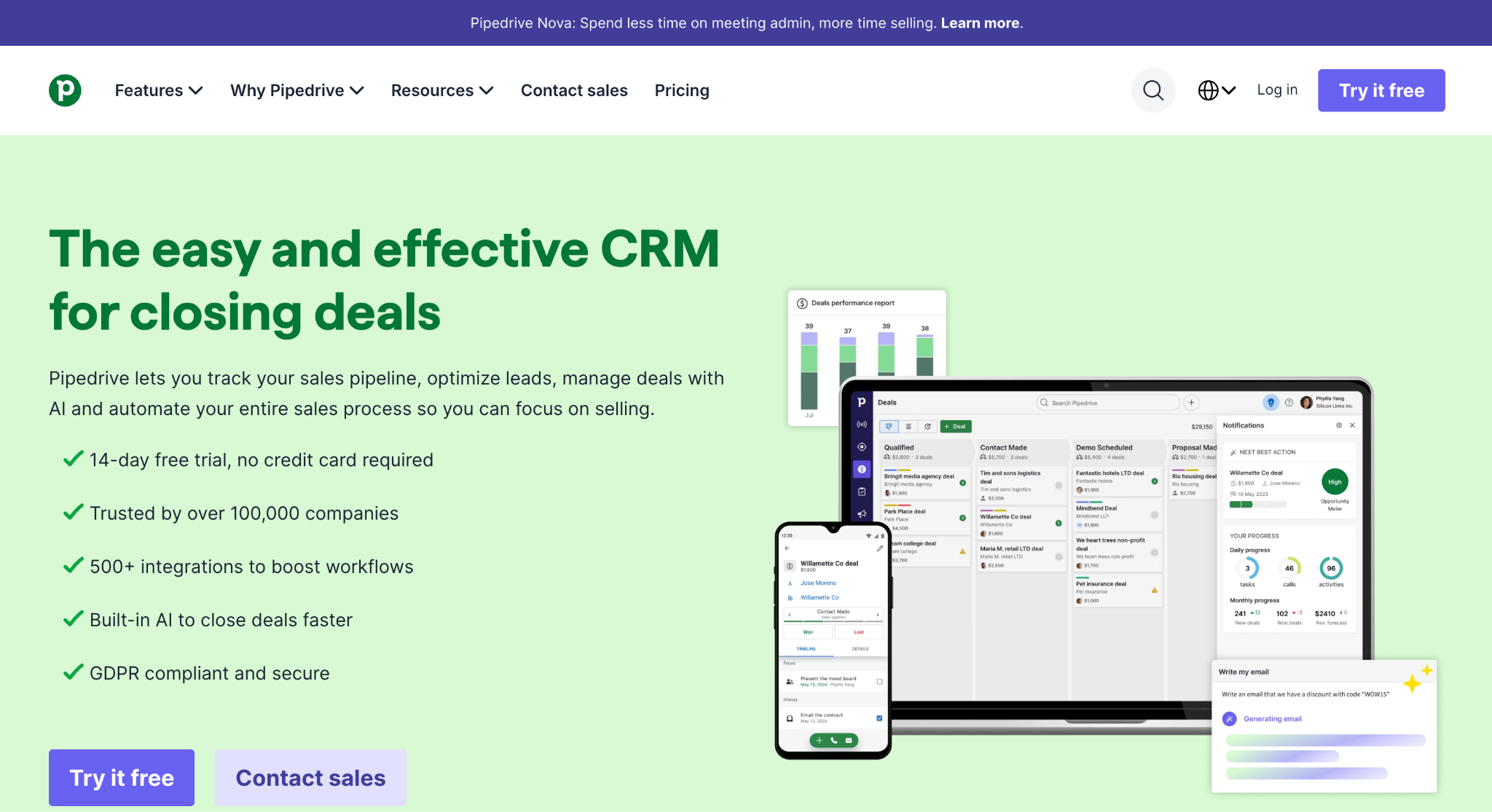
Image source: pipedrive.com
Pipedrive is a sales-first CRM, which makes it the odd one out on this list. It does not schedule jobs, dispatch technicians, or send invoices on its own.
What it does is give an electrical business a visual, drag-and-drop pipeline with custom stages, so every inquiry moves from first contact to quote to won or lost in plain sight.
That suits companies whose sales process looks like a classic sales process rather than a bid log or a service queue.
Lead management runs on automations. Users can build their own rules or start from templates for following up on new and cold leads, assigning leads to team members, and updating deals.
Custom fields capture anything from job site access details to supplier payment terms. Smart Docs generates quotes and contracts populated with CRM data, and the mobile app lets a salesperson manage deals and contacts on site.
The field side comes through integrations. Pipedrive’s Marketplace and Zapier connect it to QuickBooks, Xero, Google Maps, Asana, Trello, and hundreds of other tools, so scheduling and accounting can stay in the systems a company already uses.
Insights and reports track conversion rates, revenue, and team performance through the customer lifecycle.
Pipedrive uses tiered per-user pricing and offers a free 14-day trial.
Key Features
- Visual sales pipeline with customizable stages.
- Automations for lead assignment, follow-up reminders, and deal updates.
- Smart Docs for quotes and contracts.
- Mobile CRM app.
- Marketplace and Zapier integrations with accounting and scheduling tools.
8. Salesforce: Best for Enterprise Electrical Contractors Customizing Their CRM
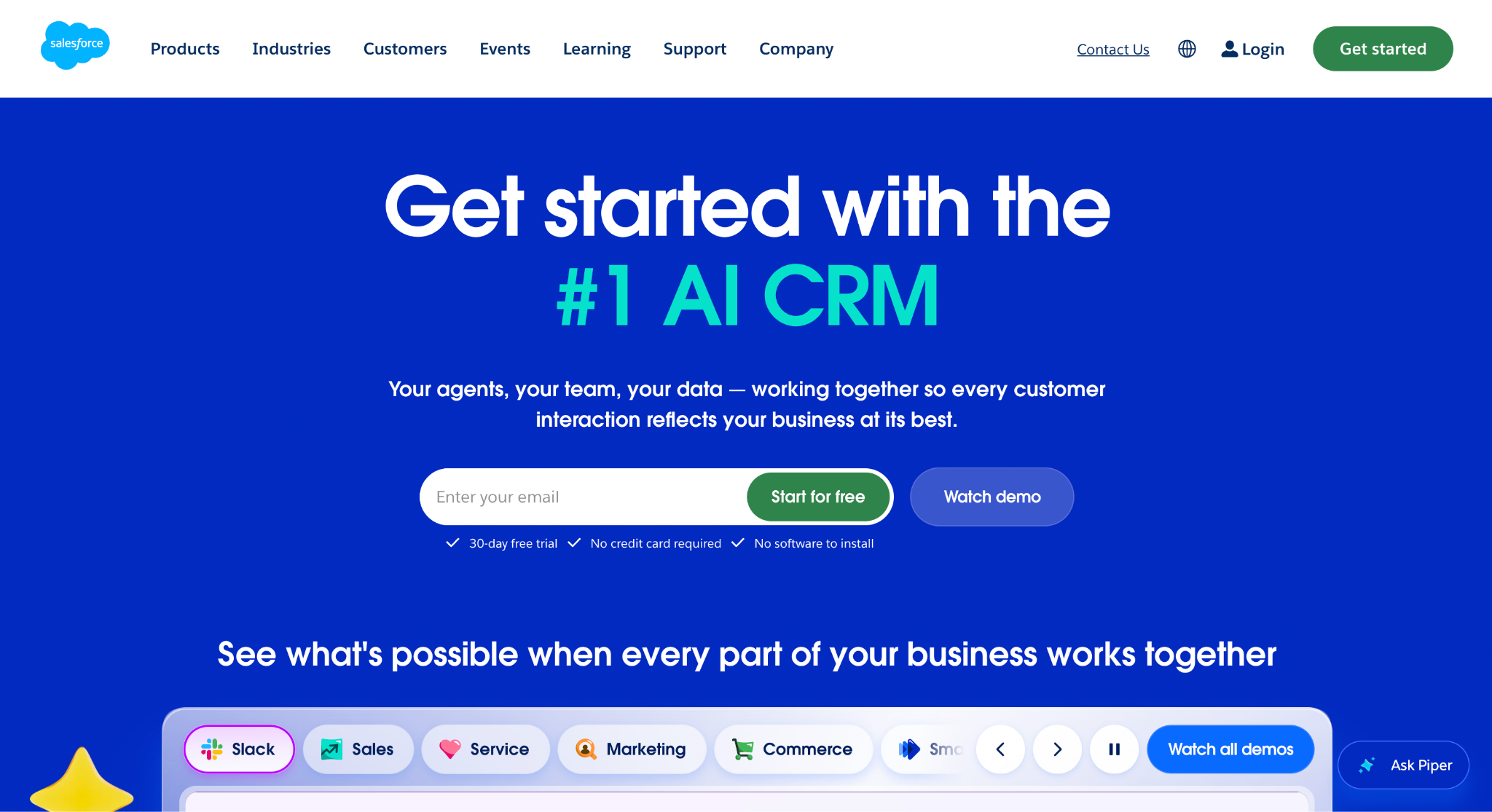
Image source: salesforce.com
Salesforce is an enterprise CRM platform rather than an electrical contractor product, and that is the point.
Large electrical companies with an IT team or a consulting partner can configure Sales Cloud to mirror their exact sales process, whether that means commercial contracts, service accounts, multi-location reporting, or all three.
Custom objects, permission sets, and reporting are built to the company’s own structure.
For the field side, Salesforce Field Service adds a dispatch console inside the CRM, a mobile toolkit for technicians, and licenses for third-party contractors.
It requires a Service Cloud license, and the Field Service Plus bundle combines dispatcher, technician, Service Cloud, and Sales Cloud functionality in one package. Einstein brings AI and advanced automation to scheduling, case routing, and forecasting.
The AppExchange marketplace supplies pre-built apps for accounting, document signing, and industry workflows, and the platform’s API supports custom integrations with ERP and estimating systems.
Salesforce may do well for electrical contractors large enough to justify the implementation effort and the ongoing administration a platform of this size requires. Pricing is per user by edition, with detailed quotes through a sales representative, and Service Cloud offers a free 30-day trial.
Key Features
- Sales Cloud with custom objects, permissions, and reporting.
- Salesforce Field Service dispatch console and technician mobile app.
- Einstein AI and workflow automation.
- AppExchange apps and open API for integrations.
- Edition-based licensing for sales, service, and field roles.
How to Choose the Right Electrician CRM Software
Start by naming how the company wins work. If most revenue comes from commercial contracts won through bids, the CRM needs a bid log, due-date tracking, and follow-up reminders tied to each opportunity.
If most revenue comes from service calls, the CRM needs to sit inside scheduling and invoicing. An electrical contracting business that does both should decide which side carries more risk when it breaks, and buy for that side first.
Next, count the people who will use it. A sales team of three estimators has different needs from twelve technicians in the field. Tools built around pipeline management reward the first group, while field service platforms reward the second.
Then check the data path. A CRM that cannot pass a won job to accounting or project management creates double entry, and double entry is where customer records go stale. Confirm the specific integrations, not just the category.
Finally, think about where the business expands. Growing electrical businesses add estimators, trucks, and locations, and the CRM should hold up at the next size, not just the current one.
Reporting that shows close rates and cash flow by salesperson or crew helps an owner see that growth coming rather than react to it.
Bids Are Under Full Control With Followup CRM
Most commercial electrical contractors do not lose work because the estimate was wrong. They lose it because the follow-up never happened.
The bid went out, the general contractor went quiet, and by the time someone checked the spreadsheet, the award had gone to a competitor who called twice.
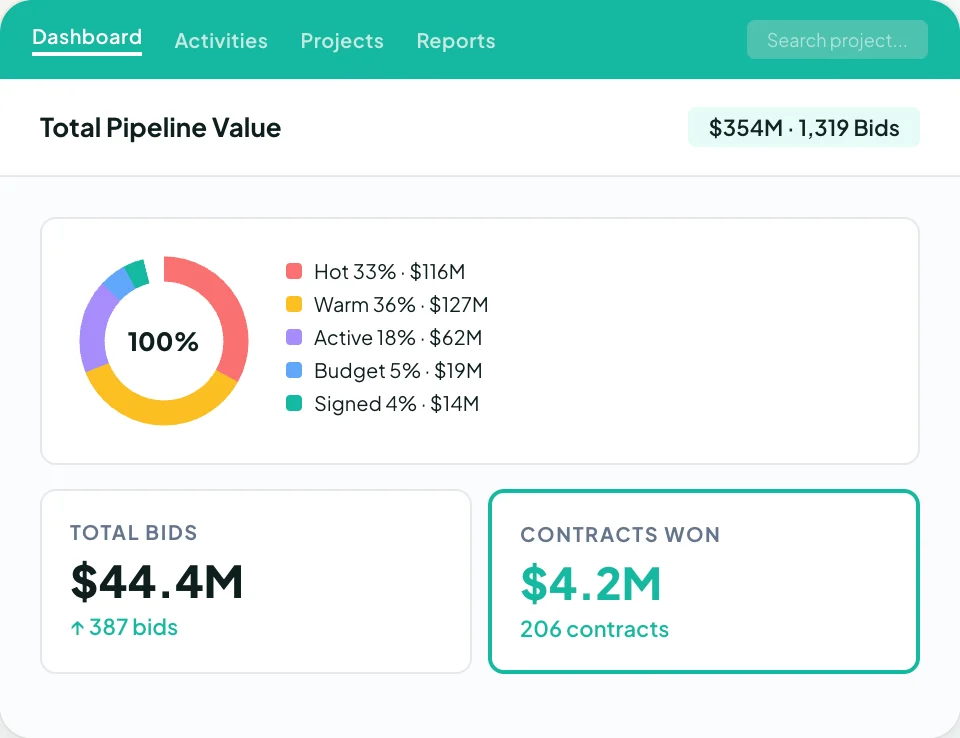
Followup CRM is built around that gap. Every bid lives in a shared pipeline with its due date, stage, and owner, so the sales team sees what needs a call today. A digital bid calendar keeps deadlines visible to the whole office.
Emails from Outlook and Gmail log themselves against the right contact, so the history of every customer interaction is on the record when a project manager picks up the phone.
The proposal generator creates branded proposals for e-signature during the sales process. After award, supported integrations transfer job data to accounting or project management systems.
That is why 4,000+ construction professionals use it, and why electrical contractors like Goforth Electric and Isaac Electric moved to it from general-purpose tools.
You can see how it fits your bid process by booking a live demo.
FAQs About Electrician CRM Software
What is the best CRM for electricians?
It depends on how the company sells. Commercial electrical contractors that win work through bids are best served by a construction sales CRM such as Followup CRM, which tracks each bid from lead to award with a digital bid calendar and follow-up reminders built in.
Service-based companies usually need field service software with CRM features instead.
What software can an electrician use for invoicing?
Invoicing is usually handled by accounting software such as QuickBooks or by a field service platform with billing built in. A sales CRM covers the stage before the invoice.
Followup CRM manages the lead, bid, proposal, and award, then passes the won job to QuickBooks or a construction accounting system such as Foundation, Vista, or Sage so the invoice is raised from the same data without re-entry.
What apps do electricians use?
Most electrical businesses run a small stack: an estimating or takeoff tool, a CRM for leads and bids, accounting software, and a project or job management app once the work is won.
Commercial contractors often use Followup CRM for the sales side, since it integrates with estimating, accounting, and project management systems so the stack shares one set of customer records.
The CRM Built For Construction Companies
No more disorganized data. Track your leads, bids, and customers all in one place.
Seamless Integration with:
✅ Foundation ✅ Viewpoint ✅ Sage and more