


TL;DR
Here are the nine best field service software tools for contractors in 2026:
- ServiceTitan
- Jobber
- Housecall Pro
- BuildOps
- ServiceTrade
- Workiz
- FieldPulse
- Salesforce Field Service
- Connecteam
What Is Field Service Software?
Field service software, also called field service management (FSM) software, helps companies coordinate work that happens outside the office.
It gives dispatchers, office teams, and field technicians one system for job scheduling, work orders, customer records, and invoicing, replacing the whiteboards and phone calls that fall apart as a company grows.
A typical FSM platform handles the full delivery cycle. A service request comes in, the office schedules the job, a technician gets the details on a mobile app, completes the work on site, captures a signature, and the system generates the invoice.
Along the way, managers can track progress, monitor job sites, and keep service history tied to each customer.
What most FSM platforms do not handle is the sales side. Commercial and specialty trade contractors rarely win work through online booking. They win it through bids, estimates, proposals, and persistent follow-up.
That part of the cycle lives in a customer relationship management (CRM) system, not a dispatch board, and it is covered after the list below.
Top 9 Field Service Software Tools for Contractors in 2026
Each tool is reviewed on its own merits, with a focus on the contractors it serves best.
1. ServiceTitan

Image source: servicetitan.com
ServiceTitan is a cloud-based field service and construction operating platform for specialty and mechanical contractors, including HVAC-R, electrical, plumbing, and garage door businesses.
It is a suitable option for companies that run both commercial service work and construction projects and want them in one system.
The workflow starts at the call. The office books the job, a dispatcher assigns a technician from the dispatch board, and the technician completes the work, builds estimates, and invoices from the field. Service and construction data live in the same system.
Key Features
- Scheduling and dispatch: A dispatch board for assigning field technicians, with skills-based scheduling and capacity planning.
- Service agreements: Automates recurring service contracts, preventative maintenance, and renewals.
- Work orders and asset management: Tracks equipment and service history within the service operations module.
- Construction project management: Project planning, crew scheduling, job costing, and progress billing with AIA-format pay applications.
- Mobile app: Field teams capture time, materials, and daily activity, and managers compare project budgets against actual costs.
ServiceTitan may do well for larger multi-location contractors who need service dispatch and commercial project management under one login.
2. Jobber

Image source: getjobber.com
Jobber is field service management software aimed at small home service businesses, including cleaning, landscaping, HVAC, plumbing, and residential electrical work. It is a good fit for owners who want quoting, scheduling, and invoicing in one place without a long setup process.
The core workflow runs from quote to payment. Users build quotes from templates, send them for approval, and the approved quote converts into a scheduled job with no re-entry of job details. Once the work is done, the invoice goes out, and customers pay online.
Key Features
- Drag-and-drop scheduling and dispatching: Assign jobs from a calendar view and adjust the day as it changes.
- Client hub: A self-serve portal where customers approve quotes, pay invoices, request work, and view past jobs.
- Online booking: Customers request service from a booking page that feeds directly into the schedule.
- Mobile app: Field workers complete job forms, upload photos, clock in and out, and collect payment on site.
- GPS tracking and routing: Available on higher tiers, with QuickBooks Online sync and time tracking.
Jobber may do well for solo operators and small crews with simple, recurring service work.
3. Housecall Pro

Image source: housecallpro.com
Housecall Pro is field service software for home service professionals, including HVAC, plumbing, electrical, and cleaning businesses. It is a suitable option for small teams that book a high volume of service calls and want the day to run without paper.
The workflow begins with the booking. Customers request service through the company website or Google, the job lands on the schedule, and the technician receives the details on the mobile app.
Customers get an "on my way" text before arrival, and the invoice goes out when the job closes.
Key Features
- Drag-and-drop scheduling and real-time dispatching: Assign jobs from a visual calendar, with job templates for routine tasks.
- Online booking: Customers book through the website, Google, or social channels, and bookings feed the schedule directly.
- Estimates and invoicing: Build estimates from the field, convert them to invoices, and process payments by card or financing.
- Customer communication: Automated text and email reminders, arrival notifications, and review requests.
- Time tracking and GPS tracking: Employee time tracking on every plan, with GPS tracking, equipment tracking, and QuickBooks integration on higher tiers.
Housecall Pro may do well for residential service companies that need booking, dispatch, and billing in one app.
4. BuildOps

Image source: buildops.com
BuildOps is a field service and project management platform for commercial specialty contractors in HVAC, electrical, plumbing, refrigeration, and fire and life safety.
It suits subcontractors who run both service calls and multi-month construction projects with the same crews.
The workflow connects service and projects in one system. Dispatchers fill the service board, project managers plan crews by phase and skill on a resource planning board, and field data flows into job costing and billing.
Maintenance agreements generate scheduled work, and on-site deficiency findings turn into quoted jobs.
Key Features
- Schedule and dispatch: Assign technicians to service calls, with a resource planning board for longer project crew assignments.
- Preventative maintenance and service agreements: Automated maintenance scheduling keeps agreements current and feeds recurring revenue.
- Asset management: Tracks customer equipment and service history at each location.
- Project management: RFIs, submittals, change orders, daily reports, punch lists, and project financials, with offline mobile access for foremen.
- Purchasing, inventory management, and ERP integration: Purchase orders and inventory tie into accounting through ERP connections.
BuildOps may do well for commercial mechanical contractors that have outgrown separate dispatch and project tools.
5. ServiceTrade

Image source: servicetrade.com
ServiceTrade is a field service management platform for commercial mechanical and fire and life safety contractors, including HVAC, refrigeration, and sprinkler and alarm service companies.
It is a good fit for contractors whose revenue depends on recurring inspection and maintenance agreements.
The workflow centers on the service contract.
Agreements generate scheduled visits, technicians perform mobile inspections on customer equipment, and any deficiency found becomes a documented repair quote sent to the customer. Approved quotes turn into jobs, and invoicing follows completion.
Key Features
- Scheduling and dispatching: Assigns technicians to recurring maintenance visits and on-demand service calls from one board.
- Mobile inspections and deficiency management: Technicians complete inspections with photos and notes, producing NFPA-format reports for fire protection work.
- Service agreements and quoting: Sells and manages recurring service contracts, with proposals that include electronic signatures.
- Customer portal: Clients review service history and inspection reports, and approve quotes online.
- PartsManager: Manages parts purchasing and inventory management for trucks and warehouses, tying parts to jobs.
ServiceTrade may do well for commercial service contractors managing large volumes of building assets under contract.
6. Workiz

Image source: workiz.com
Workiz is field service management software for small trade businesses, with a strong following in appliance repair, locksmith, garage door, and similar on-demand service work. It suits companies where the phone drives most of the business.
The workflow starts with the call. Inbound calls are logged and converted into job records, the dispatcher assigns the job from a map or list view, and the technician updates status, collects a signature, and processes payment from the mobile app.
Automations handle reminders and follow-ups between steps.
Key Features
- Scheduling and dispatching: A drag-and-drop calendar with a map view for assigning the nearest available technician.
- Built-in phone system: Call tracking and recording, with SMS reminders and "on my way" texts sent from the same platform.
- Estimates and invoicing: Line items pull from a price book, and customers pay online or on-site.
- Service plans: Recurring maintenance agreements with automated visit scheduling, billing cycles, and renewal reminders.
- Task management and location tracking: Break jobs into smaller assignments, with location tracking and QuickBooks integration on higher tiers.
Workiz may do well for small teams that want dispatch and communication tools in one interface.
7. FieldPulse

Image source: fieldpulse.com
FieldPulse is field service management software for small and mid-sized trade businesses, including HVAC, plumbing, electrical, roofing, and pest control companies.
It’s a good option for teams that want scheduling, estimates, invoicing, and customer management in one app with a short learning curve.
The workflow runs from the customer record outward.
A job is created against the customer, scheduled on a color-coded calendar, and dispatched to a technician who builds the estimate on-site from a pricebook. Approved estimates convert to invoices, and payment is collected from the same mobile app.
Key Features
- Scheduling and routing: A drag-and-drop calendar with color coding by job type, technician, or status, plus routing for the day's stops.
- Estimate builder with pricebook: Pre-set labor and material rates, with good, better, and best options presented to the customer.
- Work order and job management: Job details, photos, notes, and service history stay attached to each work order.
- Customer portal and booking portal: Customers approve estimates, pay invoices, and request service online.
- Maintenance agreements, inventory management, and job costing: Available alongside project management tools on higher tiers.
FieldPulse may do well for growing crews that have outgrown a calendar and a spreadsheet.
8. Salesforce Field Service

Image source: salesforce.com
Salesforce Field Service, now branded Agentforce Field Service, is the field service layer of the Salesforce platform.
It is a suitable option for enterprise service teams already running Salesforce CRM who want dispatch and technician management inside the same system as their customer data.
The workflow runs through the dispatcher console. Work orders are created against existing accounts and contacts, the scheduling engine assigns technicians based on skills, location, and travel time, and technicians complete the job from a mobile app that works offline.
Because every record sits on the CRM, service history and customer details stay in one place.
Key Features
- Dispatcher console: Real-time visibility into field operations, with job assignment and reallocation from a single screen.
- Scheduling and optimization: AI-assisted scheduling and route optimization based on technician skills and availability.
- Work order management: Work orders tied to accounts, contacts, and cases within the CRM.
- Asset management and product tracking: Tracks installed equipment and parts against each customer location.
- Mobile app: Android and iOS app with offline access for field technicians.
Salesforce Field Service may do well for large organizations with dedicated Salesforce administrators.
9. Connecteam

Image source: connecteam.com
Connecteam is a mobile workforce management app for deskless teams, and it is a suitable option for field service companies whose main problem is coordinating crews rather than billing customers.
It covers scheduling, time tracking, and team communication, but it is not a quoting or invoicing tool.
The workflow runs from the schedule. Managers build and share shifts from a calendar, employees clock in from their phones with a GPS stamp, and job checklists and forms get completed on site with photos and signatures.
Hours flow into timesheets for payroll, and the team chat replaces calls and texts.
Key Features
- Employee scheduling: Drag-and-drop shift scheduling with templates, open shift claiming, and conflict notifications.
- Time clock: GPS-stamped clock-in and clock-out, with timesheets prepared for payroll integrations.
- Digital forms and checklists: Safety forms, job reports, and inspections completed from the mobile app.
- Task management: Assign tasks with due dates and track progress in real time.
- Team communication: Chat, company updates feed, directory, and knowledge base in the Communications Hub.
Connecteam may do well for small crews that need workforce management without a full field service suite.
Managing Field Operations Only Pays Off If the Work Keeps Coming
Every tool on this list assumes there is a job to dispatch. Winning that job happens earlier, through bids, estimates, proposals, and follow-up calls, and that stage needs a CRM built for contractors rather than a dispatch board.

Followup CRM covers exactly that stretch. Contractors use it to track every lead and bid through the pipeline, keep due dates on a shared digital bid calendar, and send branded proposals that clients sign virtually, so the field service software above always has work to feed on.
It pairs with whichever delivery tool fits your operation, and two-way enterprise resource planning (ERP) integration keeps the sales data connected to accounting either way.
How to Pick the Best Field Service Management Software
The right choice depends less on feature lists and more on where your operation loses money today. A crew that sits idle between jobs has a scheduling problem. A crew that stays busy while the pipeline runs dry has a sales problem. Three checks narrow the field quickly.
Match the Tool to Your Trade and Team Size
Residential home service companies and commercial specialty contractors work differently, and the tools reflect that.
Small teams usually want a short learning curve and a paid plan they can start within a week. Larger organizations may need enterprise platforms such as Salesforce or Microsoft Dynamics, which reward companies with dedicated administrators and punish those without them.
Pick the tool built for operations your size.
Check Mobile Access and Integration Capabilities
Field technicians live in the mobile app, so test it before the office dashboard. Then confirm the software connects to your accounting system, because manual re-entry between dispatch and bookkeeping is where workforce efficiency quietly disappears.
Look for two-way sync with the ERP or accounting tool you already run rather than a one-way export.
Make the Most of Your Bids With Followup CRM
Field service software keeps technicians moving, but it does nothing for the bids that never got a follow-up call.

That gap is why Followup CRM exists. You can track every lead and bid from first contact to close, keep bid deadlines on a shared digital bid calendar, and build branded proposals that clients sign virtually.
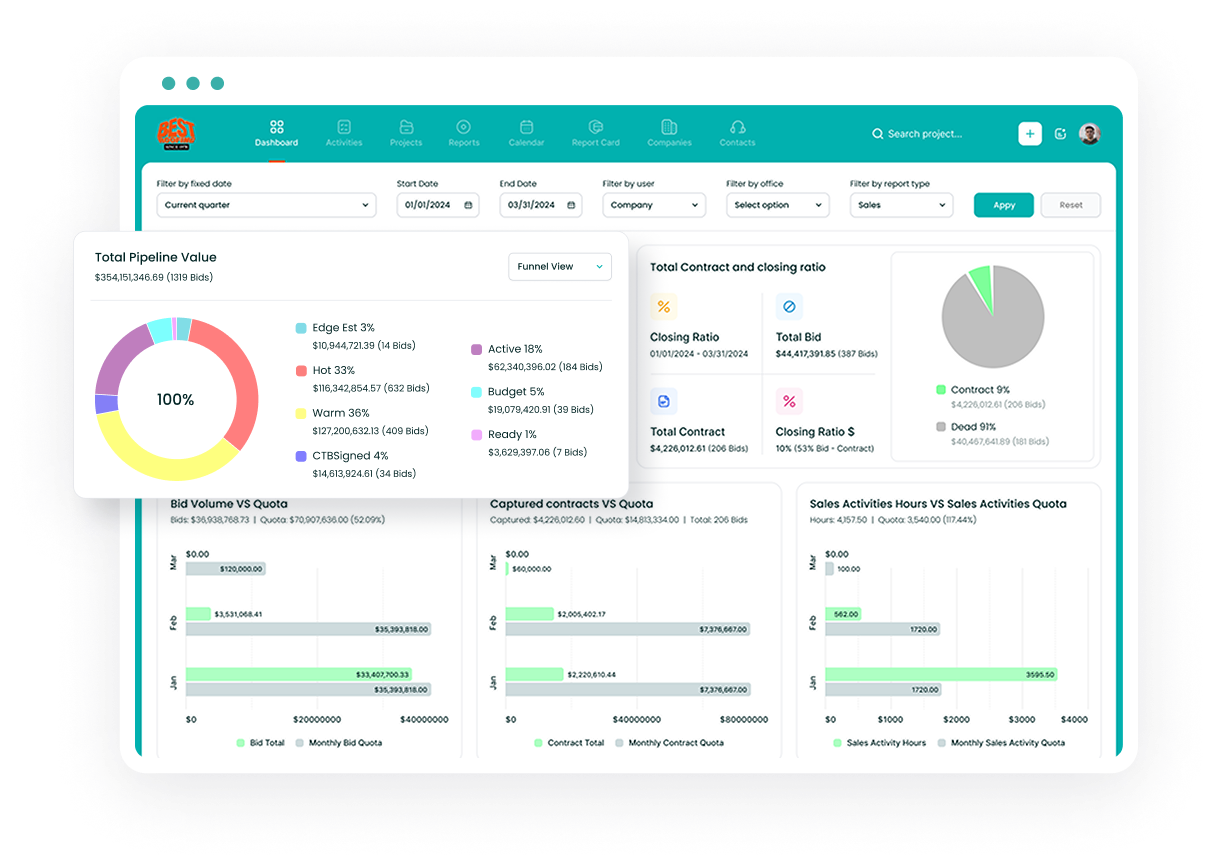
Sales and estimating dashboards show close rates and team performance in real time, so you know which bids deserve attention this week. Email activity logs itself from Outlook and Gmail, and ERP integration keeps sales data in step with accounting.
Whichever dispatch tool runs your field, Followup CRM makes sure the pipeline feeding it never runs dry.
Book a demo to see how it fits your process.
FAQs About the Best Field Service Software
What is the best field service app?
The best field service management app is the one your technicians will actually open. Look for a field service app that handles job details, customer records, and payment collection offline, since job sites rarely have reliable signal.
For the sales side, Followup CRM gives contractors a mobile view of leads, bids, and proposals, and its Voice AI lets a salesperson speak an update instead of typing it.
What is the best field service scheduling software?
Field service scheduling software should show technician availability, support drag-and-drop job scheduling, and push changes to the crew in real time. Most FSM software on this list covers that well. The scheduling most contractors overlook is the bid calendar.
Followup CRM includes a digital bid calendar that keeps every due date visible to the whole team, which prevents the missed deadlines that cost more than any scheduling gap in the field.
What are the top ten facility management software?
Facility management software serves building owners and property managers, not the contractors who service those buildings.
It tracks assets, maintenance schedules, and space usage from the owner's side. Contractors selling into facilities need the opposite view: which facility managers are requesting bids, which proposals are open, and when to follow up.
Followup CRM tracks those relationships, and construction email marketing run from the same system keeps your company in front of facility managers between projects.
What's the best WMS software?
WMS usually means warehouse management software, which handles inventory, picking, and shipping for distribution operations.
In field service, the same acronym sometimes refers to workforce management software for scheduling and time tracking. Neither replaces a sales system.
Contractors who need to win more work before worrying about warehouse or workforce tools will get further with Followup CRM, which tracks bids and proposals from first lead to signed contract.
Is field service software worth it for small businesses that only need basic scheduling?
Usually, yes, because the cost of manual scheduling shows up in places a calendar never records. Field service software does more than just scheduling.
It tracks job progress and service tasks as they happen, keeps client management and asset tracking in one place, and uses workflow automation for reminders and follow-ups that a two-person support team would otherwise handle by phone.
That improves service delivery and customer satisfaction at the same time, since customer expectations now include arrival notices and same-day invoices.
The CRM Built For Construction Companies
No more disorganized data. Track your leads, bids, and customers all in one place.
Seamless Integration with:
✅ Foundation ✅ Viewpoint ✅ Sage and more
.png)

-Dec-10-2024-07-18-58-7425-PM.webp)
-Nov-13-2024-04-44-16-0568-PM.webp)