


TL;DR
- Construction email marketing means sending regular, permission-based emails to past clients, prospects, and partners to stay top of mind between projects.
- It suits the construction industry well because sales cycles are long and buying decisions are relationship-driven.
- Start with a contact list built from people you already know, then segment it by lead status and project type.
- Bid follow-ups, project updates, newsletters, and seasonal tips are the email types that earn attention.
- Tools like Followup CRM connect email marketing directly to your sales pipeline, so every send supports a deal.
What Is Construction Email Marketing?
Construction email marketing is the practice of sending planned, permission-based emails to people connected to your construction business: previous customers, active prospects, subcontractors, general contractors, and referral partners.
The goal is not to close a deal in a single message. It is to keep your construction services in front of the right audience so that when a project comes up, your company is the first call.
One distinction matters before anything else. Marketing emails are not the same as transactional emails. Transactional emails support a job already in motion, such as an estimate confirmation, an appointment reminder, or a payment receipt.
Marketing emails fill the gaps between jobs. They nurture leads who are still comparing bids, reconnect with past clients who might need new work, and keep your name alive with potential clients who are not ready to buy yet.
Compared to traditional marketing methods like print ads or trade shows, email is cheap to run and easy to measure. You can see who opened, who clicked, and who replied, then adjust your email marketing strategy based on real numbers instead of guesswork.
Why Email Marketing Works for Construction Companies
Construction is a relationship business with long buying cycles.
A homeowner thinking about a remodel in spring may not sign until fall. A commercial client who requested a bid last quarter might approve the project after the next budget review. Email keeps you present through that entire stretch without a single cold call.
The channel also fits how construction companies operate. Most are small businesses with limited marketing budgets, and email is one of the most cost-effective ways to reach a wider audience.
According to Litmus research, email marketing returns an average of 36 dollars for every dollar spent, which is a higher return than most other channels can claim.
Email marketing offers a few other advantages that matter on the ground:
- Strengthens client relationships: regular, useful messages build trust with past customers and keep referrals and repeat business flowing.
- Supports lead generation: helpful content gives potential clients a reason to reach out when a project becomes real.
- Complements social media marketing: social media helps new people find you, email helps people who already know you remember you when it counts.
- Delivers measurable results: every send produces data you can act on.
How to Build and Segment Your Email List
Your results depend on your contact list. Buying a list is a waste of money because those people never asked to hear from you and will flag your messages as spam. Build your own instead, starting with people you already know.
Mine your existing records first: past clients, current prospects, general contractors you have bid for, subcontractors, suppliers, and design partners. Then add a signup form to your website so anyone requesting information about your construction services can opt in to future emails.
Always get permission before sending. Opt-in contacts protect your deliverability and your sender reputation.
Once the list exists, segment it. Audience segmentation means dividing contacts into groups based on various criteria, so each group receives content that actually applies to them. Useful audience segments for a construction business include:
- Lead status: new inquiry, estimate sent, follow-up needed, or cold.
- Relationship type: client, general contractor, subcontractor, or supplier.
- Project type: commercial, residential, or a specific service like roofing or electrical.
Segmenting pays off fast. A past customer does not need a promotional email for a service they just bought, but a maintenance reminder a year later lands perfectly.
This is where a CRM for contractors earns its keep, since it already holds the contact data and history you need to target the right audience.
Types of Emails Construction Companies Should Send
You do not need elaborate email campaigns to see results. A few repeatable email types, sent consistently, cover most of what a contractor needs:
- Bid follow-ups: a short, timely check-in after an estimate keeps the conversation alive while the client compares offers. Most jobs are lost to silence, not to a better bid.
- Project spotlights: before-and-after photos from past projects with a brief story behind the work. High-quality images from the job site reinforce credibility and act as social proof without feeling promotional.
- Monthly newsletter: a mix of company news, industry insights, and educational content. Answering common questions about timelines, materials, or permits positions you as the expert.
- Seasonal tips: maintenance reminders tied to the calendar, such as gutter checks in fall or roof inspections after winter. These emails give readers value even when no project is on the table.
- Promotional emails: announcements about new services, upcoming projects with open capacity, or a free consultation offer. Use these sparingly so the list does not tune you out.
- Drip campaigns: a series of automated emails that nurture new leads over time, from a welcome message through helpful follow-ups, without anyone touching a send button.
Construction Email Marketing Best Practices
Consistency beats volume. For most contractors, sending emails once or twice a month is enough to stay visible without annoying anyone.
A list that hears nothing for six months forgets who you are, and a sudden burst of messages after a quiet spell reads as desperate. Pick a cadence you can maintain and hold it.
Subject lines decide whether anything else gets read. Keep them short, specific, and honest about what is inside. Once opened, the message should deliver valuable content quickly, since most people skim on a phone between tasks.
Personalized emails outperform generic blasts. Write to individual recipients based on their pain points, not to the whole list at once.
A GC weighing subcontractor bids cares about different things than a homeowner planning a kitchen. Targeted emails to specific segments will always beat one message sent to everyone.
Close every message with one clear next step. Use action-oriented language such as "request your estimate" or "book a site visit" rather than a vague invitation to get in touch.
Lastly, respect the exit. Make unsubscribing easy and watch your unsubscribe rate. A small list that wants to hear from you beats a big list that does not.
Run Email Campaigns From Your CRM With Followup CRM
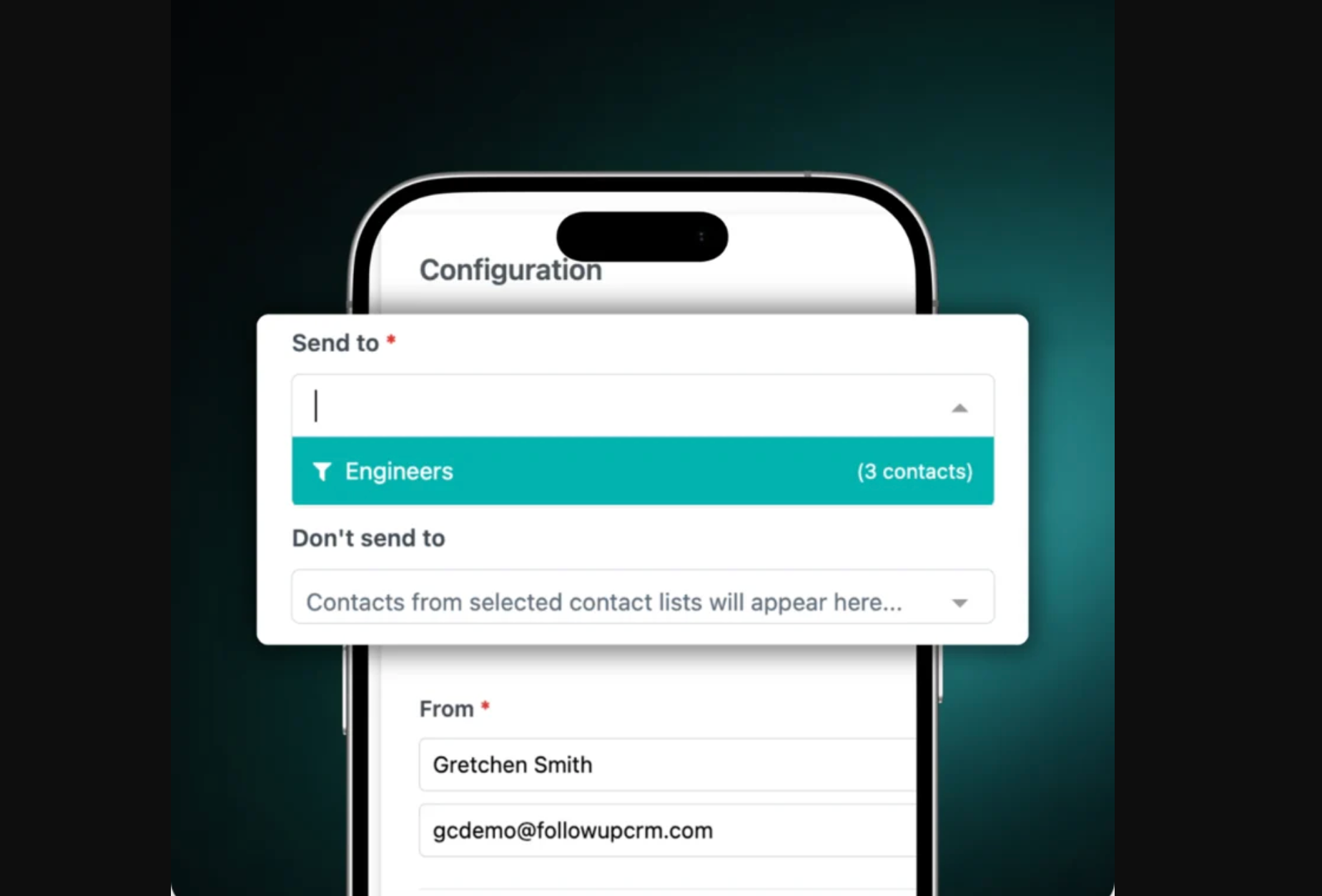
Followup CRM, an AI CRM tool for construction, includes built-in email marketing designed for construction sales teams, so your campaigns run from the same place as your leads, bids, and pipeline. There is no separate email platform to manage, and no exporting of contact lists between systems.
Four capabilities do the heavy lifting:
- Templates: start with a professionally designed template or build your own, then save and reuse it so your team is not rewriting the same email before every send.
- Targeting: send campaigns to the contact lists already living in your CRM. Because the data is the same data your team keeps current for sales, your emails reach the right audience without uploads or syncing.
- Scheduling: queue campaigns ahead of time and plan sends around bid deadlines, follow-ups, and seasonal pushes instead of scrambling at the last minute.
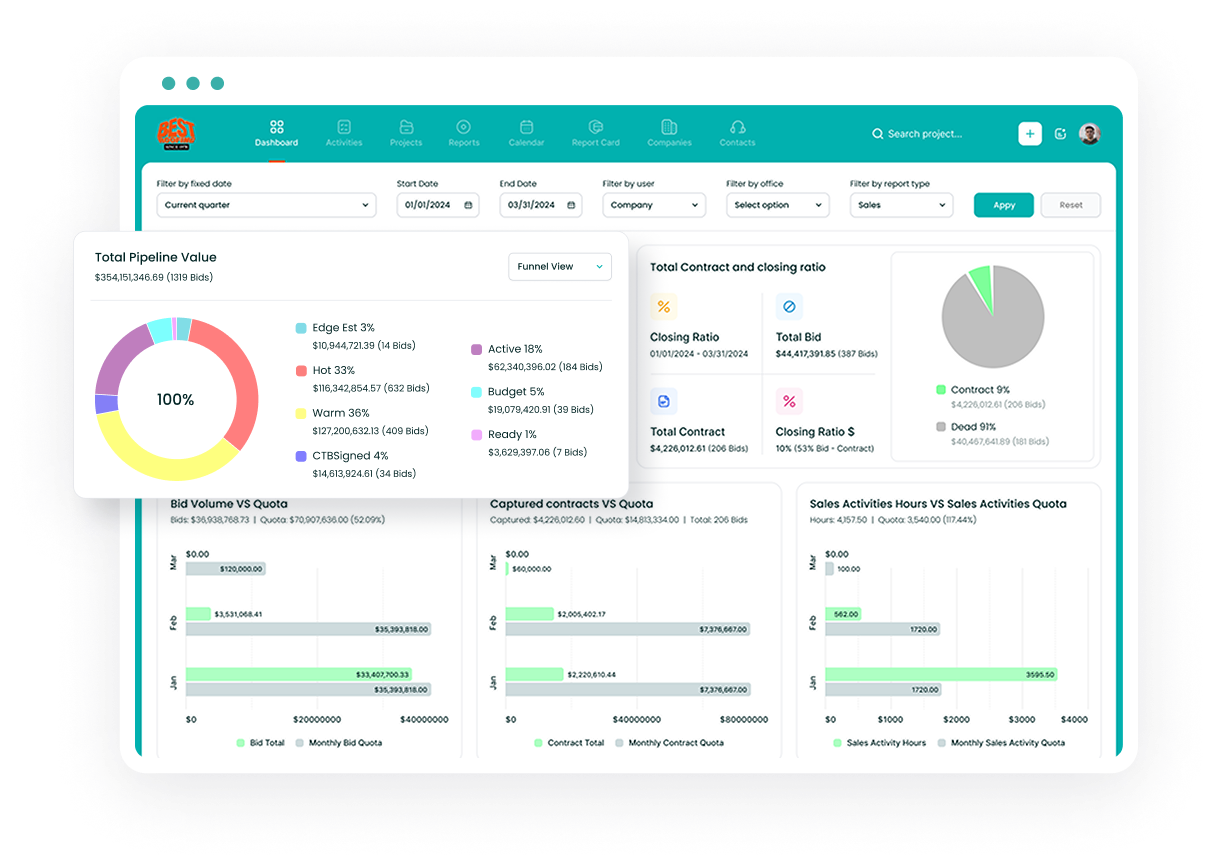
- Reporting: track opens, clicks, and engagement next to the rest of your pipeline data. You can see which contacts are warming up, so your team knows exactly who to call and when.
This is the difference between email marketing bolted onto your business and email marketing built into it. Every campaign feeds the same system that tracks your bids, which means your marketing effort shows up where it matters: in won work.
How to Measure Your Email Marketing Results
A successful email marketing campaign is one you can prove worked. Every platform reports the basics, and three numbers tell most of the story.
Open rate shows whether your subject lines earn attention. Click-through rate shows whether the content inside gives readers a reason to act. Unsubscribe rate warns you when frequency or relevance is off.
Treat these numbers as a feedback loop rather than a report card. If open rates are low, test different subject lines. If clicks lag, sharpen the call to action or rethink what you are sending to that segment. Small adjustments compound over months.
For a contractor, though, the metric that matters most does not live in an email dashboard. It is whether emails turn into estimates, bid invitations, and signed work. This is why running your email strategy through a CRM pays off.
When every send is logged against a contact and a deal, you get detailed insights into which messages actually drive sales, not just which ones get opened.
That connection between inbox activity and pipeline outcomes is what separates email that feels productive from email that wins jobs.
Add Email Marketing to Your CRM With Followup CRM
Email marketing only pays off when it connects to your pipeline. Followup CRM was built for that connection.
It is a construction CRM created by contractors, for contractors, and it keeps your contacts, bids, and communication in one place.
You can send emails with templates and sequences, track every exchange automatically against the right project, and watch your dashboards show which efforts turn into won work.
Instead of guessing whether your marketing emails matter, you can see the results next to your leads and bids. Your team follows up on time, your outreach stays consistent, and nothing slips between the inbox and the estimate.
Ready to make email part of how you win jobs? Book a demo with Followup CRM!
FAQs About Construction Email Marketing
What is the 80-20 rule in email marketing?
The 80-20 rule means that about 80% of your emails should offer valuable content, such as educational content, project updates, or seasonal tips, while only 20% should directly promote your construction services.
Readers stay subscribed when most of what you send helps them, which makes the occasional promotional email far more effective.
How much is a 1000-email list worth?
There is no fixed dollar value because a list is worth what it produces. For a construction business, the math is simple: estimate how many leads your list generates per year, multiply by your close rate, then by your average job value.
Since a single won project can be worth tens of thousands of dollars, even a small list of engaged past customers and prospects can be one of the most valuable assets your company owns. An unengaged or purchased list, by contrast, is worth close to nothing.
What is the three email rule?
The three email rule often refers to a follow-up practice: if a prospect has not responded after three well-spaced emails, stop and try a different channel or let the lead rest.
It keeps your outreach persistent without becoming a nuisance. A CRM like Followup CRM makes this easy to manage, since reminders and sequences track exactly where each contact stands.
The CRM Built For Construction Companies
No more disorganized data. Track your leads, bids, and customers all in one place.
Seamless Integration with:
✅ Foundation ✅ Viewpoint ✅ Sage and more
.jpg)

.png)