


TL;DR
Here are the six best construction bidding software tools in 2026, each serving a different use case:
- Followup CRM: Best for bid management and sales tracking.
- PlanHub: Best for finding construction bid opportunities.
- BuildingConnected: Best for bid invitations and subcontractor networks.
- STACK: Best for takeoff and estimating.
- Dodge Construction Network: Best for project leads and market intelligence.
- SmartBid: Best for subcontractor prequalification.
What Is Construction Bidding Software?
A construction bidding platform is any tool that helps contractors manage the bid phase of a project, from finding opportunities to submitting proposals and tracking outcomes.
It replaces the usual patchwork of spreadsheets, email threads, and paper folders with one system where project documents, deadlines, and bid statuses live together.
The category is broad because the preconstruction process itself is broad. Some platforms focus on bid management, meaning the tracking and follow-up side of winning work. Others handle project discovery, subcontractor invitations, or takeoffs and estimates.
General contractors and subcontractors often use different tools for the same reason: they sit on opposite sides of the bidding process.
The six tools below each cover a distinct piece of that workflow.
Top 6 Construction Bidding Software Tools in 2026
Each of the tools below covers a different part of the bidding process. Some help you find work, others help you estimate it, and others make sure no opportunity falls through the cracks. Match the tool to the gap in your current workflow.
1. Followup CRM: Best for Bid Management and Sales Tracking
Followup CRM is a construction-specific customer relationship management (CRM) system built for commercial and specialty trade contractors who need to track every bid from first contact to signed contract.
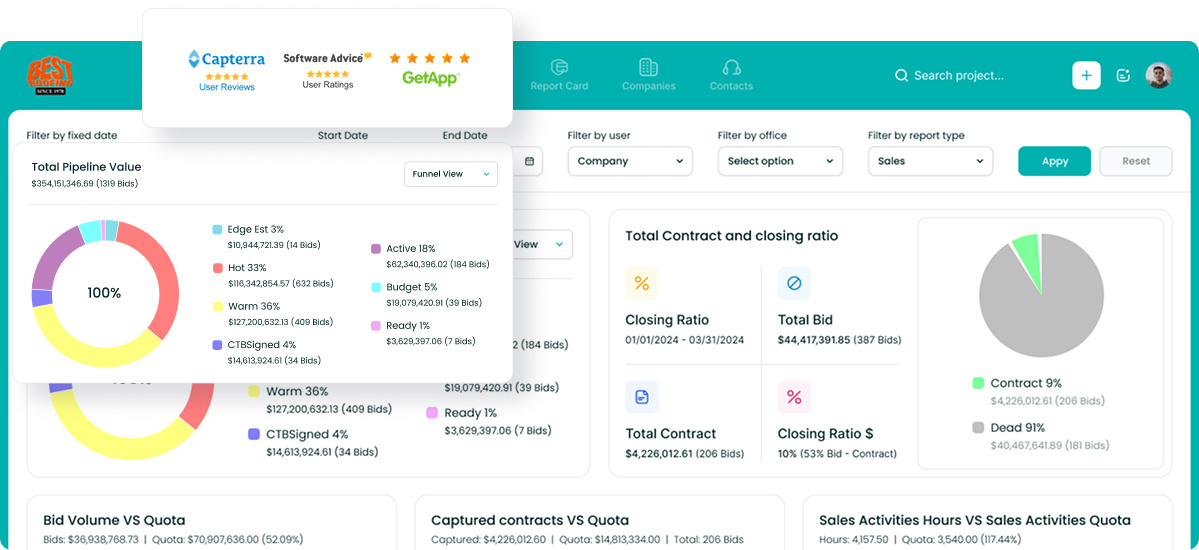
Instead of juggling spreadsheets, your team logs each opportunity once and follows it through the pipeline with automatic reminders that keep follow-ups from slipping.
Key Features
- Lead and bid tracking imports leads from multiple sources and follows each one through the pipeline.
- Digital bid calendar gives the whole team a shared view of every bid due date.
- Proposal generator with e-signature builds branded proposals and sends them for virtual signing.
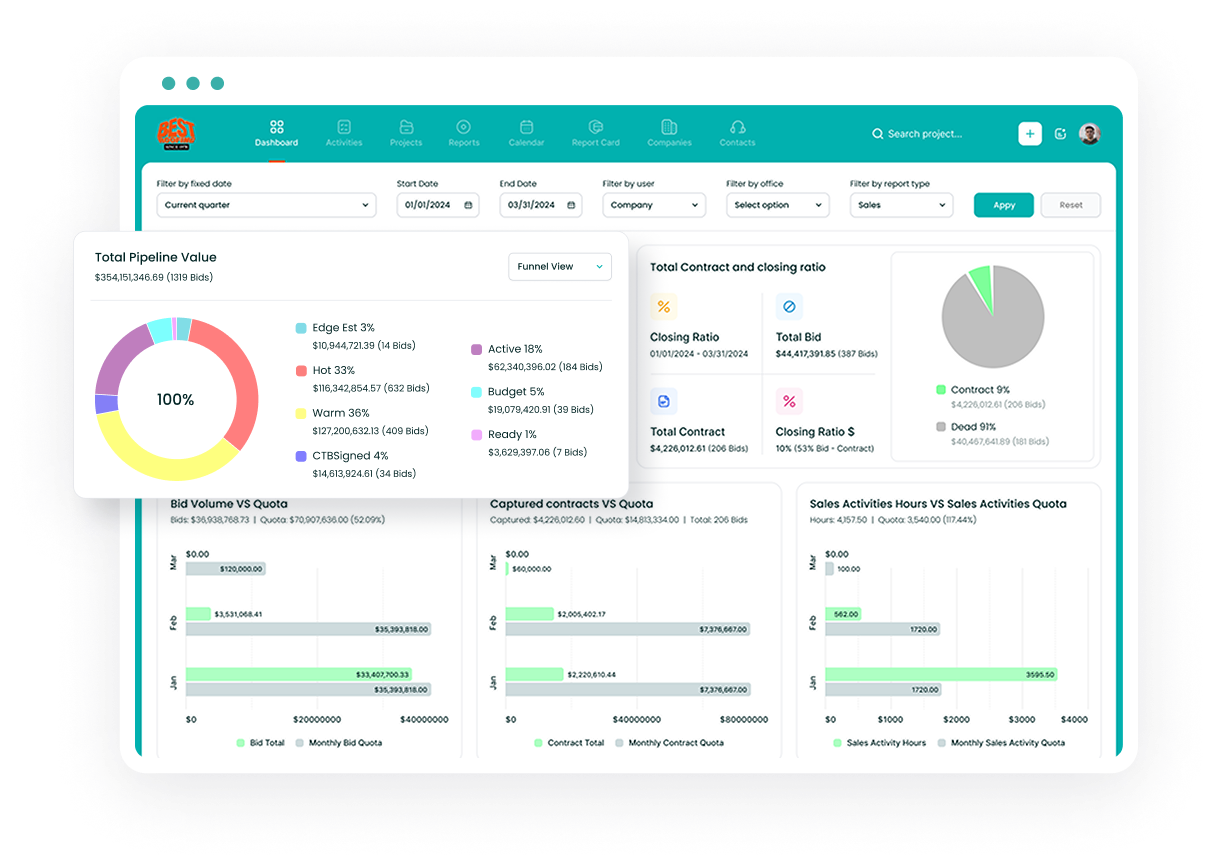
- Sales dashboards show close rates, pipeline value, and team performance in real time.
Followup CRM also connects to the rest of your stack, with integrations for ERP and accounting systems like Foundation, Sage, and Vista, estimating tools like STACK and The Estimating Edge, and bid management platforms like Procore and BuildingConnected.
With Procore, you can push a project to Bid Board for estimating, sync the estimate back, and transfer a won job with contacts and documents intact so nobody re-enters data.
Ready to see it in your own process? Book a demo with Followup CRM today.
2. PlanHub: Best for Finding Construction Bid Opportunities
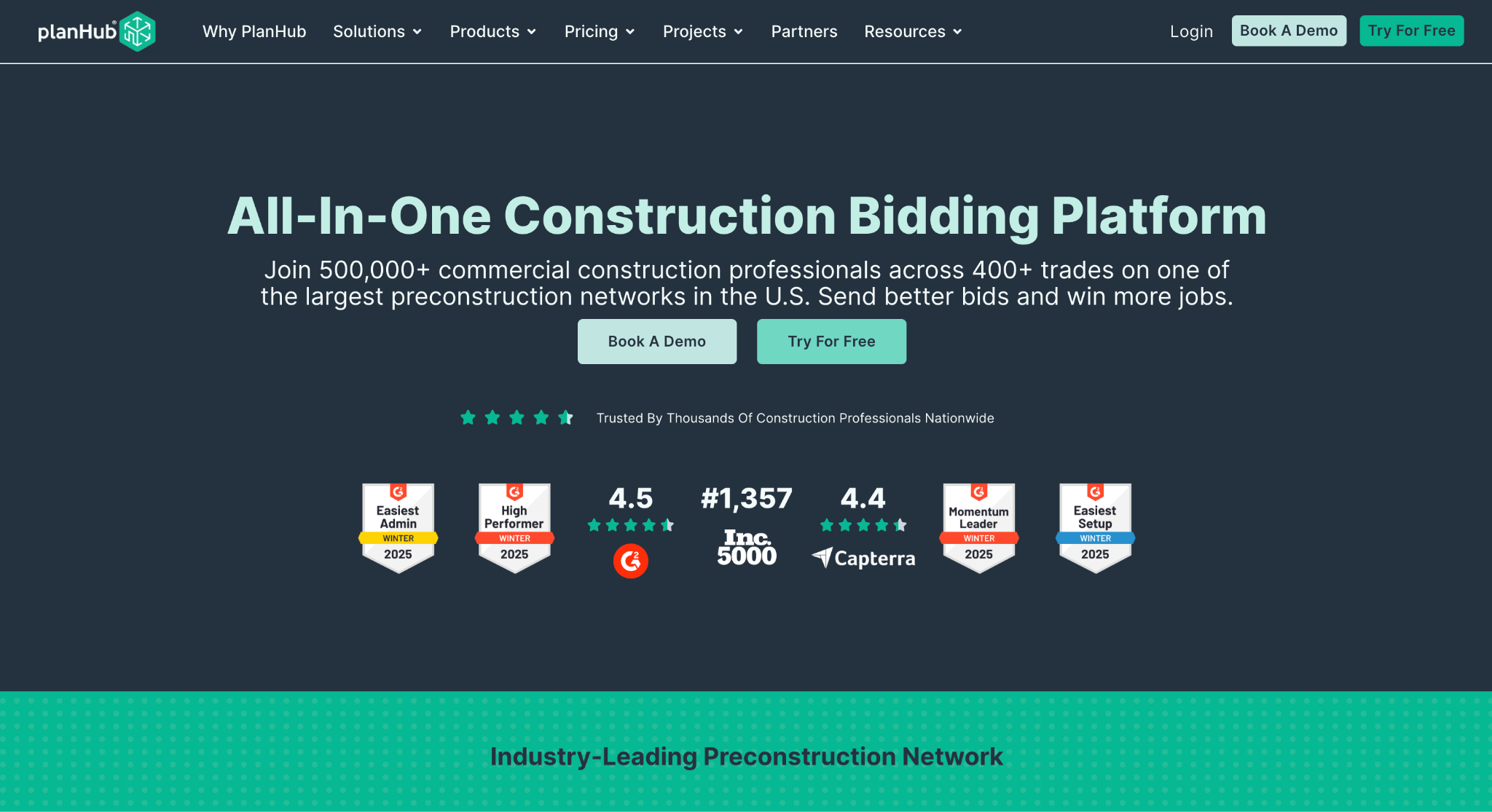
Image source: planhub.com
PlanHub is a cloud-based preconstruction platform that connects general contractors, subcontractors, and suppliers in one bidding environment.
General contractors (GCs) post projects and send bid invitations, while subcontractors browse open opportunities in their trade and service area, download plans and specs from the built-in plan room, and submit bids without leaving the platform.
The tool is a good fit for subcontractors who want to find more bid opportunities without relying only on existing GC relationships.
Automatic bid notifications alert subs when new projects match their trades, and a shared digital bid board helps teams track submissions and deadlines together.
PlanHub also includes takeoff and estimating tools, so smaller teams can access plan documents and price the work in the same place they found it.
One practical note: the volume of opportunities depends on how many general contractors post projects in your region, so coverage varies by market.
3. BuildingConnected: Best for Bid Invitations and Subcontractor Networks
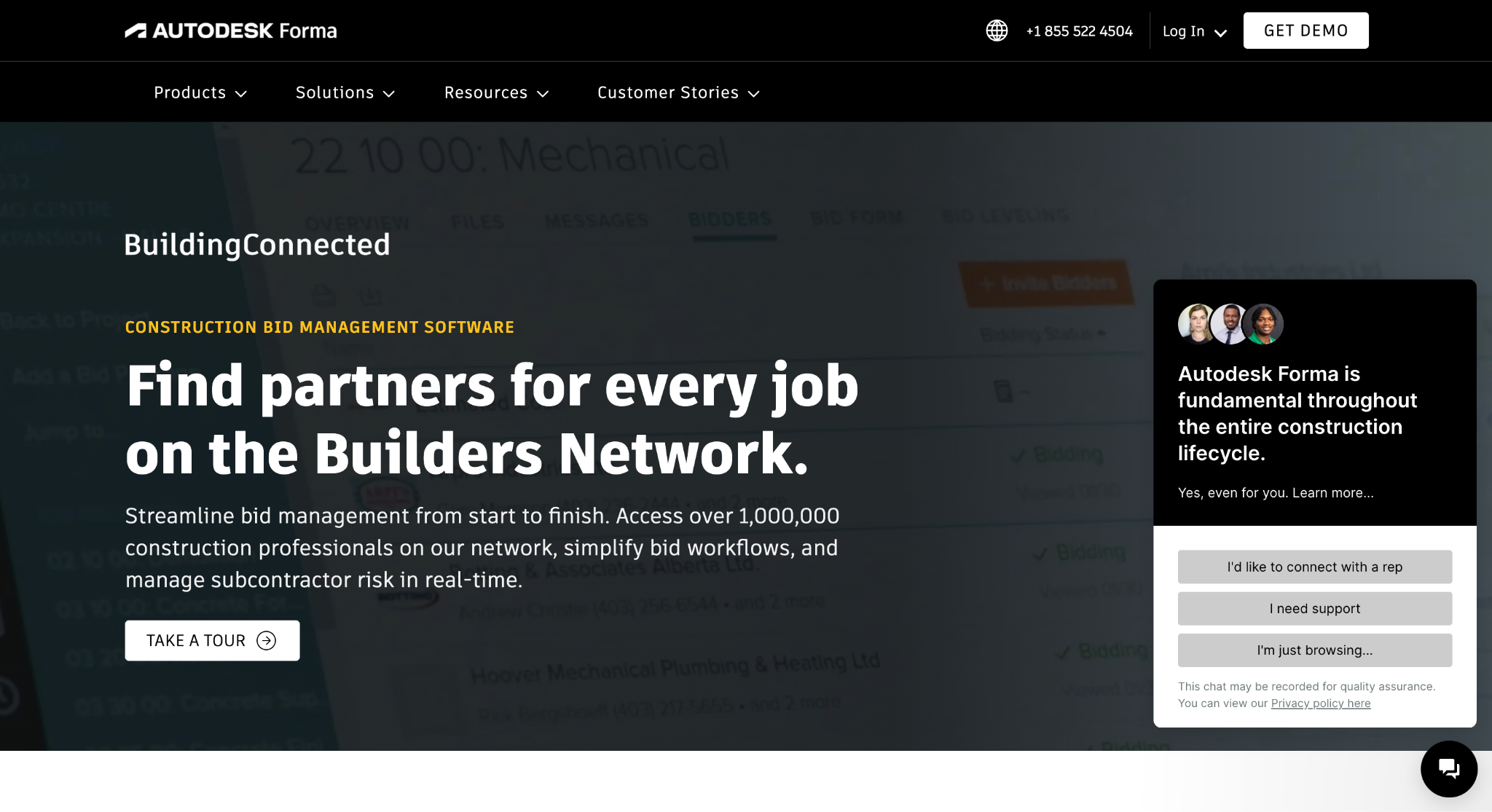
Image source: autodesk.com
BuildingConnected is Autodesk's bid management platform, built around one of the largest crowd-sourced construction networks in North America.
General contractors use it to create bid packages, send invitations, and compare subcontractor proposals side by side through bid leveling tools that standardize submissions for accurate comparison.
The network is the main draw. A recommendation engine suggests bidders based on location, trade expertise, and past performance, which helps GCs fill coverage gaps instead of scrambling for the same overloaded subs.
Qualification data flows in through TradeTapp, Autodesk's risk assessment tool, so teams can vet subcontractor financials and safety records during the invitation process rather than after.
For companies already working in the Autodesk ecosystem, the platform connects with Autodesk Construction Cloud, including Autodesk Docs for document management and Cost Management for turning winning bids into contracts.
BuildingConnected is suitable for mid-sized and large GCs managing a large sub network. It centers on GC invitations rather than independent project discovery, so subcontractors pursuing public work often pair it with a separate lead source.
4. STACK: Best for Takeoff and Estimating
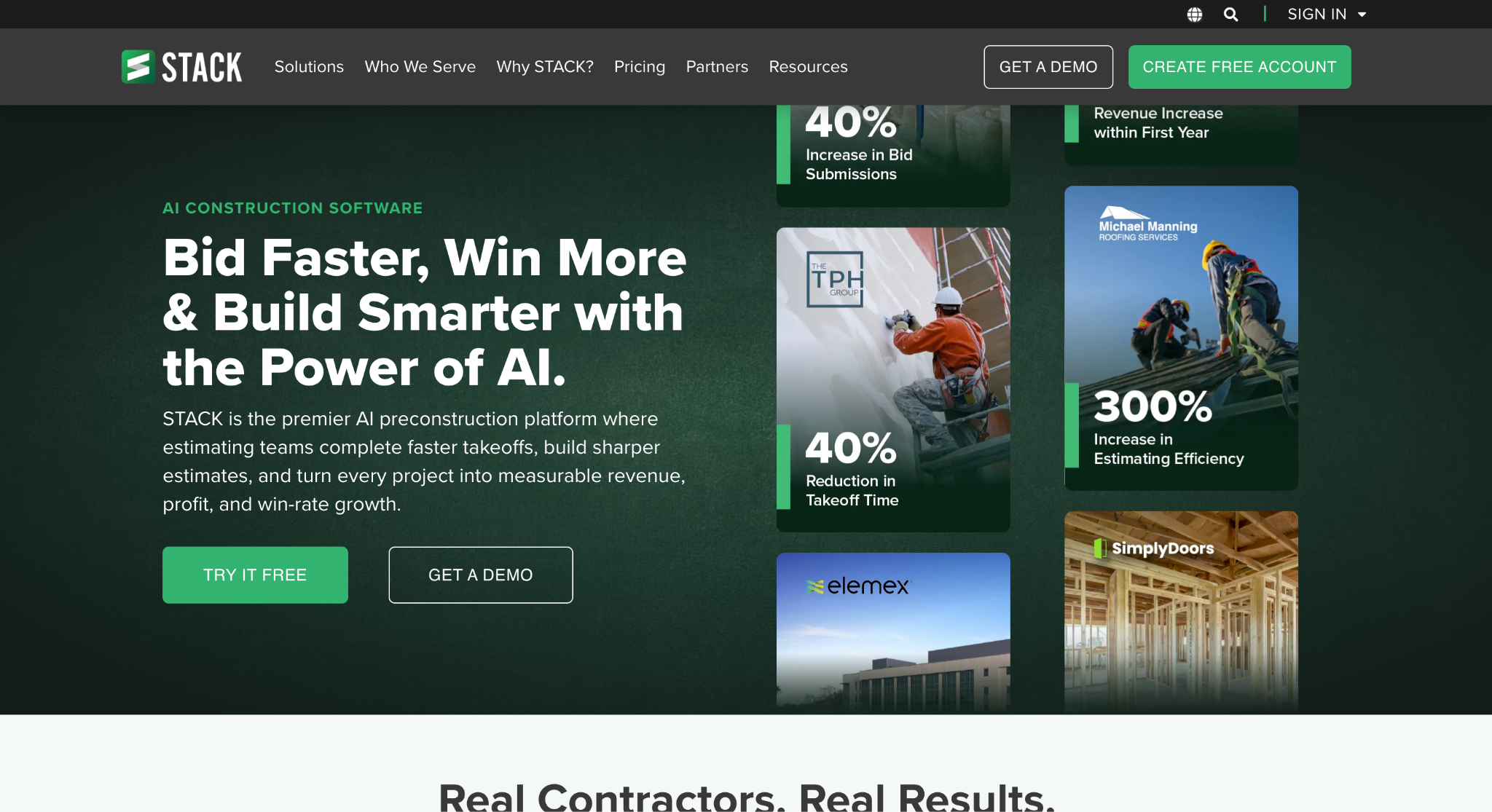
Image source: stackct.com
STACK is a cloud-based preconstruction platform that handles the numbers side of bidding: measuring digital plans and turning quantities into priced estimates.
Estimators upload plans, calibrate the scale, and use linear, area, volume, and auto-count takeoff tools to pull material quantities directly on screen.
An overlay feature compares drawing revisions, which helps catch scope changes between plan versions before they turn into pricing errors.
The estimating side connects takeoffs to pre-built item and assembly libraries, with labor rates, material costs, markup, and tax built into each estimate. A regional cost library gives teams a starting point when they lack their own historical pricing data.
Finished estimates export to Excel or flow into branded proposals, and a built-in bid calendar keeps upcoming deadlines visible for the whole team.
STACK is a good fit for subcontractors and GCs who bid high volumes of work and need construction estimating to move faster without losing accuracy.
New users should plan for a short learning curve, since the assembly setup takes some upfront configuration before the speed gains kick in.
Many teams shortlisting the best construction estimating software end up trialing STACK first for its takeoff speed.
5. Dodge Construction Network: Best for Project Leads and Market Intelligence
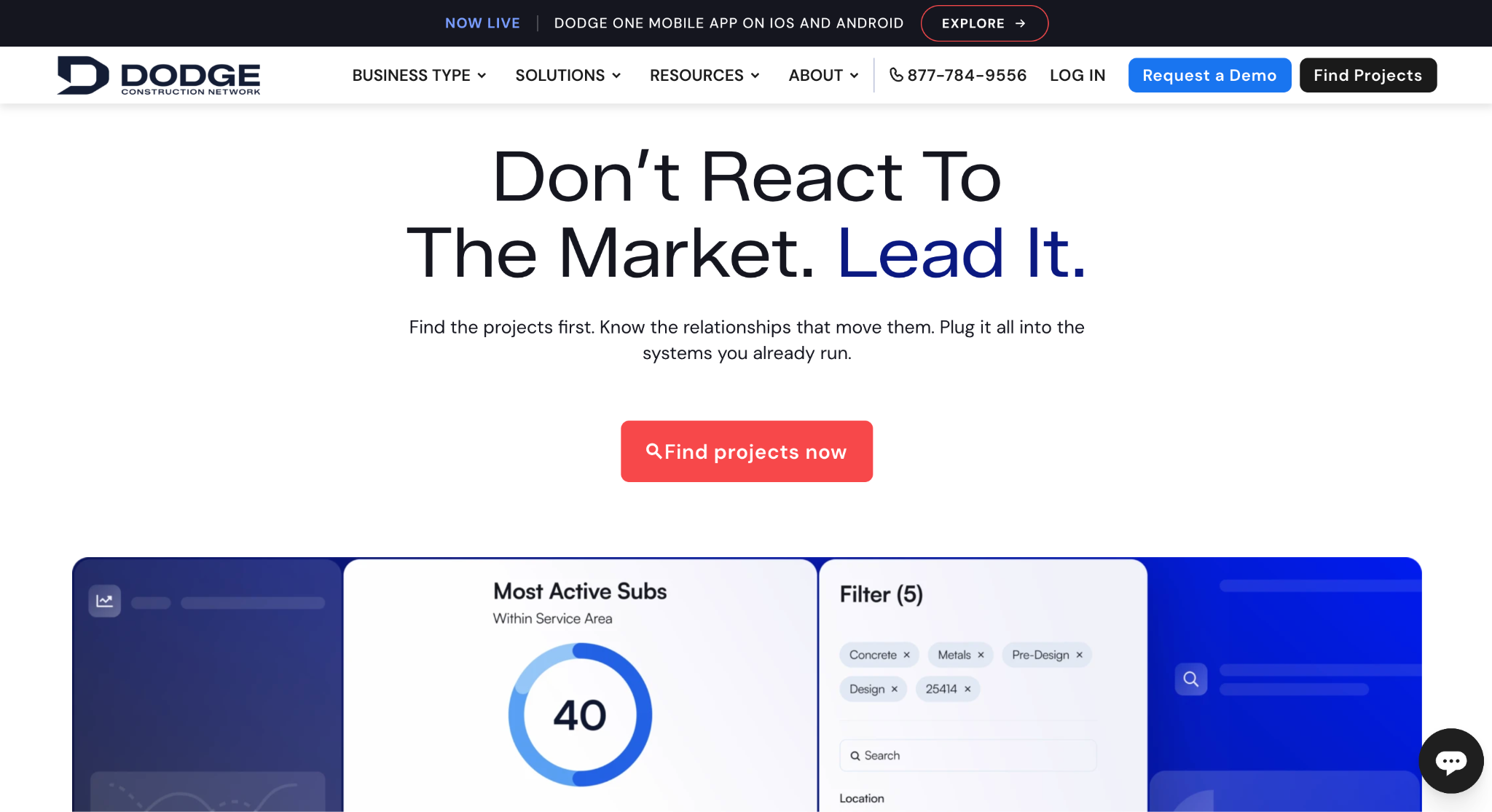
Image source: construction.com
Dodge Construction Network is a legacy project intelligence provider that tracks commercial construction projects from pre-planning through construction start.
The database covers hundreds of thousands of projects, with roughly 10,000 updates published daily, so contractors see opportunities months before they reach a public bid board.
Each project profile includes scope, estimated value, bid deadlines, available plans and specs, and contact details for the owner, architect, and GC.
Custom alerts match new projects to your trades and target markets, which turns project discovery into a passive feed instead of a daily search. A built-in plan room handles document access for active pursuits.
Dodge serves a wider audience than most bidding tools. Building product manufacturers use the same data to track specifications, and the market forecasting side supports planning decisions beyond individual bids.
For subcontractors, the value is data depth: seeing more projects earlier means filling the pipeline with the right opportunities instead of bidding whatever shows up. Dodge is suitable for companies whose growth depends on finding work, not just tracking it.
6. SmartBid: Best for Subcontractor Prequalification
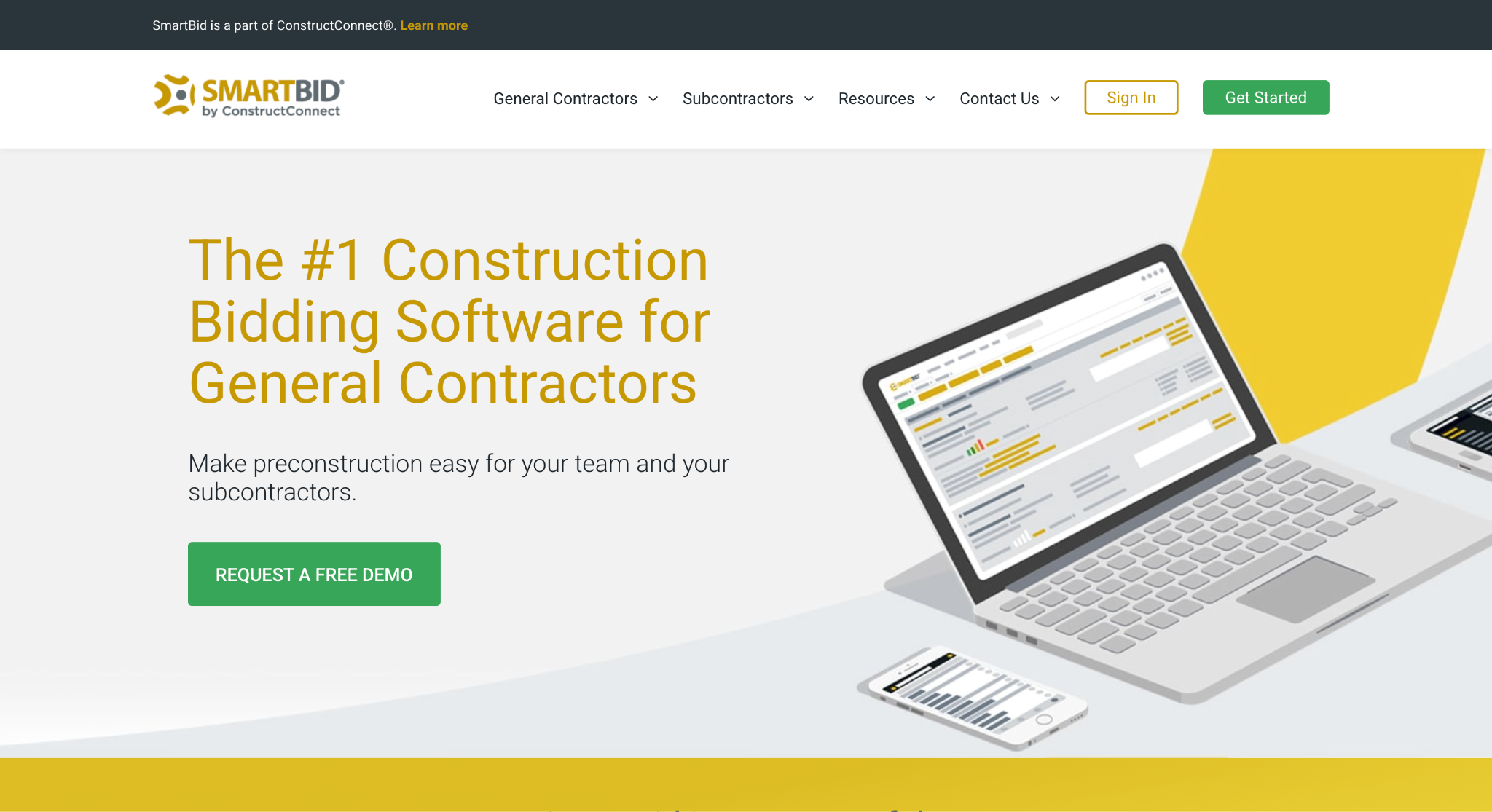
Image source: smartbid.co
SmartBid is a bid management platform from ConstructConnect, built for general contractors who need tighter control over who bids their work.
The tool's core is a private subcontractor database, organized by trade, location, and expertise, that GCs use to send invitations to bid and share project documents through a controlled-access online plan room.
Prequalification is where SmartBid stands out. Teams can build custom qualification forms or use the integrated ConsensusDocs 721 standard to collect operational, insurance, financial, and safety information from subs before awarding work.
Compliance tracking keeps certificates and documentation current, which matters for GCs managing risk on larger commercial projects.
Bid comparison tools consolidate incoming proposals into standardized tabulations, replacing the spreadsheet shuffle most estimating teams know too well.
SmartBid also integrates with Procore, Autodesk BIM 360, and Dropbox for document syncing, and subcontractors invited to bid get platform access at no cost.
The tool is suitable for mid-sized and enterprise GCs running large competitive bid pools who need an audit trail of outreach, document access, and qualification data.
How to Choose Construction Bidding Software
Start with your side of the bidding process. General contractors need tools that manage outgoing bid invitations, subcontractor data, and proposal comparisons.
Subcontractors need the opposite: finding opportunities, receiving invitations, estimating the work, and tracking their own bid submissions from first contact to decision.
Then look at where your current bid management process actually breaks down. If opportunities dry up, a project discovery tool fills the pipeline.
If estimates take too long, takeoff software saves time. But for many contractors, the real leak is simpler: bids go out, and nobody follows up. Deadlines pass unnoticed, and won or lost outcomes never get recorded, so the same mistakes repeat.
That is a tracking problem, and it costs more than any single lost bid.
Construction professionals rarely need every tool on this list. Most teams combine two: one platform to find or estimate work, and one system to manage projects through the pipeline and make sure every bid gets a follow-up.
Pick the combination that closes your specific gap, and make sure the two integrate so project costs and contacts move between them without manual re-entry.
Stop Losing Bids You Should Have Won With Followup CRM
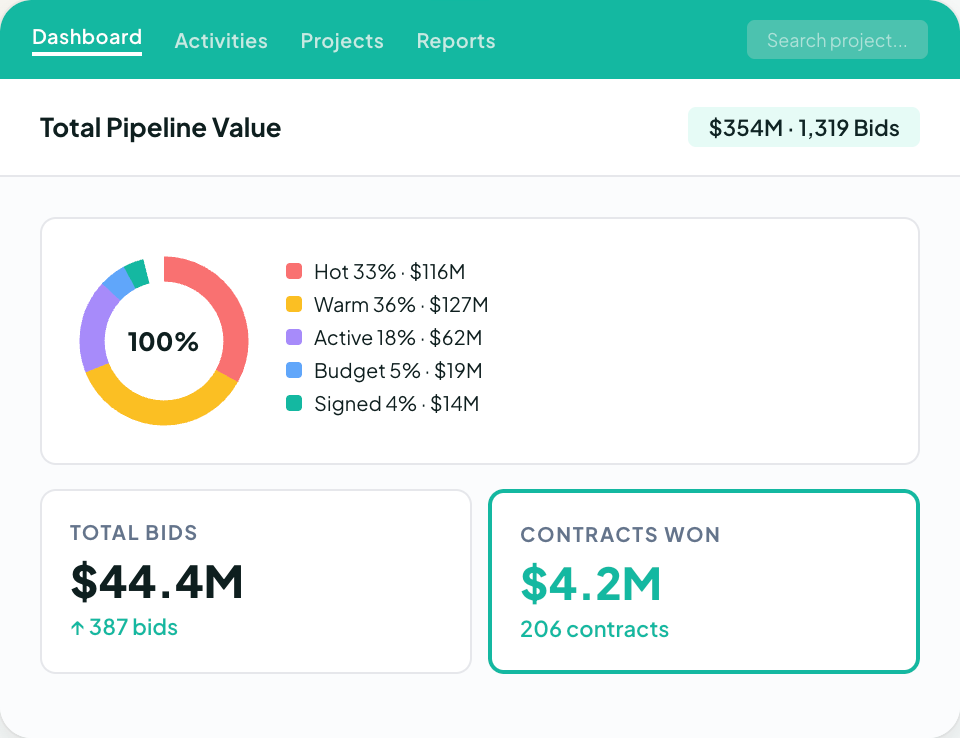
Most lost bids are process failures, not price failures. A missed follow-up, a forgotten deadline, or a proposal that sat in drafts too long.
The time-consuming part of bidding is not the estimate. It is keeping dozens of opportunities moving at once without letting any slip.
Followup CRM was built by contractors to fix exactly that. Every lead, bid, deadline, and follow-up lives in one pipeline, with reminders that fire before due dates and dashboards that show what is winning and why.
Teams that track every bid consistently start winning more of the work they already pursue, and that is the fastest route to more profitable work.
Book a demo with Followup CRM and see your pipeline in one place.
FAQs About Construction Bidding Software
What is the best app for construction bids?
For tracking and managing bids, Followup CRM is the strongest option for commercial and specialty trade contractors. It logs every bid, keeps deadlines on a shared calendar, and prompts follow-ups so opportunities never go cold.
The best app for finding bids depends on your trade and region, so match the tool to the gap in your workflow.
What is the best construction bidding website?
It depends on what you need the website to do. Platforms that list open projects work well for filling your pipeline, while a system like Followup CRM works best once bids exist and need tracking through to a decision.
Many contractors pair one of each, connected through integrations.
What is the best software for construction estimating?
Estimating software should fit your trade, bid volume, and how your team builds pricing. Look for digital takeoff tools, cost databases, and proposal output. Whichever estimating tool you choose, make sure it connects to your bid tracking system.
Followup CRM integrates with estimating platforms like STACK and The Estimating Edge, so estimates flow straight into your pipeline.
The CRM Built For Construction Companies
No more disorganized data. Track your leads, bids, and customers all in one place.
Seamless Integration with:
✅ Foundation ✅ Viewpoint ✅ Sage and more