

TL;DR
These are the best construction sales management tools to boost your sales pipeline:
- Followup CRM
- JobNimbus
- AccuLynx
- Buildertrend
- JobTread
- Pipedrive
- HubSpot
What Is Construction Sales Management Software?
Construction sales management software is a CRM platform built for how contractors sell.
It tracks every lead from first contact through bid, proposal, and close, so your sales process lives in one system instead of scattered spreadsheets and inboxes.
A generic customer relationship management tool treats every deal the same. Construction CRM is different.
Bids have hard deadlines, sales cycles stretch for months, and one estimator might juggle dozens of active opportunities at once.
Construction CRM software accounts for all of that with bid calendars, deadline reminders, and pipeline stages that match how construction firms manage their sales, from lead intake to signed contract.
It also sits apart from project management platforms like Procore or Autodesk Construction Cloud. Those tools take over after the contract is signed and cover the entire project lifecycle, from scheduling to closeout.
Sales management software covers everything before that point. Many construction firms run both and connect them, so customer data flows from the sales pipeline into project execution without manual data entry.
Common Sales Pipeline Management Challenges in Construction
Selling construction work is harder than selling most products, and the difficulty starts with time.
Sales cycles in the construction industry routinely run for months, with long gaps between the first site walk, the estimate, and the award decision. A deal can look healthy in March and die quietly in June because nobody touched it while the estimating team was buried.
Distance makes it worse. The people selling the work are rarely in one room. An estimator is at the office, a business developer is at a job site, and the owner is meeting a general contractor somewhere else.
Each of them holds a piece of the client communication, and without a shared system, those pieces never come together. The result is two people calling the same prospect in the same week, or worse, nobody calling at all.
Then there is the handoff problem.
When a bid is won, sales information has to reach the team running the work, including contacts, commitments made during the sale, and promised project timelines, which is where a clean construction sales handoff process saves weeks of cleanup.
None of these problems come from a lack of effort. They come from managing a complex sales operation with tools built for simpler businesses, which is exactly the gap construction sales management software exists to close.
Key Features to Look For in Construction Sales Management Software
Not every CRM labeled "construction" earns the name. Before you commit to a CRM platform, check that it covers these core features:
- Lead management: Capture leads from web forms, referrals, and vendor lists, then assign owners and next steps so nothing goes cold.
- Bid management: A digital bid calendar with due dates and reminders, so your team never misses a submission deadline.
- Visual sales pipeline: See every opportunity by stage, value, and owner at a glance, making sales pipeline management a daily habit instead of a monthly scramble.
- Proposal tools: Build branded proposals and collect e-signatures without leaving the platform.
- Contact management and communication history: Every email, call, and note logged against the right company and deal.
- Customizable dashboards: Close rates, pipeline value, and team performance in real time.
- Workflow automation: Automatic follow-up reminders and task creation, cutting manual data entry.
- Integration capabilities: Two-way sync with your accounting software, estimating tools, and project management platform.
- Mobile access: Construction teams can update deals from the job site, keeping office and field teams on the same page.
The more of these live on one platform, the less your sales team bounces between systems.
Top 7 Construction Sales Management Software Tools
The seven tools below cover the full range of construction sales teams, from commercial bid-driven contractors to residential roofers and small crews that want a simple pipeline:
1. Followup CRM
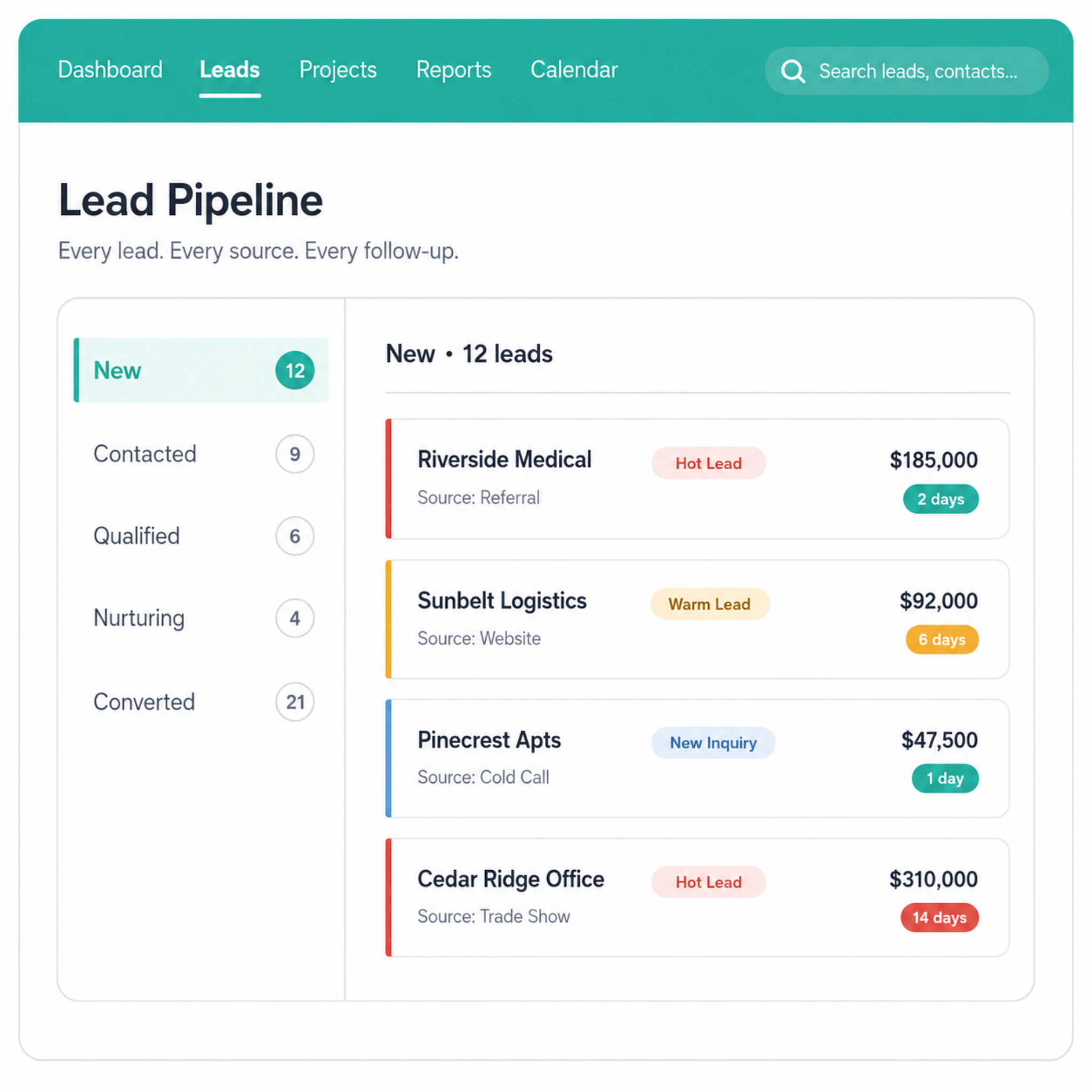
Followup CRM is construction sales management software built for commercial contractors, general contractors, and subcontractors.
It was created by contractors who could not find a sales tool that fit specialty trade work, and the whole platform is organized around one job: managing the construction sales cycle from lead intake through bid, estimate, proposal, and close.
Lead and Bid Tracking
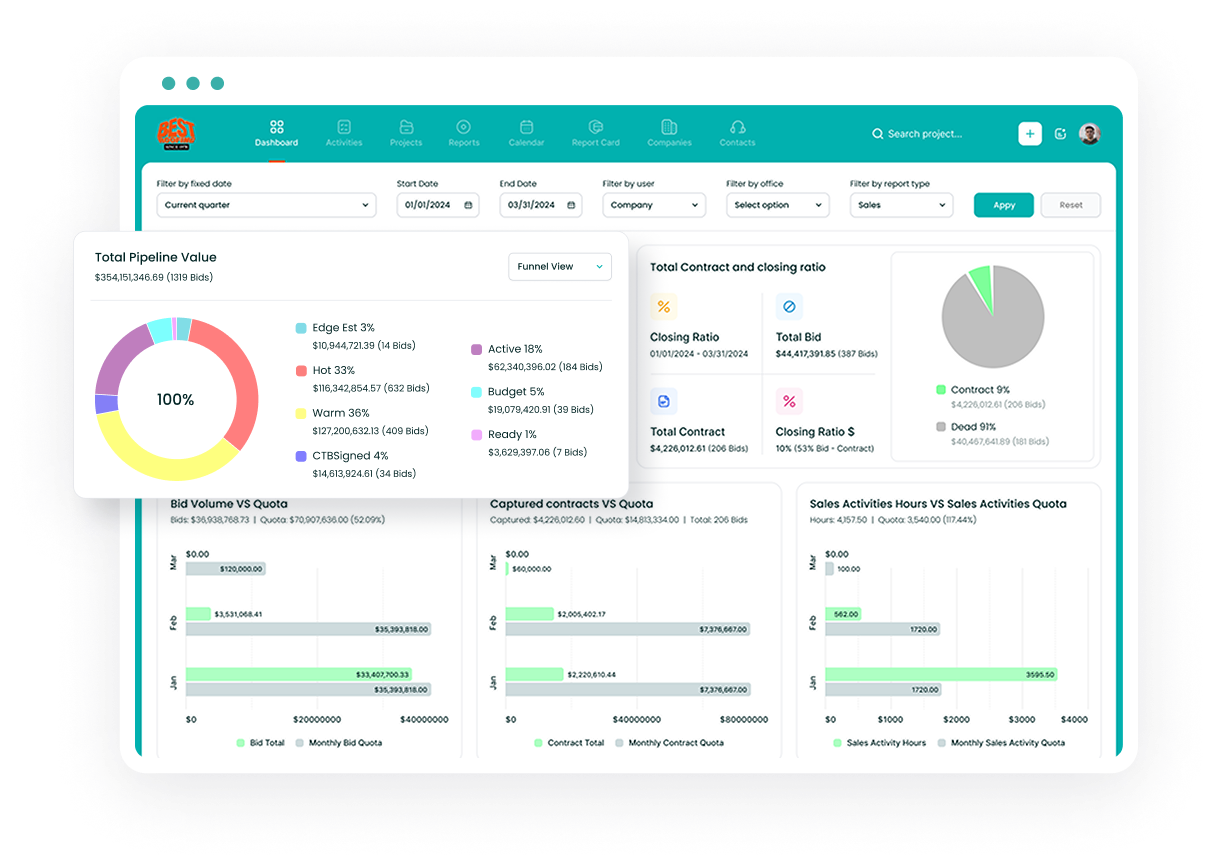
Leads import from multiple sources into a pipeline CRM built for bid-driven selling. A shared digital bid calendar keeps every due date visible, so estimators and sales managers manage deadlines from one place instead of separate spreadsheets.
Sales and Estimating Dashboards
Real-time dashboards show pipeline value, close rates, and team performance. Sales leaders see exactly where every deal sits and coach the sales process from live numbers.
Proposal Generator and E-Signature
Build branded proposals inside the platform and send them for virtual signature, cutting days off the time between estimate and signed contract.
Team Goals and Reporting
Set sales targets per team and measure them against win/loss and activity reports, turning sales management into a numbers-driven routine. Voice AI speeds up data entry: the contractor speaks about what happened, and the system logs it.
Followup CRM also integrates with construction ERP and accounting systems, including Foundation, Sage, Vista, and Procore, so sales data flows into the systems that run the rest of the business.
Book a demo to see it on your own sales pipeline.
2. JobNimbus
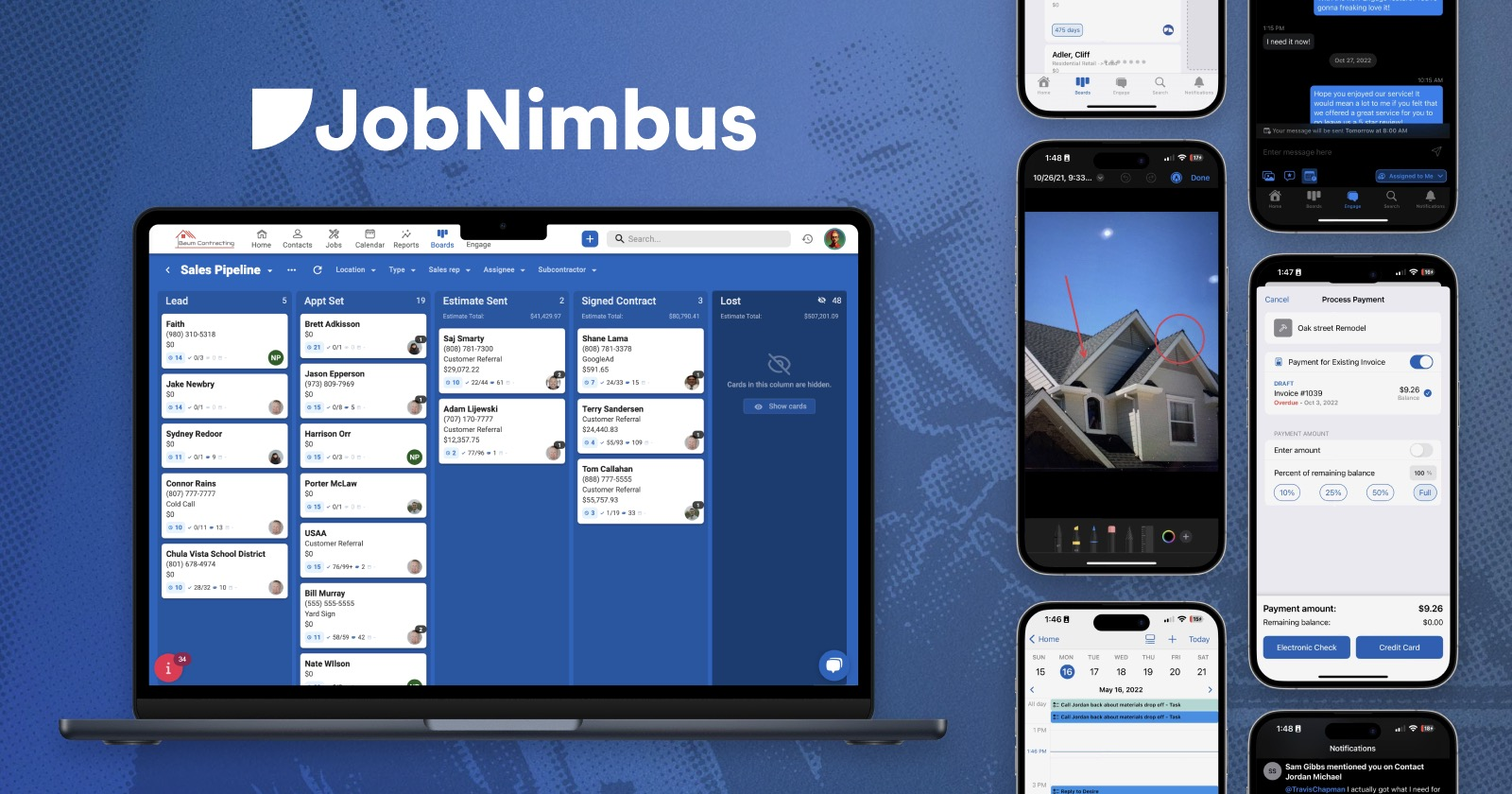
Image source: jobnimbus.com
JobNimbus is an all-in-one platform for roofing contractors that combines a sales CRM with production and invoicing tools. It is a good fit for residential roofing companies that want their sales process and job workflow in the same system.
The sales side is built around visual boards. Contractors map their own custom sales process, then move leads through it stage by stage, with every board showing estimated totals at a glance.
A shared calendar handles inspection appointments and job schedules, and workflow automation moves deals forward on its own, such as marking a job "Sold" the moment a proposal is signed.
Contact management, estimates, documents, e-signatures, invoices, and reporting are all included, along with a QuickBooks integration and built-in online payments.
Engage, the platform's texting tool, keeps customer and crew conversations organized in one place, which suits sales teams that live on their phones.
3. AccuLynx
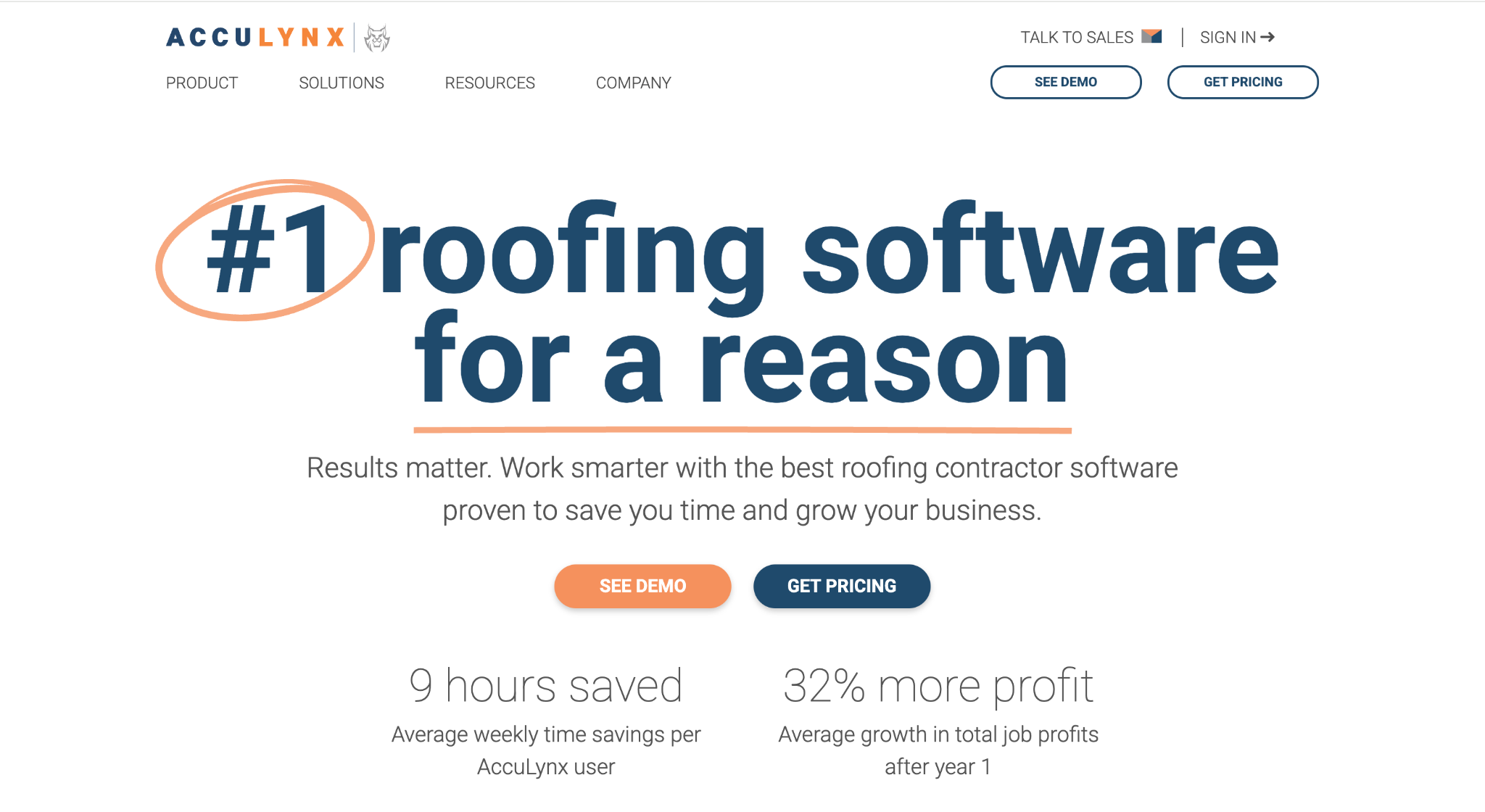
Image source: acculynx.com
AccuLynx is a business management platform for residential roofing companies, and it is suitable for contractors who handle both retail sales and insurance restoration work.
The sales features track every deal from initial lead to signed contract, with activities, documents, and correspondence captured in the job file along the way.
Two things stand out on the sales side. First, built-in AI ranks lead records by their likelihood to buy, which helps sales teams prioritize follow-ups when lead volume gets heavy after a storm.
Second, estimators can order EagleView, Hover, Geospan, and GAF QuickMeasure roof measurement reports directly from the platform, and the customer data feeds into estimate templates with margins, taxes, and discounts applied.
Lead information imports automatically from web forms and landing pages, cutting duplicate entry. Proposals are handled through the document editor, with e-signature reminders and expiration dates to keep deals moving.
4. Buildertrend
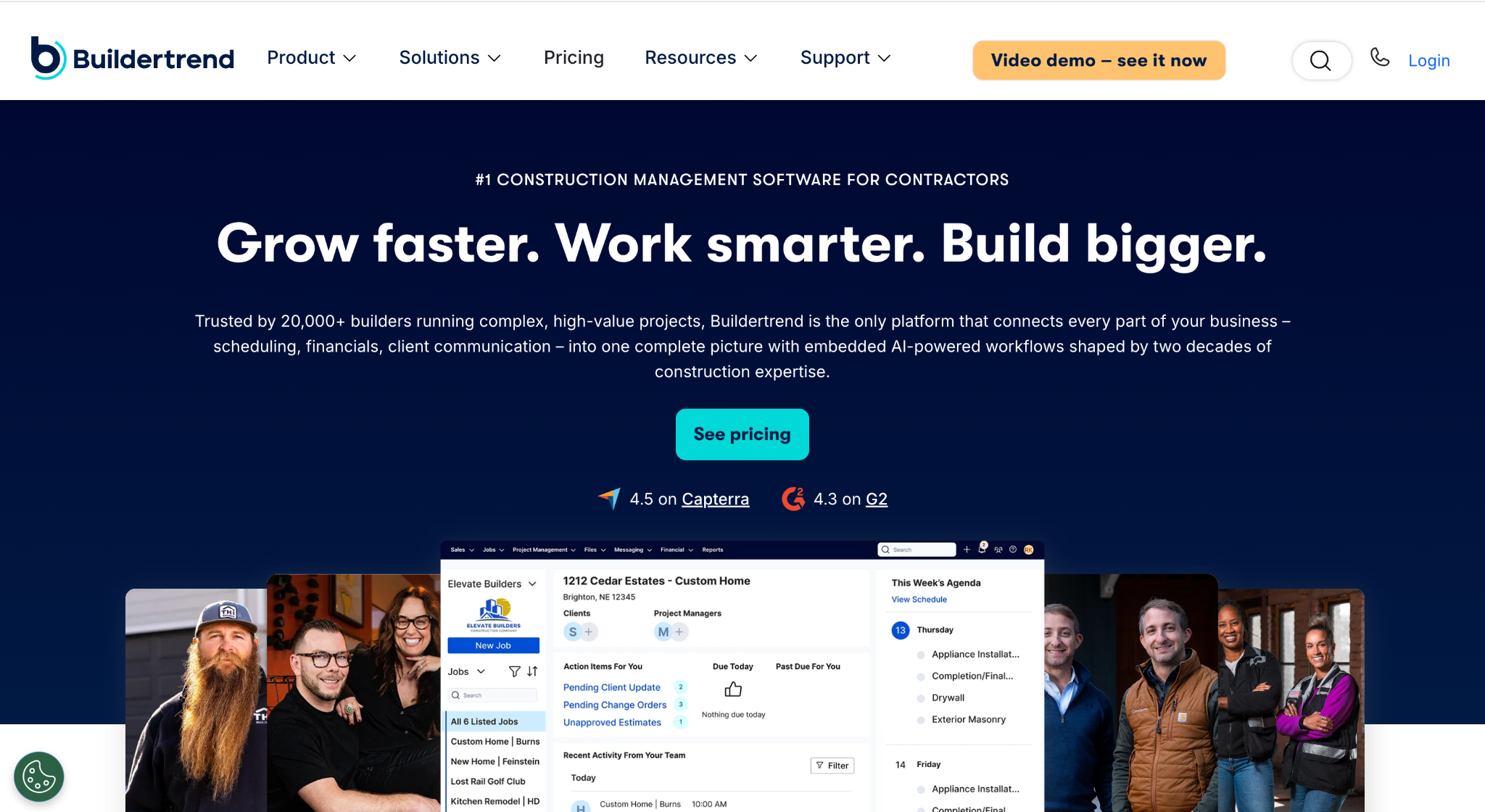
Image source: buildertrend.com
Buildertrend is construction management software for home builders and remodelers that includes a sales CRM alongside project management, financial tools, and client communication features.
It is a useful option for residential construction companies that want sales and project execution in one system.
The CRM tracks every touchpoint between your business and your clients and subcontractors, so the communication history stays attached to the right relationship.
Sales activity flows directly into the rest of the platform, starting with estimating and budgeting, then moving into project management and closeout, all working from the same data instead of separate systems matched by hand.
The client portal is a strong part of the sales experience. Clients can access project status from their own phone or tablet, ask questions, request changes, and submit signatures, which shortens the back-and-forth that slows deals down.
After the sale, the same portal keeps clients engaged through the build.
For teams managing multiple projects, financial management covers budgeting, bids, and costs, with integrations for QuickBooks and Xero on the accounting side.
5. JobTread
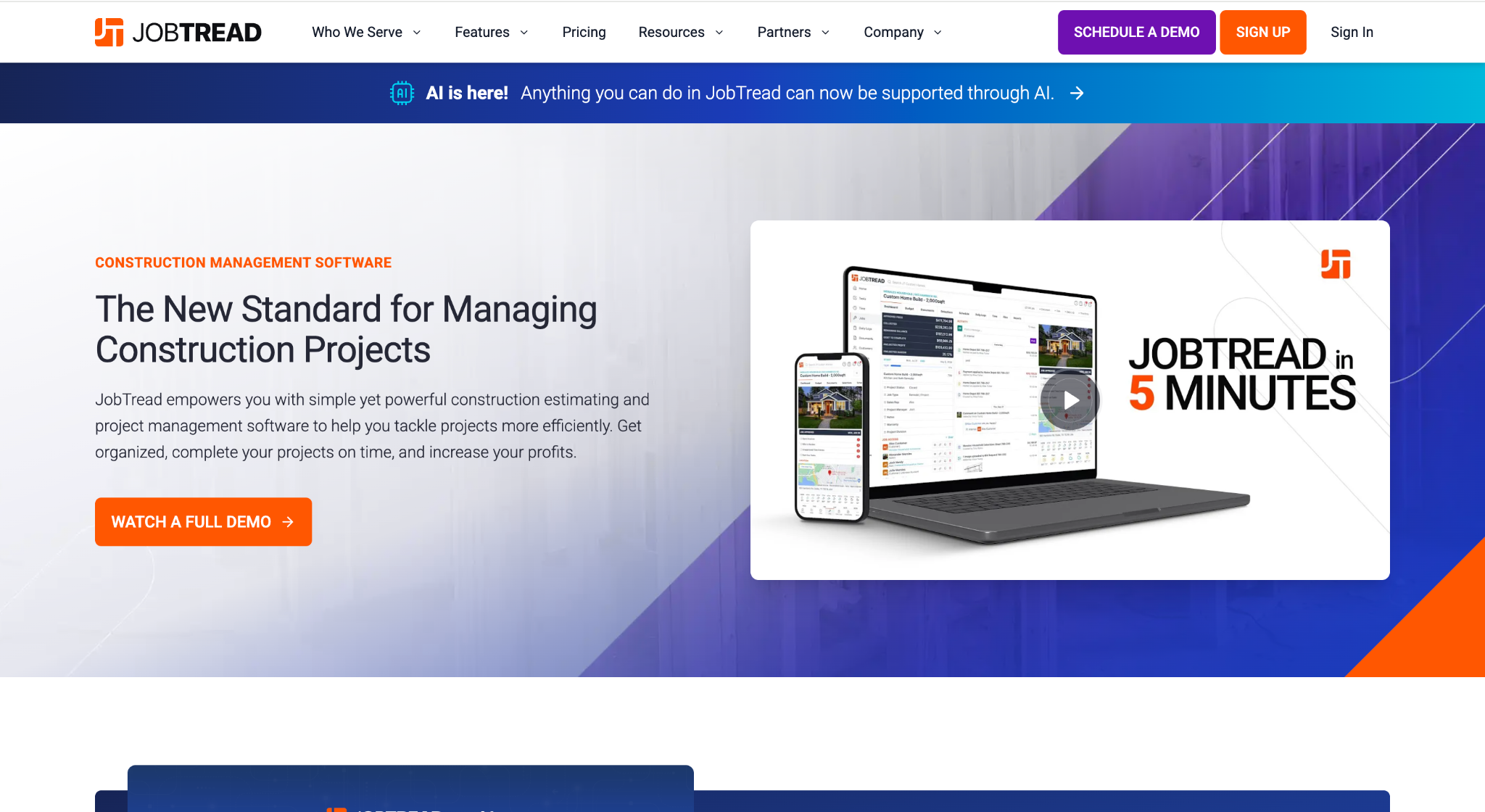
Image source: jobtread.com
JobTread is end-to-end construction management software with a budget-first approach, and it may do well for job-based businesses that want their sales numbers tied to job budgets from day one. The platform serves builders, remodelers, and specialty contractors of any trade.
The sales and estimating side starts with a construction CRM that tracks leads, customers, vendors, subcontractors, and jobs in one place.
Estimates are built from a cost catalog, with formulas that calculate quantities, costs, and prices as the budget takes shape. Proposals convert into contracts with e-signatures, so the handoff from quote to signed deal happens without switching tools.
Custom views and reporting give visibility into the sales pipeline, job progress, and team performance. A customer portal lets clients follow their project, communicate with the team, and pay invoices online, which keeps cash moving after the deal closes.
On the integration side, JobTread connects with QuickBooks Online, Stripe, Slack, and Zapier.
6. Pipedrive
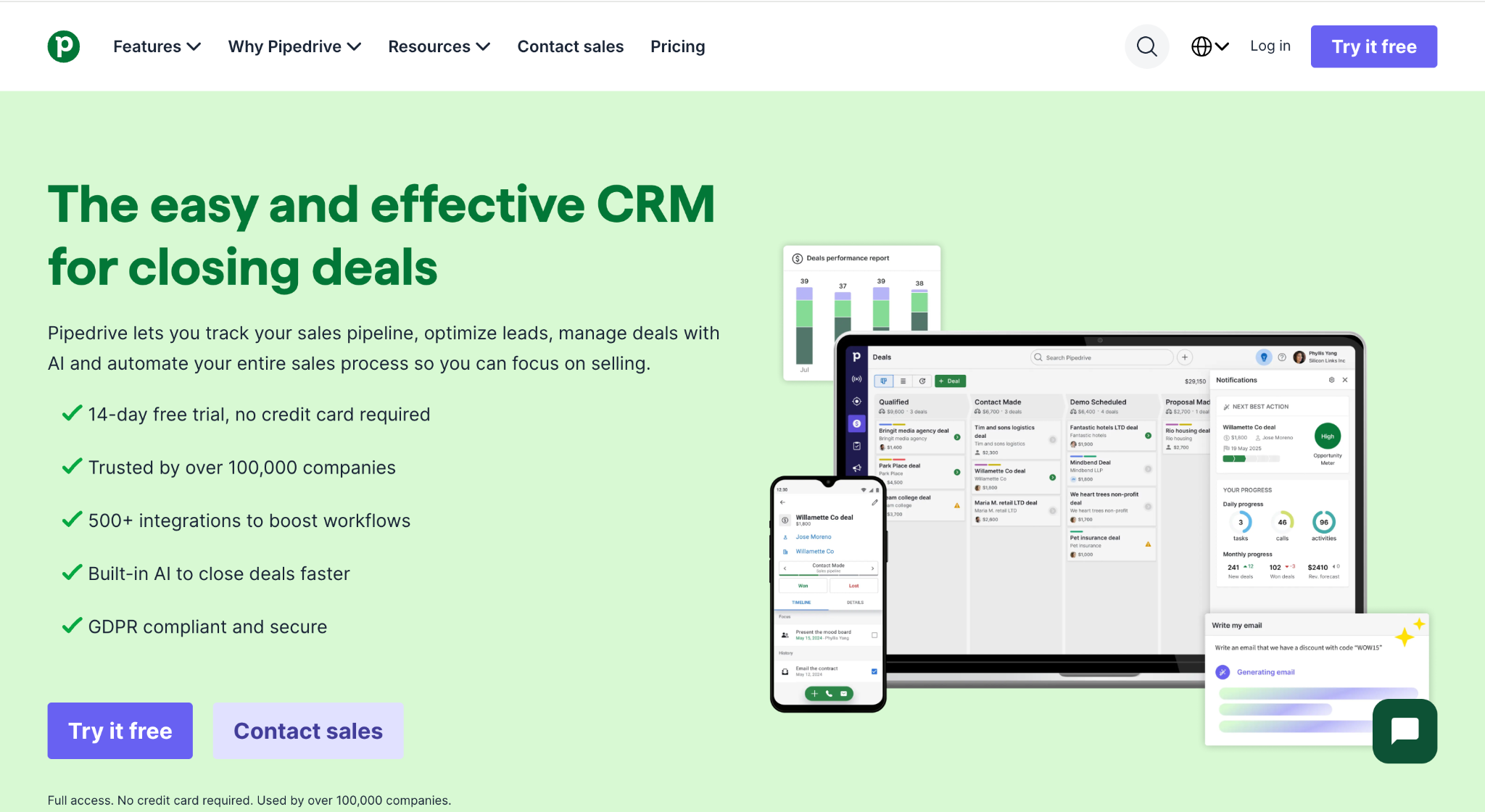
Image source: pipedrive.com
Pipedrive is a general-purpose sales CRM, not a construction tool, but it is a useful option for small contractor sales teams that want a simple visual sales pipeline without industry-specific extras.
The core of the platform is a drag-and-drop pipeline that you customize to your own sales process. Each deal carries its value, win probability, and expected close date, and colored cues flag deals going cold so reps know what to tackle first.
Teams can run multiple pipelines side by side, which works for contractors selling different service lines or covering separate territories.
Email sync logs conversations against the right deal automatically, keeping the communication history complete without manual entry.
Automation handles repetitive steps, from scheduling follow-up activities to sending emails when a deal changes stage.
The Insights feature turns pipeline data into real-time dashboards for sales forecasting and team performance.
Pipedrive connects with over 500 apps, including Gmail, Zoom, and Zapier, and offers several plan tiers so teams can start small and add capability as they grow.
7. HubSpot

Image source: hubspot.com
HubSpot Sales Hub is a general CRM rather than a construction platform, and it is a good fit for contractors who want their sales pipeline and marketing tools in the same ecosystem.
Deals move through a visual pipeline with real-time progress tracking, and the underlying CRM keeps every contact, company, and interaction in one unified record.
Email tracking notifies reps the moment a prospect opens a message or clicks a link, which makes follow-up timing sharper.
Sequences automate outreach with personalized email follow-ups, and the meetings tool removes the scheduling back-and-forth that stalls early conversations.
Reporting covers deal velocity, revenue, and sales activity, with forecasting tools for pipeline planning.
Gmail and Outlook integrations log communication automatically, and the tie-in with HubSpot's marketing side means lead capture, nurturing, and sales tracking share the same customer data.
Benefits of Using Sales Management Software in Construction
The most immediate benefit is that nothing gets lost. When every lead, bid date, and follow-up lives in one system, construction sales teams stop losing work to missed deadlines and forgotten callbacks.
Companies that improve lead management this way typically see more bids go out the door with the same headcount.
Visibility comes next. A sales pipeline gives owners and sales managers a live picture of what is coming, which makes resource allocation far less of a guessing game.
If the pipeline shows three large projects likely to close next quarter, you can plan crews, materials, and cash flow before the contracts land.
Reporting turns activity into insight. Win/loss data shows which project types, lead sources, and estimators drive the best results, so decisions about where to bid rest on numbers instead of gut feel.
Lastly, integration means smooth data flow from sales to execution.
When the CRM connects to your accounting and project management systems, a won bid becomes an active job without retyping a single contact or figure, and the office can track project progress from day one.
How to Choose the Right Construction Sales Management Software
Start with your sales motion.
Commercial contractors that live and die by bid deadlines need bid calendars and estimate tracking at the core of the tool, while residential firms selling homeowner by homeowner should weigh client portals and e-signature workflows more heavily.
The right tool matches how your team actually sells, not how a generic sales team operates.
Check integration capabilities before anything else on the feature list. The CRM has to talk to your existing systems, meaning your accounting tools, estimating software, and project management platform.
A tool that forces double entry between sales and financial tools will lose your team within a month.
Think about who has to use it every day. Estimators and field reps will only adopt a system that saves them time, so favor platforms with strong mobile access and simple data entry over ones with the longest feature list.
Match the tool to your size. Small crews often do fine with a lightweight pipeline, while medium construction companies juggling dozens of open bids need deeper reporting, team goals, and permissions.
Construction firms should also ask vendors for references from their own trade, since a tool proven in roofing may work differently for electrical or concrete work.
Take Your Sales Pipeline to the Next Level with Followup CRM
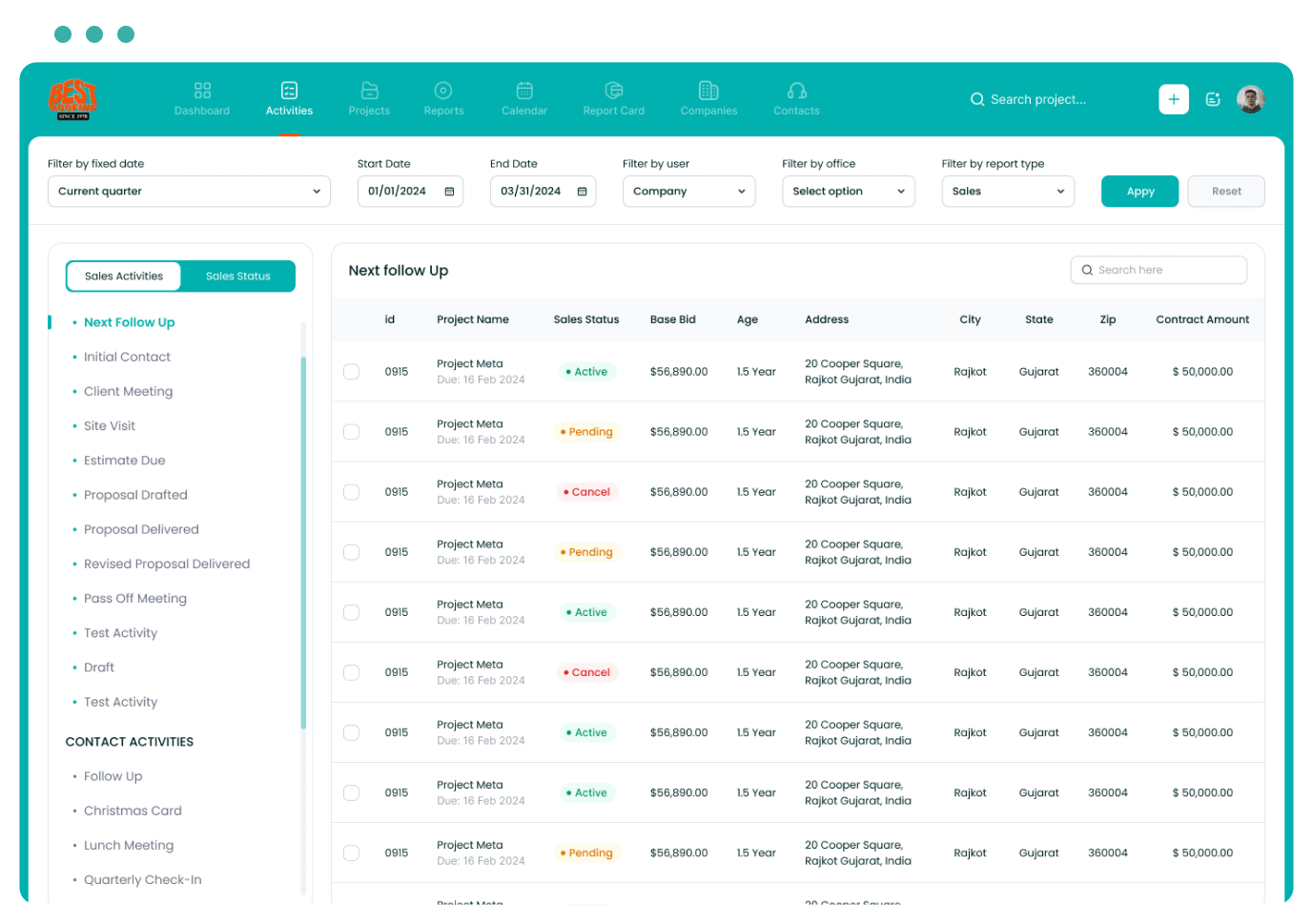
Reading about features is one thing. Watching your own sales process run through a construction CRM is another.
Followup CRM was built for the construction industry around one problem: contractors losing winnable work because sales management lived in spreadsheets.
Every part of the platform serves that problem. Leads come in from any source and land in a pipeline built for bid-driven sales. The digital bid calendar keeps every due date in front of the team.
Dashboards show pipeline value, close rates, and sales performance in real time, so sales managers coach from live numbers instead of last month's spreadsheet.
Proposals go out branded and come back signed electronically, and follow-up reminders keep deals moving during the long stretches between estimate and award.
That focus on construction sales management, rather than generic contact storage, is why more than 1,000 construction professionals run their pipeline on Followup CRM.
FAQs About Construction Sales Management Software
What is the best construction CRM software?
The best construction CRM software depends on how your company sells, but for commercial and specialty trade contractors running bid-driven sales, Followup CRM is the strongest fit.
It was built by contractors specifically for lead and bid tracking, and it pairs a digital bid calendar with customizable dashboards and proposal tools so the whole sales cycle lives in a single platform.
What is the difference between construction customer relationship management software and project management software?
A construction CRM manages everything before the contract is signed: leads, bids, proposals, and follow-ups.
Project management software takes over afterward, helping teams manage projects, schedules, and budgets through delivery. The two work best connected.
Followup CRM integrates with project management and ERP systems like Procore and Sage, so won bids flow into construction projects without duplicate data entry.
Can construction sales software work for teams on multiple job sites?
Yes. A cloud-based CRM keeps construction teams working from the same pipeline, whether they are in the office or spread over multiple job sites.
With Followup CRM, salespeople and estimators log activity and check bid deadlines from anywhere, and Voice AI lets them speak an update instead of typing it after a site visit.
How does a CRM improve sales performance in construction?
It removes the two biggest sales killers: missed deadlines and forgotten follow-ups. Beyond that, win/loss reporting shows which lead sources and project types actually close, so leadership can steer effort toward the best opportunities.
Followup CRM adds team goals and activity reports on top, tying individual effort to overall business performance.
Is a construction CRM worth it for a small contractor?
Small teams often feel the pain of scattered sales data first, since one missed bid date hurts a small contractor more than a large one. A construction CRM pays for itself when it recovers even a handful of bids that would have slipped.
Followup CRM is a practical starting point because it focuses on managing customer relationships and bids rather than burying a small team in features it will not use.
The CRM Built For Construction Companies
No more disorganized data. Track your leads, bids, and customers all in one place.
Seamless Integration with:
✅ Foundation ✅ Viewpoint ✅ Sage and more