


TL;DR
- Unlike a ballpark estimate, a plumbing bid is a firm price for a defined scope, so the numbers behind it have to hold up.
- A clear list of what is included and what is not protects your margin and prevents disputes later.
- Count every fitting and pipe run from the drawings before you touch labor rates or supplier quotes.
- Insurance, vehicles, office staff, and training all belong in the price, not just materials and labor.
- Followup CRM gives plumbing contractors a bid calendar, pipeline view, and proposal tools built for contractors.
What Is a Plumbing Bid?
A plumbing bid is a formal, written offer to complete a defined scope of plumbing work for a stated price.
It tells the client or general contractor (GC) exactly what you will install, what materials you will use, how long the work will take, and what they will pay.
Once the client accepts it, the bid becomes the basis of the contract.
That makes it different from an estimate. An estimate gives the client an approximate cost based on the information available and may change when the scope becomes clearer. A bid presents a stated price for a defined scope, usually in response to a formal request.
A price quote states the amount a customer will pay and is more common for smaller residential work, such as a water heater replacement, that does not require a formal bidding process.
Service calls rarely involve a bid at all. The plumber diagnoses the problem, quotes a price on the spot, and does the work.
Bids become the norm as jobs get larger, especially on commercial projects where several plumbing contractors are competing for the same package and the GC needs comparable proposals for the same scope.
Different Types of Plumbing Projects
The bidding process changes with the type of plumbing work, so it helps to know which lane a job falls into before you start.
- Residential remodels and additions: A homeowner or small builder asks for a price after a site visit. The scope is usually simple, and a two-page proposal is enough.
- Commercial new construction: A GC issues plans and specs and invites plumbing subcontractors to bid a package. These are the large jobs where accuracy matters most, because the scope is fixed and change orders are scrutinized.
- Tenant improvements and commercial repairs: Shorter timelines, existing conditions that are not always documented, and a heavier reliance on the site walk.
- Public and institutional work: Government agencies, school districts, and hospitals post formal invitations to bid, often with prevailing wage requirements and mandatory pre-bid meetings.
Many of these opportunities are listed on public and private construction bid boards, which are worth checking on a regular schedule.
Each type requires a slightly different approach, but the core work of reading the scope, counting the materials, and pricing the labor stays the same.
What a Plumbing Bid Should Include
A GC reviewing five plumbing bids wants to compare them quickly. A bid that is missing a section or buries the price on page four gets set aside. Here is what a complete plumbing bid contains.
- Cover page: Company name, license number, contact details, the project name, the client's name, and the submission date.
- Scope of work: A plain-language description of every system you will install or modify. State exclusions just as clearly. If excavation, fire sprinklers, or gas piping are not in your price, say so.
- Materials list: Pipe types, fixture schedules, supplies, and any owner-specified brands, with quantities taken from the completed takeoff.
- Labor breakdown: Estimated hours by task or phase, with your labor rate applied. Some clients want the total only, but having the detail on hand makes questions easier to answer.
- Timeline: Start date, key milestones, and expected completion, tied to the GC's schedule if you have it.
- Payment terms: Deposit, progress payments, and final payment triggers.
- Qualifications: Master plumber licenses, certifications, proof of insurance, and references from similar projects.
- Terms and conditions: Warranty period, change order process, and bid validity date.
Keep the whole package professional and easy to read. It is often the first piece of your work a client sees.
How to Bid a Plumbing Job in Six Steps
The steps below apply to most commercial and larger residential bids. Service work and small repairs can skip straight to pricing, but anything with drawings and a written scope deserves the full process.
1. Review the Specs and Drawings
Start with the documents. On commercial projects, the GC or owner sends a bid package that includes the plumbing specifications, the drawings, and an invitation to bid with a due date.
Read the specs before the drawings, because the specs define the materials, the standards, and the testing requirements that the drawings do not show.
Focus on the sections that affect your price the most: pipe materials by system, fixture schedules, insulation requirements, and any owner-specified brands. Note the submittal and inspection requirements too, since they add administrative labor to the job.
Then study the drawings. Confirm the number of floors, the location of risers, the routing of waste and vent lines, and how the plumbing coordinates with mechanical and electrical trades. Flag anything unclear and send your questions to the GC before the bid deadline.
A question asked now costs nothing. The same question discovered mid-project becomes a change order fight.
Gather all the information in one folder per bid so that anyone on your team can pick up the file and fully understand the job.
2. Walk the Job Site
Drawings never show everything. A site visit tells you what the paper cannot: access for deliveries, staging space, the condition of existing systems on a remodel, and how far the water and sewer connections sit from the building.
On tenant improvement and repair work, the site walk matters even more. Existing pipe may not match the as-built drawings, ceilings may be tighter than expected, and demolition may reveal problems that add days to the schedule.
Take photos, measure long runs, and note where specialized equipment such as trenchers or lifts will be needed.
If the owner holds a mandatory pre-bid meeting, attend it. Beyond the site conditions, you will hear the questions other plumbers ask, which often reveal ambiguities in the scope that need to be reflected in the bid.
Write up your notes the same day while the details are fresh, and attach them to the bid file. When a job comes back six months later as a revised scope, those notes save you a second trip.
3. Run the Quantity Takeoff
The takeoff is a complete count of the materials required for the job, pulled directly from the drawings. It is the foundation of the price, and rushing it is the most common way plumbing contractors lose margin.
Go system by system: domestic water, sanitary waste and vent, storm, gas, and any specialty systems such as medical gas or acid waste.
For each one, count fixtures, measure pipe runs by size and material, and list every fitting, valve, hanger, and insulation section. Include rough-in and finish materials separately, since they arrive at different points in the schedule.
Many plumbers still run takeoffs in a spreadsheet, and that works for smaller jobs. On large commercial projects, digital takeoff tools can save time, speed up the counting, and reduce missed items.
Either way, the output is the same: a materials list with quantities you can send to suppliers for current pricing.
Do not price from last quarter's quotes. Factor possible price changes into any plumbing job that will not begin for several months. Ask suppliers for quotes with a validity date that covers your expected start.
4. Price Labor, Materials, and Equipment Costs
With the takeoff done, you can calculate the direct costs of the job.
Labor comes first. Estimate how much time each phase will require, then apply your fully loaded labor rate. That rate is not just the hourly rate you pay a journeyman.
It includes payroll taxes, workers' compensation, benefits, and paid time off. Pricing at the bare wage is how a bid that looks profitable on paper ends up losing money.
Material costs come straight from the supplier quotes on your takeoff. Add freight, sales tax, and a small allowance for waste and breakage.
Equipment costs are easy to overlook. Include lifts, trenchers, pipe threaders, testing tools, and other specialized equipment, whether it is rented or company-owned.
Include permit fees and inspection charges here as well, since they vary by jurisdiction and are easy to overlook.
If any part of the work goes to subcontractors, such as excavation or core drilling, get their quotes in writing before you finalize your number.
Add all of it together, and you have the direct cost of the job. That is not yet the price.
5. Add Overhead Costs, Contingency, and Profit Margin
Direct costs only cover what the job consumes. Your plumbing business also has to cover the costs of existing: office rent, vehicles, fuel, insurance, software, estimator salaries, training, and marketing.
These business expenses are your overhead, and every bid has to carry its share.
Calculate an overhead recovery rate from the plumbing business’s financial records and apply it consistently to each bid. The method may be based on direct labor, total direct costs, revenue, or another cost base that matches the company’s accounting practices.
The goal is for completed jobs to cover their share of office rent, vehicles, insurance, software, training, and other business expenses.
Contingency comes next. It is a buffer for the unknowns you identified during the site walk and the spec review: tight access, unclear existing conditions, or a schedule that depends on other trades finishing on time. The riskier the job, the larger the buffer.
Finally, apply the markup needed to reach the target profit margin. This is the amount left after every cost is paid, and it is the reason the company exists. Set it deliberately rather than shaving it to win.
A bid that arrives at the right price with a defensible margin is worth more than three underpriced wins.
6. Assemble and Submit the Proposal
The final step turns your numbers into the document the client reads. Follow the structure covered earlier: cover page, scope with exclusions, materials, labor, timeline, payment terms, qualifications, and terms.
Write the scope in plain language. The person reviewing your bid may be a project manager rather than a plumber, and a clear description of what is and is not included makes their comparison easier.
If the GC provided a bid form, use it exactly as issued. Some owners reject bids that arrive in a different format.
Proofread the numbers twice. A misplaced decimal in the labor total is the kind of error that costs a job or, worse, wins one you cannot deliver.
Then submit through the channel the GC specified, whether that is a bid portal, email, or sealed envelope, and confirm receipt. The habits that make a construction proposal win apply just as well to plumbing packages.
Submission is not the end. Log the bid date, the follow-up date, and the decision date somewhere your whole team can see. Then follow up.
Common Plumbing Bid Mistakes
Most lost bids trace back to a handful of avoidable errors. The list below covers the ones that show up most often in plumbing companies that bid regularly.
- Bidding everything: Every bid costs estimators hours. Chasing jobs outside your expertise, outside your service area, or against a dozen other plumbers drains the office and lowers your win rate. Pick the projects that match what you do well.
- Pricing from stale numbers: Supplier quotes from the last job, labor rates that have not been updated for the year, and overhead percentages from two years ago all lead to a price that is wrong before it is submitted.
- Leaving the scope vague: A bid that says "plumbing per plans" invites disputes. Spell out inclusions and exclusions so both sides know what the price covers.
- Missing the due date: A late bid is a rejected bid. When multiple GCs are bidding the same project, you may have several due dates for one job, and it helps to track opportunities with multiple bidders in one place rather than in scattered emails.
- Going quiet after submission: Plenty of bids are lost because the contractor never called to ask where things stood. Follow-up is part of the bid.
Plumbing Estimating vs. Bidding Software
Two categories of software support the bidding process, and they do different things.
Plumbing estimating software handles the numbers. It runs digital takeoffs from the drawings, applies material and labor pricing, and produces the cost side of the bid. Tools in this category replace the spreadsheet for steps three through five above.
Bidding software, or bid tracking software, handles everything around the numbers.
It records every invitation to bid, the due date, the GC contacts, the proposal you sent, and every follow-up call, then shows leadership which bids are open, which were won, and why the rest were lost.
This is where a construction CRM (customer relationship management) system such as Followup CRM fits.
It was built by contractors for the specialty trades, plumbing included, and its user-friendly interface is designed around bids and due dates rather than generic sales fields.
Key Features
- Digital bid calendar and bid log: Every open plumbing bid sits on a shared calendar with its due date, so the team never misses a submission. The bid log keeps the history of every opportunity in one record.
- Lead and pipeline tracking: Leads from GCs, bid boards, and referrals move through defined stages from first contact to award.
- Proposal generator and e-sign: Teams can build branded proposals from the opportunity record and send them for electronic signature through the proposal generator.
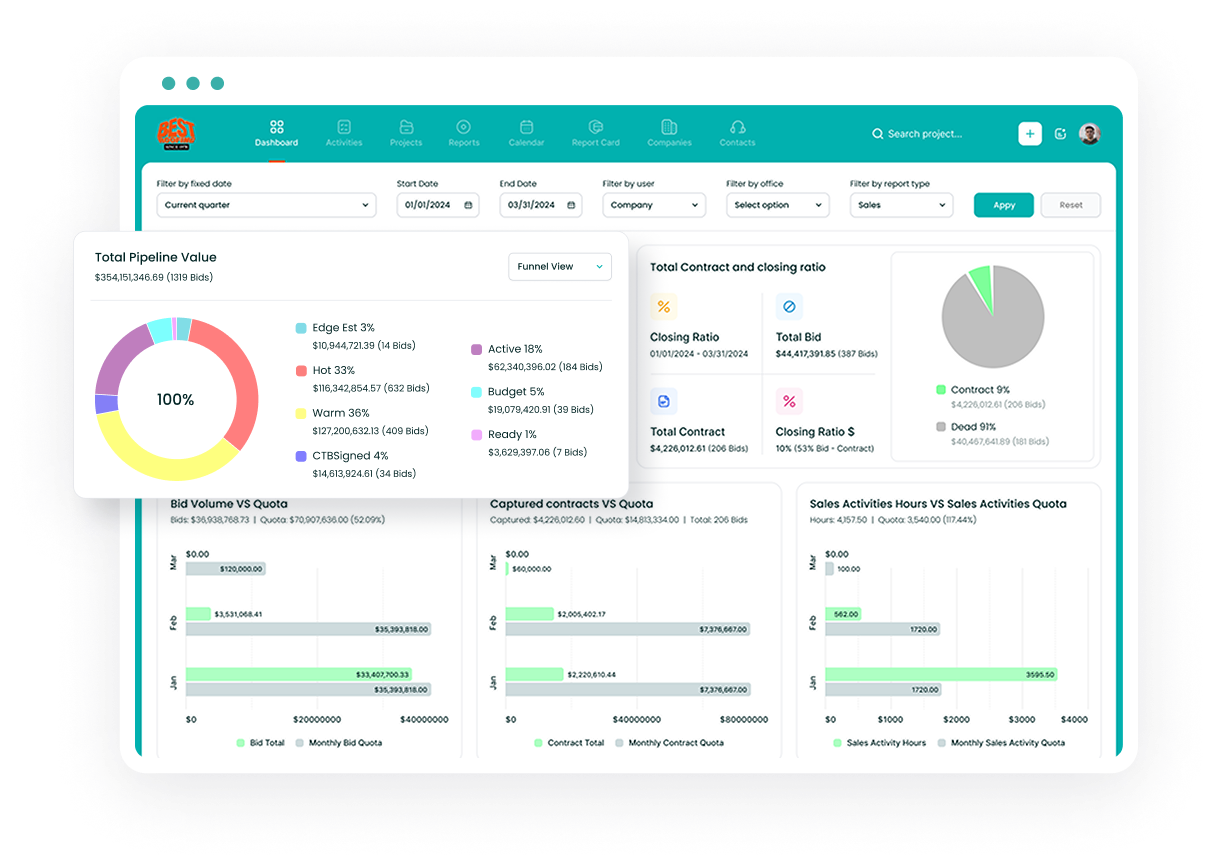
- Reporting tools: Sales and estimating dashboards show win rates, pipeline value, and team performance in real time.
- Email logging: Outlook and Gmail integration attaches every bid-related email to the right project automatically.
- Integrations: Connects with estimating tools such as The Estimating Edge and STACK, accounting and ERP (enterprise resource planning) systems such as Foundation, Sage, and Vista, and project management platforms such as Procore.
Used together, estimating software calculates the price, and Followup CRM makes sure the bid gets submitted, followed up, and reported on.
Keep Plumbing Bids on Schedule With Followup CRM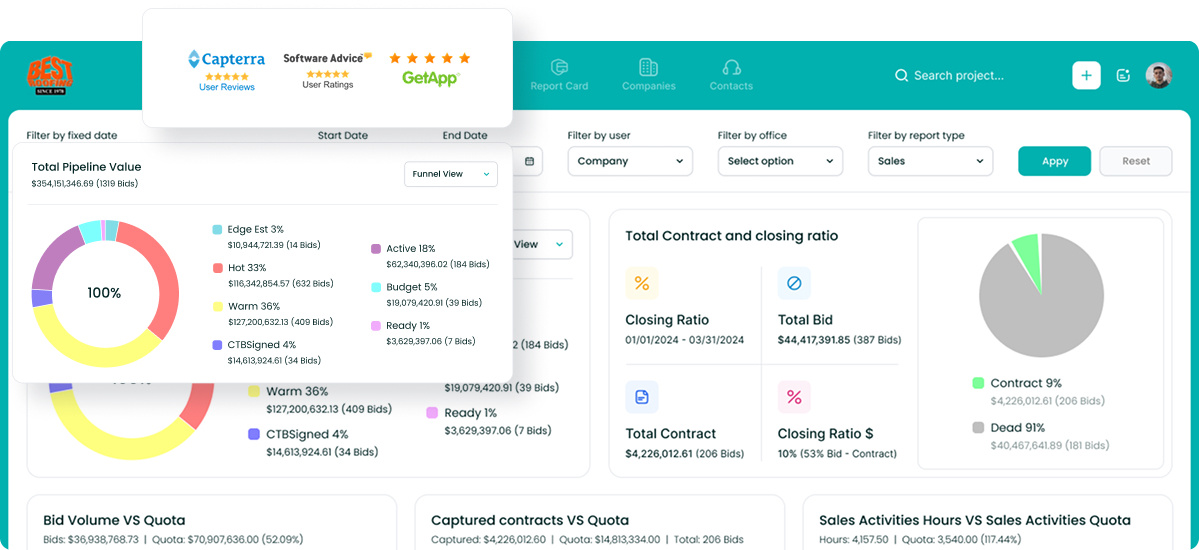
When bid tracking is split between spreadsheets, shared inboxes, and personal notes, contractors may lose opportunities because a due date passes unnoticed or no one contacts the GC after submission.
Followup CRM was built to fix that for specialty contractors. Every invitation to bid becomes a record with its due date on the bid calendar, its contacts, its documents, and its follow-up tasks. Estimators see what is due this week.
Owners see how many bids are open, how many were won, and where the pipeline is thin. Proposals go out from the same record and come back signed.
You can see how it works on your own bids rather than on a generic sales demo.
Bring a current project, walk through how the bid calendar, pipeline, and reporting tools handle it, and ask the questions that matter to a plumbing business. Then decide whether it beats the spreadsheet.
Request a live demo of Followup CRM and see how plumbing contractors keep every bid on schedule.
FAQs About Plumbing Bid
How to bid on a plumbing job?
Start with the specs and drawings, walk the job site, and run a quantity takeoff of every fixture, pipe run, and fitting.
Price labor at your fully loaded rate, add material and equipment costs from current supplier quotes, then add overhead, contingency, and profit margin.
Assemble the proposal with a clear scope and exclusions, submit it the way the client asked, and follow up after the due date.
What is the best bidding software for plumbers?
For tracking bids, the best fit for plumbing contractors is a construction CRM built for the trades.
Followup CRM keeps every invitation to bid on a shared bid calendar, moves it through a pipeline, generates the proposal, and reports on wins and losses, and it pairs with estimating tools for the pricing side.
What are the four types of bids?
There is no single industry-standard list, but bids are most often grouped by how they are solicited: open bids that anyone can submit, sealed bids opened at a set time, invited bids sent to a short list of contractors, and negotiated bids worked out with one contractor.
Commercial plumbing work usually falls into the invited or sealed category, which is why tracking due dates matters so much.
The CRM Built For Construction Companies
No more disorganized data. Track your leads, bids, and customers all in one place.
Seamless Integration with:
✅ Foundation ✅ Viewpoint ✅ Sage and more