In our Followup CRM 101: Automation Essentials for Everyday Efficiency webinar, we explored how construction teams can use automation to reduce manual work, improve consistency, and keep every opportunity moving forward. You can watch the full webinar here: Followup CRM 101: Automation Essentials for Everyday Efficiency or keep reading to get the full break down.
Why Construction Sales Teams Need Automation
Construction sales processes involve dozens of small but important actions. Your team may need to:
- Follow up on new leads
- Check in after submitting a bid
- Schedule calls and site visits
- Notify team members when an opportunity changes
- Send recurring emails
- Update project information
- Keep customers informed
- Make sure overdue tasks receive attention
Each task may only take a few minutes. Across hundreds of leads, bids, customers, and projects, however, that time quickly adds up.
The larger problem is inconsistency. When every salesperson manages follow-up differently, it becomes difficult to know whether every opportunity is receiving the attention it needs.
Automation creates a standardized process. Instead of relying on each person to remember every next step, your CRM helps prompt or complete the appropriate action at the right time.
What Is Construction CRM Automation?
Construction CRM automation uses predefined rules to trigger actions based on activity inside your CRM.
A simple automation follows this structure:
When something happens, the CRM automatically performs a related action.
For example:
- When a new lead is created, assign it to a salesperson.
- When a bid is submitted, schedule a follow-up activity.
- When an opportunity becomes overdue, notify the responsible team member.
- When a project reaches a certain stage, send a templated email.
- When information changes, update another relevant field.
- Assigning the lead to a salesperson
- Creating an introductory call task
- Setting a follow-up deadline
- Sending an internal notification
- Starting a structured outreach sequence
These workflows help construction teams maintain momentum without manually recreating the same tasks for every opportunity.
1. Automate New Lead Follow-Up
New leads are most valuable when your team responds quickly. Research from Harvard Business Review found that companies contacting a new lead within one hour were nearly seven times more likely to qualify that lead than companies that waited even one hour longer. That's why having automated lead notifications, reminders, and follow-up workflows isn't just convenient—it can have a measurable impact on revenue.
Without a clear process, a website inquiry, referral, phone call, or imported lead may sit untouched while everyone assumes someone else is handling it.
A construction CRM can automatically create the next step as soon as the lead enters the system. Depending on your process, that could include:
This gives every new opportunity a consistent starting point and makes ownership clear from the beginning.
2. Create a Repeatable Bid Follow-Up Process
Submitting a bid is not the end of the sales process.
General contractors, property owners, and other decision-makers may be reviewing several proposals at once. Without consistent follow-up, your company can lose visibility even when your bid is competitive.
Automation allows your team to create a repeatable process after every bid submission.
For example, your workflow might:
- Create a follow-up task two days after submission.
- Schedule another check-in several days later.
- Notify the salesperson as the expected decision date approaches.
- Escalate the opportunity if no activity has been completed.
- Stop the sequence when the bid is won, lost, or placed on hold.
This keeps opportunities active while still allowing your team to personalize each conversation.
3. Use Automated Tasks and Reminders
Many construction sales activities do not need to happen immediately, but they still need to happen.
A prospect may ask you to check back next month. A customer may need a call after an upcoming budget meeting. A salesperson may need to reconnect after a project is redesigned or rebid.
When these commitments are stored only in someone’s memory or inbox, they can easily be forgotten.
Automated tasks and reminders help your team organize future actions by:
- Creating tasks based on project stages
- Assigning activities to specific users
- Establishing due dates automatically
- Flagging overdue activities
- Keeping upcoming work visible
- Recording completed follow-up in the CRM
This creates accountability without requiring managers to manually check every opportunity.
4. Automate Email Without Losing the Personal Touch
Your team probably sends many of the same types of emails repeatedly:
- Initial introductions
- Bid follow-ups
- Meeting confirmations
- Proposal reminders
- Status updates
- Re-engagement messages
Email templates and automated sequences can save time while keeping communication consistent.
The goal is not to make every customer interaction feel robotic. Instead, automation handles the repetitive structure so your team has more time to personalize the parts that matter and show up reliably.
A salesperson can start with an approved template, add project-specific context, and send a thoughtful message without writing every email from scratch.
5. Trigger Actions When an Opportunity Changes
Construction opportunities move through multiple stages before ever becoming active projects.
A typical sales pipeline might include:
- New lead
- Contacted
- Qualified
- Estimating
- Bid submitted
- Follow-up
- Negotiation
- Won or lost
Each stage may require a different set of actions.
With automation, moving an opportunity into a new stage can trigger the next part of your sales process. That might mean creating an activity, assigning a user, updating a field, sending a notification, or beginning a new follow-up sequence.
This helps your CRM do more than store important information. It actively supports the way your team sells.
6. Improve Communication Across Sales, Estimating, and Operations
Construction sales rarely happen within a single department.
Salespeople, estimators, project managers, owners, and administrative team members may all contribute to the customer journey. When information is spread across emails, spreadsheets, text messages, and separate systems, handoffs become difficult.
Automation can help connect those handoffs.
For example, when a project is marked as won, the CRM could:
- Notify the appropriate team members
- Create onboarding or handoff tasks
- Update relevant project fields
- Assign responsibility for the next stage
- Record the change for reporting purposes
This reduces the need for someone to manually communicate every update and gives the team a more reliable process.
The Benefits of CRM Automation for Contractors
Automation is not just about completing tasks faster. It can improve the overall quality of your sales process.
Fewer opportunities fall through the cracks
Every lead and bid can receive a defined next step rather than remaining untouched until someone remembers it.
Your team follows a consistent process
Automations create shared expectations for how leads are assigned; bids are followed up on, and customers are contacted.
Salespeople spend less time on administrative work
Your team can focus more of its attention on conversations, relationships, estimates, and revenue-generating activities.
Managers gain greater visibility
When tasks, emails, and pipeline updates are recorded in one system, leaders can see what has happened and what still needs attention.
Your process becomes easier to scale
A repeatable workflow makes it easier to onboard new employees and handle additional opportunities without adding the same amount of administrative work.
Start Small With Construction CRM Automation
You do not need to automate your entire sales process at once.
Start with one repetitive process that causes frustration or frequently gets missed. A good first workflow might be:
- Assigning new leads
- Creating bid follow-up tasks
- Sending internal reminders
- Scheduling recurring customer check-ins
- Notifying managers about overdue opportunities
Once that process is working effectively, you can gradually introduce additional automations.
It is also important to review your workflows periodically. Your sales process will evolve, and your automations should evolve with it.
Automation Should Support Your Team—not Replace It
Strong construction sales still depend on human relationships.
Customers want to work with companies that communicate clearly, understand their needs, and follow through on commitments. Automation supports those relationships by making sure your team has the time and information needed to serve customers well.
The right system handles repetitive work in the background while your people focus on building trust and winning projects.
See Construction CRM Automation in Action
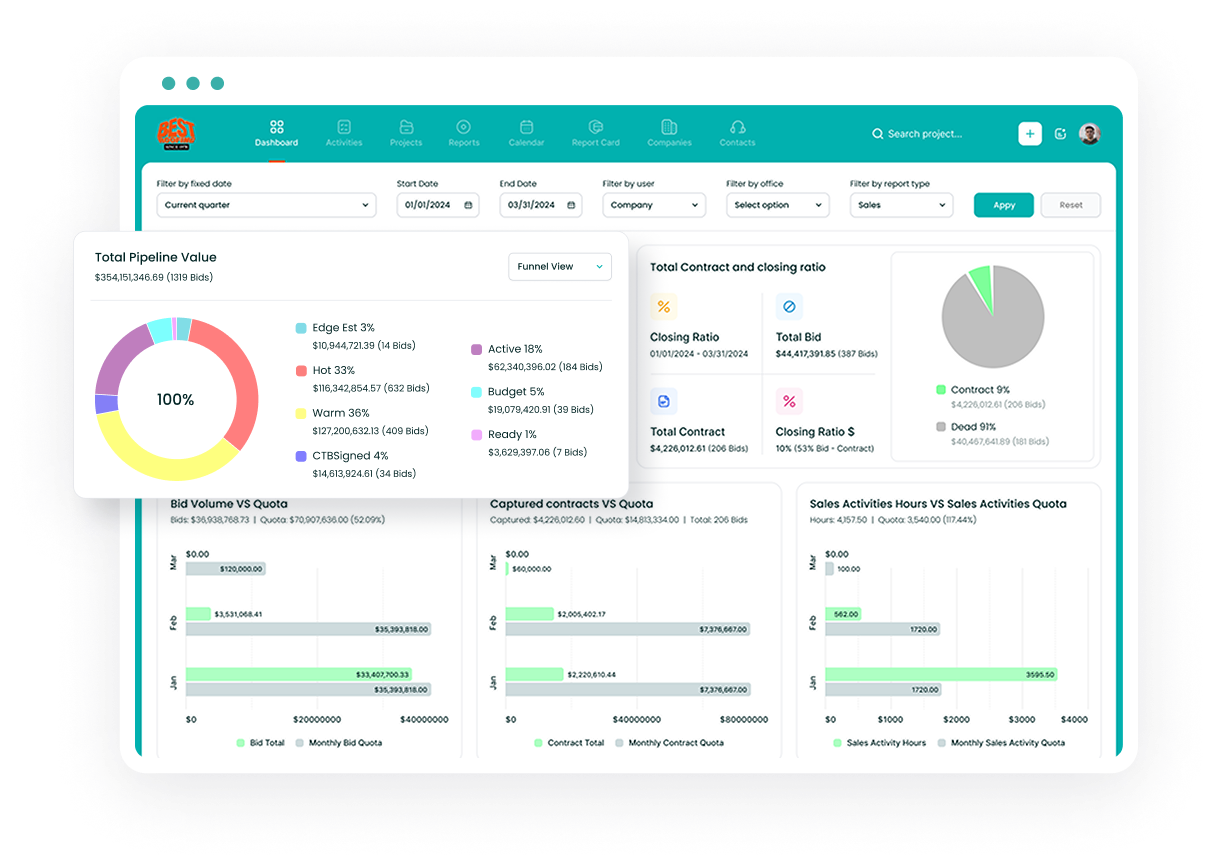
Followup CRM helps commercial contractors, specialty contractors, and subcontractors organize their pipelines, manage follow-up, automate repetitive sales activities, and gain greater visibility into every opportunity.
Instead of relying on disconnected spreadsheets, inboxes, and individual reminders, your team can manage its sales process from one centralized construction CRM.
Ready to see how Followup CRM can help your team save time and win more work?



.png)


.png)