


TL;DR
- Construction management refers to a service that manages a project's schedule, cost, quality, safety, and scope on behalf of the owner.
- A construction manager coordinates people, budgets, and timelines so the project finishes on time and within budget.
- Every project moves through pre-construction, procurement, construction, and closeout, and each phase has its own management demands.
- Modern construction teams use specialized software to manage everything from bidding to project delivery.
- Followup CRM helps commercial contractors manage the pre-award side of construction, from lead intake to bids, proposals, and follow-ups.
What Is Construction Management?
Construction management is a professional service that plans, coordinates, and controls a construction project from start to finish.
In an agency role, the construction manager represents the project owner and takes responsibility for the schedule, cost, quality, safety, scope, and function of the build.
In the construction industry, this professional service connects planning, design, procurement, construction, and closeout.
The goal is simple to state and hard to execute. Deliver the project on time, at or under budget, and to the standard the owner expects.
The discipline exists because construction projects involve many moving parts that rarely align on their own.
Owners fund the work, architects and engineers design it, general contractors execute it, and subcontractors handle specialized trades. Someone has to keep all of these parties working toward the same deadlines and the same budget. That is the construction manager's job.
Construction management applies to every project delivery method and every project size. A small commercial renovation needs the same fundamentals as a high-rise development. The difference is scale, not substance.
In each case, the work breaks down into planning the project, procuring materials and labor, supervising the build, and closing the project out. The sections below walk through each of these stages and the people responsible for them.
What Does a Construction Manager Do?
Construction managers plan, budget, coordinate, and supervise construction projects from the first estimate to the final inspection. The role blends office work and field work.
Construction managers typically split their working hours between a central office and an onsite field office, allowing them to oversee several projects and make day-to-day decisions regarding construction operations.
The core responsibilities fall into a few areas:
- Cost management: Preparing cost estimates, tracking every cost, working to manage costs against the budget, and anticipating scope changes that could affect the final number.
- Schedule management: Sequencing tasks in the right order, building work timetables, and keeping crews, deliveries, and inspections aligned so the team can meet deadlines.
- Quality control: Making sure the finished work meets design specifications and the owner's expectations.
- Safety management: Enforcing site safety regulations and keeping documentation in order.
- Contract administration: Creating contracts for subcontractors and suppliers, managing payments, and sourcing materials.
- Communication: Coordinating between owners, architects, engineers, subcontractors, and other professionals, including city inspectors or local officials.
On larger projects, a senior construction manager may oversee other managers responsible for different parts of the build.
Some construction managers also manage multiple projects at once, which puts a premium on leadership skills and the ability to report progress clearly to owners and executives.
The Phases of Construction Management
Every construction project moves through the same broad phases, and each one carries its own management demands.
Pre-Construction
This phase covers everything before ground breaks. The owner defines the scope, designers produce plans, and contractors handle cost estimation and submit bids.
For contractors, this is where projects are won or lost. Clear proposals and planned follow-ups help clients respond before the bidding process stalls.
Lead tracking, bid deadlines, proposals, and follow-ups all live here, and missed follow-ups in this phase cost more revenue than most field mistakes.
Procurement
Once the project is awarded, the team secures materials, equipment, labor, and other resources. Construction specialists select subcontractors, negotiate contracts, and lock in pricing before costs shift.
Construction
The build itself. The construction manager supervises daily work, monitors progress against the schedule, and resolves conflicts between trades.
Many teams use the critical path method to sequence tasks and spot which delays actually threaten the completion date and which ones the schedule can absorb.
Closeout
The final phase covers inspections, punch lists, documentation handover, and financial reconciliation. A clean closeout gets the team paid faster and protects the relationship for the next bid.
Each phase feeds the next. Weak pre-construction planning shows up as procurement delays, and procurement delays show up as schedule pressure in the field.
Construction Management vs. Project Management
The two terms overlap, and plenty of job postings use them interchangeably, but they are not the same discipline.
Project management is the broader field. A project manager can run a software rollout, a marketing campaign, or a merger. The core skills of scope, budget, schedule, and risk apply to any industry.
Construction management is project management applied to the built environment, with a layer of specialized knowledge on top.
A construction manager has to read drawings and specifications, understand construction methods, sequence trades, manage site safety, and make sure the project complies with legal requirements, permits, and inspections. Those demands do not exist in a generic project role.
The work also spans very different project types, from office buildings to infrastructure projects, and each brings its own regulations and logistics.
The practical difference often depends on the employer and contract. An agency construction manager represents the owner’s interests and coordinates the design team, engineers, and general contractor around the owner’s goals.
A project manager employed by a construction firm usually represents that firm and focuses on delivering its contracted scope.
For contractors, the distinction matters most when hiring. A strong generalist project manager without field experience will struggle to challenge a subcontractor's schedule claim or spot a sequencing problem on site.
Key Roles in a Construction Project
A capital project runs on a small set of core roles, and understanding how they fit together explains most of what happens on a job site.
- Owner: Commissions the project and funds it, either directly or through financing. The owner sets the scope, the budget ceiling, and the standard the finished work has to meet.
- Architect and engineers: Design the project. The architect shapes the building itself, while structural, mechanical, and civil engineering specialists handle everything from foundations to site drainage.
- General contractor: Oversees day-to-day operations, hires subcontractors, and manages the field work. The general contractor turns the design into a physical building.
- Subcontractors: Specialized trade firms that handle scopes like electrical, roofing, concrete, and glazing. On most commercial projects, subcontractors perform the majority of the actual labor.
- Construction manager: Represents the owner's interests at every stage, keeps the other parties aligned, and explains contracts, schedules, and cost implications to the owner in plain terms.
These professionals collaborate with each other and with other construction specialists throughout the entire project, and the quality of that collaboration usually decides the outcome.
Disputes between designers and builders, or between the general contractor and trades, lead to work delays, added costs, and unresolved change orders.
Construction Management Software and Its Role
Construction teams have steadily replaced paper, spreadsheets, and whiteboards with specialized software. These are systems that record construction activities and monitor projects against the budget, schedule, and assigned responsibilities.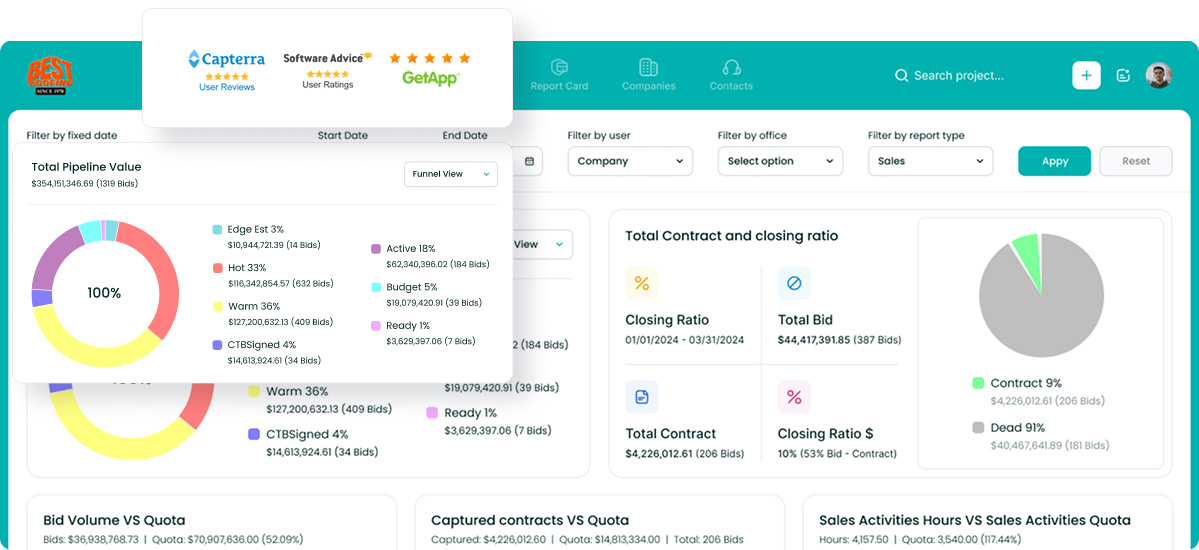
Estimating tools price the work, project management platforms run the build, and accounting systems track the money.
This is where Followup CRM fits. It is a construction customer relationship management (CRM) platform built for commercial and specialty trade contractors.
It tracks the full sales cycle from lead intake through bid, estimate, proposal, and close.
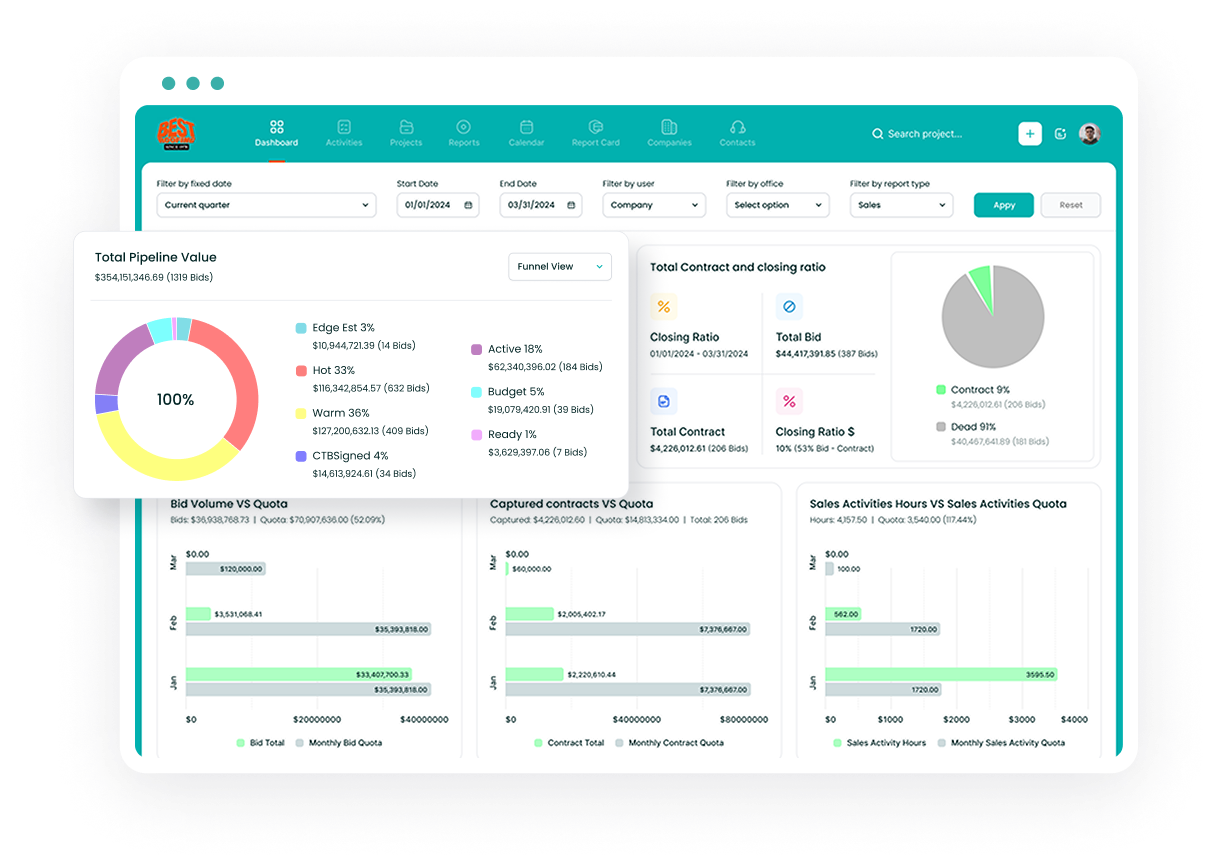
Teams manage leads and bids in one pipeline, keep bid deadlines on a shared digital bid calendar, build branded proposals with e-signature, and let dashboards report close rates and team performance in real time.
Followup CRM also connects the pre-award stage to project delivery.
Its Procore integration pushes a project to Procore Bid Board for estimating, syncs estimate fields back into Followup CRM as read-only data, and on award pushes the project name, contacts, and documents into a Procore Standard Project.
Sales wins the job in Followup CRM, and operations delivers it in Procore, with no re-entry of project data.
For the field and accounting side, Followup CRM integrates with ERP and accounting systems including Foundation, Sage, Vista, and QuickBooks.
Common Construction Management Challenges
Even well-run projects hit friction. These are the problems construction managers deal with most often:
- Work delays: Weather, late deliveries, permit holdups, and inspection backlogs all push the schedule. The manager's job is knowing which delays threaten the completion date and which ones the plan can absorb.
- Budget matters: Material prices shift between estimate and procurement, and change orders stack up quietly. Without live cost tracking, overruns surface when it is too late to correct them.
- Labor shortages: Skilled trades are in high demand, and thin crews stretch schedules. Managers increasingly plan sequencing around crew availability, not just task logic.
- Communication breakdowns: When technical information sits in one person's inbox, the field builds from outdated drawings. Centralized documentation and clear reporting lines prevent most of these failures.
- Project emergencies: Site accidents, failed inspections, and subcontractor defaults demand fast decisions. Strong managers have contingency plans before they need them.
- Losing track of the pipeline: For contractors, the most expensive challenge sits before the project starts. Bids that never get a follow-up call are revenue lost silently, and most teams cannot say how many bids died that way last year.
Win More Bids Before the Project Even Starts
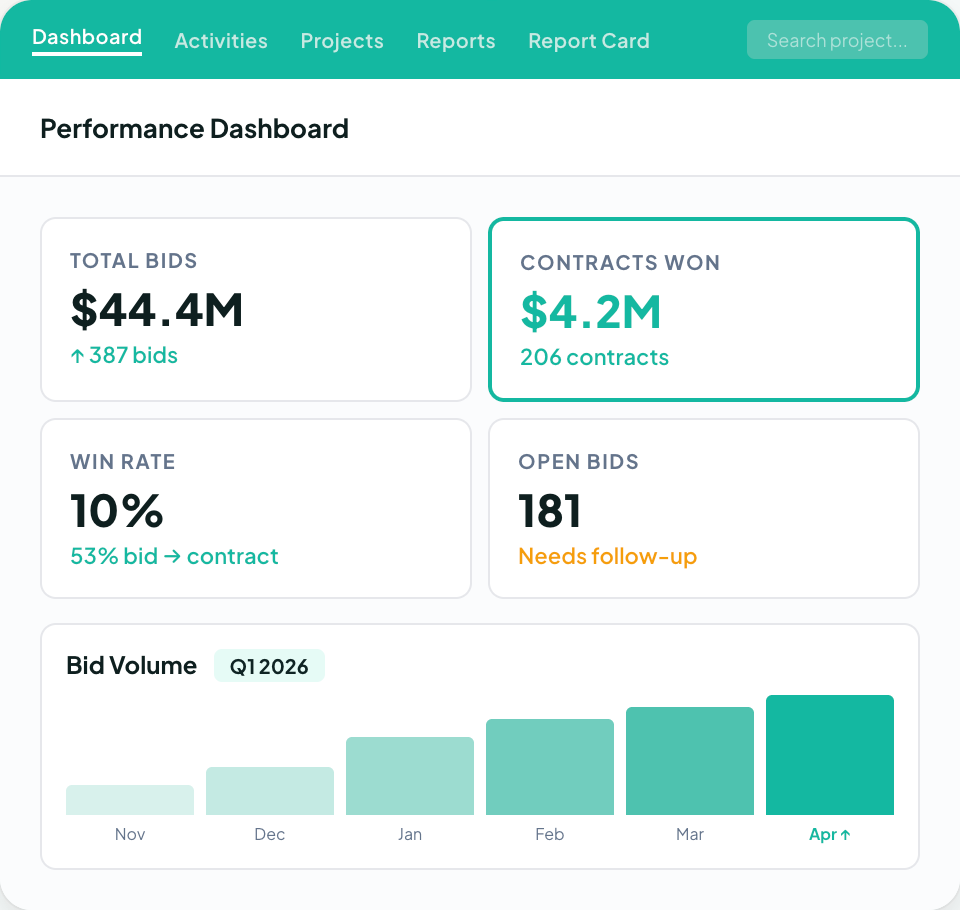
Construction management covers the full life of a project, but for contractors, the outcome is often decided before ground breaks. The bids you track, the proposals you send, and the follow-up calls you make in pre-construction determine which projects you get to manage at all.
Followup CRM gives commercial contractors one place to run that stage.
You can track every lead and bid in a single pipeline, watch deadlines on a digital bid calendar, build branded proposals with e-signature, and see close rates and team performance on real-time dashboards.
When you win the job, the Procore integration pushes the project data to your operations team with no re-entry.
Book a demo to see how Followup CRM fits your sales process.
FAQs About Construction Management
What education do construction managers need?
Construction managers typically need a bachelor's degree in construction management, building science, engineering, or a related field. Professional experience and certifications such as the Certified Construction Manager credential can also support career advancement.
What does construction management do?
Construction management controls a project’s cost, schedule, quality, safety, and scope. Construction managers coordinate owners, designers, contractors, and subcontractors from planning through closeout.
What are the main project delivery methods?
Common project delivery methods include design-bid-build, design-build, and construction manager at risk. Each method assigns contracts, responsibilities, and financial risk differently.
How is a construction manager different from a general contractor?
A construction manager usually represents the owner and oversees the budget, schedule, and coordination. A general contractor manages field operations, subcontractors, materials, and construction work.
How long is schooling for construction management?
Most construction managers hold a bachelor's degree in construction management, construction education, building science, or a related field, which takes four years.
Programs accredited by the American Council for Construction Education set the standard for formal education in the field.
Experienced professionals can also pursue the Certified Construction Manager credential from the Construction Management Association of America (CMAA).
This requires demonstrated capability on real projects and an exam built on the CMAA body of knowledge, rather than classroom time alone.
Is it worth getting into construction management?
The job outlook is strong. The U.S. Bureau of Labor Statistics projects nine percent employment growth for construction managers from 2024 to 2034, with about 46,800 openings each year, and construction managers earn a median annual wage of $106,980.
Most roles require a bachelor's degree, and growth is projected well above the average growth rate for all occupations.
The trade-off is the schedule. Construction managers work schedules that flex with the job, put in extra hours when deadlines demand it, travel between different worksites, and can stay tied to one site for extended periods. It is a demanding career path with pay to match.
The skills needed go beyond technical knowledge, since strong management capabilities and communication skills matter as much as field experience.
The CRM Built For Construction Companies
No more disorganized data. Track your leads, bids, and customers all in one place.
Seamless Integration with:
✅ Foundation ✅ Viewpoint ✅ Sage and more


-1.webp)