


TL;DR
- Followup CRM: The best AI-powered platform for managing estimates, proposals, and bids from first contact to closed deal.
- Togal.AI: A suitable option for automated takeoffs that measure and quantify floor plans in minutes.
- STACK: A useful choice for general contractors who need cloud-based takeoff and estimating in one place.
- Handoff: A good fit for residential and remodeling contractors who want AI-generated estimates from project descriptions.
- Kreo: A suitable pick for teams that need AI takeoff tools at a lower entry cost.
What Is AI Construction Estimating Software?
AI construction estimating software uses machine learning to automate the work of creating, pricing, and managing construction estimates. It replaces manual measurement, spreadsheet math, and memory-based follow-up with tools that do the heavy lifting in the background.
The category covers two layers. The first is AI takeoff, where computer vision reads uploaded plans and drawings, then identifies and quantifies materials automatically. What used to take an estimator a full day of clicking and counting now takes minutes.
The second layer is AI estimate management. This is where estimating dashboards, proposal automation, and follow-up reminders live.
These tools track every estimate after it leaves your desk, so you always know which proposals are out, which are stale, and which are ready to close.
Most contractors need both layers. A fast takeoff means nothing if the estimate sits unanswered for three weeks. The best setups pair quick, accurate estimate creation with a system that pushes every proposal toward a signature.
How It Works
On the takeoff side, you upload plans in PDF or CAD format. The AI detects walls, fixtures, and surfaces, assigns measurements, and produces material quantities you can review and adjust. The estimator checks the output instead of building it from scratch.
On the management side, the software tracks each estimate as it moves through your sales pipeline. It logs when a proposal goes out, reminds your team when a follow-up is due, and reports which bids closed and which stalled.
Some platforms add AI data entry, where a team member speaks an update, and the system records it automatically.
Together, the two sides shorten the path from plan to signed contract.
Key Benefits of AI Construction Estimating Software
Contractors who adopt AI estimating tools see gains in five areas that directly affect how much work they win.
- Faster estimates: AI takeoff cuts measurement and counting from hours to minutes, so your team turns bids around sooner.
- Fewer errors: Automated quantification removes the manual math mistakes that inflate or sink an estimate.
- Higher bid capacity: When each estimate takes less time, your team can pursue more projects without adding headcount.
- No lost estimates: Automated reminders make sure every outstanding proposal gets a follow-up instead of dying in an inbox.
- Pipeline visibility: Dashboards show which estimates are out, what they are worth, and how your close rate is trending.
Top 5 AI Construction Estimating Software Solutions
Here are the five AI construction estimating software tools that stand out in 2026.
1. Followup CRM
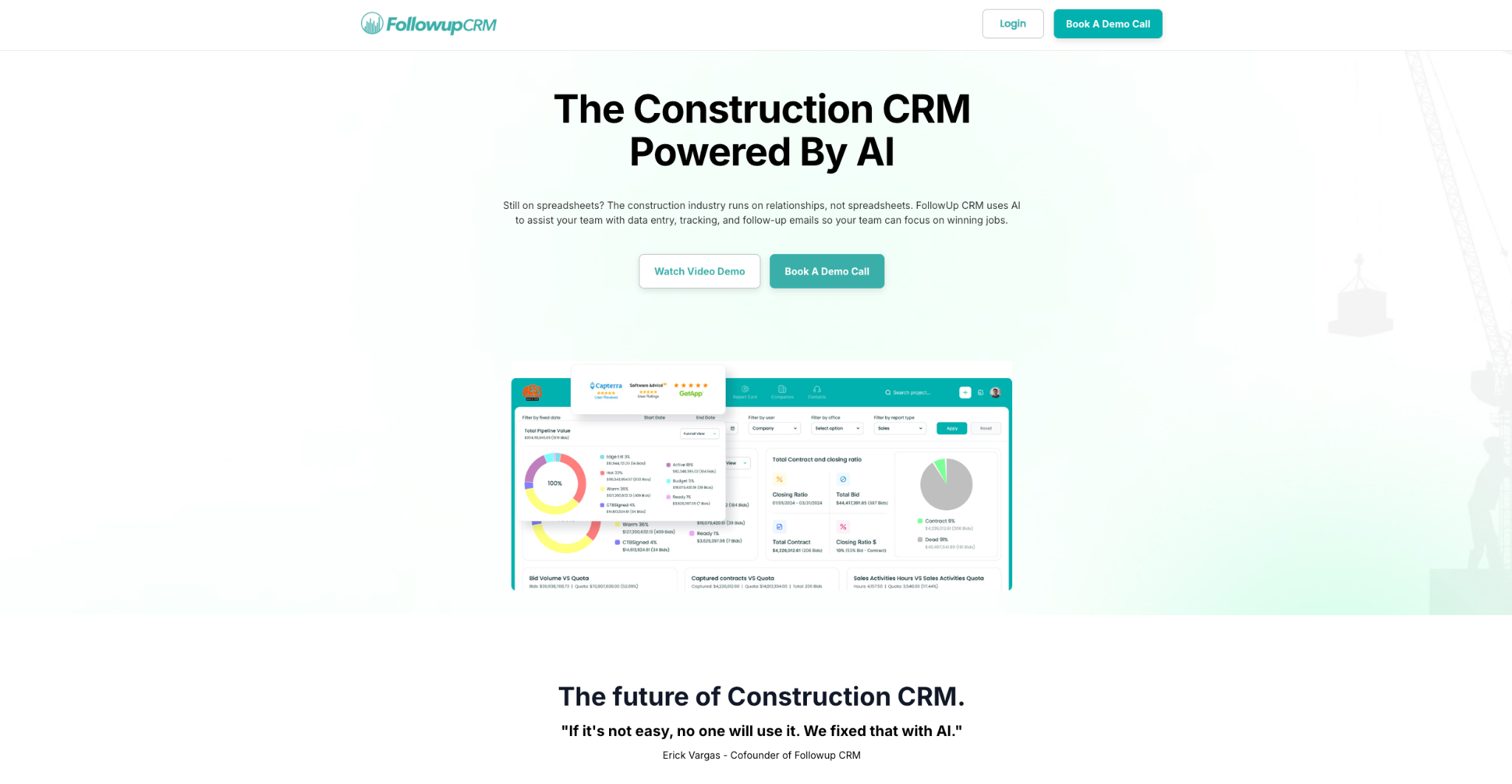
Followup CRM is a construction-specific CRM platform is the ideal choice for commercial and specialty trade contractors who want AI working on the sales side of estimating, where most bids are actually won or lost.
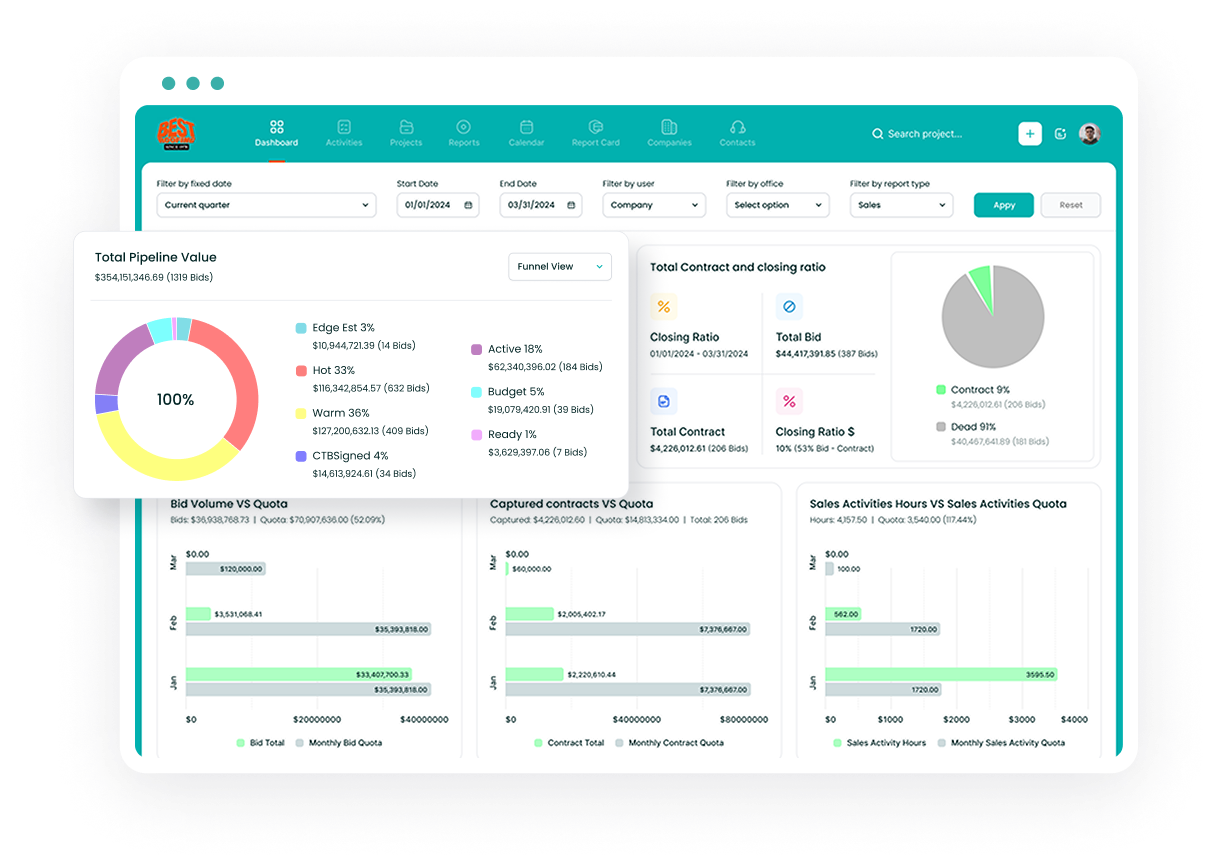
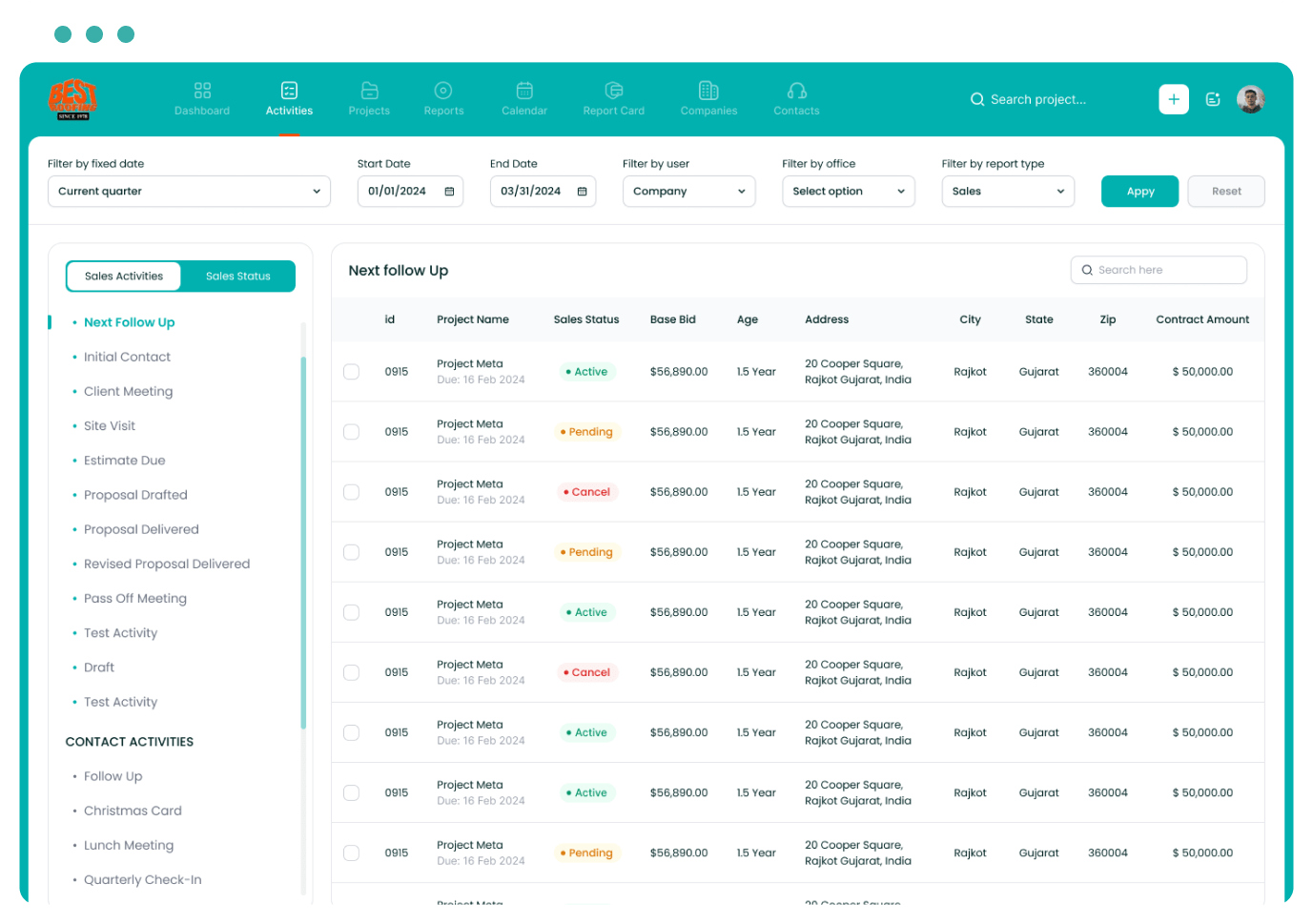
The platform tracks every estimate and bid through the pipeline, from lead intake to signed contract. Estimating dashboards give leadership real-time visibility into close rates and team performance.
The Proposal Generator turns estimates into branded proposals and sends them for virtual signature.
The Voice AI feature lets contractors speak about an update, and the system handles the data entry.
Followup CRM also includes Gregg AI Assist, a built-in AI that researches and summarizes contacts, companies, and projects. It can also draft follow-up emails, so your team spends less time writing and more time closing.
Key features:
- Sales and estimating dashboards: Real-time pipeline, close-rate, and team-performance reporting keep leadership informed.
- Proposal Generator with e-sign: The platform builds branded proposals and collects virtual signatures without extra tools.
- Digital bid calendar: A shared calendar of bid due dates keeps the whole team on deadline.
- Estimating and ERP integrations: Followup CRM connects with tools like STACK, The Estimating Edge, and major construction accounting systems.
- Voice AI: Contractors speak about what happened, and the AI handles the data entry, no typing required.
- Gregg AI Assist: The built-in AI researches and summarizes contacts, companies, and projects and helps your team write follow-up emails.
- Completely customizable: You can adjust fields, pipeline stages, and user permissions to match the way your team sells and estimates.
Book a demo to see how Followup CRM can level up your estimates management from day one.
2. Togal.AI
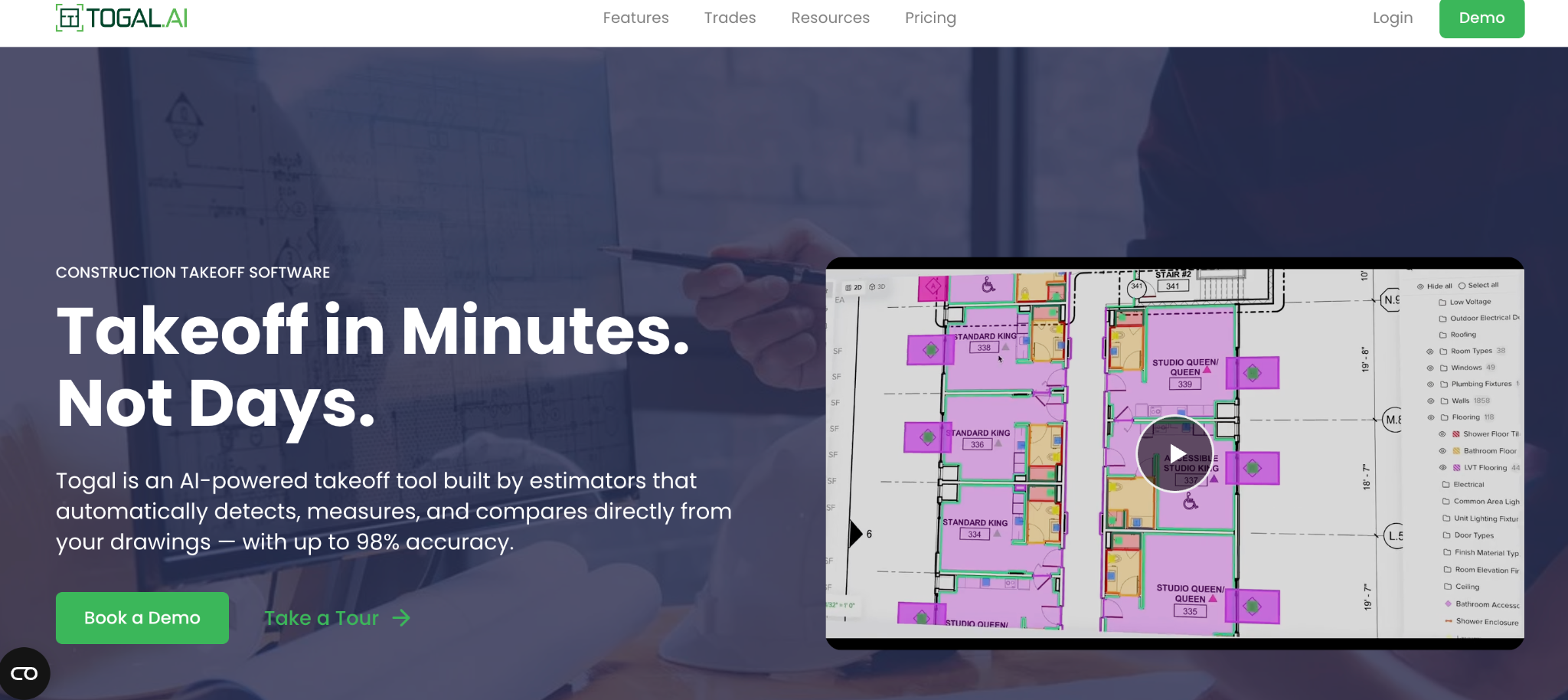
Image source: togal.ai
Togal.AI is a cloud-based takeoff tool that uses computer vision to detect, measure, and label spaces and features on architectural drawings.
Estimators upload plans, click one button, and the AI produces square footage, linear measurements, and counts for doors, fixtures, and other predetermined elements.
The platform also includes Togal.CHAT, an AI assistant that answers questions about uploaded plans, and a search function that finds and counts matching objects through an entire plan set.
Multiple team members can work on the same takeoff at the same time.
Key features:
- Automated detection and measurement: The AI quantifies floor plans and reflected ceiling plans in seconds rather than hours.
- AI-powered search: Users draw a box around an object and search the full plan set for every match.
- Real-time collaboration: Cloud access lets several estimators work on one takeoff together.
3. STACK
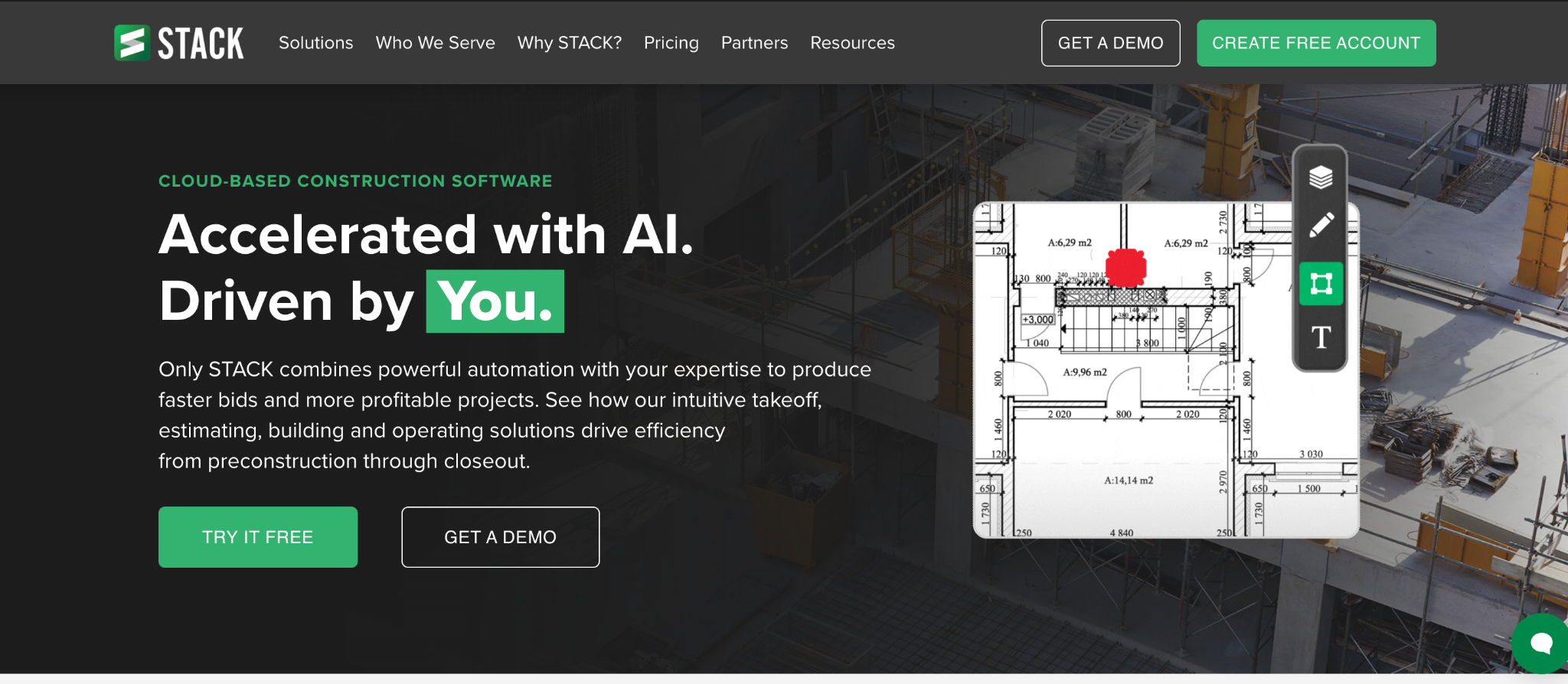
Image source: stackct.com
STACK combines digital takeoff and estimating in a single cloud platform. Estimators can upload plans, measure areas, lengths, counts, and volumes on screen, then build estimates using item and assembly libraries.
Trade-specific AI tools assist with the repetitive parts of the takeoff process, and AI-powered OCR pulls text from plan titles and documents.
The platform includes takeoff templates, custom labels for organizing quantity data, and a prebuilt database of common materials, labor, and equipment. Finished estimates flow into professional quotes and proposals.
Key features:
- Trade-specific AI assistance: Automation handles time-consuming measurement tasks so estimators can focus on pricing.
- Items and assemblies: Prebuilt and custom libraries generate a bill of materials from takeoff data.
- Plan and document management: Auto-naming, hyperlinking, and version overlays keep plan sets organized.
4. Handoff
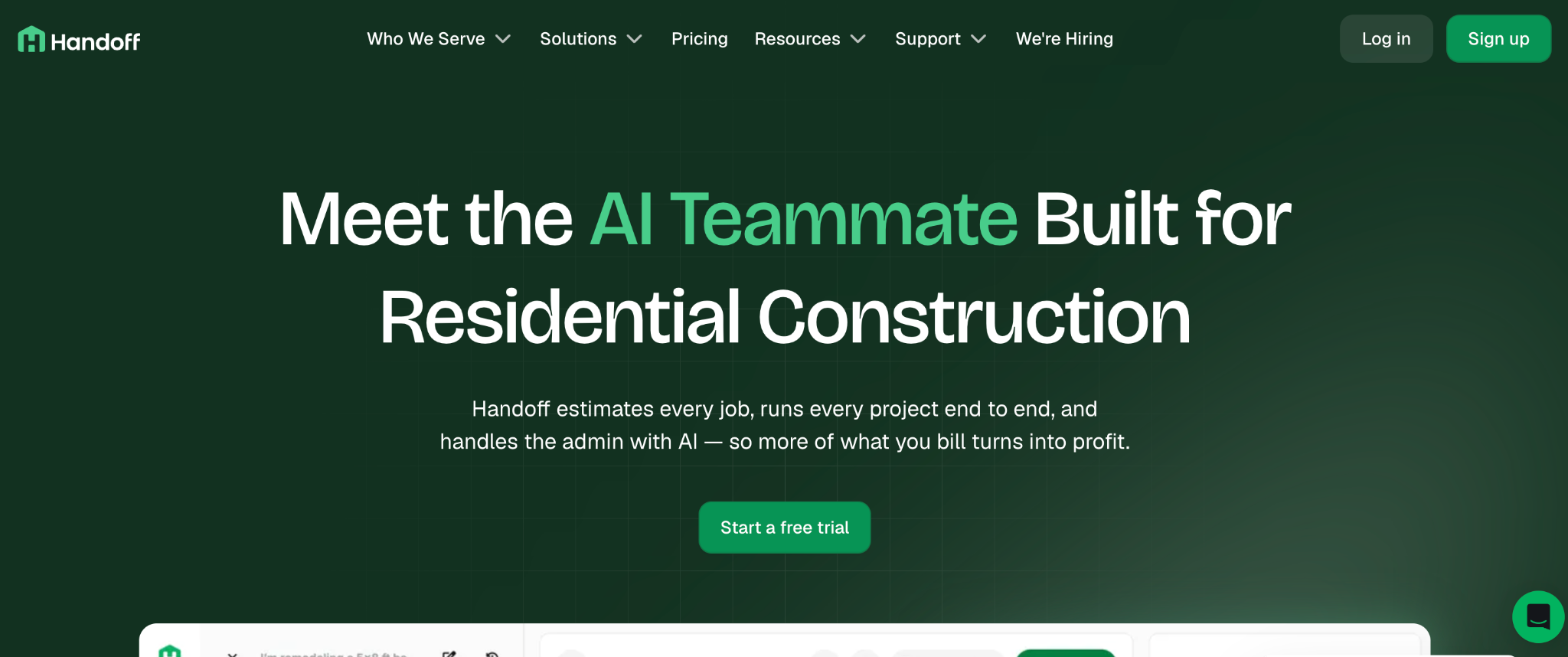
Image source: handoff.ai
Handoff generates residential project estimates from short descriptions. A contractor types or speaks what the job involves, and the AI produces a line-item estimate drawing on data from completed residential projects and supplier-backed pricing tied to the contractor's ZIP code.
The platform extends past estimating into proposals, invoicing, payments, and basic client management, so smaller operations can run their back office from one app.
It is available on the web, iOS, and Android.
Key features:
- AI-generated estimates: Project descriptions become detailed estimates in about a minute.
- Localized pricing data: Costs reflect local supplier pricing rather than national averages.
- Proposals and invoicing: Estimates convert into client-ready proposals and digital invoices.
5. Kreo
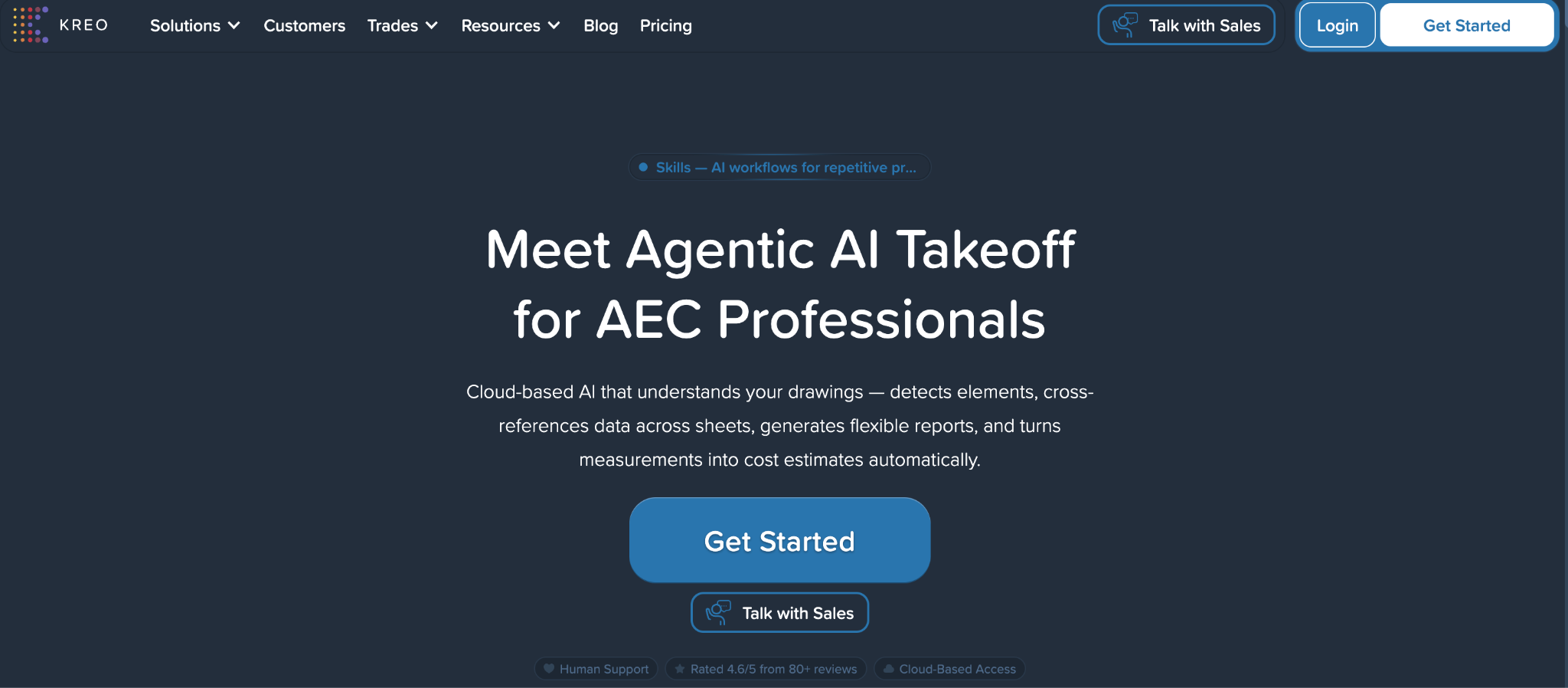
Image source: kreo.net
Kreo is a cloud-based takeoff and estimating tool that automates quantity measurement from PDF and CAD drawings.
Its AI detects and classifies elements like rooms, walls, doors, and windows, and users can run measurements through text prompts. The Caddie AI agent reads drawings, answers questions about specifications, and runs takeoffs with the estimator reviewing the output.
Results export to spreadsheet-style reports that stay synced with the drawings, and version comparison highlights what changed between plan revisions.
Key features:
- AI element detection: The software identifies and measures drawing elements automatically.
- Prompt-based takeoffs: Estimators can request measurements with plain-text commands.
- Drawing comparison: Revised plans are overlaid, and changes are highlighted for review.
How to Choose the Right AI Construction Estimating Software
Begin by identifying where your construction estimating process actually loses time and money.
If your estimating team spends days on quantity takeoffs from construction drawings, prioritize a takeoff tool with strong AI detection.
If estimates go out fast but die without follow-up, the gap is in estimate management, and that calls for a platform like Followup CRM.
Then check these factors:
- Trade and project fit: A tool trained on residential construction data will not serve a commercial contractor well, and the reverse is also true. Match the software to your typical scope and project size.
- Pricing logic: Look at how the tool builds costs. Some pull supplier pricing, others rely on your own unit costs and past projects. Your pricing strategy should stay in your control.
- Integrations: The software should connect to your accounting, project management, and takeoff tools instead of creating another data silo.
- Team adoption: The best system is the one your estimators will use on multiple projects without fighting it.
Contractors managing serious bid volume usually need both layers working together: AI-powered estimating tools for fast, accurate quantities, and a CRM layer that protects project budgets by tracking every estimate to a decision.
Best Practices for Using AI Construction Estimating Tools
AI estimating software delivers the best results when your team treats it as an assistant, not a replacement. These habits protect estimating accuracy while saving time:
- Review every AI output: Artificial intelligence handles routine tasks well, but an estimator should always check the numbers and flag missing items before a complete estimate goes to a client. Human review catches what automation misses.
- Feed it clean data: AI tools learn from past projects. Accurate historical project costs and consistent unit costs make every future estimate sharper.
- Run it in parallel first: For the first few jobs, compare AI results against your manual process. This builds trust and exposes where the tool needs adjustment.
- Track your win rate: Cutting takeoff time means little if bids are not converting. Measure how estimating changes affect the jobs you win, not just the hours you save.
- Use the time you get back: Less manual data entry and manual effort should translate into higher bid volume, better client communication, and better decision-making on which projects to pursue, not just a shorter workday.
Done right, AI reduces human error and cost overruns while your team keeps control of judgment calls.
Win More of the Work You Bid With Followup CRM
AI is changing the estimating process on both ends, but the construction industry still runs on a simple truth: the estimate that gets followed up wins. Followup CRM makes sure that happens on every job.
The platform gives your team AI-powered estimating support where it counts.
Estimating dashboards show exactly where every proposal stands, the digital bid calendar keeps deadlines visible, and Gregg AI Assist offers automated reminders and AI-drafted follow-up emails to end the back and forth of chasing updates.
Voice AI cuts manual work by turning a spoken update into logged data, so your estimators get capacity back without a new hire.
The result is a business that sends professional estimates, follows up on every one of them, and books more jobs and bigger projects from the same bid volume.
Book a demo call today and see how Followup CRM turns your estimates into signed contracts.
FAQs About AI Construction Estimating Software
Can AI do construction estimates?
Yes. AI can generate estimates from project descriptions, quantify materials from drawings, and price line items using historical data.
It works best with human oversight. An experienced estimator should review every AI estimate, since the technology can misread unusual details or apply the wrong assumptions to specific approaches and project phases.
What is the best AI construction estimating app?
It depends on what your business needs. Followup CRM is the best choice for contractors who want to manage estimates, proposals, and bids through to close. For automated takeoffs, tools like Togal.AI and STACK are suitable options, while Handoff is a fit for residential work.
Can ChatGPT do construction takeoffs?
Not reliably. General-purpose chatbots like ChatGPT by OpenAI are not built to read scaled construction drawings, and they have no measurement engine, so the quantities they produce cannot be trusted for bidding.
Can AI do takeoffs from blueprints?
Yes. Purpose-built AI takeoff tools read uploaded blueprints, detect elements like walls, doors, and fixtures, and produce measurements and counts automatically. Estimators then review the output to improve accuracy and catch anything the AI missed.
The CRM Built For Construction Companies
No more disorganized data. Track your leads, bids, and customers all in one place.
Seamless Integration with:
✅ Foundation ✅ Viewpoint ✅ Sage and more