Why Forecasting Matters More Than It Used To
Construction has always been a relationship-driven business. For many companies, pipeline forecasting historically relied on experience and intuition.
A senior estimator might say:
“Feels like we’re going to land that school project.”
And often, that instinct was right.
But as companies grow and competition increases, intuition alone isn’t enough.
Leadership teams need better visibility into what’s actually happening in the pipeline so they can make decisions about:
- hiring and staffing
- equipment and scheduling
- estimating capacity
- revenue expectations for the quarter or year
When that information is unclear, planning becomes reactive.
And reactive planning is expensive.
The Reality of How Most Companies Track Bids
Most construction companies didn’t set out to create a complicated sales process. It simply developed (got out of hand) over time.
A typical system might look something like this:
- bids tracked in a spreadsheet
- contacts managed in Outlook
- project details stored in shared folders
- estimating information inside separate estimating software
- follow-ups handled individually by estimators or sales reps
Each piece works fine on its own.
The problem is that none of these systems provide a complete view of the pipeline.
When leadership wants a forecast, someone usually has to pull information from several places just to assemble a rough picture.
That approach can work for a while.
But as the number of opportunities grows, it becomes increasingly difficult to maintain.
Where Opportunities Actually Get Lost
Contrary to what many people assume, bids rarely disappear because of bad estimating.
More often, opportunities stall because of small breakdowns in the process.
Things like:
- a follow-up that never happens
- unclear ownership of the next step
- communication scattered across emails and calls
- incomplete history of previous bids with a contractor
Individually, these issues seem minor.
But across dozens or hundreds of opportunities, they create a pipeline that’s difficult to understand and even harder to forecast.
The Shift From Bid Tracking to Pipeline Management
The companies that solve this problem usually make a fairly simple change.
They stop thinking about bid tracking and start thinking about pipeline management.
That means organizing opportunities so teams can easily answer practical questions like:
- What stage is this opportunity in?
- Who is responsible for the next follow-up?
- What relationships are tied to the project?
- When should we expect a decision?
Once that structure exists, forecasting becomes much easier.
Instead of guessing, leadership can see how opportunities are actually progressing.
Why Construction Companies Are Turning to CRMs
To support this shift, more construction companies are adopting CRM platforms designed specifically for the industry.
Unlike general-purpose CRMs, construction-focused systems organize opportunities around projects, which reflects how contractors actually pursue work.
That allows teams to keep everything connected to a project in one place, including:
- GC and owner relationships
- bid history
- communications and follow-ups
- project details and documents
Centralizing this information helps eliminate many of the operational problems that construction companies face, including disorganized data, missed follow-ups, and communication breakdowns between teams.
What Better Pipeline Visibility Actually Changes
When companies gain clear visibility into their pipeline, the benefits go beyond forecasting.
Sales teams can see which opportunities need attention.
Estimators can focus their time on projects that are progressing.
Leadership gains confidence in planning staffing, revenue, and growth.
Instead of reacting to whatever happens next, companies can start managing their opportunities with intention.
The Companies That Adapt Will Have an Advantage
Construction will always involve uncertainty.
But companies that improve how they track opportunities and follow-ups gain something extremely valuable: CLARITY
Clarity about:
- which deals are real
- where attention is needed
- what the pipeline truly looks like
And in a competitive market, that clarity can make a significant difference.
See How Construction Teams Are Managing Their Pipeline Today
If your team is still trying to understand the pipeline through spreadsheets, inboxes, and scattered project information, there may be a better approach.
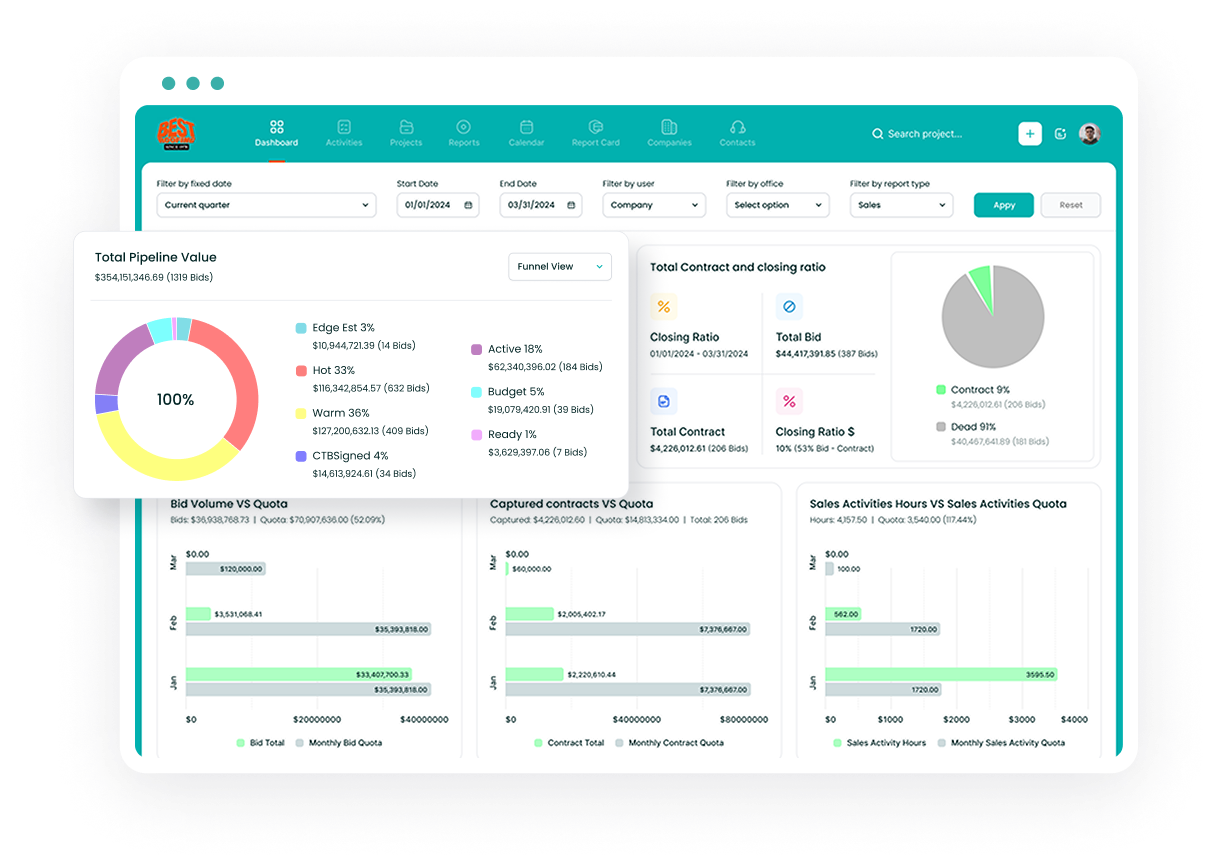
Followup CRM helps construction companies centralize project and bid information, organize opportunities, and keep follow-ups consistent across the team.
Schedule a quick demo to see how Followup CRM can help you bid less, win more.



.png)


.png)