


TL;DR
These are the best construction CRM tools available:
- Followup CRM
- Procore
- Buildertrend
- JobNimbus
- Jobber
- Salesforce
- Zoho CRM
- Pipedrive
What Is Construction CRM Software?
Construction CRM software is a customer relationship management system built for how construction companies actually sell. Instead of tracking a simple sales process, it follows the full project lifecycle: lead intake, bid, estimate, proposal, negotiation, and close.
A general CRM handles managing customer relationships through contacts and deals. A construction CRM adds the pieces contractors need, such as bid management, subcontractor and general contractor relationships, project data, and document management.
A construction CRM stores essential client data and customer interactions alongside actual jobs, so a salesperson can see the bid deadline, the estimate, and the last conversation in one view.
The goal is simple. Every lead gets tracked, every bid gets followed up, and leadership gets clear reporting on sales performance. For construction firms still running on spreadsheets, that alone is usually the difference between guessing and knowing where the pipeline stands.
Key Benefits of Construction CRM Software
Here is what construction businesses typically gain after implementing CRM software:
- Centralized client data: Contacts, emails, documents, and project details live in one system instead of multiple inboxes and folders.
- Fewer missed bids: Bid deadlines and follow-up reminders are tracked automatically, so opportunities rarely slip away.
- Clear sales pipeline tracking: Managers see every deal, its stage, and its value in real time, which makes forecasting realistic.
- Less manual data entry: Workflow automation logs calls, emails, and activity for you, freeing estimators and project managers for actual work.
- Better client communication: Every team member sees the full conversation history, so clients never repeat themselves or get conflicting answers, which lifts customer satisfaction over the life of a project.
- Stronger business development: Win/loss reporting shows which lead sources and project types pay off, so you invest effort where it earns.
Together, these benefits turn customer relationships into a managed asset rather than something that depends on one person's memory.
8 Best Construction CRM Software Tools
Here are the eight best construction CRM software tools in 2026.
1. Followup CRM
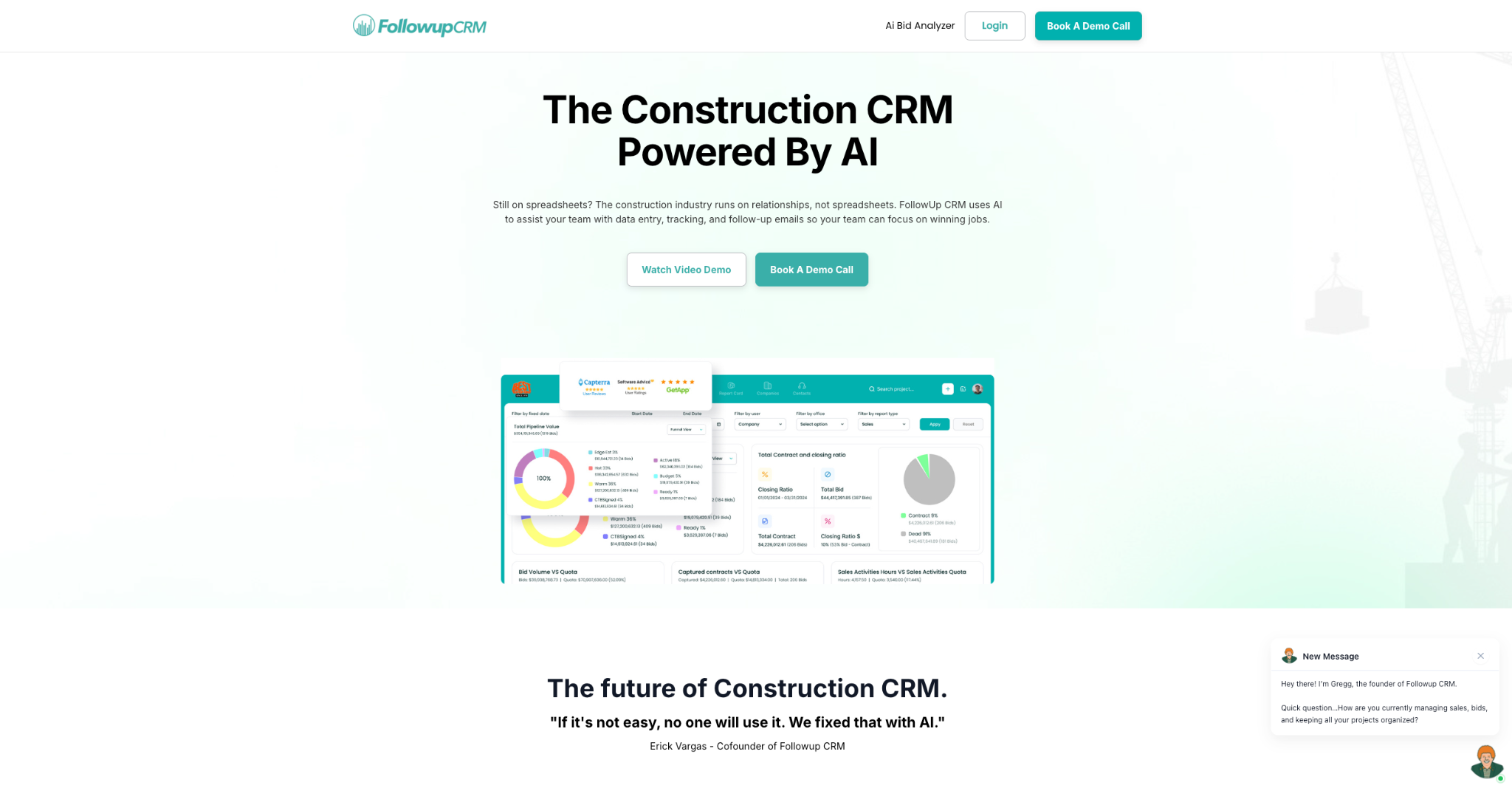
Followup CRM is the best construction CRM software for commercial and specialty trade contractors. It was built by contractors, for contractors, which shows in how the platform handles the sales cycle.
Instead of forcing a generic sales funnel onto construction work, it tracks the full path from lead intake through bid, estimate, proposal, and close.
Lead and bid tracking sit at the core. The system imports leads from many sources and follows each one through the pipeline, while the digital bid calendar keeps the whole team on top of due dates. That means no more bids lost to a missed deadline buried in someone's inbox.
Key Features:
- Lead and bid tracking: Every lead's details and progress in one pipeline view.
- Digital bid calendar: Shared visibility into bid due dates for the entire team.
- Proposal Generator and e-sign: Branded proposals sent for virtual signature.
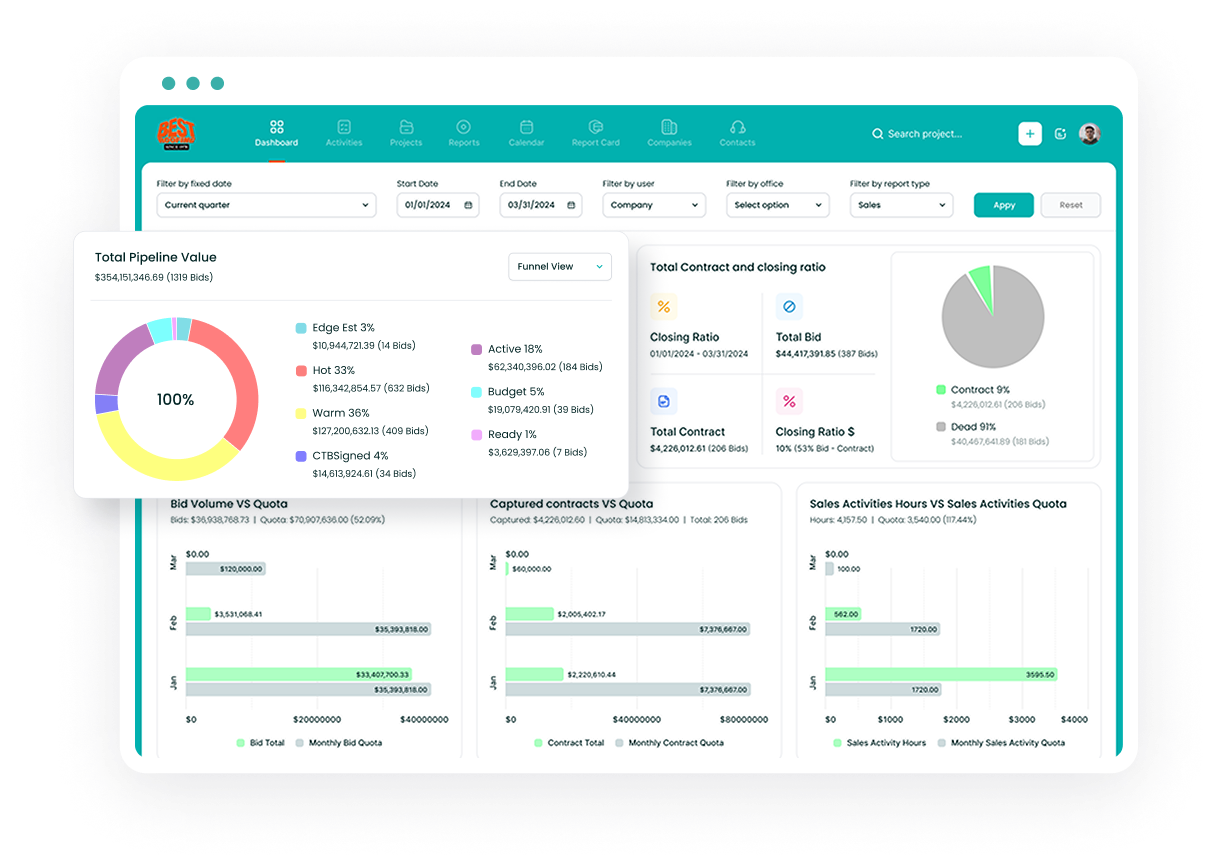
- Sales and estimating dashboards: Real-time pipeline, close rates, and team performance.
- Email marketing: Offers everything you need to run email campaigns from your CRM, such as automated follow-ups, lead nurturing, and engagement tracking.
- Voice AI: Speak about what happened on a call, and the system handles the data entry.
- Gregg AI Assist: Automates email follow-ups, researches and summarizes contacts, companies, and projects.
Followup CRM also integrates with construction ERP and accounting systems such as QuickBooks, plus Outlook and Gmail for automatic activity logging. Book a demo call to see it in action.
2. Procore
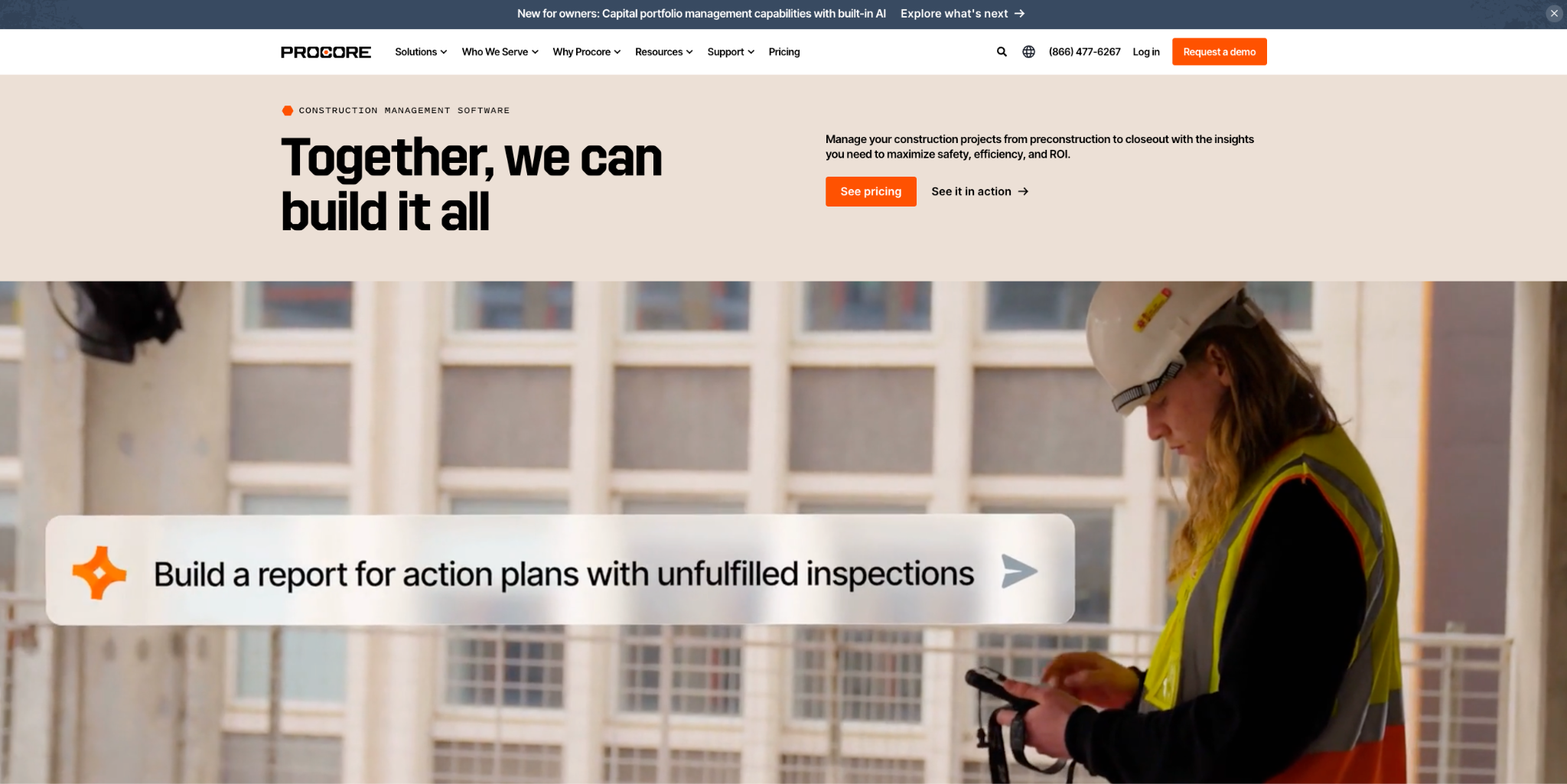
Image source: procore.com
Procore is a commercial construction management platform built for running active jobs. It covers project management, field coordination, budgets, drawings, and documentation from the moment a project kicks off through closeout.
It is a good fit for general contractors and larger firms that need deep project execution tools once work is awarded.
Procore also integrates with Followup CRM, which handles the pre-award side of the job. Followup CRM manages leads, bids, proposals, and follow-ups, and can push a project to Procore for estimating, with estimate results syncing back to the pipeline.
When a bid is won, the project pushes into Procore with its name, contacts, and documents, so the project team starts from accurate data instead of re-entering it.
Key Features:
- Project management: Centralizes schedules, tasks, and daily logs for active jobs.
- Document control: Keeps drawings, specs, RFIs, and submittals current for the whole team.
- Budget and cost tracking: Tracks project financials alongside the work being delivered.
- Mobile app: Field teams update progress, photos, and punch lists from the job site.
Procore is suitable for mid-sized and larger construction firms that want one platform for delivering projects.
Companies looking for sales pipeline tracking will still need a CRM alongside it, which is where the Followup CRM integration closes the loop from first contact to finished job.
3. Buildertrend
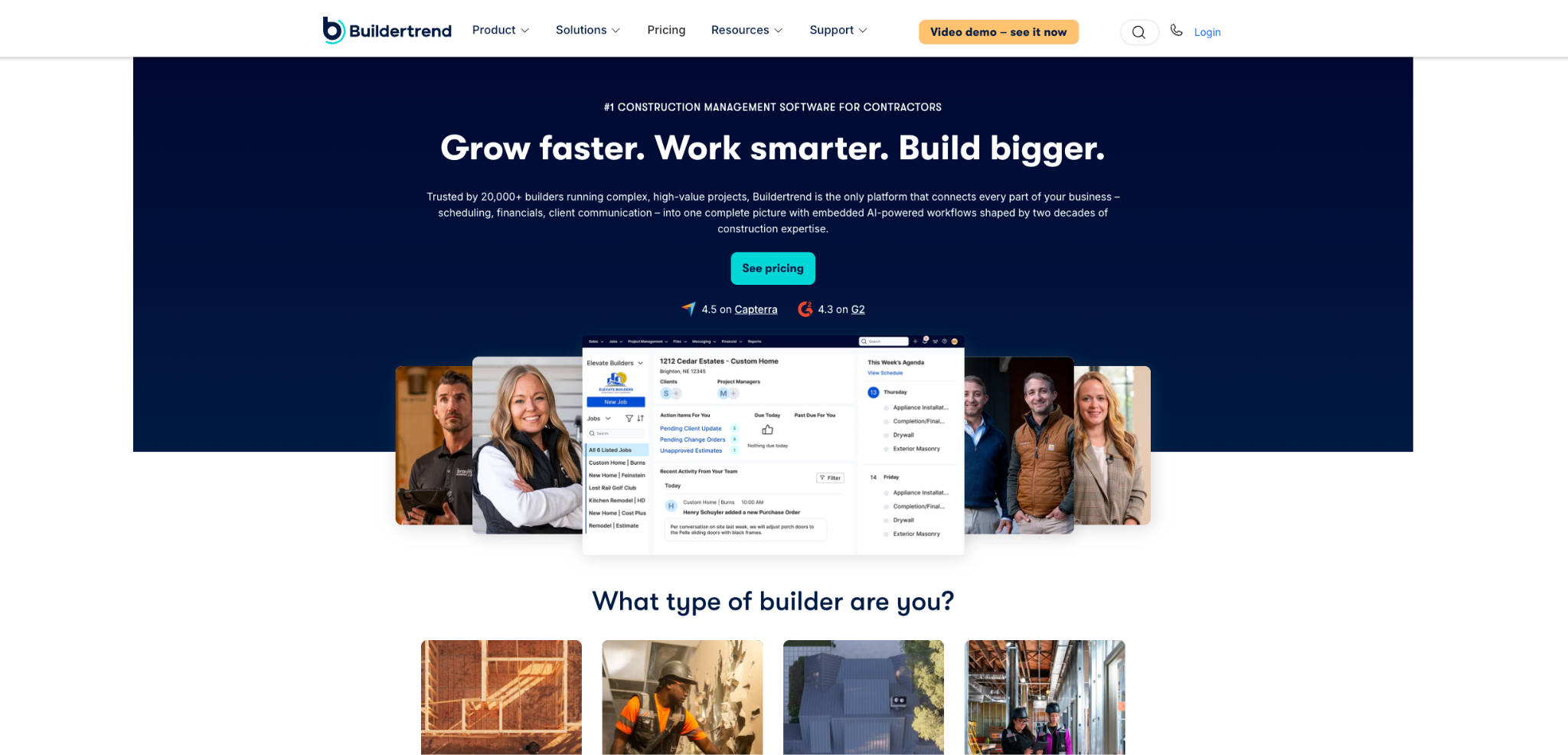
Image source: buildertrend.com
Buildertrend is construction management software for residential builders and remodelers, with a built-in CRM Hub for the sales side. It is a suitable fit for home builders who want lead management connected to project planning, scheduling, and financials in one platform.
The CRM Hub acts as the place to capture, organize, and close prospects. Leads can be added in several ways, tracked with details like projected sale date and assigned salesperson, and converted into active jobs once the sale lands, so information carries straight into production.
Key Features:
- CRM Hub: Documents and organizes leads, then converts closed sales into active jobs without re-entry.
- Digital proposals: Templated, customizable proposals with electronic signatures to keep the sales process moving.
- Email marketing: Automated campaigns to nurture prospects, with push notifications the moment a lead responds.
- Client portal: Gives customers access to project information and updates after the sale, which supports repeat work and referrals.
Buildertrend integrates with QuickBooks and Xero on the accounting side. It is a suitable choice for residential contractors who want sales and project management under one roof.
Commercial contractors with bid-driven sales cycles may find the platform's residential focus less aligned with how they win work.
4. JobNimbus
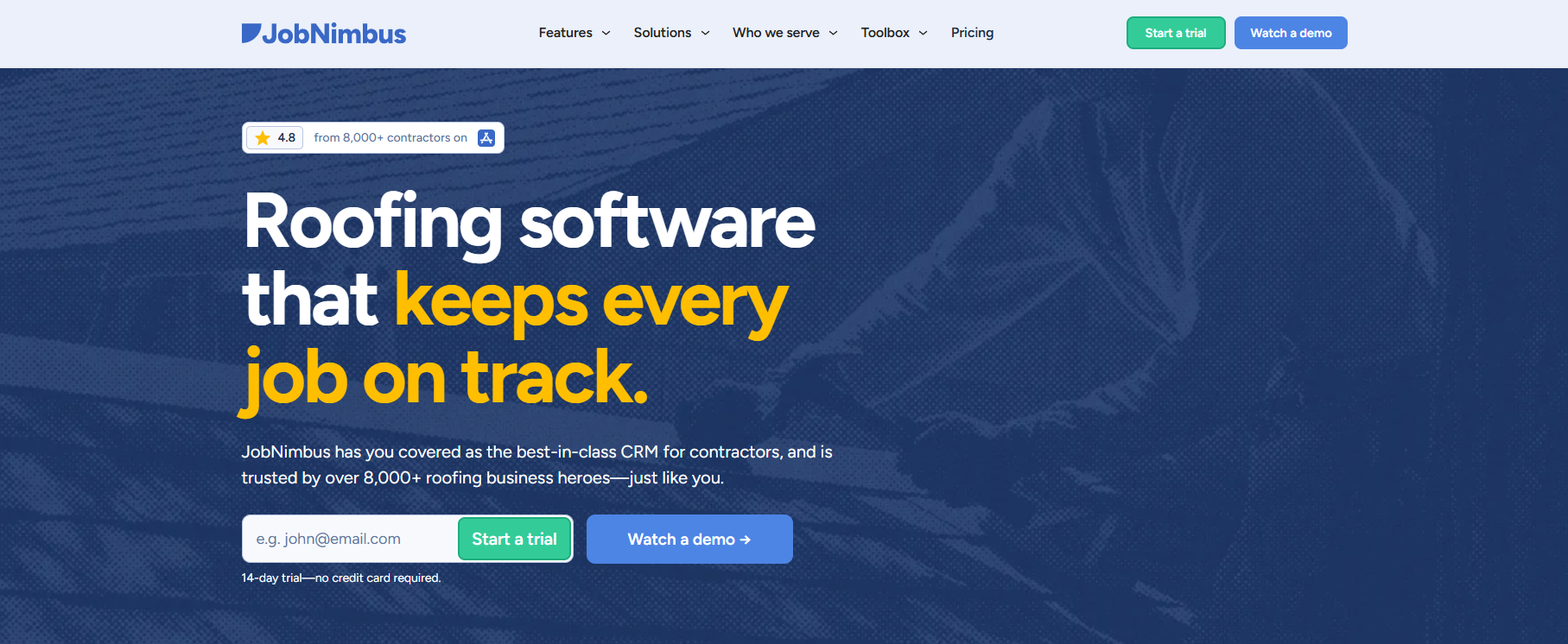
Image source: jobnimbus.com
JobNimbus is a CRM and project management platform built for roofing and home exterior contractors, including siding, gutters, and solar. It is a suitable option for residential trade businesses that want their sales pipeline and production tracking in the same tool.
Boards are the signature feature. They digitize the whiteboard most contractors already run, showing every lead and job as a card that moves through custom stages, so the team sees at a glance where each deal stands and where work is getting stuck.
Key Features:
- Visual boards: Drag-and-drop pipeline views for leads and jobs, with custom workflows per job type.
- Automations: Trigger-based rules such as sending a customer email when a job is scheduled or moving a job to sold when a proposal is signed.
- Built-in texting: A shared inbox for customer text conversations, with templates and automated review requests.
- Material ordering: Orders created from estimates and sent to suppliers directly from the platform.
JobNimbus syncs with QuickBooks and includes a highly rated mobile app for field teams. It works best for residential exterior contractors.
Businesses outside those trades, or commercial contractors with complex bid cycles, may find their workflows too specialized for their sales process.
5. Jobber
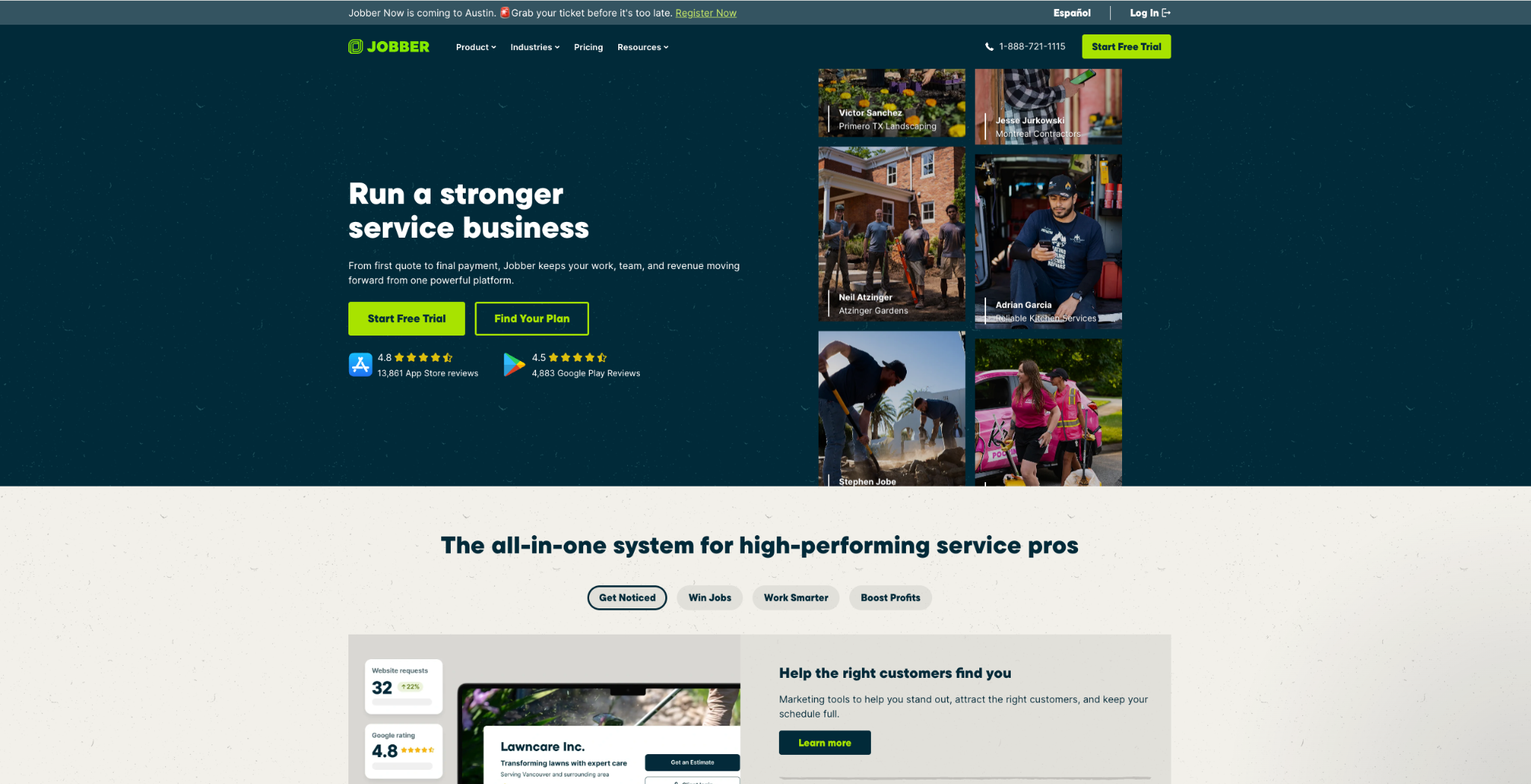
Image source: getjobber.com
Jobber is field service management software with built-in CRM features, aimed at home service and residential contractors. It is a suitable option for smaller construction and trade businesses that need quoting, scheduling, and invoicing more than formal bid management.
The CRM side keeps client details, job history, and communication records in one place. Teams can see every past quote, job, visit, and invoice for each customer, and lead management tools track potential customers separately from active clients.
Key Features:
- Client hub: An online portal where customers request work, approve quotes, and pay invoices.
- Online quoting: Professional quotes that clients approve online, with automatic follow-ups on quotes still waiting for a response.
- Drag-and-drop scheduling: A visual calendar with route optimization for daily job planning.
- Automated invoicing: Invoices are generated from job details, with payment reminders sent automatically.
Jobber integrates with QuickBooks Online for accounting and includes a mobile app rated well by field teams. It works best for residential contractors, installers, and service businesses with high job volumes.
Commercial contractors managing long bid cycles and complex proposals will likely need a more sales-focused system.
6. Salesforce
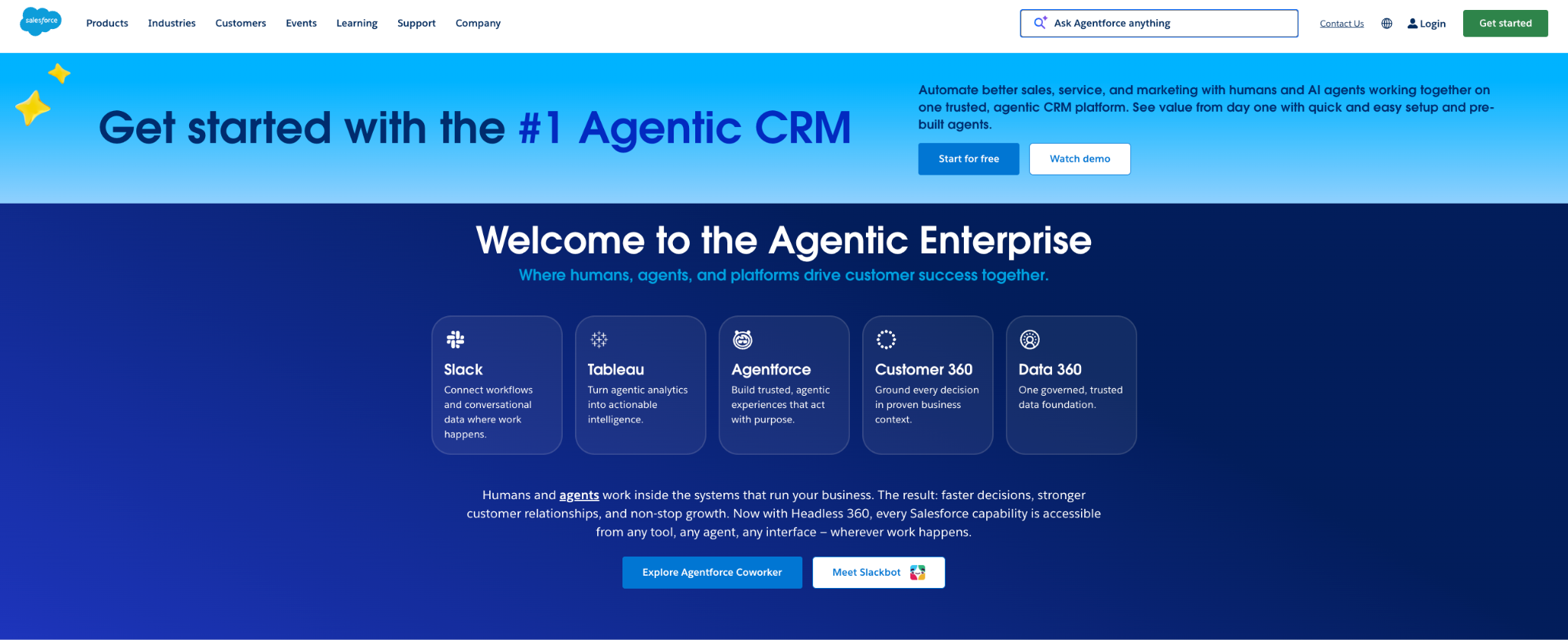
Image source: salesforce.com
Salesforce is the most widely used general CRM platform, and construction companies can adapt its Sales Cloud product to manage leads, opportunities, and forecasting.
It is a useful option for larger construction firms with the resources to configure an enterprise system around their sales process.
The platform tracks the full pipeline through lead management, opportunity tracking, and account records, with dashboards that give leadership real-time visibility. Its Einstein AI layer adds lead scoring, deal insights, and forecast predictions built from historical sales data.
Key Features:
- Pipeline and opportunity tracking: Customizable stages, account records, and real-time dashboards for sales visibility.
- Einstein AI: Lead scoring, opportunity insights, and forecasting that learns from past deals.
- Activity capture: Connects email and calendar so customer interactions are logged against the right records automatically.
- App ecosystem: A large marketplace of add-ons and integrations, plus APIs for custom connections.
The main consideration is that Salesforce is not specialized for the construction industry. Bid calendars, proposal workflows, and construction-specific fields all need to be configured or bought as add-ons, and implementation usually requires an administrator or consulting partner.
Salesforce is decent for construction businesses that want enterprise flexibility and can invest in the setup.
7. Zoho CRM
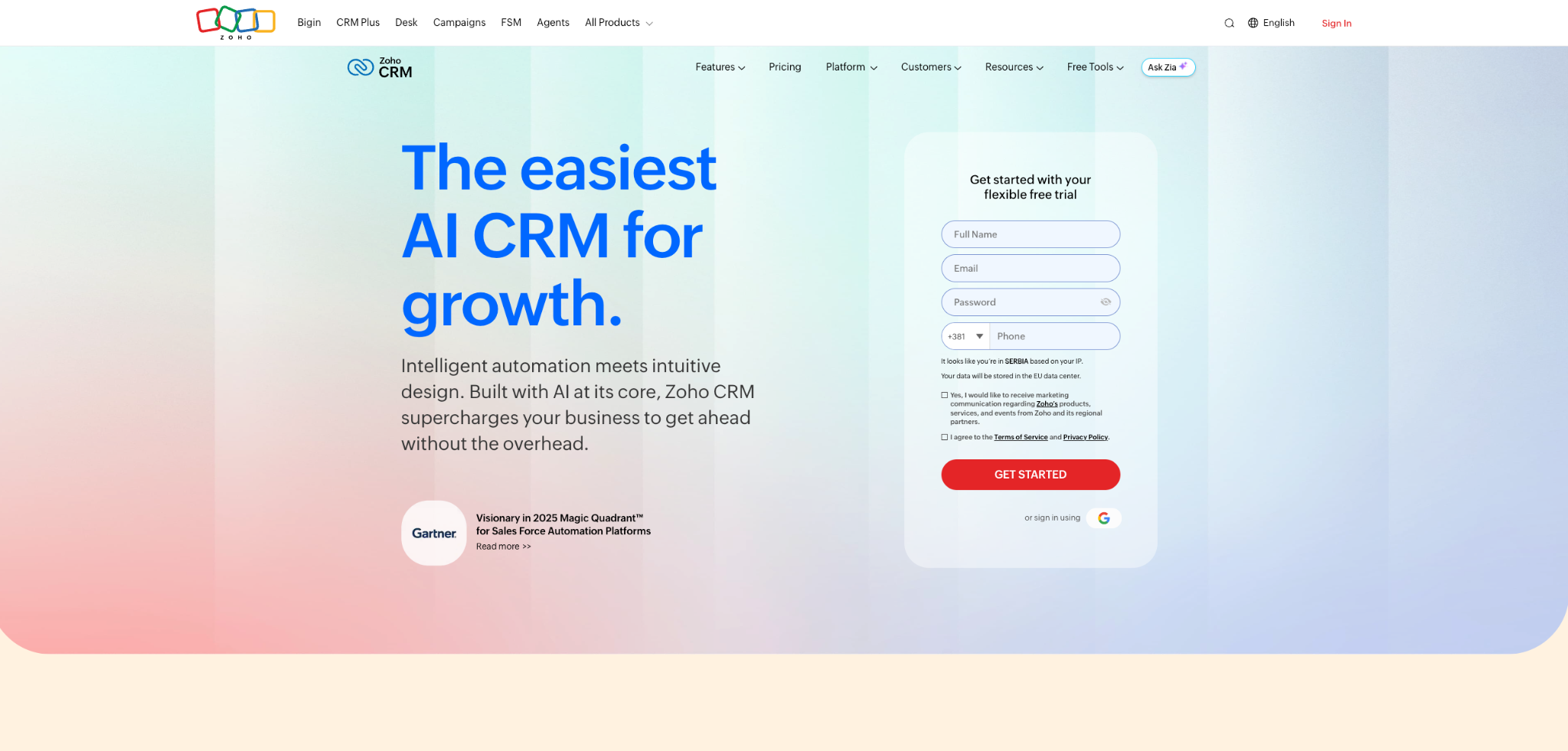
Image source: zoho.com/crm/
Zoho CRM is a general-purpose CRM that construction businesses can customize to fit their sales process. It is a useful option for construction firms that want flexibility and a large integration ecosystem without paying for construction-specific software.
Companies can shape the platform to capture construction data such as project types, bid stages, and site details, and deal phases can be tailored to match a construction workflow from bidding through execution and handover.
Key Features:
- Custom fields and modules: Layouts built to capture the construction data that a generic CRM would miss.
- Workflow automation: Handles repetitive tasks like lead assignment, follow-up sequences, and stalled-deal alerts.
- Integration ecosystem: Connects with over 1,100 apps through pre-built integrations and REST APIs, including accounting and ERP tools.
- Zoho suite add-ons: Zoho Forms for field data collection, Zoho Sign for approvals, and Zoho Projects with collaboration tools to manage projects after the sale.
The trade-off is setup effort. Because the platform is not built for construction out of the box, firms need to configure pipelines, fields, and automations themselves or hire a partner to do it.
Zoho CRM is adequate for construction businesses with the time to shape a general tool to their needs.
8. Pipedrive
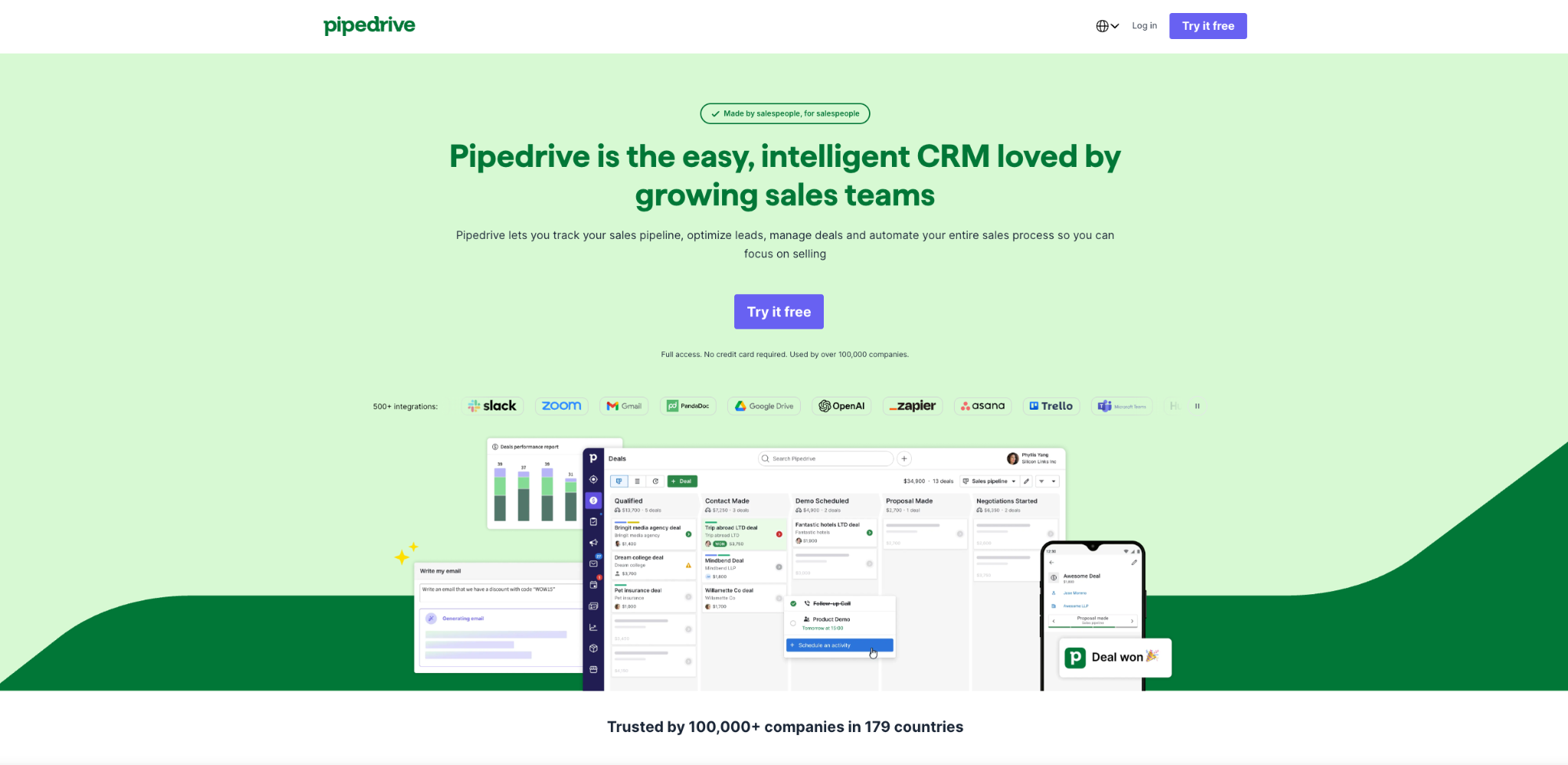
Image source: pipedrive.com
Pipedrive is a sales-focused CRM known for its visual pipeline management. It is a suitable choice for construction sales teams that want a simple, clear view of every deal without the weight of a full construction platform.
The kanban-style pipeline is the centerpiece. Deals move through customizable stages with drag-and-drop simplicity, so a sales manager can see the entire funnel at a glance.
Stages can be renamed to match construction milestones such as bid submitted, estimate sent, or negotiation.
Key Features:
- Visual pipelines: Custom fields capture deal details, and multiple pipelines separate work by division or project type.
- Automation: Deals move forward based on triggers, follow-up reminders fire on schedule, and email syncs to the right contact.
- Insights reporting: Conversion rates, pipeline health, and revenue forecasts update in real time.
- Mobile app with offline mode: Reps update deals, log calls, and manage tasks from job sites with poor coverage.
Pipedrive integrates with over 500 apps, including QuickBooks and Zapier. It works best for teams focused purely on sales tracking, since project management integration is limited to an add-on for handling multiple projects.
Like any general-purpose CRM, it is not specialized for the construction industry, so bid-specific workflows need to be built manually.
How to Choose the Right Construction CRM
The right CRM software depends on how your business sells work. Small teams, medium-sized construction businesses, and larger mid-sized construction firms all weigh these factors differently, so use these steps to narrow the field before you commit.
Map Your Sales Process First
Before comparing tools, write down how a lead actually becomes a job in your company. Where do leads come from? Who qualifies them? How many bids do you submit per month, and who tracks the deadlines?
A CRM should mirror that process, not force a new one on your team. If your sales cycle runs on bids and estimates, a generic contact manager will leave gaps from day one.
Look for Construction-Specific Features
General CRM systems track contacts and deals. Construction work demands more. Look for bid management, a bid calendar, proposal generation, and integrated project management capabilities that connect deals to live construction projects.
If subcontractor management or job costing visibility matters to your workflow, confirm the tool handles it before signing anything.
Check Integration Capabilities
Your CRM should talk to your existing systems. That means accounting software, ERP, estimating tools, and email at a minimum. Without integrations, your team ends up doing double data entry, and the CRM becomes one more silo instead of a central hub.
Ask each vendor for their current integration list and confirm the ones you depend on.
Confirm Mobile Access for the Job Site
Construction sales do not happen at a desk. Estimators and business developers work from trucks, construction sites, and client offices.
A strong mobile app lets them update deals, log conversations, and check bid statuses on the spot, so the pipeline stays current without end-of-day catch-up work.
Evaluate Reporting and Dashboards
Leadership needs to see sales performance without chasing spreadsheets. Look for real-time dashboards showing pipeline value, close rates, and win/loss trends by project type or estimator.
Good reporting turns the CRM from a filing cabinet into a decision-making tool.
Test It With Your Team Before Committing
The best CRM is the one your team actually uses. Book a demo, bring the people who will live in the system daily, and run a real scenario: a lead coming in, a bid going out, a follow-up getting scheduled. Adoption problems kill more CRM projects than missing features do.
General-purpose platforms can be configured to fit, but tools built for the construction industry cover these needs without custom setup.
Turn Your Bids Into Won Work With Followup CRM
Most CRM software was built for selling subscriptions or retail products, then adapted for construction as an afterthought. Followup CRM took the opposite path.
It started as an in-house system at a working roofing company and grew into the CRM for commercial contractors, which makes it a great fit for teams that sell through bids, estimates, and proposals.
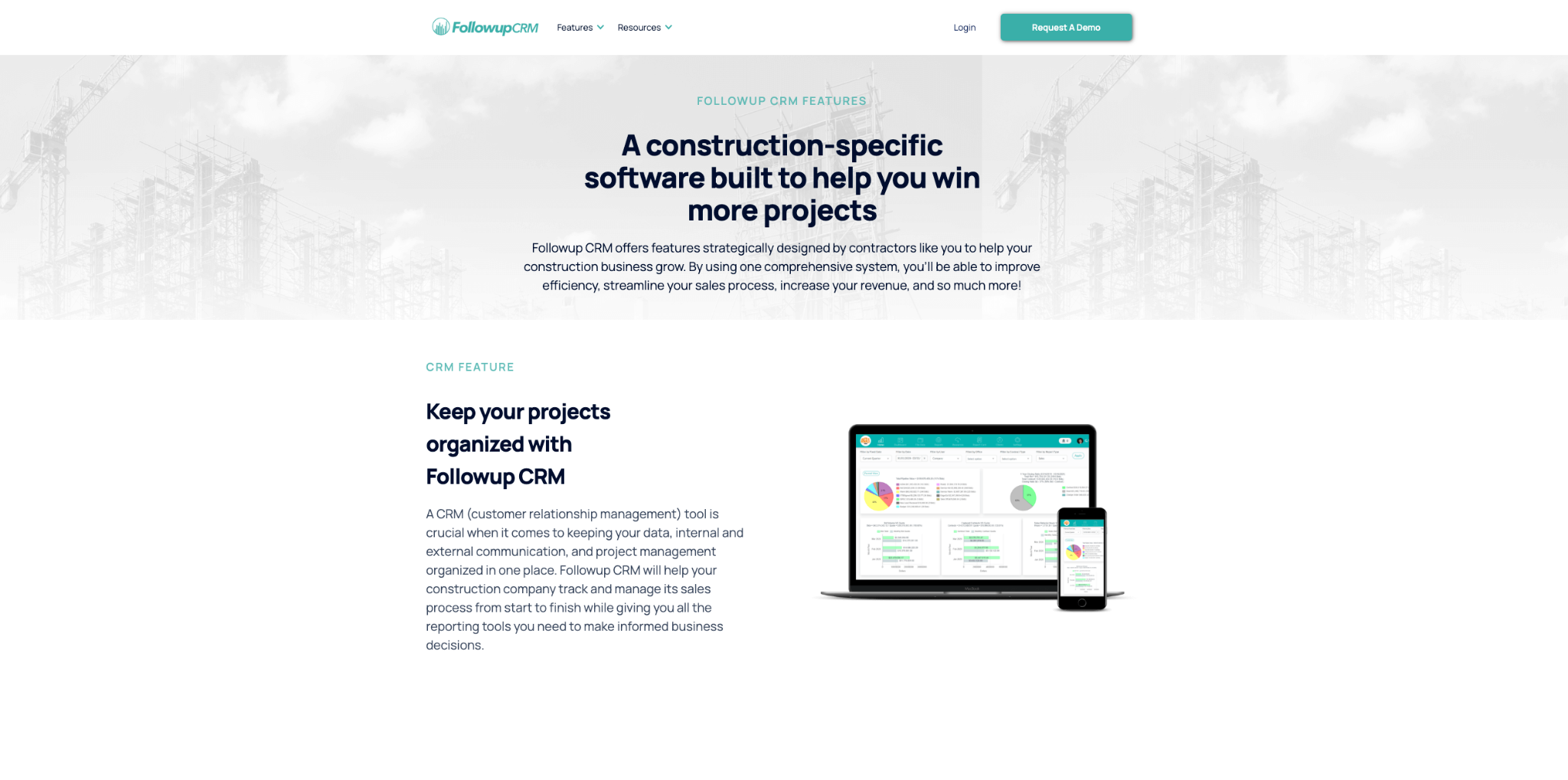
The platform covers the entire sales cycle in one place. Leads come in from multiple sources, bids land on a shared digital calendar, proposals go out branded and ready for e-signature, and dashboards show leadership exactly where the pipeline stands.
Notifications and reminders keep follow-ups from slipping, which is where most contractors lose winnable work.
It also fits into the systems contractors already run.
Outlook and Gmail integration logs email activity automatically, and two-way ERP integration syncs data with construction accounting platforms such as Foundation, Sage, and Vista. Estimators stop retyping the same information into three systems.
FAQs About Construction CRM Software
How is a construction CRM different from a general CRM platform?
General customer relationship management software is built for short sales cycles and simple deals. A construction CRM adds what construction companies actually need: bid calendars, proposal generation, estimate tracking, and client management tied to specific projects.
It follows the long path from first contact through bid, negotiation, and close, which a generic CRM solution handles poorly.
What are the essential CRM features for construction companies?
The essential CRM features for construction are lead and bid tracking, a shared bid calendar, proposal and e-signature tools, reporting dashboards, and mobile accessibility for the job site.
Automation capabilities that cut manual data entry matter too, along with integrations that connect the CRM to accounting software and other existing systems.
What does construction CRM software do?
Construction CRM software gives construction companies a centralized system for contact management, lead tracking, and bid management. Instead of spreadsheets, teams manage leads in one place, follow each bid to its deadline, and keep every client conversation on record.
Most CRM tools also include project tracking on the sales side, so nothing falls through between winning a job and starting it.
Can a construction CRM integrate with construction management software?
Most construction CRM tools integrate with construction management software, accounting platforms, and ERP systems. Followup CRM, for example, offers two-way ERP integration along with Outlook and Gmail logging.
The CRM Built For Construction Companies
No more disorganized data. Track your leads, bids, and customers all in one place.
Seamless Integration with:
✅ Foundation ✅ Viewpoint ✅ Sage and more