


TL;DR
- eSUB is project management software built only for trade contractors and commercial subcontractors, with a focus on daily reports, field notes, and document control.
- Procore is a full construction management platform for general contractors and mid-market to enterprise firms, covering preconstruction, project management, and project financials.
- Procore offers a much larger integration ecosystem, while eSUB keeps things simpler for field teams.
- Financial management is the biggest functional gap. eSUB sends labor data to your accounting software, while Procore manages budgets, invoices, and change orders inside the platform.
- Neither platform manages your sales pipeline before the job is won. That is where Followup CRM comes in, and it integrates directly with Procore.
What Is eSUB?
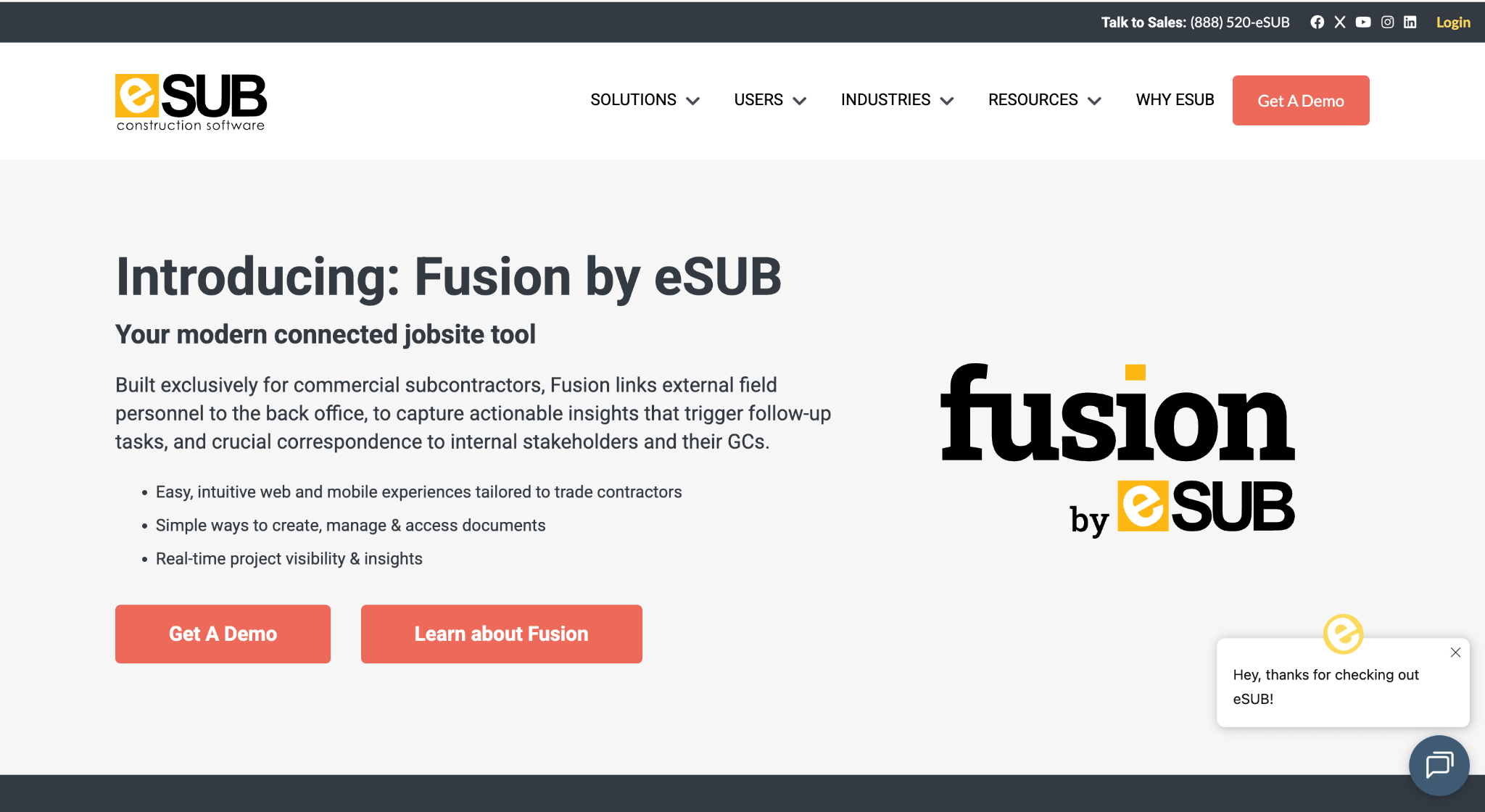
Image source: esub.com
eSUB is cloud-based project management software built for commercial subcontractors. Trade contractors in electrical, mechanical, HVAC, plumbing, drywall, glazing, and concrete use it to manage project documents and field communication from one platform.
The company has focused on the subcontractor market since its founding, and the product reflects that. Workflows match how self-performing contractors operate rather than how general contractors run jobs.
The core of the platform is field documentation. Crews submit daily reports, field notes, photos, and timecards from mobile devices, and the office manages RFIs, submittals, change orders, and correspondence from the web platform.
Every entry is logged and time-stamped, which builds a complete project record that protects subcontractors when disputes come up.
All documents live in one searchable, cloud-based location with unlimited storage, so teams can access project information from the office or the jobsite.
eSUB also handles labor tracking. The timecard module captures hours and costs from the field, and approved timecards can flow to accounting software such as QuickBooks Online. For subcontractors, this connects field activity to job costs without duplicate data entry.
The platform serves companies from small trade shops to midsize firms, with training delivered through the eSUB Academy.
What Is Procore?
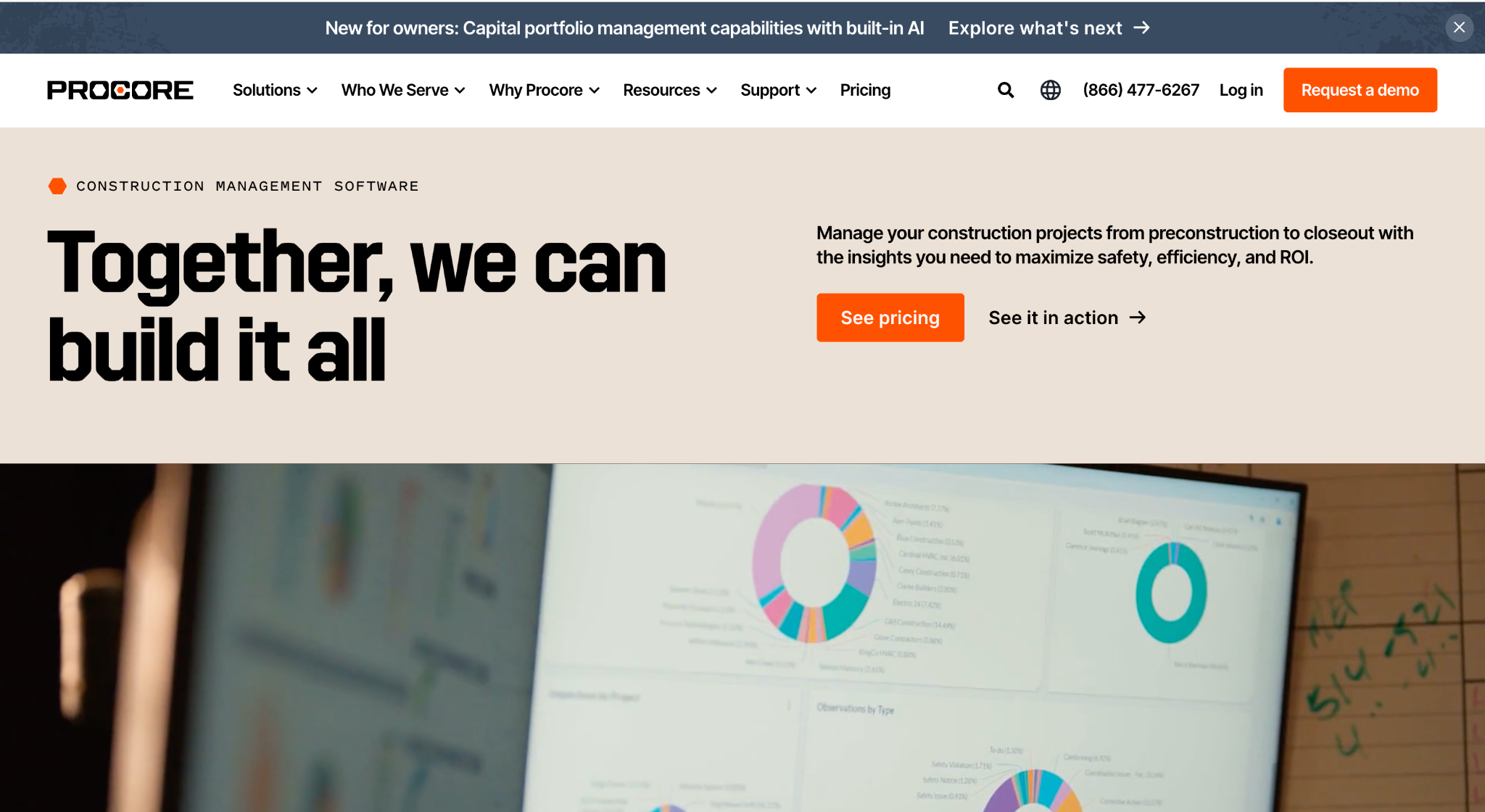
Image source: procore.com
Procore is a construction management platform that connects every stakeholder on a construction project, from preconstruction through closeout. General contractors, owners, specialty contractors, and public agencies use it to run projects in one system.
It is one of the most widely adopted platforms in the construction industry, built to handle complex jobs with many companies involved.
The platform is organized into four product lines:
- Preconstruction: Prequalification and bid management
- Project management: Core project tools plus quality and safety, design coordination, and BIM
- Resource management: Field productivity
- Financial management: Project financials, invoice management, and accounting integrations
Companies license the product lines they need, and every product includes unlimited users and unlimited data.
Procore's reach extends through its App Marketplace, which offers more than 400 integrations and an open API for custom connections.
Web and mobile apps keep field teams and the office working from the same current information, whether that is drawings, RFIs, budgets, or inspections.
The breadth is the point. Procore aims to replace the patchwork of separate tools many construction companies run, though that same breadth means new users face a steeper learning curve than narrower platforms present.
Key Features Comparison
The clearest way to compare these two platforms is category by category. Both address the fundamentals of construction project management, but they solve different problems at different levels of depth.
eSUB stays focused on what subcontractors need in the field. Procore builds out a wider system for companies managing the full project lifecycle.
The sections below break down how each platform performs on project management, financial tools, mobile access, integrations, and pricing, so you can weigh the categories that matter most to your business.
Project Management and Field Tools
Day-to-day project management is where the two platforms feel most different in practice.
eSUB centers on field documentation. Crews use mobile devices to submit daily reports, field notes, photos, and timecards from the jobsite.
The office team manages RFIs, submittals, and change orders from the web platform, and every document is time-stamped and stored in one searchable place.
For subcontractors, this creates a clean project record that protects them in disputes and keeps communication moving between the field and the office.
Procore covers those same workflows and adds layers on top. Its drawing management handles revisions and markups, so everyone works from the current set.
Quality and safety tools add inspections, observations, and incident tracking. Design coordination and BIM support bring architects and engineers into the same system as the field.
Project managers can track how a change event progresses from an on-site observation to a budget adjustment.
For a subcontractor whose main need is defensible daily reports and clean document control, eSUB delivers that with less setup. For a general contractor coordinating dozens of companies on a specific project, Procore's broader toolset is built for exactly that situation.
Financial Tools and Accounting Integrations
The gap between the two platforms widens on the financial side. eSUB approaches project financials from the field up. Its timecard module tracks labor hours and costs, and approved timecards can be sent to accounting software such as QuickBooks Online.
Combined with daily reports, this gives subcontractors real visibility into where labor is going on each construction project without manual work or duplicate data entry.
Procore includes a full financial management suite. Project Financials manages budgets that update in real time as field data comes in. Invoice Management handles billing between owners, general contractors, and subcontractors.
Accounting integrations sync the platform with industry-standard accounting systems, so the project team and the back office stay aligned on costs. Change orders connect directly to the budget, which means teams can see the financial impact of scope changes as they happen.
The right fit depends on who owns the numbers. If your accounting team runs the books elsewhere and you mainly need accurate labor data flowing in, eSUB covers it.
If you want budgets, invoices, and change orders managed inside one system alongside your project data, Procore is built for that.
Mobile and Field Access
Both platforms treat mobile access as core, not an afterthought. eSUB's mobile app is built around what a foreman needs at 4 PM on a jobsite: submit the daily report, log hours, attach photos, and file a field note before leaving.
Crews can access project information from any device, and the app keeps data entry short so field teams actually use it. That last point matters more than any feature list. Software only improves accountability if the people in the field adopt it.
Procore's mobile app carries more of the platform into the field. Superintendents can pull up current drawings, respond to RFIs, complete inspections, and review budget data from a phone or tablet.
Photo capture and markup tools are strong, and offline access keeps work moving on sites with poor coverage.
The trade-off is density. Because the app mirrors a much larger system, new users face more screens and options than eSUB's focused toolset presents.
For field-first simplicity, eSUB has the edge. For the depth of information available on mobile devices, Procore does.
Integration Capabilities and Ecosystem
Integration capabilities separate these platforms clearly. Procore runs an App Marketplace with more than 400 out-of-the-box integrations plus an open API for custom builds.
Accounting systems, scheduling tools, estimating software, document storage, and BIM platforms all connect to it.
For companies that already run several systems, this ecosystem is a major reason Procore wins deals in the mid-market and enterprise segments. Data flows between tools without duplicate entry, and IT teams can build what the marketplace does not cover.
eSUB's integration list is more limited. The headline connection is QuickBooks Online, which receives approved timecards directly. Documents can be exported, and logs can be converted to Excel for reporting outside the platform.
For many subcontractors, this is enough, since their software stack is smaller to begin with. But companies planning to connect estimating, scheduling, and enterprise resource planning (ERP) tools into one system will find Procore's ecosystem far deeper.
A note for contractors weighing either option: integration reach matters most at the edges of a platform, where your sales process, accounting, and project execution meet. That is worth checking against the tools you already use before committing.
Which One Fits Your Company
The decision usually settles itself once you define your company type and project mix. eSUB fits self-performing subcontractors who need clean field documentation, labor tracking, and document control without a heavy system around them.
If your crews file daily reports, your office manages RFIs and change orders, and your accounting already lives in QuickBooks Online or a similar tool, eSUB covers that lane with minimal training overhead. Small and midsize trade contractors are its natural market.
Procore fits general contractors, owners, and larger specialty contractors running complex projects with many stakeholders.
If you need bid management, design coordination, quality and safety tracking, and project financials in one system, Procore was built for that job.
The unlimited-user model also favors companies that want everyone on the project inside the platform, from the field to design teams to trade partners.
Company trajectory matters too. A growing subcontractor that expects to take on GC work may outgrow eSUB. A small trade shop buying Procore may pay for depth it never uses.
Match the platform to the work you will actually do over the next few years, not the most ambitious version of it.
Make the Most of Your Sales Cycle With Followup CRM
Here is what neither platform covers: winning the job in the first place. eSUB and Procore both start working after a project exists.
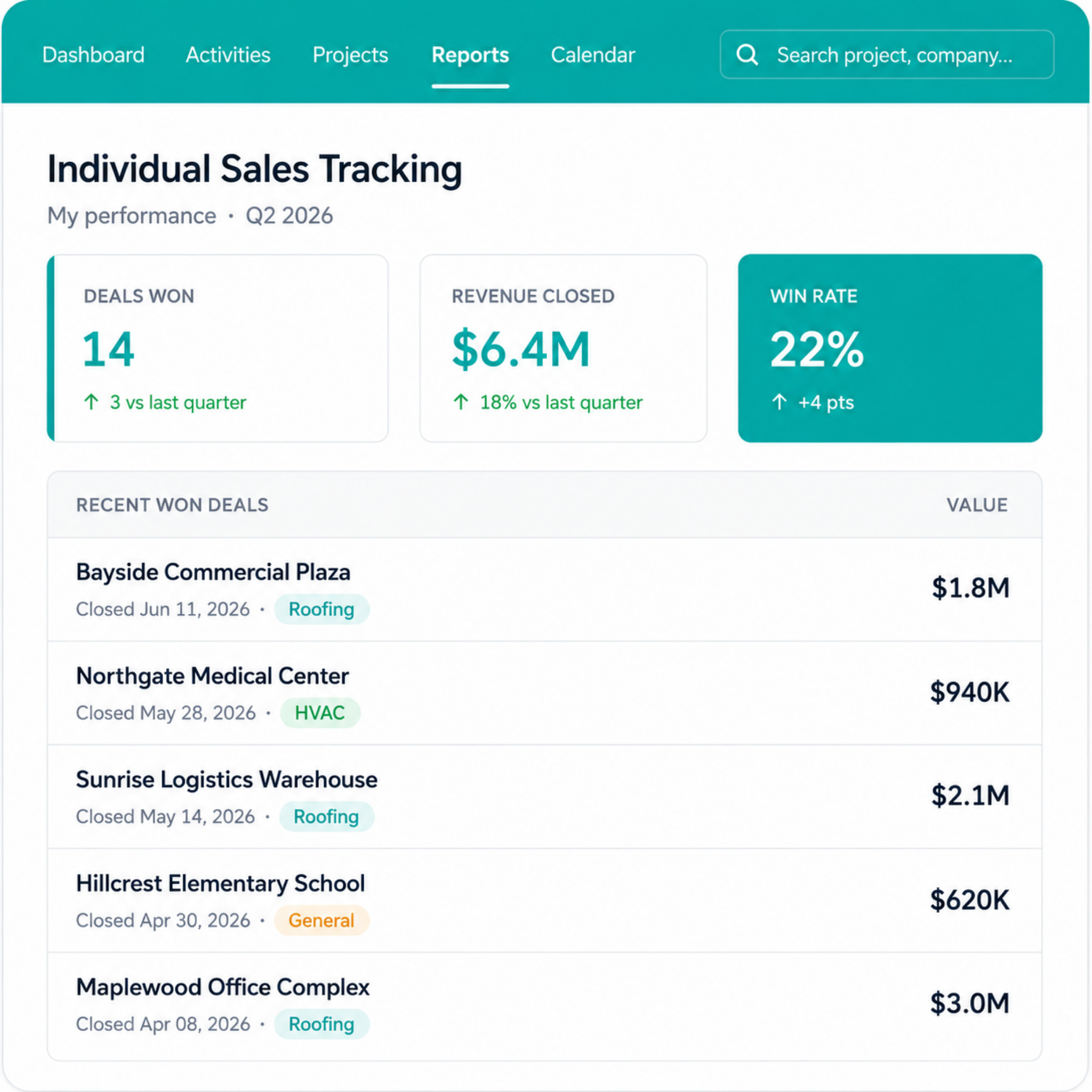
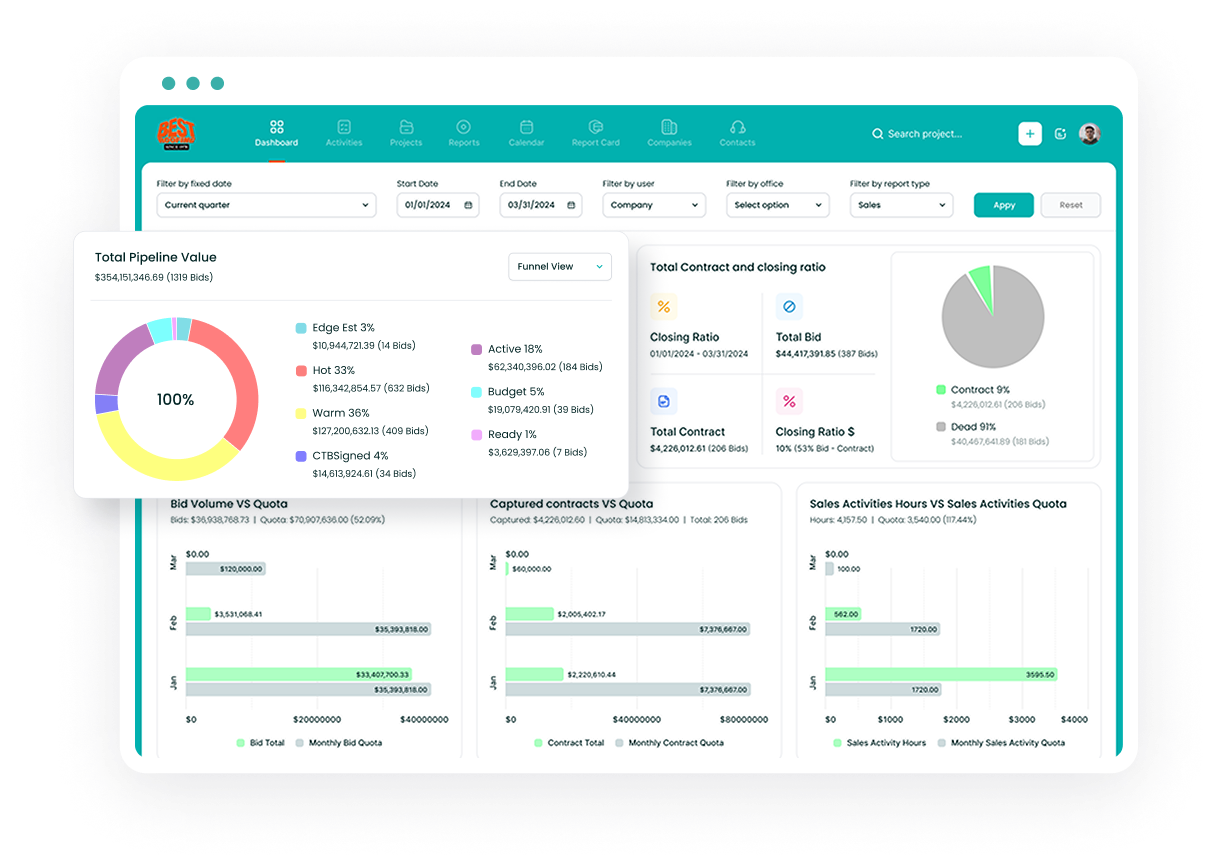
The lead tracking, bid follow-ups, proposals, and pipeline visibility that get a contractor from first contact to a signed contract sit outside both systems. That pre-award stage is exactly what Followup CRM was built for.
Followup CRM is a construction CRM that tracks the full sales cycle. Leads come in with contact, project type, and source recorded.
The digital bid calendar keeps every due date in front of the team. Proposals go out through the proposal generator, and follow-ups are tracked until the job is won or lost. Sales and estimating dashboards show leadership exactly what is in the pipeline and how the team is performing.
For companies choosing Procore, the fit gets even better. Followup CRM integrates directly with Procore. Opportunities push from Followup CRM to Procore Bid Board, with job name, number, address, and contacts synced.
When you win the bid, the award pushes to a Procore Standard Project automatically, with project data and documents transferred and no re-entry needed. Your sales pipeline and your project execution stay connected in one continuous process.
Win the Job Before You Manage It
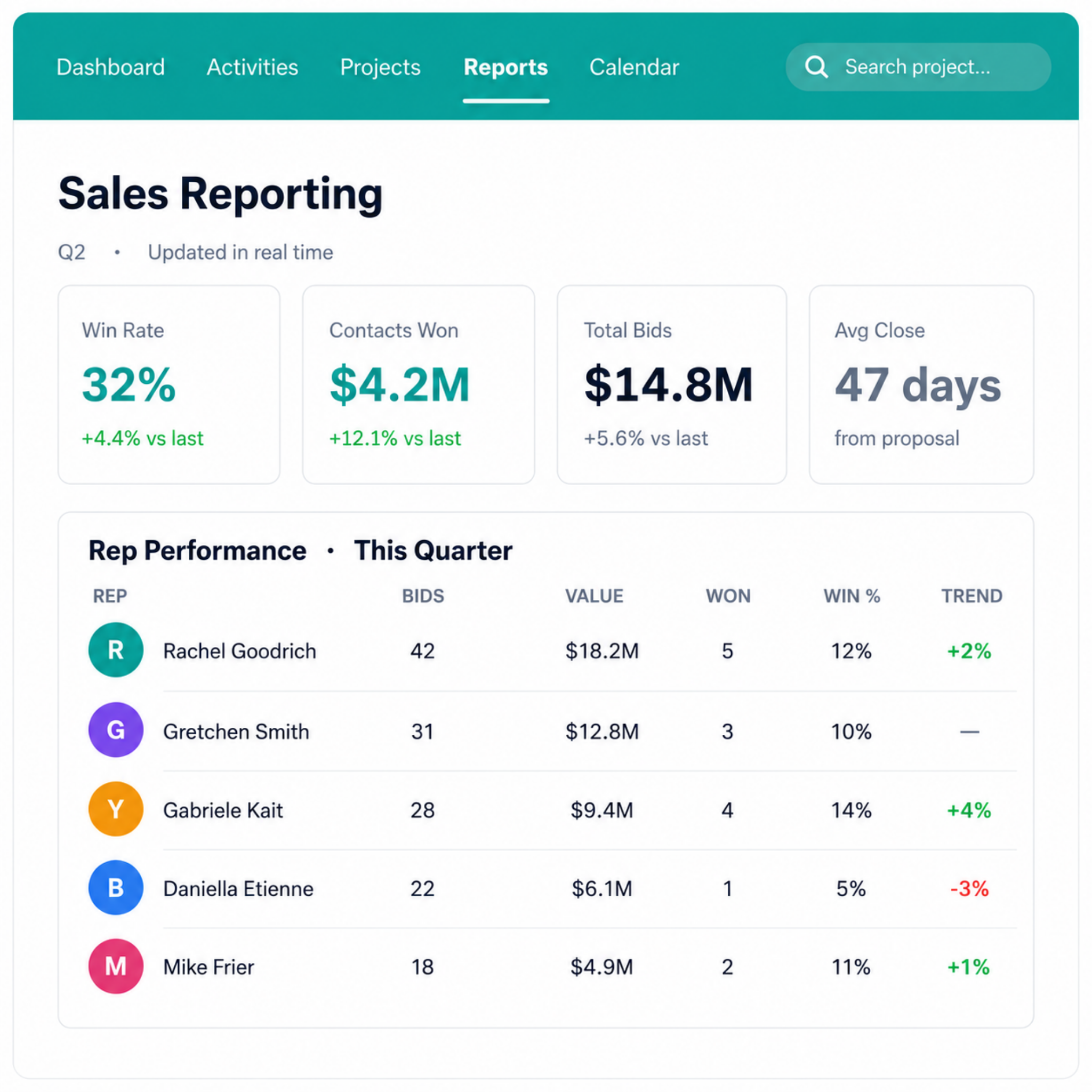
eSUB and Procore can both run your projects. Followup CRM makes sure you have projects to run. Track every lead, hit every bid deadline, and turn more proposals into contracts with a CRM built by contractors, for contractors.
Book a demo and see how Followup CRM fits in front of whichever platform you choose.
FAQs About eSUB vs Procore
Is Procore worth the money?
That depends on your company size and project volume. Procore prices are based on annual construction volume with unlimited users, so the value grows with how much of the platform your team actually uses. Larger contractors running complex projects tend to get the most from it.
Whichever direction you go, protect the investment by keeping your pipeline full. Followup CRM handles the sales side, and its Procore integration means every job you win flows straight into your project platform.
Do subcontractors use Procore?
Yes. Specialty contractors use Procore both on their own projects and as collaborators invited into a general contractor's account. That said, many subcontractors find platforms built for their workflows, like eSUB, a closer fit for daily field documentation.
For the sales and bid tracking that happens before any project platform takes over, subcontractors turn to Followup CRM, which was built by contractors specifically for specialty trades.
Which is better, Procore or Autodesk?
Both are adequate platforms with different strengths. Procore centers on connecting project management, field tools, and financials in one system, while Autodesk Construction Cloud ties project delivery closely to design tools like Revit and AutoCAD.
Teams with design-heavy workflows may lean towards Autodesk, while Procore suits companies focused on execution and cost control.
Neither manages your sales pipeline, so pairing your choice with Followup CRM keeps lead tracking, bids, and proposals covered from first contact to award.
The CRM Built For Construction Companies
No more disorganized data. Track your leads, bids, and customers all in one place.
Seamless Integration with:
✅ Foundation ✅ Viewpoint ✅ Sage and more

-Feb-13-2025-08-28-41-9829-PM.webp)