


TL;DR
- Timberline (Sage 300 CRE) is suitable for accounting and financial management, construction job costing, and financial reporting.
- Procore works well in project management, document management, and mobile field access.
- Timberline is primarily an on-premise system, while Procore is fully cloud-based.
- Many construction companies run both together, with Timberline handling the books and Procore running projects.
- Neither tool manages preconstruction sales, which is where Followup CRM fits alongside both.
What Is Timberline (Sage 300 CRE)?

Image source: sage.com
Timberline started as a standalone accounting and job costing product in the 1970s and became the industry standard for construction financials.
Sage acquired Timberline Software in 2003 and later rebranded the product as Sage 300 Construction and Real Estate, though most contractors still call it Timberline. Sage Timberline Office was the transitional name, and the rebrand did not change the product's core identity.
The platform is a construction-specific ERP built around accounting. It covers accounting and financial management, job costing, certified payroll with prevailing-wage support, estimating, procurement, service management, and property management in a single system.
Construction companies with complex financial reporting needs, multiple entities, or union payroll requirements are the typical user base, since the platform gives them tight financial control over every job cost.
Sage 300 CRE is primarily an on-premise system. It can be hosted in the cloud through third-party providers, but it was not built as a cloud product. That heritage shows in its user interface, which favors detailed data entry and accuracy over modern design.
It also shows in its mobile tools, which remain limited compared to newer platforms. Most Timberline shops fill the field and mobility gaps with integrated third-party software.
What Is Procore?
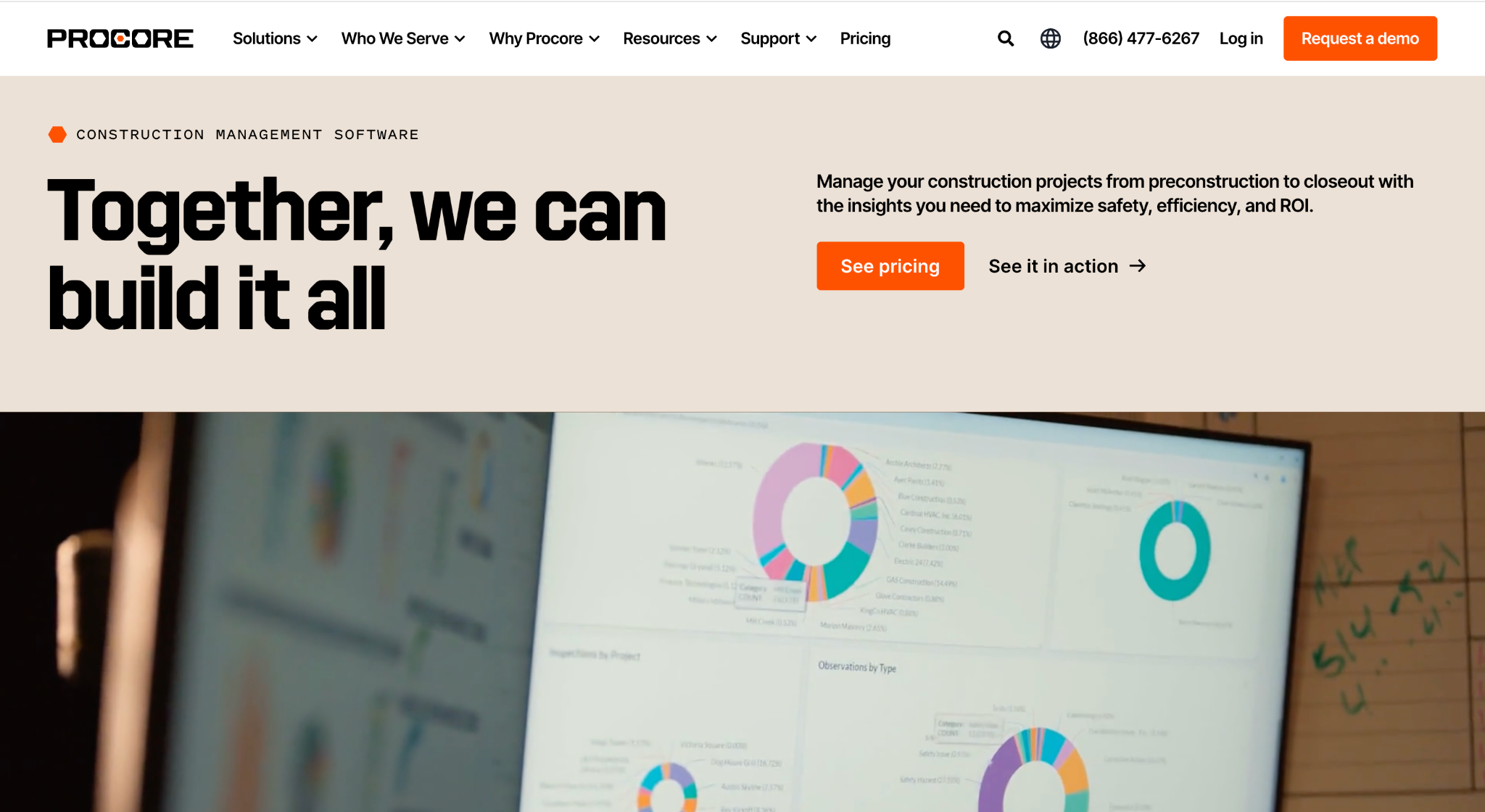
Image source: procore.com
Procore is cloud-based construction management software focused on running projects rather than running the books.
It handles project management, document management, drawings and specifications, RFIs, submittals, daily logs, scheduling, quality and safety programs, and project financials such as budgets and change orders.
The platform was built for the cloud from day one, and that design decision defines the user experience. Office staff and field teams work from the same live project data.
The mobile app gives crews access to drawings, photos, punch lists, and daily logs from the jobsite, and it works offline in areas with poor connectivity, syncing once a signal returns.
Procore is not accounting software. It tracks project costs and budgets, but general ledger accounting, payroll, and company-level financial operations live elsewhere.
Procore connects to accounting and ERP systems through its integration marketplace, which lists hundreds of third-party business applications.
General contractors and larger subcontractors in the construction industry managing multiple active projects are the platform's core audience, though the platform serves owners and specialty contractors as well.
Timberline vs Procore: Feature and Pricing Comparison
The two platforms overlap less than the keyword battle suggests. Timberline is built to control money, while Procore is built to control projects.
The comparison below walks through the five areas where construction companies usually feel the difference: financials, project management, deployment, integrations, and pricing.
Read each one against your own workflows, because the right answer depends on where your current system is costing you the most time.
Financial Management and Job Costing
This is Timberline territory. Sage 300 CRE was built around construction accounting, and it shows in the depth of the financial data it captures.
Job costs break down by cost codes and sub jobs, so accountants can track labor, materials, and equipment against budget at any level of detail. Payroll handles certified payroll, prevailing wage, and union requirements natively.
Reporting covers cash flow forecasting and multi-entity financials for companies operating several businesses under one roof.
Procore approaches project financials from the field side rather than the ledger side. Budgets, commitments, change orders, and invoice approval processes live at the project level, and project managers see cost impacts in real time.
For company-level accounting, Procore relies on connections to dedicated accounting software. That split works well for firms that want project teams in Procore and accountants in their ERP, but Procore alone cannot replace a construction accounting system.
Project Management and Field Operations
Here, the roles reverse. Procore gives project managers one system for drawings, RFIs, submittals, daily logs, punch lists, and scheduling, with every update visible to the whole team instantly.
Field teams get full mobile access from the jobsite, including offline mode where connectivity is weak.
Photo documentation, safety inspections, and quality checklists keep project data flowing from the field to the office without manual data entry at day's end.
Timberline offers project management tools, but they center on the financial side of projects: contracts, change management, and cost tracking. Its mobile and field capabilities are limited, which is why many Sage 300 CRE users pair the platform with separate field software.
For a contractor whose main pain is coordination between the office and the jobsite, Timberline alone will feel thin.
Deployment, Ease of Use, and Implementation
Sage 300 CRE is an on-premise system at heart. It runs on your servers or through a third-party cloud host, and its user interface reflects its accounting heritage: dense, precise, and built for trained users.
Implementation typically involves data migration from legacy systems, setup through certified Sage partners, and structured training, with Sage University providing ongoing courses. Plan for a serious onboarding period measured in weeks, not days.
Procore is browser and app-based, with no servers to maintain and a modern user interface that most users pick up quickly.
Implementation still requires planning, template setup, and training, but Procore's certification courses and support resources are self-paced and included.
Integrations
Timberline integrates most deeply within the Sage ecosystem and with construction tools that have built certified connections to it, including estimating, field, and document platforms. The list is curated rather than sprawling, and accounting data flows are reliable once configured.
Procore runs an open marketplace with hundreds of third-party business applications spanning accounting, estimating, scheduling, and field management. Teams can pull data between Procore and their ERP to eliminate double entry on costs and commitments.
Followup CRM connects to both platforms, syncing sales and bid data into Sage 300 CRE and Procore so information entered during preconstruction carries into accounting and project management without retyping.
Timberline or Procore: Which One Should You Choose?
Start with a thorough assessment of where your business loses the most time and money today, because the two platforms answer different problems.
Timberline fits organizations whose specific needs center on financial control. If you run complex payroll, manage multiple entities, or need job cost reporting at a depth that satisfies auditors and bonding agents, Sage 300 CRE is built for that work.
It suits companies with accounting staff who value precision over polish and who already have field tools they like.
Procore fits companies whose pain lives in project execution. If drawings are out of date in the field, RFIs sit in inboxes, and the office learns about problems days late, Procore's collaboration tools directly improve efficiency between the jobsite and the office.
It suits firms managing several active projects that need one source of truth for project data.
Many contractors do not choose at all. A common setup pairs Timberline as the accounting backbone with Procore running project management, connected through integration.
The question then becomes less about which platform wins and more about whether your whole workflow, from first lead to final invoice, is covered. One stage is missing from both: sales.
Followup CRM Works Great With Both Tools
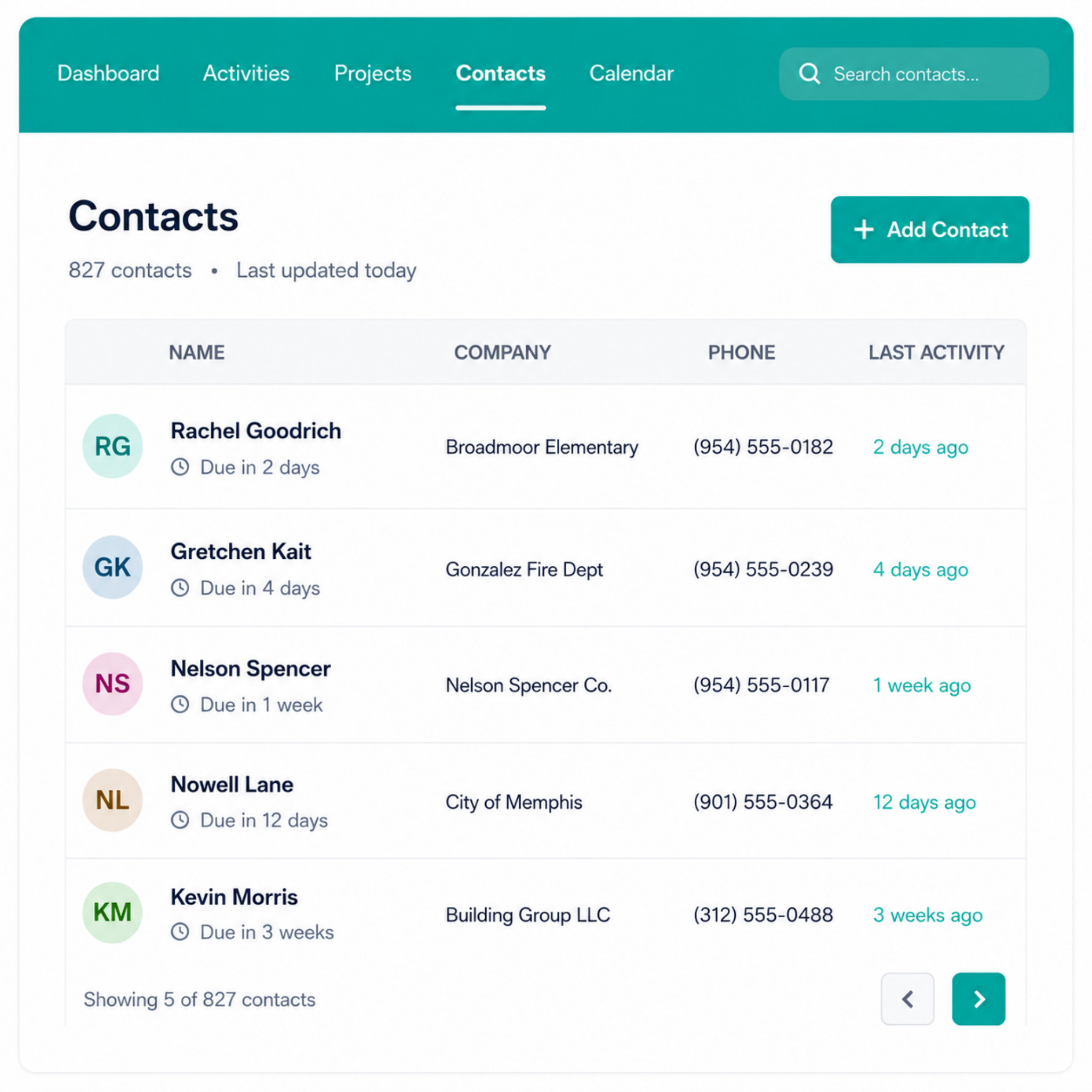
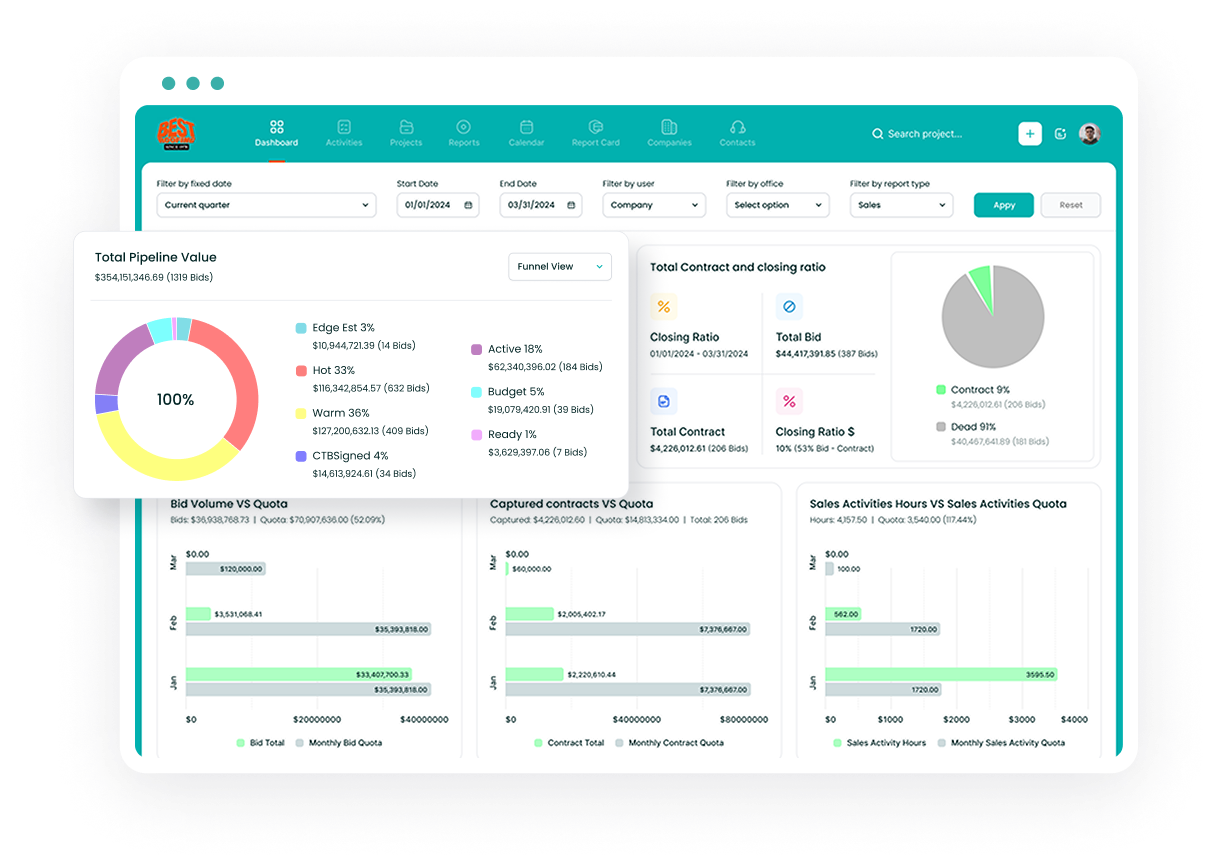
Neither Timberline nor Procore tracks what happens before a project exists. Leads, estimates in progress, proposals, and follow-up calls live in spreadsheets or inboxes, and that is where operational efficiency breaks down first.
Followup CRM covers this preconstruction stage and connects it to both platforms.
Followup CRM is a construction CRM built for commercial and specialty trade contractors. It tracks every lead from first contact through bid, proposal, and close.
The digital bid calendar keeps due dates in front of the whole team, sales and estimating dashboards show pipeline and close rates in real time, and notifications make sure no follow-up slips.
The Procore connection runs through the full bid lifecycle. A lead tracked in Followup CRM pushes to the Procore Bid Board for estimating, and the estimate syncs back for the proposal.
When you win the job, the award triggers a push to a Procore Standard Project, carrying the project name, number, address, contacts, and documents with no re-entry of project data.
On the accounting side, Followup CRM's ERP integration includes two-way sync with Sage 300 CRE, so won jobs flow into your financial system cleanly.
Whichever platform runs your projects or your books, Followup CRM makes sure the jobs feeding them keep coming.
See Followup CRM in Action
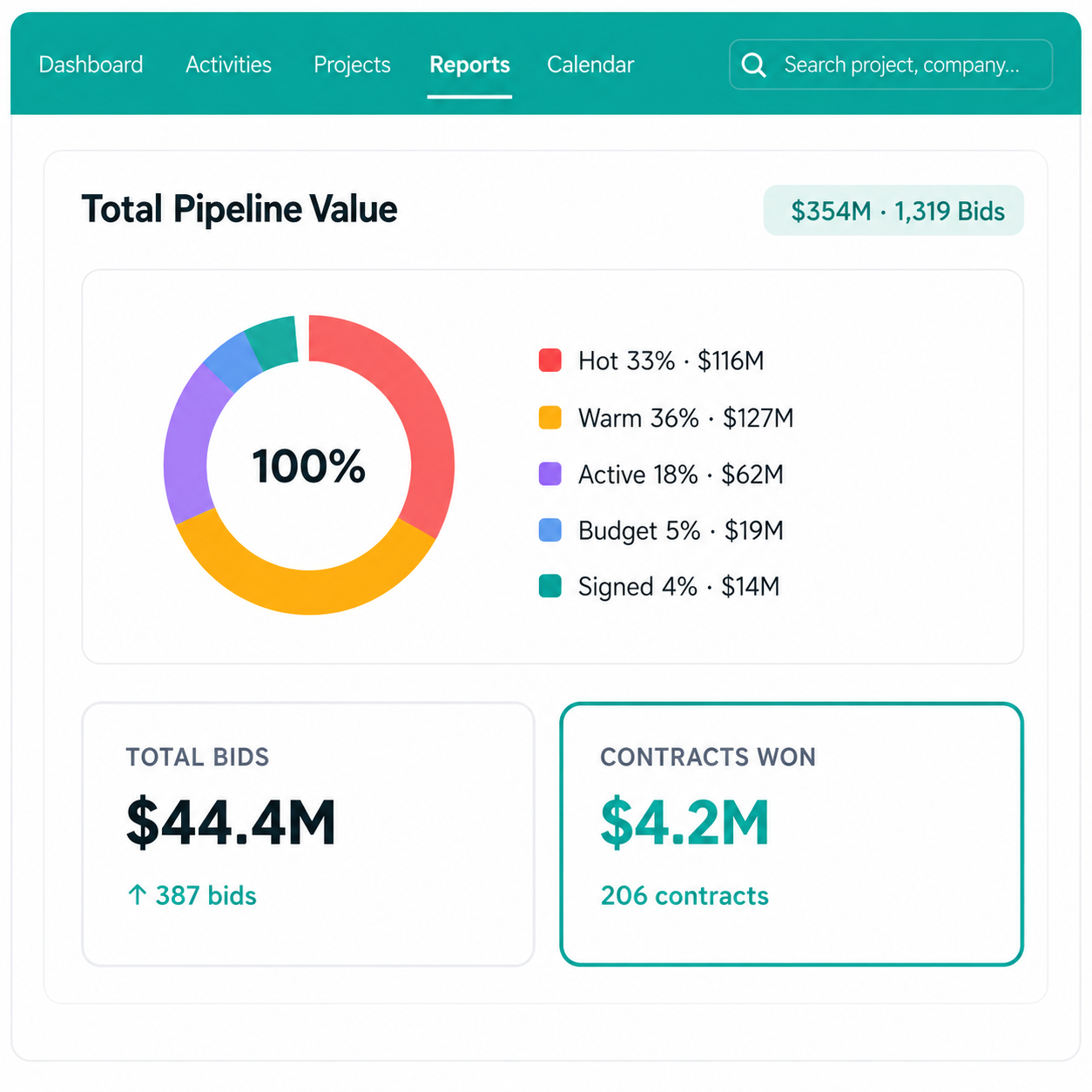
Timberline and Procore help you manage the work you have won. Followup CRM helps you win it. See how the platform tracks your leads, bids, and follow-ups in one place, and how it connects to the systems you already run.
Book a demo and walk through it live with our team.
FAQs About Timberline vs Procore
Who is Procore's biggest competitor?
Procore competes with other project management solutions like Autodesk Construction Cloud, Buildertrend, and CMiC, depending on company size and focus. Timberline competes with it mainly where project financials overlap.
None of these platforms covers preconstruction sales, though, so many contractors pair their project management choice with Followup CRM to track leads, bids, and proposals before a project ever starts.
Is Timberline software still around?
Yes. Timberline is sold today as Sage 300 Construction and Real Estate, and Sage continues to support and update it.
Its key features remain construction accounting, job costing, and payroll, built to keep contractors compliant with industry regulations like certified payroll and prevailing wage.
Is Procore worth the money for construction companies?
That depends on your project load. Procore's quote-based pricing scales with annual construction volume, so firms with higher annual revenue from construction work can expect higher costs, while the cloud model delivers new features without upgrade projects.
What is the most popular construction software?
There is no single answer, because contractors typically combine tools for accounting, project management, and sales rather than running one system for everything. Procore and Sage 300 CRE are both widely used in their categories.
For sales and bid tracking, Followup CRM gives commercial contractors a single platform for leads, bids, proposals, and follow-ups, trusted by over 1,000 construction professionals.
The CRM Built For Construction Companies
No more disorganized data. Track your leads, bids, and customers all in one place.
Seamless Integration with:
✅ Foundation ✅ Viewpoint ✅ Sage and more