1. They Treat Bid Tracking Like a Process
Many construction companies start out tracking bids in spreadsheets. At first, it works. But as the number of opportunities grows, spreadsheets quickly become difficult to maintain.
Common issues we see include:
- Multiple versions of the same spreadsheet
- Outdated information
- No clear ownership of follow-ups
- Lack of visibility across the team
High-performing contractors recognize that tracking opportunities isn’t just about storing data — it’s about managing a process.
Instead of relying on static spreadsheets, they build systems that help them answer questions like:
- Which bids need follow-up this week?
- Which opportunities are most likely to close?
- Where are deals getting stuck?
When the pipeline becomes a living system instead of a static file, teams can act on information instead of simply recording it.
2. They Assign Clear Ownership for Follow-Ups
One of the most common reasons bids are lost isn’t price. It’s lack of follow-up. After a bid is submitted, there are usually several important moments where communication matters:
- Confirming receipt of the bid
- Answering questions from the GC
- Staying top of mind during evaluation
- Following up on results
But when ownership of those steps isn’t clear, follow-ups become inconsistent.
High-performing teams solve this by making sure every opportunity has a clear owner. That person is responsible for:
- tracking communication
- scheduling follow-ups
- keeping the opportunity moving forward
This simple shift dramatically improves consistency.
3. They Centralize Relationship History
In construction, relationships are everything. Many opportunities come from existing GC relationships, repeat partnerships, or previous projects.
But when relationship history lives across email inboxes, personal notes, and spreadsheets, it becomes difficult to see the full picture. High-performing contractors keep relationship information centralized so teams can easily see:
- past projects with a GC
- previous bids
- communication history
- upcoming opportunities
This allows business development teams to approach conversations with better context and stronger relationships.
4. They Use Pipeline Visibility to Improve Forecasting
Leadership teams often ask a simple question:“What does our pipeline look like for the next quarter?”
Unfortunately, many companies struggle to answer this confidently. When bid tracking is scattered, forecasting becomes guesswork. High-performing contractors take a different approach.
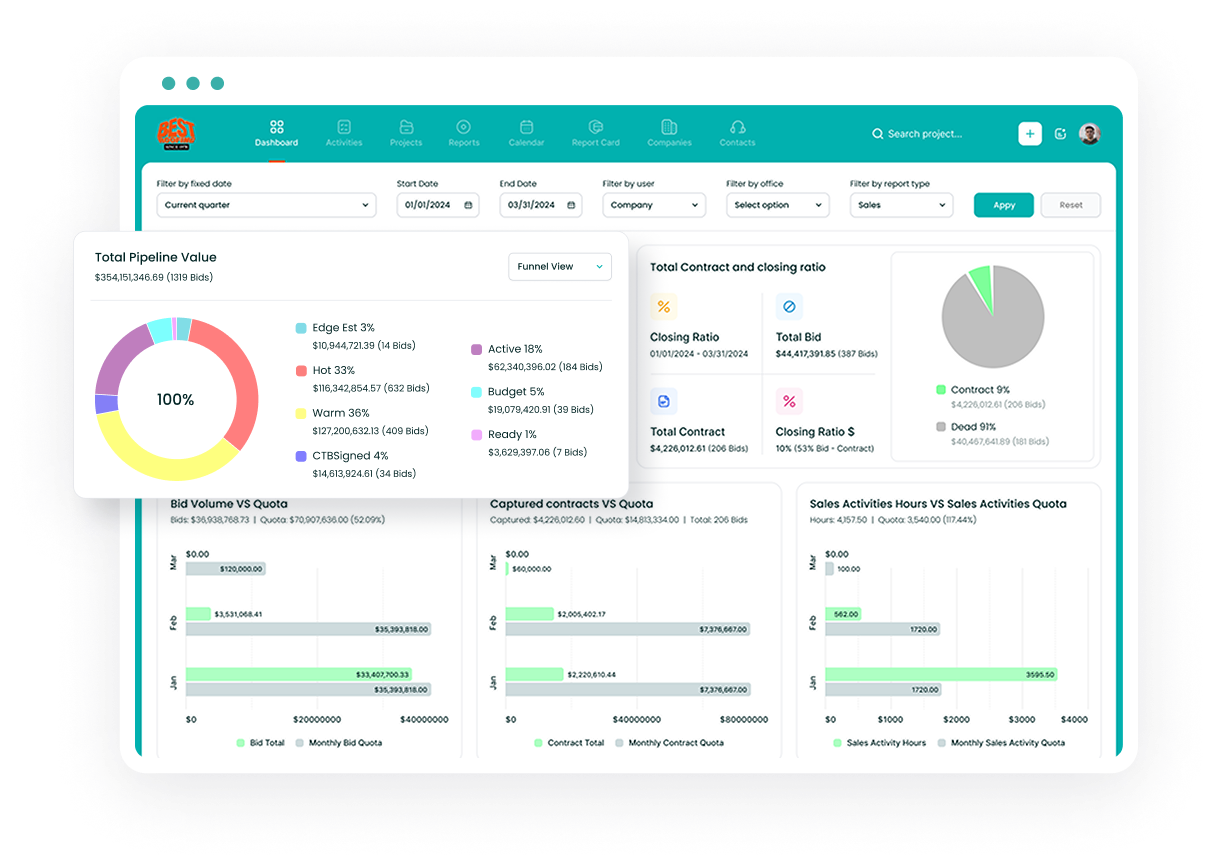
They structure their pipeline so leadership can quickly understand:
- how many opportunities are in play
- their stage in the process
- expected timelines
- likelihood of closing
This visibility allows companies to make smarter decisions about hiring, resource allocation, and growth planning.
5. They Focus on Consistency
The biggest difference between high-performing sales teams and everyone else usually comes down to one thing: CONSISTENCY.
Consistent follow-ups.Consistent tracking.Consistent communication across the team.
When everyone follows the same process, opportunities are far less likely to slip through the cracks. Over time, that consistency compounds into higher close rates and stronger relationships.
Final Thoughts
Winning more work isn’t always about finding more opportunities. Often it’s about managing the opportunities you already have more effectively. That's why we say – bid less, win more.
Contractors who improve visibility into their pipeline tend to see benefits across the board:
- fewer missed follow-ups
- better forecasting
- stronger GC relationships
- higher win rates
And most importantly, leadership gains confidence that opportunities are being managed intentionally instead of reactively.
If you’re interested to see more inside of Followup, we've put together a short preview video to give you a better idea of what the system look like.
Watch video demo here