

TL;DR
The 5 best pipeline construction management software are:
- Followup CRM
- Pipeline CRM
- Pipedrive
- Buildertrend
- Contractor Foreman
What Is Pipeline Construction Management Software?
This software helps construction teams organize their sales process into clear stages and track every opportunity as it moves toward a signed contract.
Instead of keeping bids in spreadsheets, estimator notebooks, and email threads, your team works from one shared system that shows what is active, what is stalled, and what needs attention today.
A typical pipeline runs from lead intake through qualification, bid, proposal, and close. The software records every call, email, and site visit against the right deal, reminds salespeople when a follow-up is due, and warns the team before a bid deadline passes.
Managers get reports on close rates, win and loss reasons, and projected revenue, which supports better resource allocation and decision-making.
The term can cause confusion because the pipeline industry uses similar software names. Pipeline contractors that build physical pipeline construction projects rely on tools for route planning, mapping pipeline routes, and regulatory compliance.
That is a separate category.
The tools in this guide manage the sales work that happens before construction begins. They work alongside project management software such as Autodesk Construction Cloud, Autodesk Build, or Microsoft Project, which handles project delivery once the job is won.
Key Features to Look For
Not every tool handles construction sales well. Before you commit to a tool, check that it covers these essentials:
- Visual pipeline stages: You should see every deal on a board or list, sorted by stage, so the status of each bid is clear at a glance.
- Bid deadline tracking: Construction sales run on due dates. The software should surface upcoming deadlines and warn you before one slips.
- Follow-up reminders: Most bids are lost to silence, not rejection. Look for automatic reminders and flags on deals with overdue activities.
- Activity logging: Calls, emails, and site visits should attach to the right deal, so anyone on the team can pick up a conversation with full context.
- Reporting: Close rates, win and loss reasons, and pipeline value by stage turn real-time data into better decisions.
- Mobile access: Salespeople work from trucks and job sites, not desks. Look for mobile apps that field crews can actually use in the field.
- Integrations: The software should connect to your accounting, estimating, and project management software, so won jobs move to other systems without double entry.
Choosing the right pipeline construction software for your project type will save time and prevent costly mistakes later.
5 Best Pipeline Construction Management Software Tools
Here are five tools that handle sales pipeline management for construction businesses, each suited to a different kind of team.
1. Followup CRM
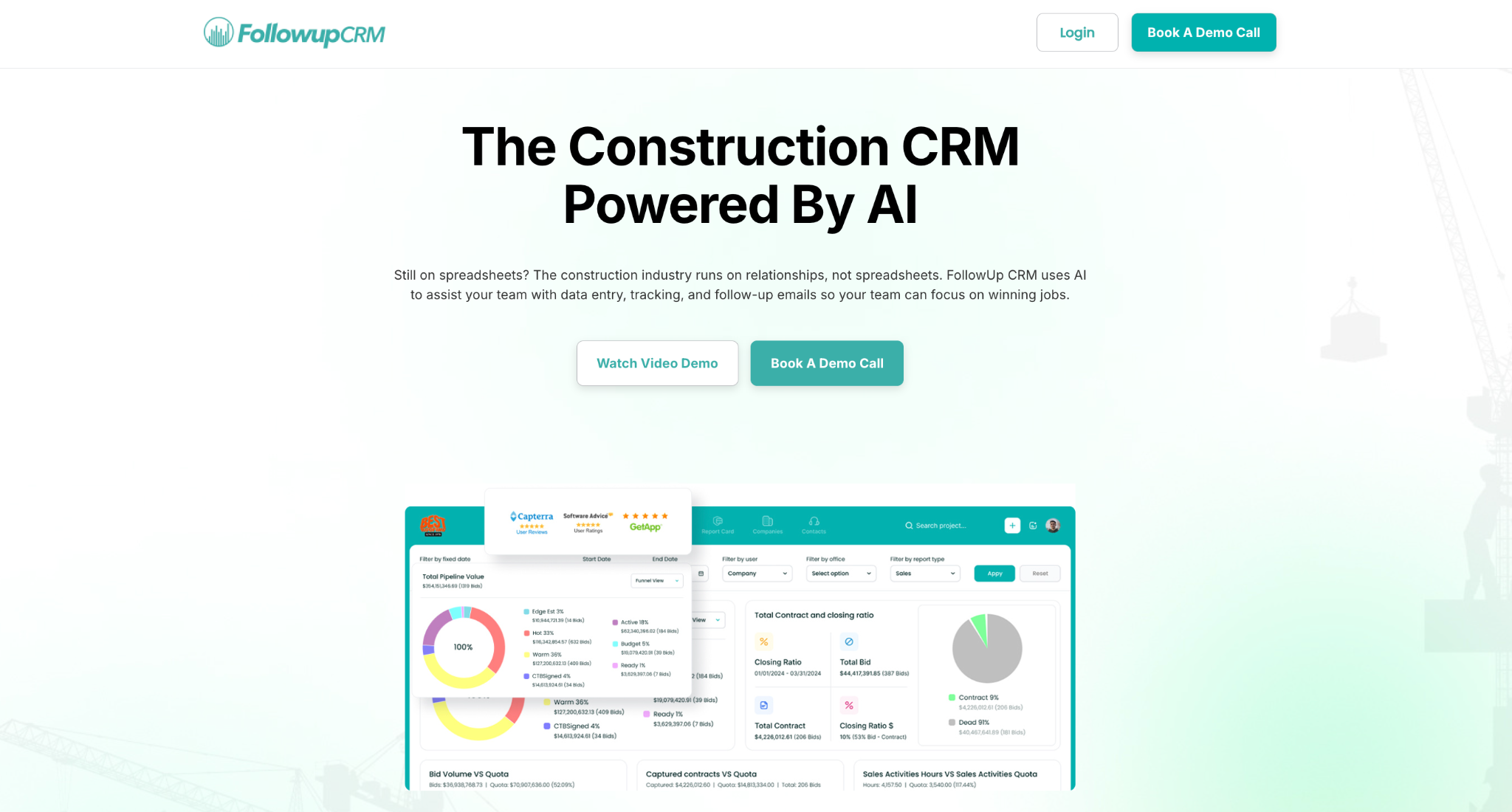
Followup CRM is a construction CRM built by contractors, for contractors, and it treats pipeline management as its core job. The platform is ideal for commercial contractors, general contractors, and specialty trades that bid in volume and cannot afford to let follow-ups slip.
Lead and Sales Pipeline Management
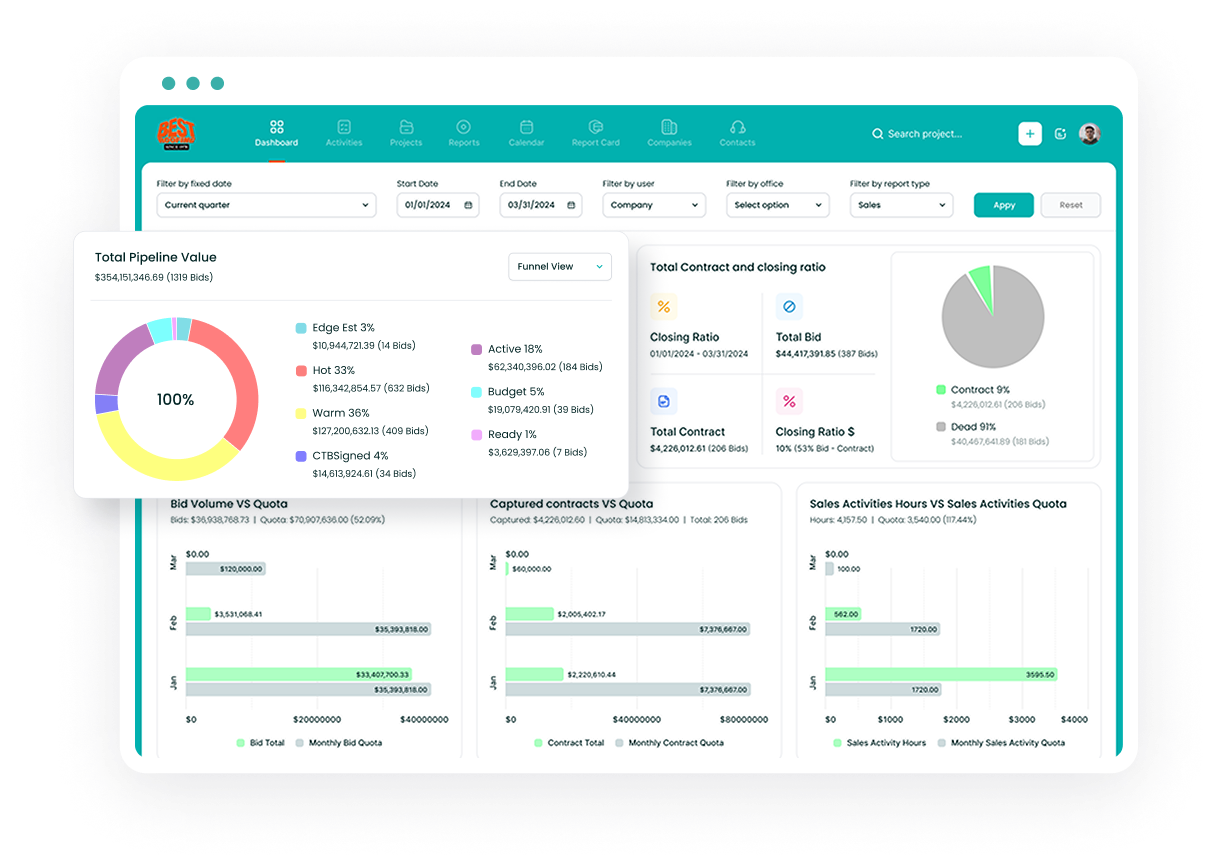
Followup CRM lets your team track bids and leads from first contact through proposal, award, or loss, so you always know exactly where every opportunity stands.
The pipeline view shows which deals have activities due, overdue, or not yet assigned, so nothing sits forgotten in an estimator's inbox and stalled deals surface before they die.
Stages, fields, and permissions are all customizable, which means the pipeline mirrors how your team actually sells and estimates instead of forcing a generic template onto construction work.
This also makes weekly pipeline review meetings simple, since the whole team looks at the same live view. Leadership gets complete visibility into pipeline value and projected revenue in real time, which turns the pipeline into a forecasting tool, not just a tracking one.
Digital Bid Calendar
Since contractors win work through bidding, Followup CRM includes a shared bid calendar that keeps due dates, workloads, and the whole team in sync.
Everyone sees what is due and when, which helps with identifying potential conflicts between deadlines before they turn into missed bids.
Reporting and Team Goals
The platform reports on close rates, win and loss results, and sales activity, and lets managers set targets per team.
Ready to see it in your own sales process? Book a demo with Followup CRM today.
2. Pipeline CRM
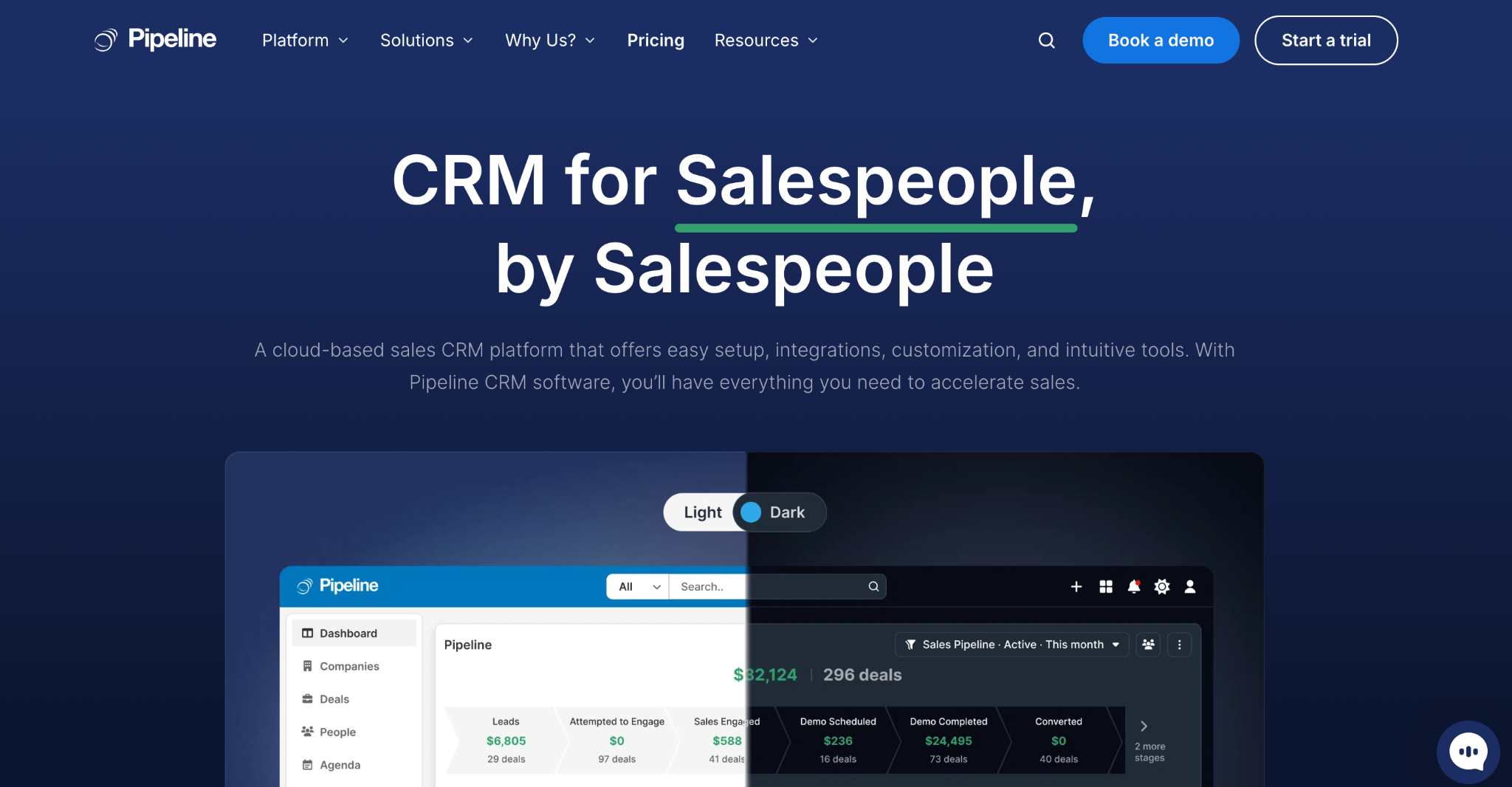
Image source: pipelinecrm.com
Pipeline CRM is a general sales CRM with a dedicated construction focus, which makes it a good fit for contractors who want more flexibility than a spreadsheet without a heavy setup process.
Customizable Deal Stages
Teams can use default stages like Qualified Lead, Proposal, Contract, and Signed, or rename them to match their own bid process.
You can also track separate revenue streams, such as residential and commercial deals, in their own pipelines. Up to 25 custom fields appear on every deal page, so details like job site, primary contact, or post-bid follow-up date stay attached to the deal.
Lead and Activity Tracking
The platform centralizes prospect and customer interactions along with project documents like estimates, permits, and contracts.
It sends an alert the moment a prospect views an estimate, so salespeople can follow up while interest is fresh. Automations notify managers when deals close or reach milestones.
Mobile Tools
Salespeople can add notes to a bid from the job site, and a one-click mapping feature helps plan routes when several meetings land on the same day. This makes the tool useful for teams that spend most of their week in the field.
3. Pipedrive
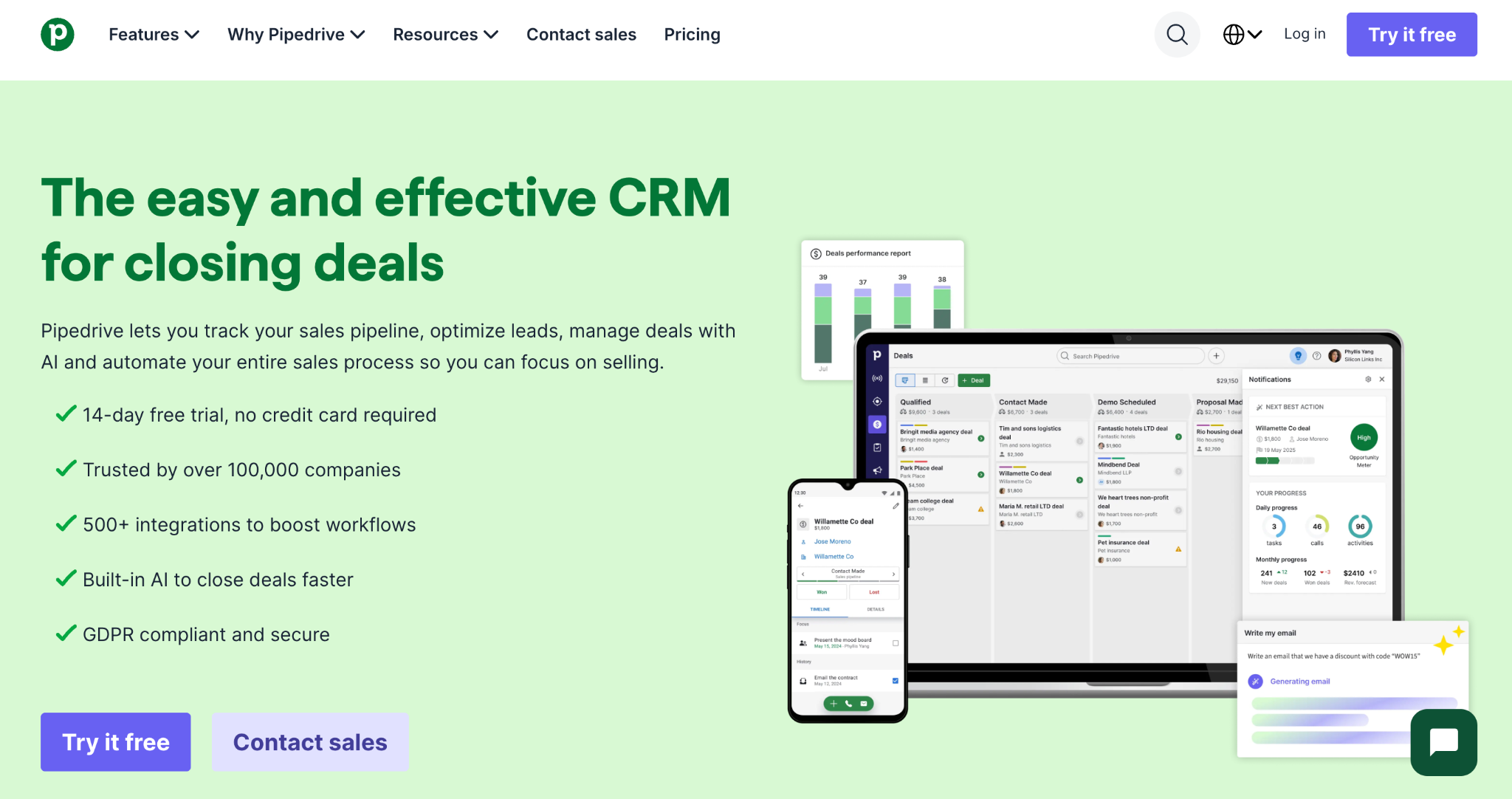
Image source: pipedrive.com
Pipedrive is a general-purpose sales CRM known for its visual pipeline, and it is a suitable choice for smaller construction teams with a straightforward sales process.
Visual Sales Pipeline
Deals appear as cards on a board, arranged by stage, so the whole pipeline is visible at a glance. Dragging a deal from one stage to the next takes a second, which keeps the system easy to maintain even for teams new to CRM software.
The platform is not built exclusively for construction, but its flexibility means you can rename stages and fields to match how your company bids and closes work.
Progress Tracking and Automation
Pipedrive tracks client communication against each deal and automates routine follow-up steps, which helps teams keep long customer lifecycles organized. Built-in tools track progress from first contact to project completion.
Integrations
Pipedrive connects with a wide range of business tools, including construction project management platforms, so client information can move into production systems once a sale is made.
For small teams that mainly need clean pipeline visibility, it may do well without the overhead of a full construction suite.
4. Buildertrend
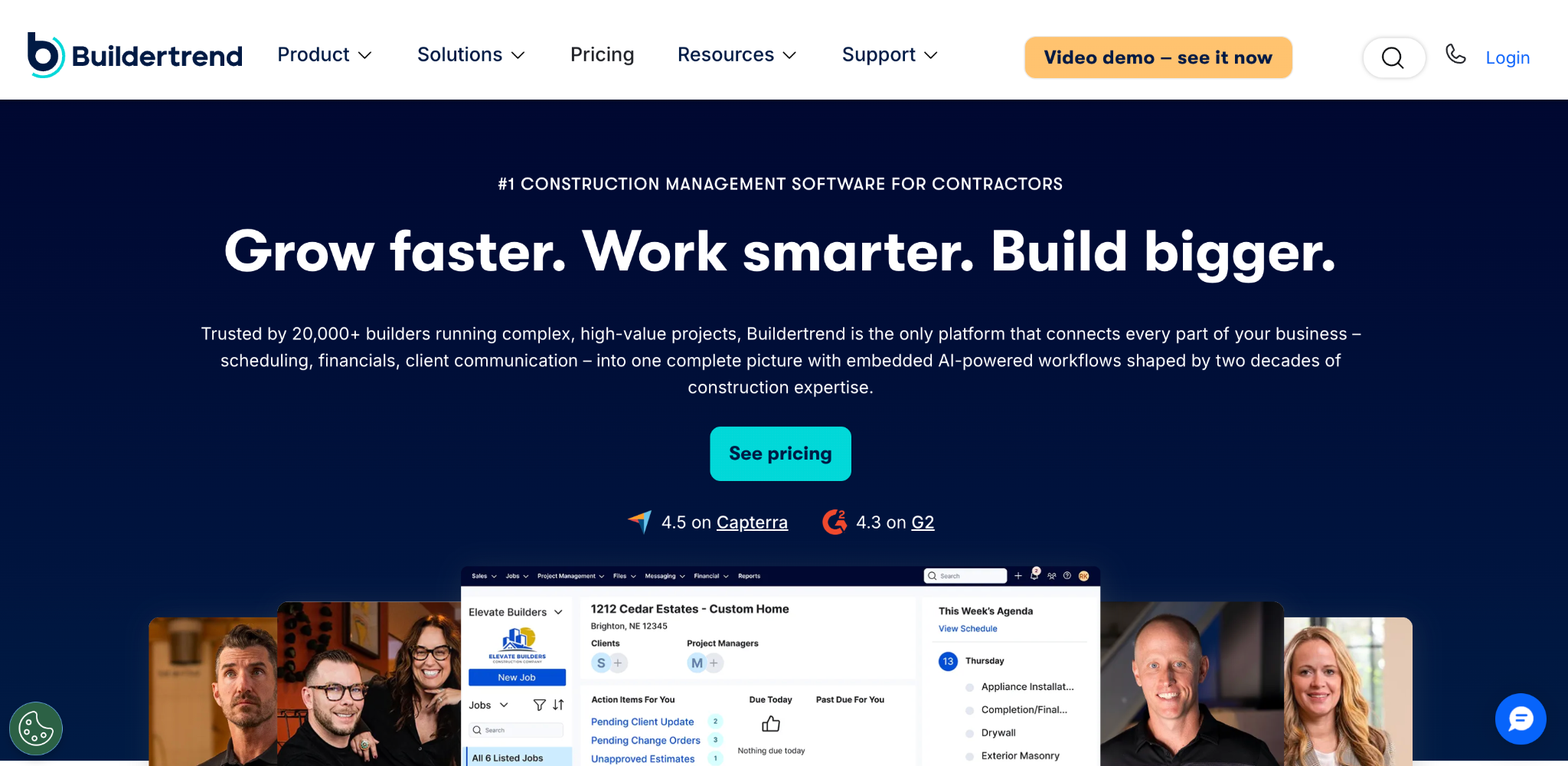
Image source: buildertrend.com
Buildertrend is a construction management platform for residential builders and remodelers, and its CRM Hub makes it a good fit for companies that want their sales pipeline connected to the same system that runs their construction projects.
CRM Hub for Lead Management
The CRM Hub captures and tracks every lead in one place, so the team always knows who to follow up with and when.
Push notifications alert salespeople the moment a lead responds, which shortens response times. Won leads convert directly into active jobs, so client details carry over without retyping.
Proposals and Follow-Up Automation
Buildertrend builds professional proposals and collects digital signatures, moving approved estimates into active projects.
Automated, personalized follow-ups keep prospects engaged and moving through the pipeline without manual effort. Reusable proposal and email templates help teams respond faster and stay consistent.
Sales Reporting
Dashboards show where leads come from and how the team converts them, which helps owners judge which sales strategies deserve more attention. For builders who want sales and production in one login, Buildertrend is a suitable option.
5. Contractor Foreman
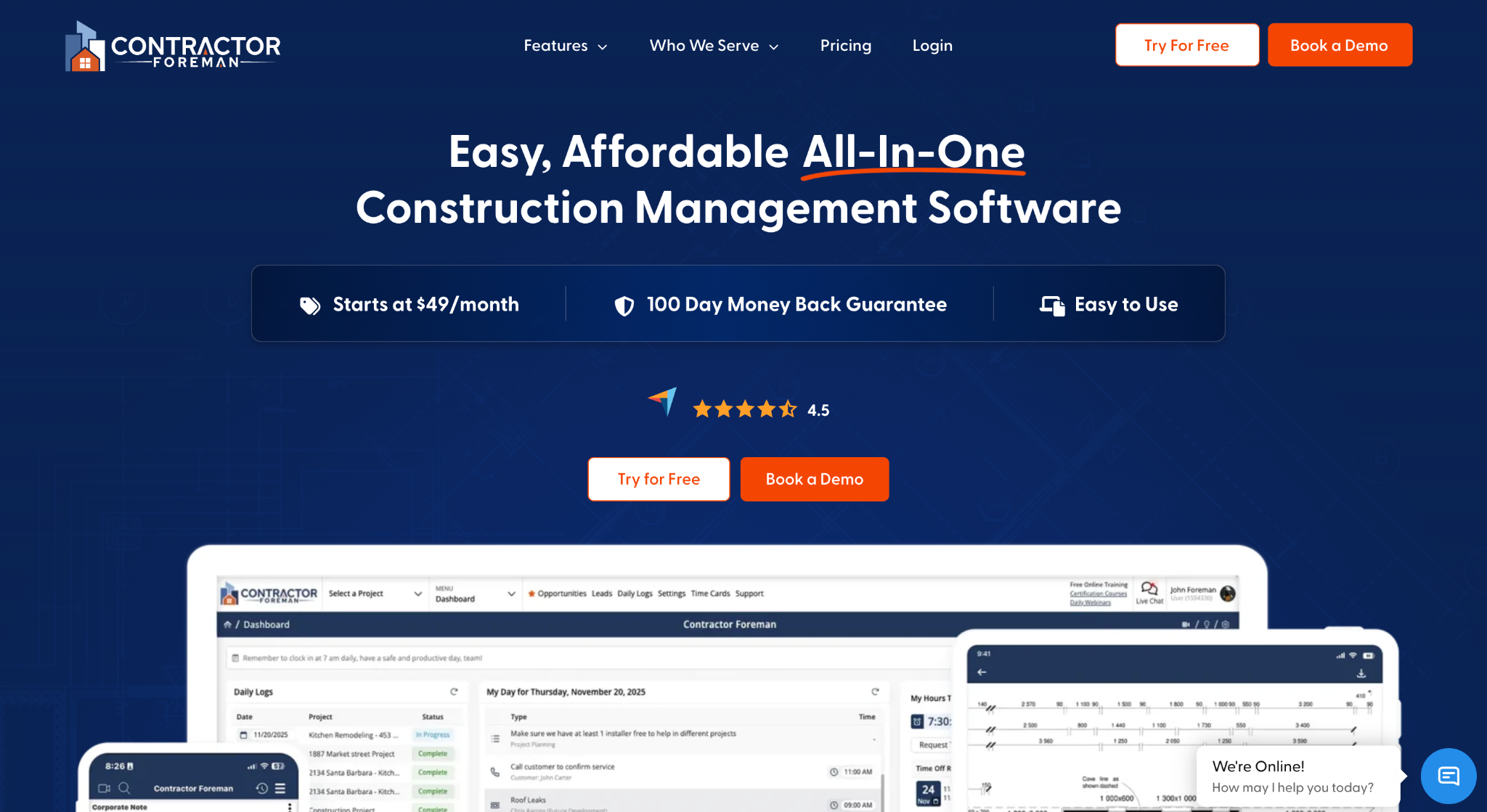
Image source: contractorforeman.com
Contractor Foreman is an all-in-one construction management platform, and its built-in sales tools make it useful for small crews that want pipeline tracking inside one unified platform instead of a separate CRM.
Leads and Opportunities
The platform includes dedicated Leads and Opportunities modules. Leads carry source, contact preferences, ownership, and a quality rating, while opportunities move through stages from pending to quoted.
Both can be viewed as lists or Kanban boards, so the team can see the state of the pipeline at a glance.
Lead Capture and Forms
Contractor Foreman generates lead forms with source tracking, and it can import leads automatically from outside services, so inquiries enter the pipeline without manual entry.
Notes, photos, and bid information are attached to each potential project, turning inquiries into opportunities the team can act on.
Built-In Everything Else
Because estimating, scheduling, job costing, and budget tracking live in the same system, a won opportunity flows straight into an active project. For small contractors that would rather manage sales and operations in one tool, Contractor Foreman is an adequate choice.
How to Get More Out of Your Sales Pipeline
The right software only pays off when the team uses it with discipline. A few habits make the difference:
- Define stages that match your real process: If your work moves from lead to site visit to bid to award, your pipeline should show those exact steps, including any internal approval process before a bid goes out, not generic labels nobody recognizes.
- Log every activity: A pipeline is only as accurate as what goes into it. Every call, email, and meeting belongs on the deal record, whether it comes from the office or the field.
- Review the pipeline weekly: A short standing meeting around the pipeline view keeps field and office teams aligned, and surfaces stalled deals before they die quietly.
- Act on overdue follow-ups first: Deals flagged as overdue are the ones most likely to slip away. Clearing them daily takes minutes and saves real revenue.
- Track your close rate over time: Win and loss numbers tell you which job types, clients, and price ranges deserve more of your bidding hours.
Handled this way, the software stops being a data entry chore and becomes a tool for continuous improvement in how your team sells.
Use Followup CRM and Stop Losing Winnable Work
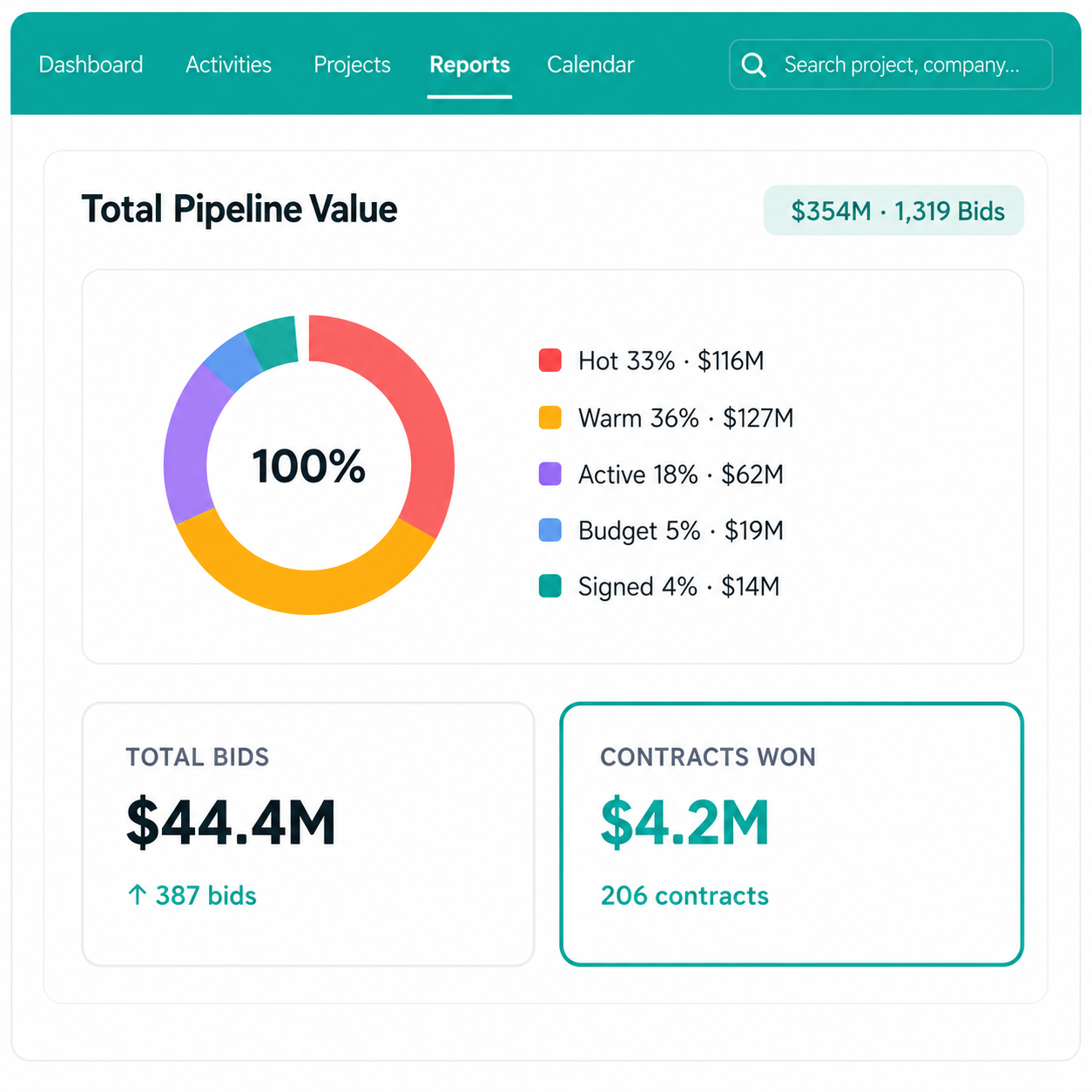
Most contractors do not lose bids because their price was wrong. They lose them because nobody followed up while the decision was still open.
Followup CRM was built to end that problem. Every lead, bid, and proposal lives in one pipeline view, follow-ups are flagged before they go overdue, and the bid calendar keeps the whole team ahead of every deadline.
It is the system Best Roofing used to grow from $6 million to $60 million, and it works the same way for commercial and specialty trade contractors of any size.
See it running on your own sales process. Book a demo with Followup CRM today.
FAQs About Pipeline Construction Management Software
What is pipeline management software?
Pipeline management software tracks sales opportunities through defined stages, from first contact to a signed contract.
In construction, that means every lead and bid sits in one shared view, with follow-up reminders, deadline alerts, and reports on close rates and projected revenue.
Good pipeline software also forecasts revenue from the deals sitting in each stage.
What is the most used construction management software?
Procore is widely considered the most used construction management platform, with industry research placing it at the top of the construction applications market and more than two million users worldwide.
Tools like Autodesk Construction Cloud and Oracle Primavera are also common at large construction companies managing complex projects.
These platforms manage project delivery, and they typically work alongside a sales pipeline tool rather than replacing one.
How much does pipeline CRM cost?
Pricing varies widely by vendor and plan. Entry-level plans for general sales CRMs typically start between $15 and $50 per user per month, while advanced tiers with automation and reporting can run $100 or more.
Many construction-specific platforms do not publish prices at all and instead provide custom quotes based on team size and needs.
Do project managers need pipeline management software?
Usually not as their main tool. Project managers and project teams take over once a bid is won, and their day runs on project planning, scheduling, document management, and compliance tracking as they deliver projects. The sales pipeline belongs to the sales side.
The two still need to connect. On large projects, and especially multi-phase projects, the handoff from sales to production is where details get lost. Many software solutions integrate both sides, connecting field and office teams without forcing anyone to juggle multiple tools.
The CRM Built For Construction Companies
No more disorganized data. Track your leads, bids, and customers all in one place.
Seamless Integration with:
✅ Foundation ✅ Viewpoint ✅ Sage and more