

TL;DR
Here is a quick overview of the seven best plumber CRM options and what each one does well:
- Followup CRM: Best for commercial plumbing contractors that bid for work.
- Jobber: Best for job scheduling and route optimization.
- Housecall Pro: Best for home service businesses focused on customer satisfaction.
- ServiceTitan: Best for large plumbing companies with inventory management needs.
- HubSpot: Best for email marketing and lead nurturing.
- Workiz: Best for capturing missed calls and phone leads.
- Pipedrive: Best for simple visual pipeline tracking.
What Is a CRM for Plumbers?
A customer relationship management system is software that stores all of your customer information in one central place. That includes contact details, quotes, job history, service history, notes, and every conversation your team has had with a client.
For plumbing contractors, that solves a very specific problem. Customer data usually lives in five different places at once, such as a spreadsheet, a whiteboard, a text thread, and two people's memories.
When a customer calls back a year later, nobody remembers what was quoted or exactly which materials were installed.
A CRM for plumbers pulls all of that together. Your team can look up any customer in seconds, see the full history of the relationship, and know exactly what the next step is.
Platforms like Followup CRM build their entire feature set around this idea, with lead tracking, follow-up reminders, and reporting layered on top of one shared database.
Plumber CRM vs. Field Service Management Software
These two categories overlap, but they solve different problems, and knowing the difference will save you from buying the wrong tool.
Field service management software handles operations. It covers tasks such as:
- Job scheduling
- Dispatching techs
- Route planning
- On-site invoicing
- Collecting payment before the truck leaves
It answers who goes where today.
A plumber CRM handles relationships and sales. It tracks:
- Leads
- Quotes
- Bids
- Follow-ups
A CRM shows you which jobs are likely to close and which ones are going cold. It answers where the next job comes from.
Residential shops running high volumes of small service calls usually lean toward field service software, and many of those platforms now include solid CRM features for managing customers and quotes.
Commercial plumbing contractors work differently. They win projects by bidding, often against several other subs, which makes deadlines, proposals, and persistent follow-up the core of the business. For that workflow, the CRM side is the priority, not the dispatch board.
Neither category is wrong. The list below includes both types, so keep your own revenue model in mind as you read, because that decides which one fits.
Top 7 Plumbing CRM Software Tools in 2026
Plumbing business software falls into two camps. Some tools below are sales-focused CRMs, and others are field service platforms with CRM features built in. Each entry states who it serves best, so match it to how your company wins work.
1. Followup CRM: Best for Commercial Plumbing Contractors That Bid for Work
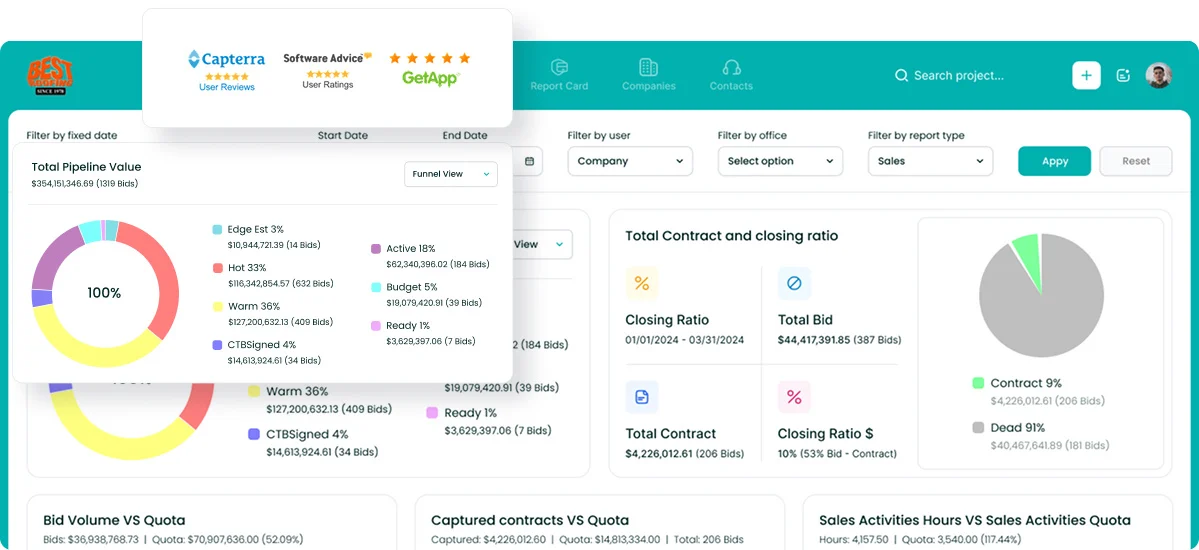
Followup CRM is a construction-specific sales CRM built by contractors, for contractors.
If your plumbing business wins work by bidding, whether that means commercial projects, new construction, or larger service contracts, this is the tool designed for your sales team.
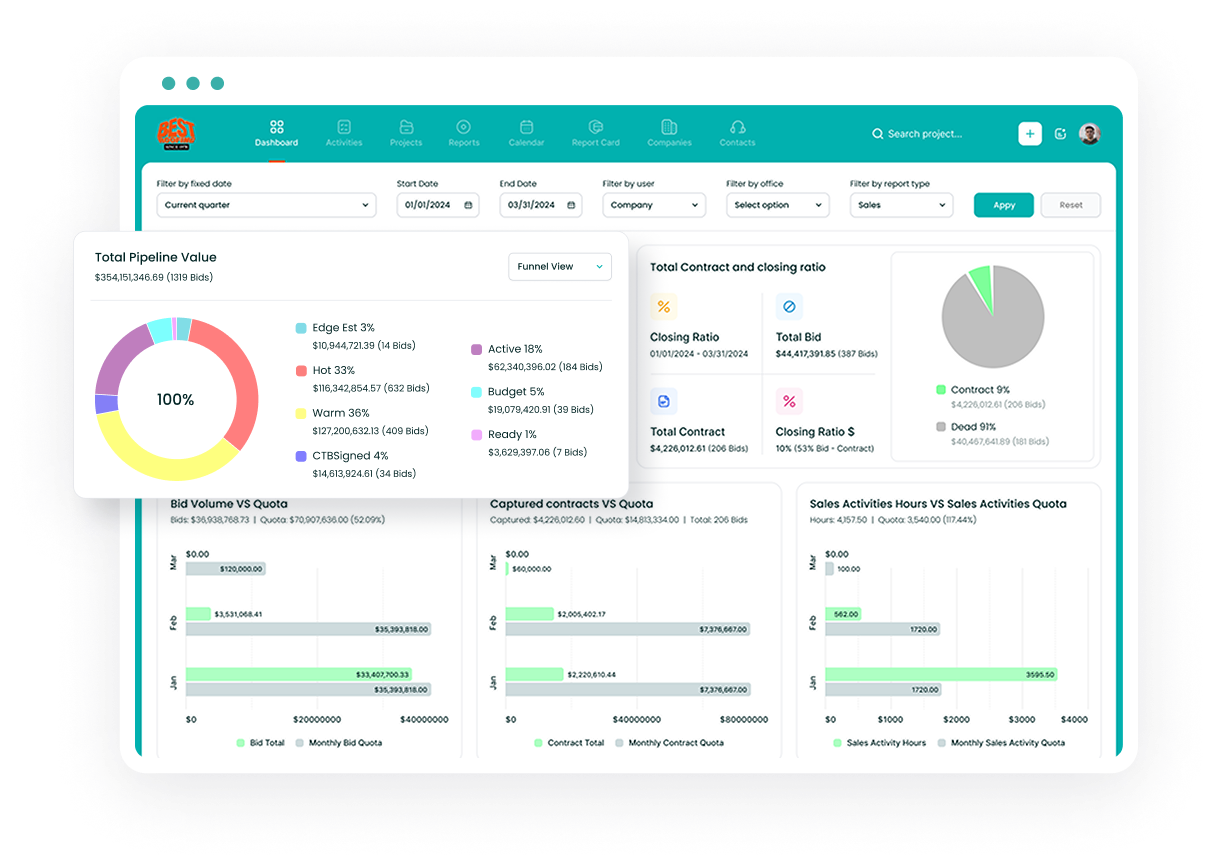
The platform's core is the bid log, a central record of every opportunity, including its due date, general contractor (GC), and status. A shared digital bid calendar keeps the whole team on schedule, and automated reminders make sure no bid or follow-up slips.
Since commercial plumbers often quote the same project to several GCs, the system is built for tracking opportunities with multiple bidders without duplicate entry or false pipeline inflation.
The proposal generator includes e-signature, so branded proposals can go out in minutes. Email tracking works through Outlook or Gmail to log activity against the right project.
Sales and estimating dashboards provide real-time visibility into close rates and pipeline value. Followup CRM also offers two-way integrations with Foundation, Sage, Vista, Spectrum, QuickBooks, and Procore.
For commercial plumbing contractors, Followup CRM turns bidding from a spreadsheet scramble into a repeatable process.
Book a demo now and see how Followup CRM suits your business needs.
2. Jobber: Best for Job Scheduling and Route Optimization
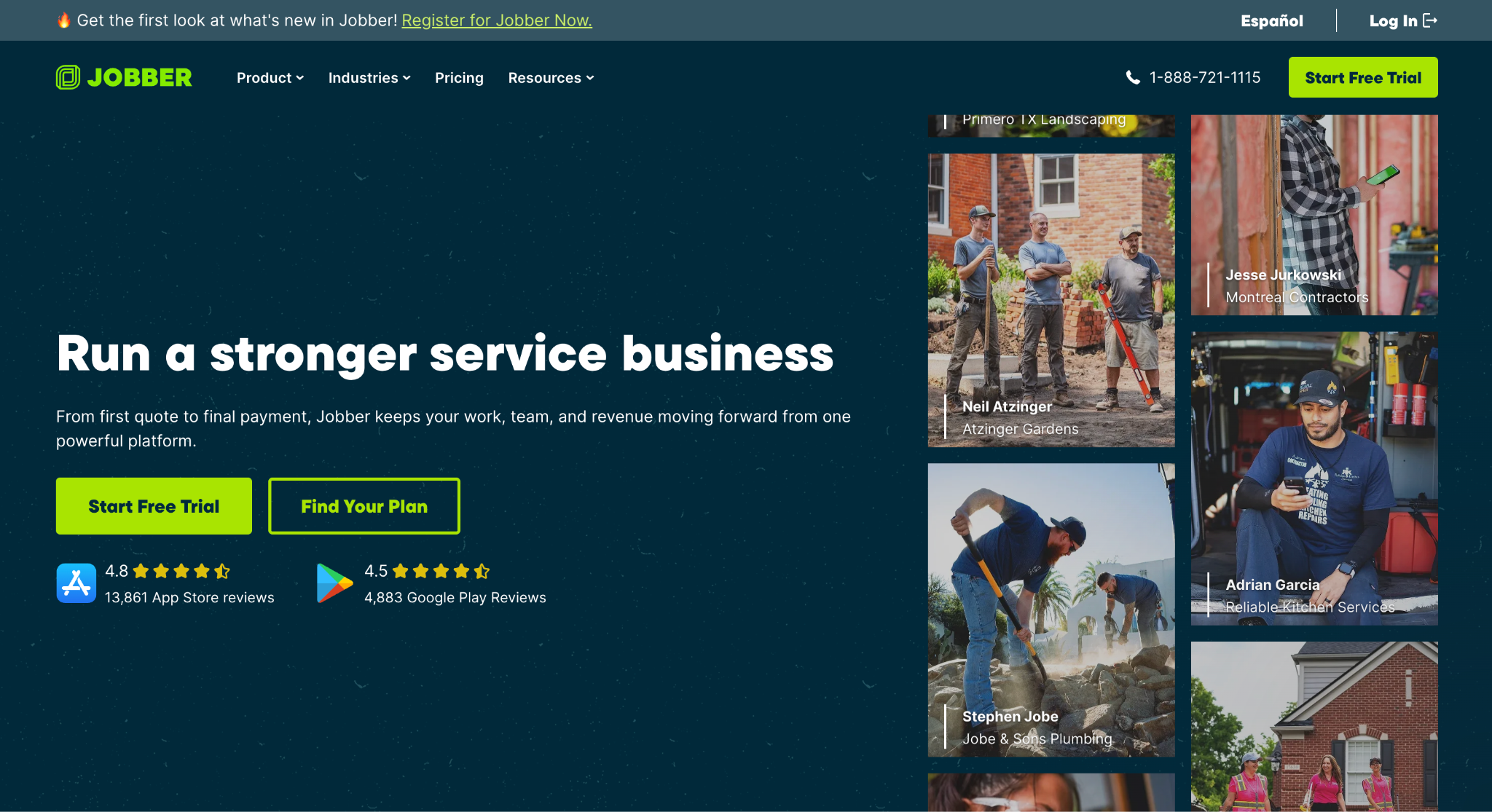
Image source: getjobber.com
Jobber is field service software aimed at small home service businesses, and plumbing is one of its main verticals. It covers the day-to-day operational side of running a residential crew.
The scheduling tools are the highlight. Dispatchers can drag jobs onto a calendar, assign techs, and optimize routes so nobody crosses town twice in one afternoon.
Customers get automated appointment reminders, which cuts down on no-shows, and techs see their day from a mobile app with the customer information they need on site.
Jobber also handles quoting, invoicing, and payments, and its client manager keeps job history in one place.
It is a good fit for solo plumbers and small residential teams that need scheduling handled first and sales tracking second.
3. Housecall Pro: Best for Home Service Businesses Focused on Customer Satisfaction
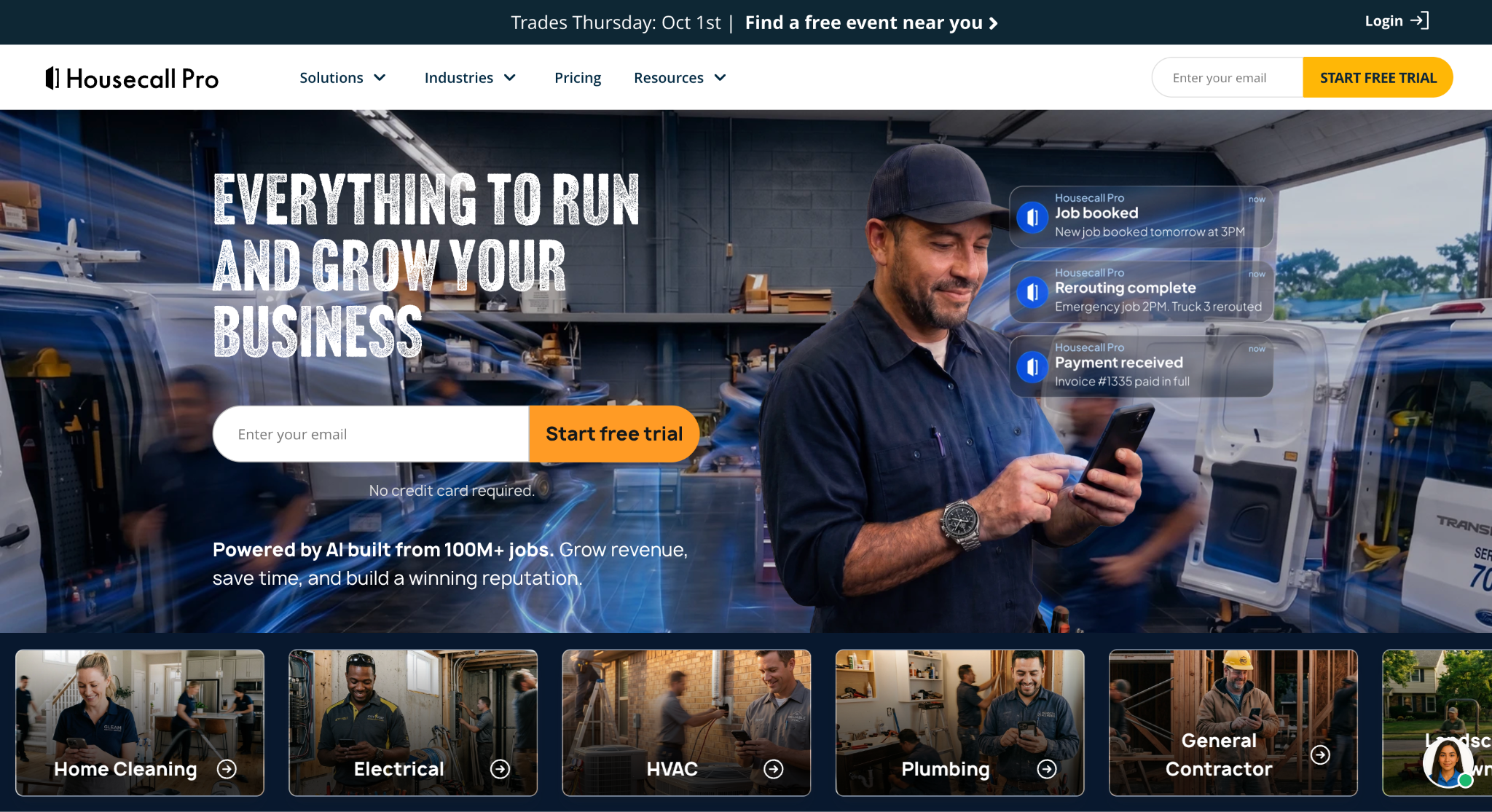
Image source: housecallpro.com
Housecall Pro is a field service platform for residential trades that puts extra weight on the customer experience. Homeowners get text updates when the tech is on the way, can pay online, and receive automated review requests after the job.
On the operations side, it covers scheduling, dispatching, estimates, invoicing, and payment processing.
It also includes marketing features like email campaigns and postcards for reactivating past customers, plus a consumer financing option that helps homeowners say yes to bigger tickets like a repipe or a water heater replacement.
Housecall Pro suits residential plumbing companies that rely on repeat business and referrals, where customer satisfaction directly drives next month's schedule.
4. ServiceTitan: Best for Large Plumbing Companies With Inventory Management Needs
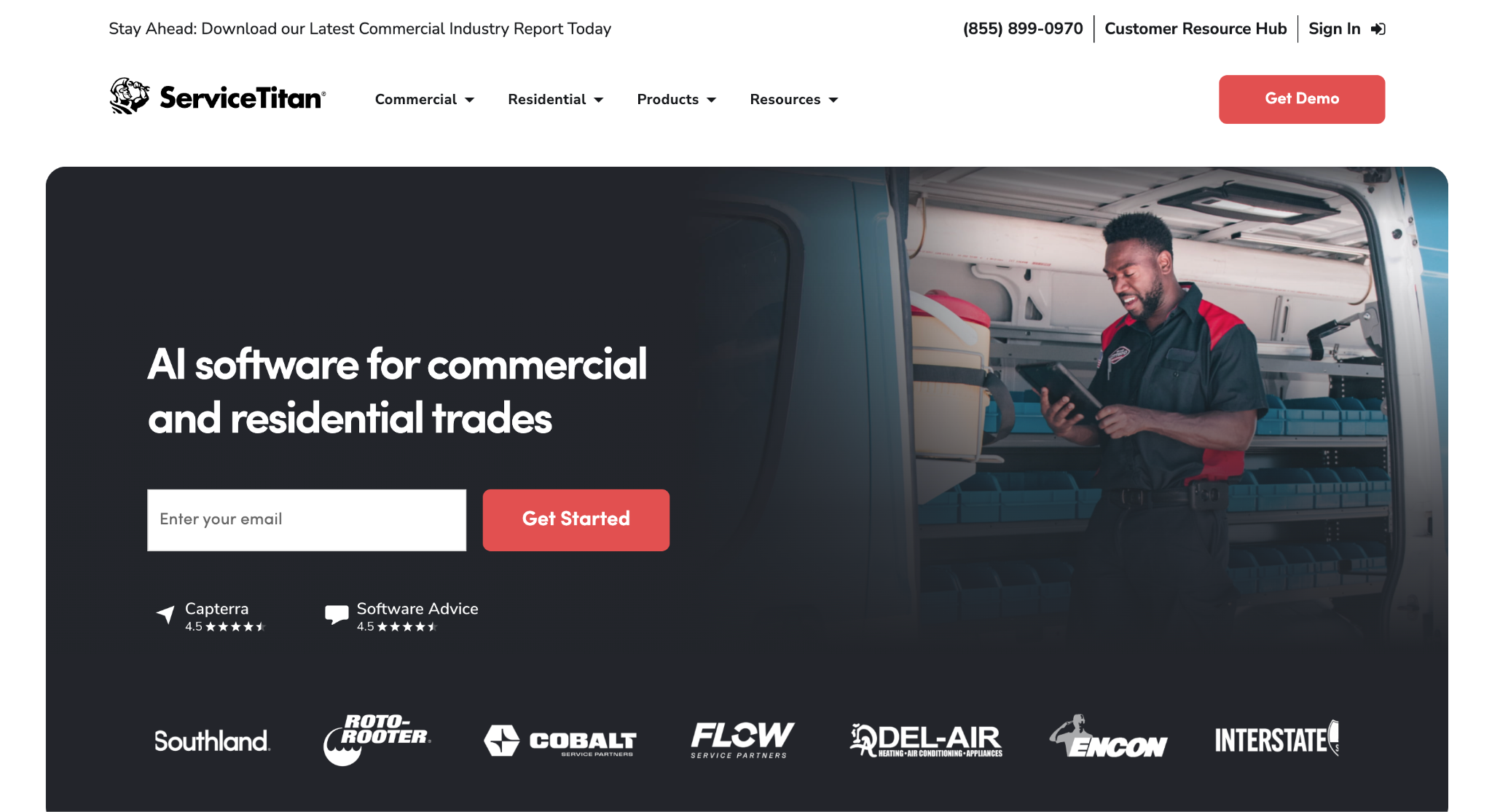
Image source: servicetitan.com
ServiceTitan is enterprise-grade field service management software used by many of the largest residential and commercial service operations in the trades.
Its scope is wide. Call booking tools help office staff convert inbound phone calls, dispatch boards manage large tech teams in real time, and a built-in pricebook standardizes what techs present in the home.
The inventory management module suits bigger shops, tracking parts and materials from warehouse to truck so replenishment happens before a tech shows up without the right fitting.
Reporting is detailed, with visibility into revenue, technician performance, and marketing ROI.
ServiceTitan may do well for plumbing companies with larger teams and the internal structure to support a full operational platform.
5. HubSpot: Best for Email Marketing and Lead Nurturing
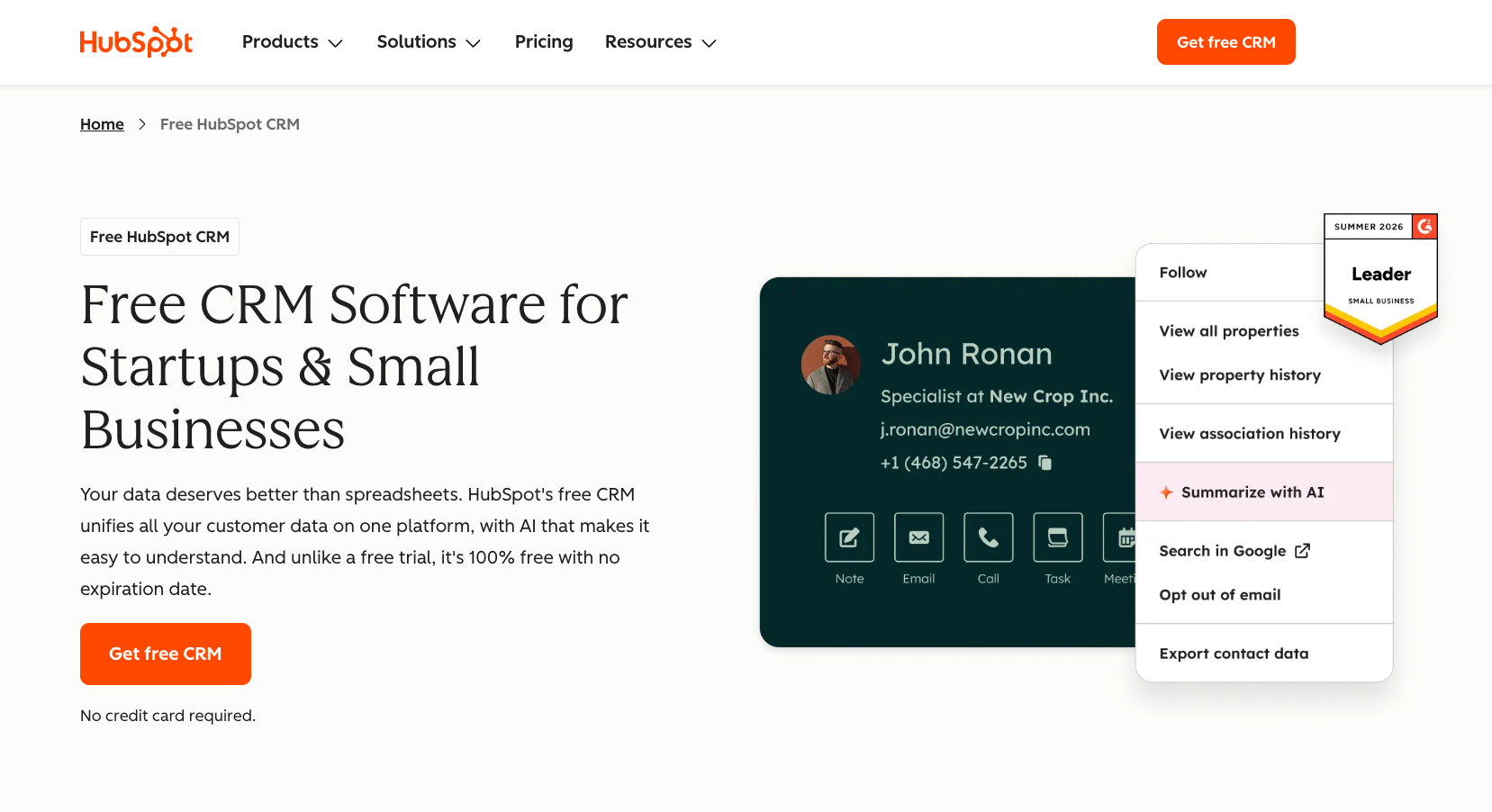
Image source: hubspot.com
HubSpot is a general-purpose CRM with marketing tools attached, which makes it a reasonable option for plumbing companies that want to nurture leads over time rather than just track them.
The CRM stores contact details, deal stages, and full communication history, while the marketing side handles email campaigns, forms, and landing pages.
A plumbing business can capture website inquiries automatically, drop them into a pipeline, and keep past customers engaged with scheduled email sends. Meeting scheduling and email tracking round out the sales toolkit.
The trade-off is that HubSpot is not built for the trades. There are no bid calendars, job records, or construction enterprise resource planning (ERP) integrations, so anything industry-specific has to be configured manually or connected through third-party add-ons.
HubSpot may work well for plumbing companies that treat marketing as a growth channel and are comfortable adapting a generic system to their process.
6. Workiz: Best for Capturing Missed Calls and Phone Leads
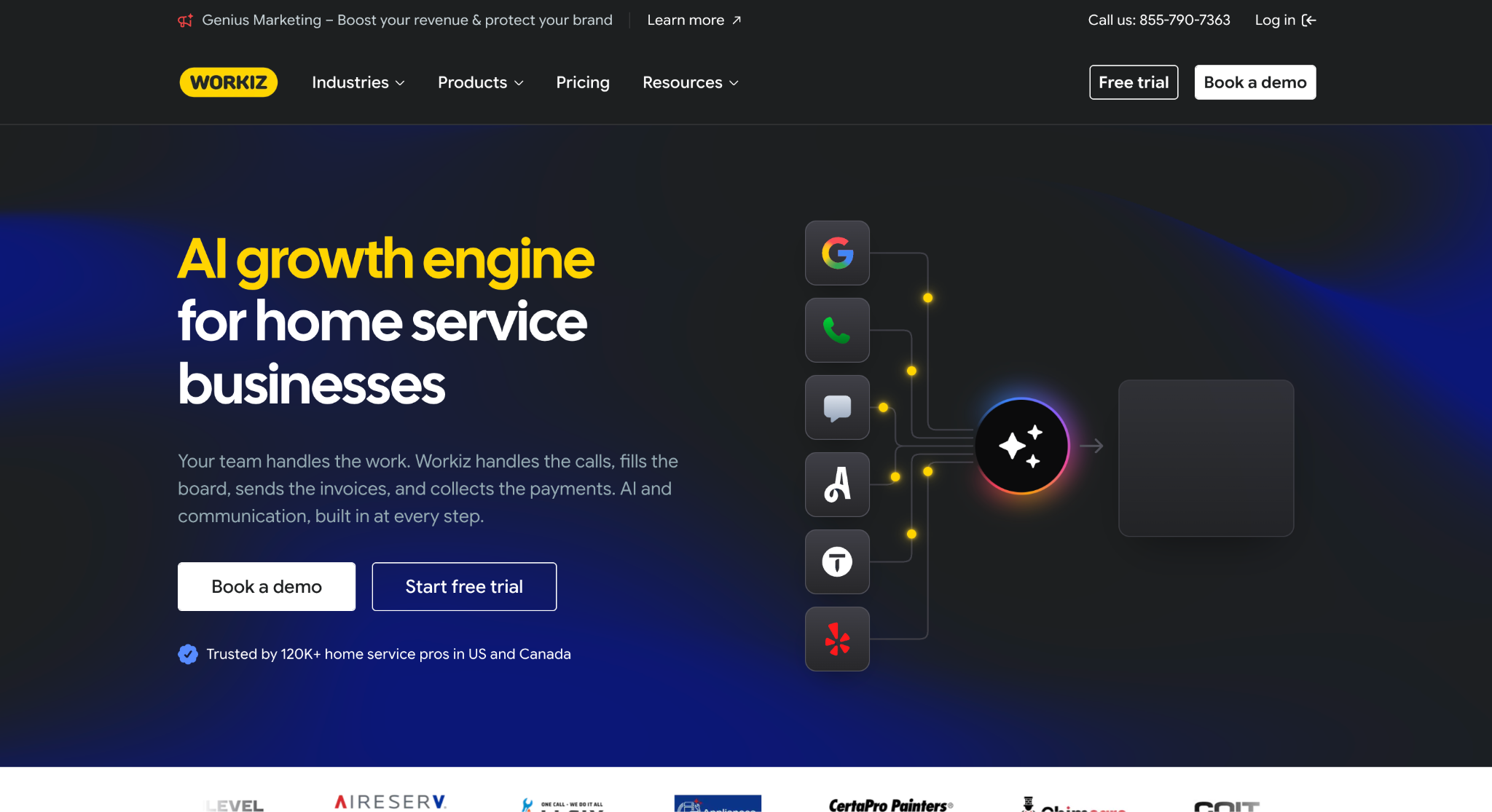
Image source: workiz.com
Workiz is field service software with communication tools at its center.
It includes a built-in phone system with call tracking, recording, and reporting, so you can see which ad campaigns make the phone ring and how office staff handle those calls.
That focus matters because missed calls are lost jobs in the service world. Workiz can trigger automatic text-backs when a call goes unanswered, giving the business a second chance at the lead before the homeowner dials a competitor.
The platform also covers online booking, scheduling, dispatch, estimates, and invoicing. Workiz is a good fit for plumbing businesses with heavy inbound call volume that want every phone lead accounted for.
7. Pipedrive: Best for Simple Visual Pipeline Tracking
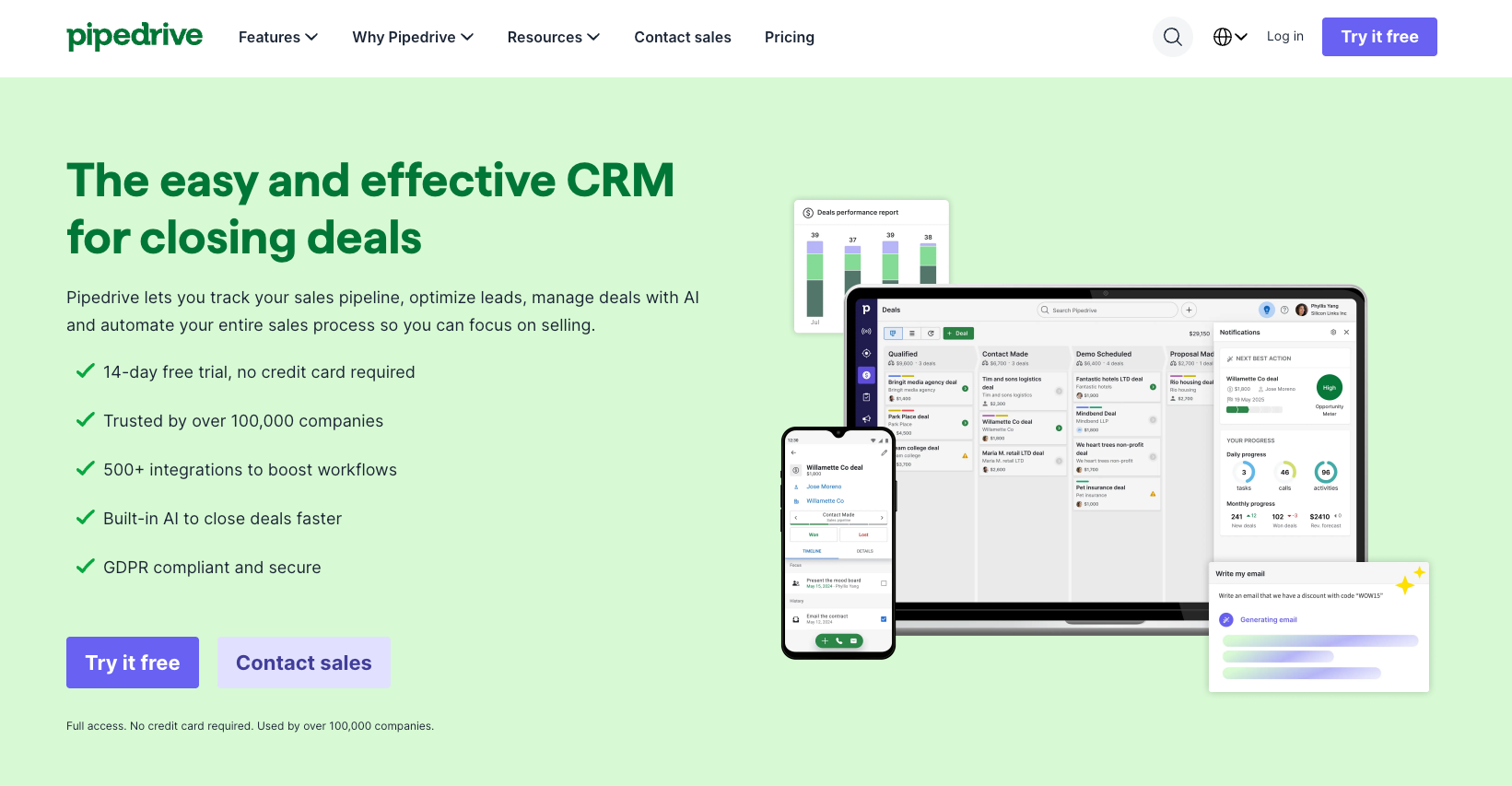
Image source: pipedrive.com
Pipedrive is a sales-focused CRM known for its visual pipeline, where every open deal sits as a card that moves through customizable stages from new lead to closed job.
The system is built around activity-based selling. Every deal gets a next step attached, such as a call, a site visit, or a quote to send, and the platform nudges the salesperson when that activity is due.
Email sync logs conversations against the right contact, and basic reporting shows stage-to-stage conversion rates.
Like other general-purpose CRMs, Pipedrive has no construction-specific features, so bid deadlines and job details live in custom fields rather than purpose-built records.
Pipedrive is suitable for smaller plumbing companies that want a clear view of their sales pipeline without adopting a full operations platform.
What to Look for in Plumbing CRM Software
Before comparing tools, check that any plumbing CRM you shortlist covers these four areas.
Customer Information and Job History
Every inquiry should create a customer profile automatically, with contact details, property notes, quotes, and past jobs attached to it.
The profile should also be easy to pull up mid-call, because the office sounds a lot more credible when they can reference the last visit without putting the customer on hold.
Complete job history pays off twice. It helps your team give informed answers on the spot, and it surfaces upsell opportunities, like a fixture upgrade for a customer whose water heater install is coming up on ten years.
Look for a system where notes, documents, and communication all live on the same record instead of in separate apps.
Follow-Up Automation
Unanswered quotes are the quietest revenue leak in the plumbing sector. A homeowner requests an estimate, gets it, and then doesn’t hear back from the company, so the job goes to whoever calls back first.
Look for automated reminders that nudge your team when a quote has gone silent, plus scheduled emails or texts that go out without anyone having to remember them.
Better systems let you build follow-up sequences once and apply them to every new opportunity, so consistency doesn't depend on how busy the week was.
A quote that gets followed up on has a real chance of closing. One that sits in an outbox usually expires.
Reporting and Pipeline Visibility
You should be able to see, at any moment, how many open opportunities you have, what they are worth, and who owns the next step. Without that view, forecasting becomes guesswork and slow months arrive as a surprise.
Dashboards that break down close rates by salesperson, lead source, or job type tell you where to spend your marketing budget and which habits to coach.
For bid-driven contractors, reporting should also cover win and loss patterns, so you can see which GCs, project types, or regions are actually worth chasing.
Integrations and Mobile Access
A CRM that stands alone creates double entry, so check that it connects to the tools you already run.
QuickBooks Online support matters for most small shops, while larger commercial contractors should look for two-way sync with construction ERP and accounting platforms, so customer and job data stays consistent between sales and the back office.
Mobile access is the other non-negotiable aspect. Estimators and techs work from job sites, not desks, and a CRM only helps if updating a record takes seconds on a phone. If the field crew can't use it, the data goes stale within a month.
Win More Plumbing Jobs With Followup CRM
The right software depends on how your plumbing business makes money.
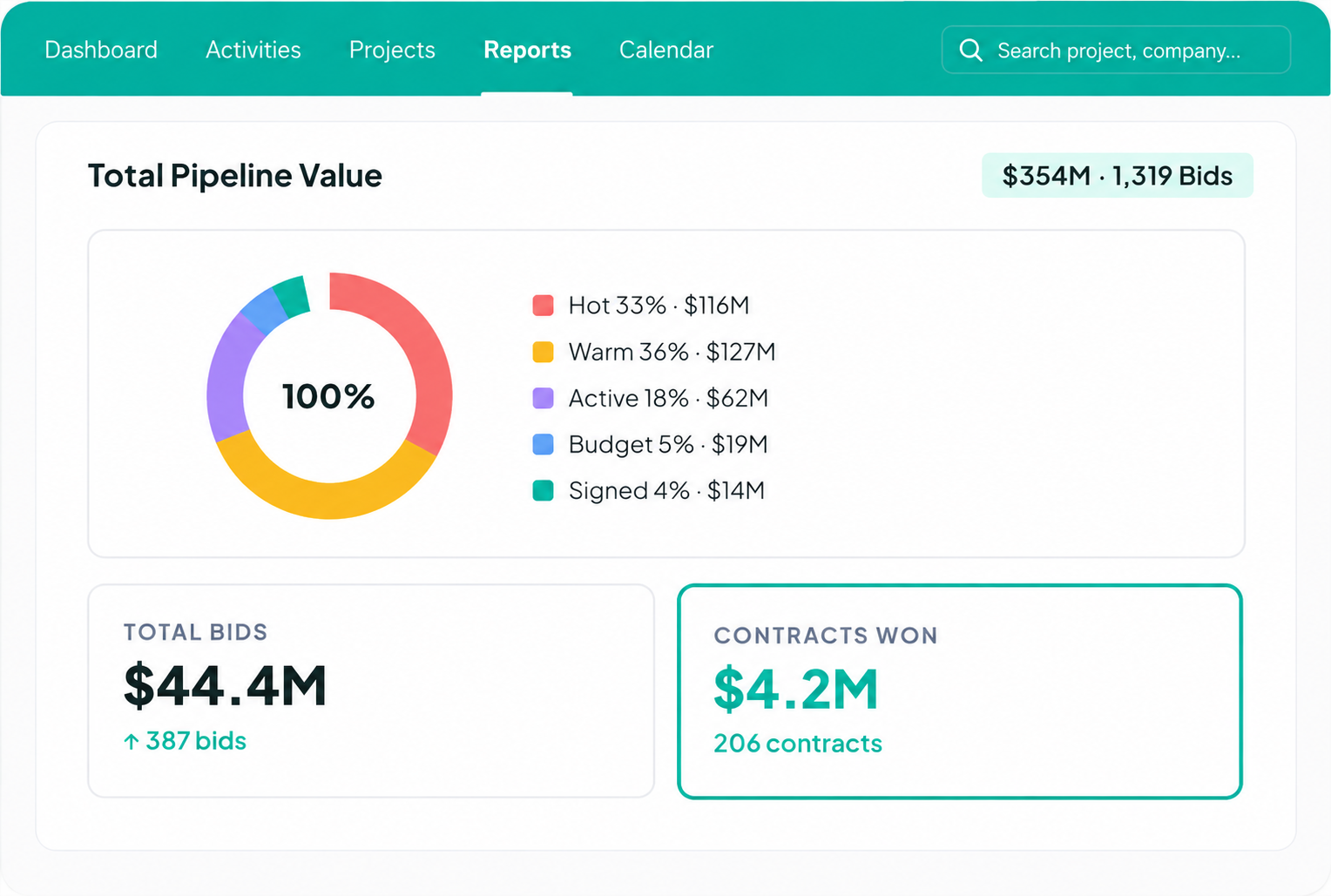
If your revenue comes from bids, proposals, and relationships with GCs and property managers, you need a system built for that sales cycle.
Followup CRM gives commercial plumbing contractors a bid log the whole team works from, automated follow-up reminders, branded proposals with e-signature, and dashboards that show exactly where your pipeline stands.
It also connects to the ERP and accounting systems contractors already use, so won jobs flow straight into job costing.
FAQs About Plumber CRM
What is the best CRM for plumbers?
It depends on how your plumbing business wins work.
Residential shops need plumbing software with scheduling and dispatch at the core, while commercial contractors need a purpose-built CRM for tracking bids.
Followup CRM fits that second group, with follow-up reminders, proposal generation, and real-time visibility into the pipeline for the whole sales team. Book a free demo to see if it is the right CRM for your process.
What are the top three CRM tools?
There is no universal top three, because plumbing companies win jobs in different ways.
Some need a sales platform for managing customer relationships and bids, while others need field service tools to schedule jobs and dispatch plumbing techs.
For commercial plumbing contractors, Followup CRM is the strongest option, and the list above covers the best picks for other use cases.
What is the best invoicing software for plumbers?
Most plumbing businesses invoice through accounting software, with QuickBooks as the common choice for keeping records up to date and cash flow steady. The bigger win is connecting invoicing to the system that wins the work.
Followup CRM integrates with QuickBooks Online and construction ERP platforms, so a won bid flows into invoicing and job costing without re-entry.
What is the best software for plumbers?
No single tool runs all plumbing business operations. Field service software covers job details, real-time job status, and daily dispatch, while a CRM handles storing contacts, follow-up, and turning quotes into more jobs.
Since revenue starts with winning the work, bid-driven contractors should start with Followup CRM and connect the rest of their tools to it.
How does plumbing business software help you get more customers?
It works on both ends of the relationship.
On the front end, a CRM makes sure every inquiry gets a fast response and a professional estimate, and automated SMS or email follow-ups keep the quote alive until the customer decides.
On the back end, it helps you deliver reliable service to existing clients by keeping every promise, note, and callback on record.
The CRM Built For Construction Companies
No more disorganized data. Track your leads, bids, and customers all in one place.
Seamless Integration with:
✅ Foundation ✅ Viewpoint ✅ Sage and more