


TL;DR
- Construction sales management involves coordinating every step that takes a prospect from the initial conversation to a signed contract.
- The construction sales process runs through four stages: lead intake, bidding and estimating, proposal and negotiation, and close and handoff.
- A dedicated sales manager sets sales targets, coaches sales reps, and keeps the pipeline accurate.
- Construction-specific CRM tools such as Followup CRM centralize leads, bids, and follow-ups in one place.
What Is Construction Sales Management?
Construction sales management is the practice of organizing, tracking, and improving every step that moves a potential client into a signed project. It is what’s between business development efforts that generate new leads and the project teams that deliver the work.
The construction industry sells differently from almost any other field. Sales cycles are long, often stretching for months from first contact to contract. Deals are bid-driven, so winning depends on estimating accuracy as much as persuasion. Buyers are rarely a single person.
In commercial construction sales, a general contractor, an owner, and an architect may all influence the decision. And building relationships carries unusual weight, since general contractors tend to invite bids from subcontractors they already know and trust.
Because of these technical aspects, a generic sales approach falls short. A contractor cannot manage a bid calendar, a takeoff, and a proposal deadline with tools built for selling software subscriptions.
This sales management type adapts the standard sales process to how projects are actually won, through qualified leads, accurate estimates, timely bids, and long-term relationships that generate repeat work.
When done properly, it gives leadership a clear view of the sales pipeline, so decisions about hiring, capacity, and revenue growth rest on real numbers instead of gut feel.
Construction Sales Process: Pipeline Stages Explained
A healthy sales pipeline follows a predictable path. When every construction opportunity moves through the same stages, sales teams know what to do next, and leadership can forecast revenue with confidence.
Here is how the process breaks down.
Lead Intake and Qualification
Every project starts as a lead. New leads arrive from referrals, bid boards, trade shows, website inquiries, and repeat clients, and the first job is getting all of them into one central place. A lead scribbled on a notepad is a lead that goes cold.
Qualification comes next. Not every inquiry deserves a bid, so teams should score prospective clients on project type, budget, timeline, and fit.
A fast, professional response also sets the first impression, and in a relationship-driven business, that matters more than most contractors admit.
Bidding and Estimating
Qualified construction opportunities move into the bid stage. This is where construction diverges from typical sales work, because the estimate is the sales document.
An accurate takeoff and a sharp estimate win jobs, while a rushed one either loses the bid or wins unprofitable work.
The operational challenge is deadlines. Contractors often juggle dozens of active bids at once, and a missed due date is a guaranteed loss. A shared bid calendar keeps the whole sales team on schedule.
Proposal and Negotiation
A strong proposal translates the estimate into a document that the client can act on. It should present scope, pricing, and timeline clearly, look professional, and be easy to sign.
Negotiation in construction usually centers on scope adjustments rather than raw discounting, so document every change and confirm it in writing.
Follow-up discipline decides this stage. Many contractors submit a proposal and wait. The ones who win consistently follow up on a set schedule until they get a yes or a no.
Close and Handoff
A signed contract is not the finish line. The handoff to project management determines whether the expectations set during selling hold up during delivery.
Pass along complete records: contacts, pricing, commitments, and communication history.
A clean handoff protects margins and sets the project up for success. Since repeat clients and referrals drive most construction revenue, how a project starts is part of how the next one gets sold.
The Role of the Construction Sales Manager
Someone has to own the pipeline. In smaller companies, that is often the owner, while larger contractors hire a dedicated sales manager. Either way, the job description covers the same core responsibilities for anyone in this results-driven position.
The first is setting direction. A sales manager defines sales targets for the company and individual sales goals for each rep, based on capacity, market conditions, and revenue growth plans.
Targets only work when they connect to activity, so good managers track the inputs too, such as calls made, bids submitted, proposals sent, and follow-ups completed.
The second is coaching. Many construction sales representatives come from the field, with deep technical expertise but limited prior sales experience.
A manager's job is to turn that product knowledge into selling skills, through ride-alongs, bid reviews, and honest feedback on lost deals.
The third is keeping the pipeline honest. Sales reps are optimists by nature, and a pipeline full of dead deals leads to bad forecasts. Managers should review every active opportunity regularly, close out stale ones, and make sure activity tracking reflects real sales performance.
A strong sales manager gives leadership something rare in construction: a forward view of the business instead of a rearview one.
Key Management Tools and Technology
Most contractors start managing sales with spreadsheets, and most outgrow them fast. Spreadsheets cannot remind a rep to follow up, log an email thread, or warn the team that three bids are due Friday. When more than one person touches the sales process, the cracks show.
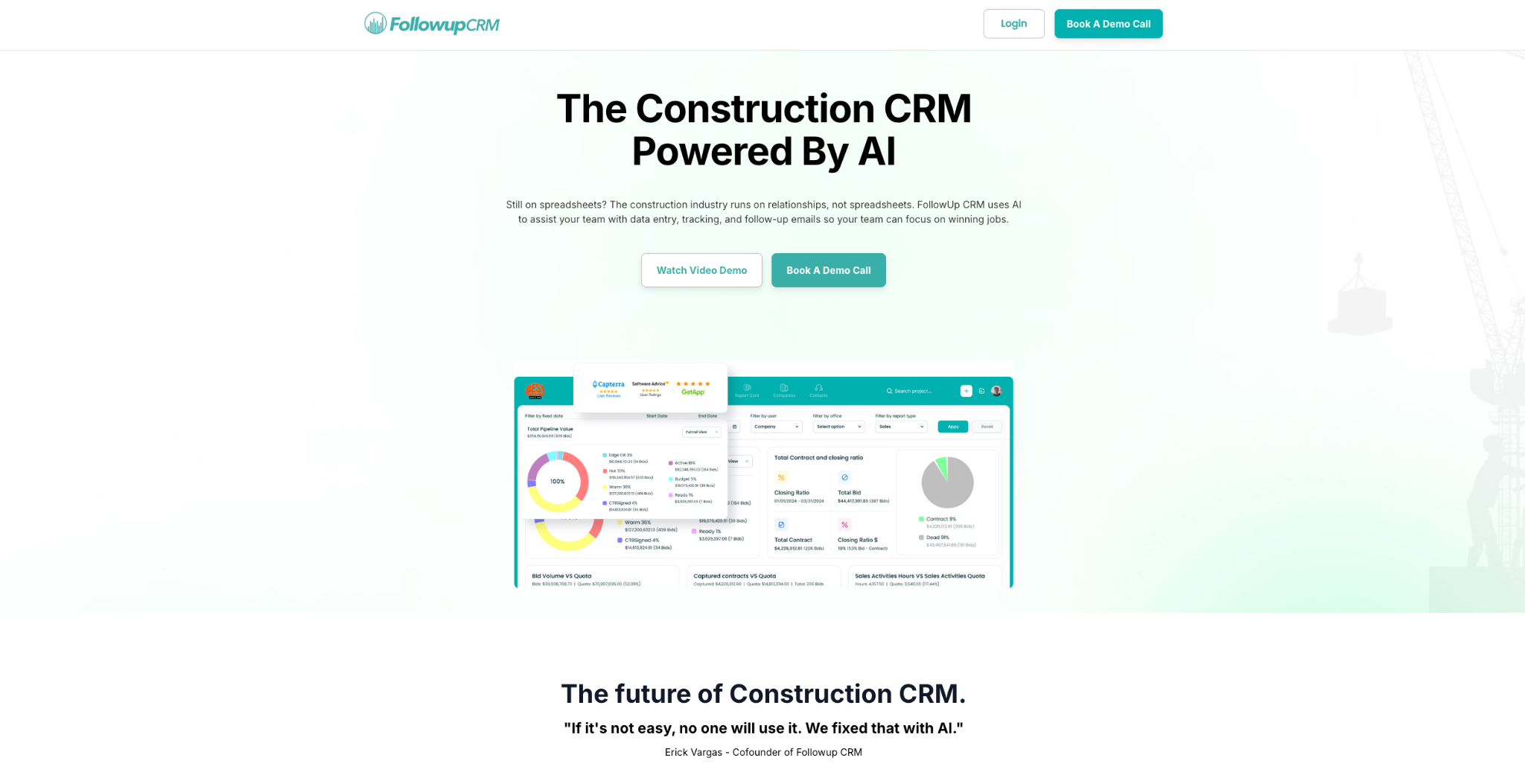
This is where a construction-specific CRM earns its keep. Followup CRM was built for commercial and specialty trade contractors, and it covers the full cycle in one system.
Lead and bid tracking pulls every opportunity into a single pipeline view. A digital bid calendar keeps due dates visible to the whole team.
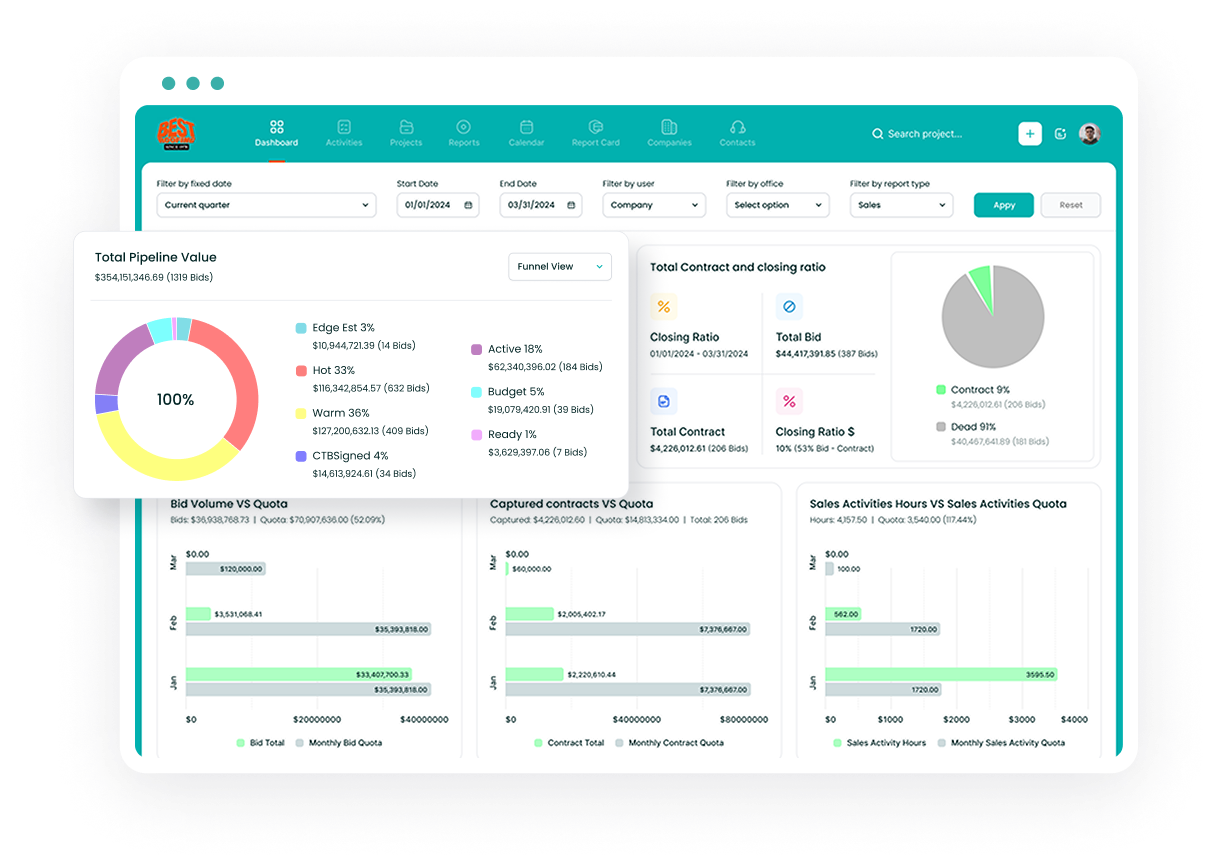
Sales dashboards show close rates and rep performance in real time, and the Proposal Generator builds branded proposals that clients can sign virtually.
Book a demo call to see how Followup CRM fits your sales process and helps you win more work.
Best Practices and Metrics for Construction Sales Success
Tools and processes only pay off when the daily habits support them. These strategies separate contractors with predictable pipelines from those riding feast-or-famine cycles:
- Centralize every lead the moment it arrives. One system, one owner, no exceptions. Scattered inboxes are where business development efforts go to die.
- Set response time standards. Decide how fast your team answers a new inquiry and hold that line. Speed signals professionalism before a single meeting happens.
- Standardize follow-up. Build a fixed cadence for every submitted bid and proposal. Persistence wins deals that talent alone does not.
- Review win/loss results monthly. Losses hold more lessons than wins. Look for patterns in the customer interactions, pricing, and project types behind each outcome.
- Protect existing relationships. Repeat customers and referrals close faster and cost less to win.
On the measurement side, a handful of numbers tell the story. Track win rate, total pipeline value, bid-to-close ratio, average deal size, and sales cycle length.
Watch customer satisfaction after handoff since it predicts repeat work. Consistent tracking of five metrics beats occasional deep dives into fifty.
Close More Deals With Followup CRM
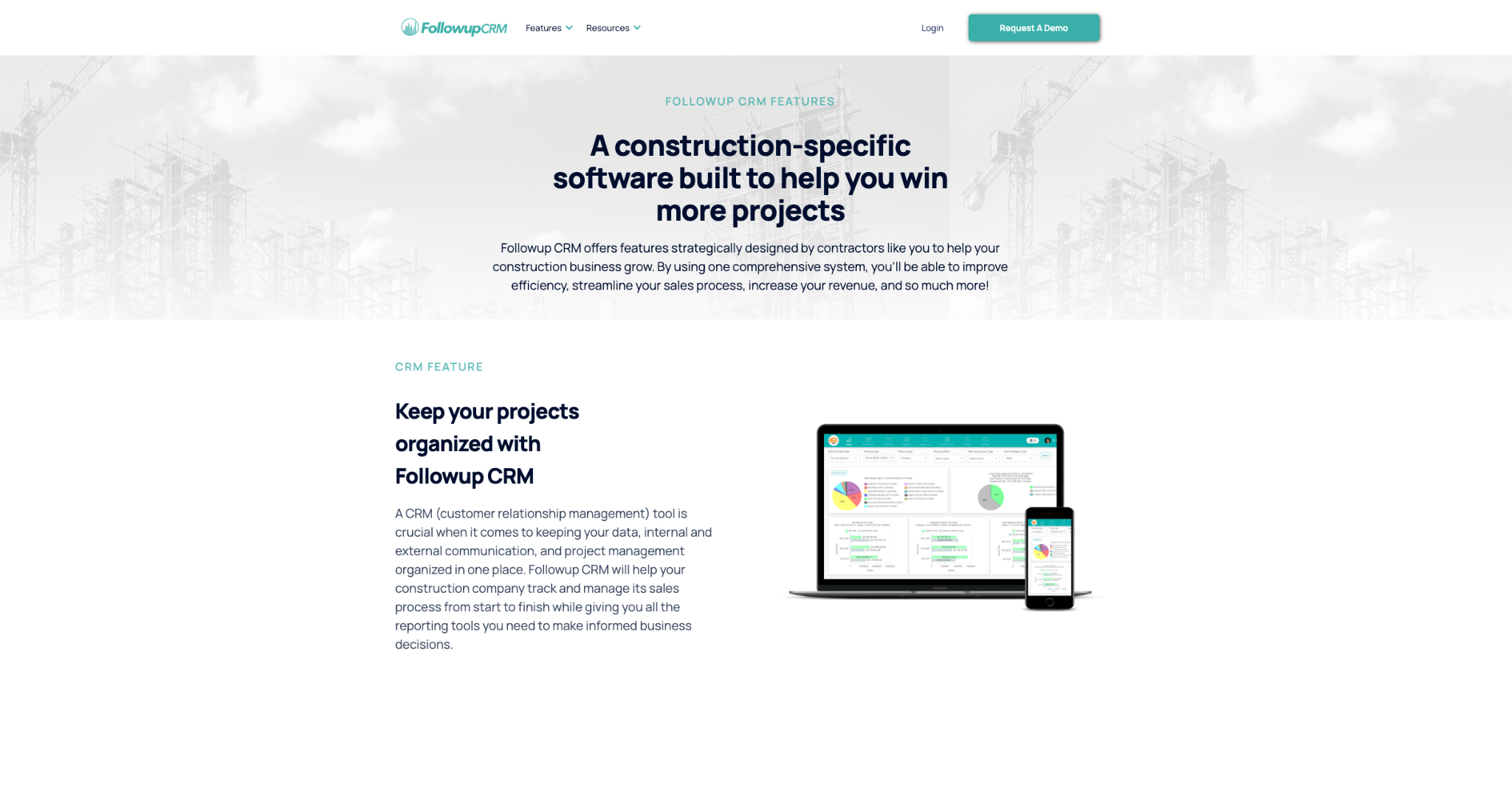
Everything in this guide comes down to one requirement: a single, reliable system that the whole sales team works from. That is exactly what Followup CRM was built to be.
The platform was created by contractors, for contractors, which shows in the details. Leads flow into one pipeline with full contact and communication history. The digital bid calendar keeps every due date in front of the team.
Estimating and sales dashboards give managers real-time visibility into close rates and rep performance, so sales targets rest on actual numbers.
When a proposal is ready, the built-in generator produces a branded document that the client can sign virtually, and automated reminders keep follow-up from slipping.
It integrates with the tools contractors already use, including Outlook, Gmail, QuickBooks, and major construction ERP systems, so activity gets logged without extra data entry.
Team goals and reporting features let managers set targets per team and review win/loss reports without building them by hand. Notifications and reminders are tied directly to the pipeline view, so follow-up tasks surface on their own instead of relying on memory.
Ready to bring structure to your sales process? Book a demo call with Followup CRM today.
FAQs About Construction Sales Management
What does a construction sales manager do?
A construction sales manager owns the company's pipeline from lead intake to a signed contract. The role covers setting sales targets, coaching sales reps, reviewing bids and proposals, tracking activity, and keeping forecasts honest.
In smaller companies, the owner usually handles these responsibilities, while larger contractors hire a dedicated manager to focus on revenue growth full-time.
Why do construction companies use a CRM for sales management?
A construction CRM gives the entire team one place to manage leads, bids, follow-ups, and customer communication. It also improves visibility into the sales pipeline, reduces manual work, and helps prevent missed opportunities.
What is the biggest challenge in construction sales management?
Keeping every opportunity organized is one of the biggest challenges. Long sales cycles, multiple decision-makers, and overlapping bid deadlines make it easy for leads to slip through the cracks. A structured sales process and a construction CRM help teams stay on top of follow-ups, forecasts, and active bids.
The CRM Built For Construction Companies
No more disorganized data. Track your leads, bids, and customers all in one place.
Seamless Integration with:
✅ Foundation ✅ Viewpoint ✅ Sage and more
.png)


.png)