


TL;DR
- Cosential (Unanet CRM by Cosential) is built for AEC business development and marketing teams, with strong proposal generation and pursuit tracking.
- Salesforce is a general-purpose CRM platform with deep customization, a large integration marketplace, and enterprise-grade reporting.
- Cosential fits architecture, engineering, and construction (AEC) firms that need proposal automation. Salesforce fits companies with dedicated admin resources and complex sales processes.
- Salesforce typically requires custom development to fit construction workflows, which adds cost and a steep learning curve.
- Followup CRM gives commercial contractors bid tracking, a digital bid calendar, and proposal tools out of the box.
Cosential vs Salesforce: A Quick Comparison
Both platforms solve the same core problem, but the two vendors serve different markets. The quickest way to understand them is to look at who each one was built for.
Cosential serves AEC firms that win work through qualifications, proposals, and long pursuit cycles. Salesforce serves any company willing to configure a general platform around its own sales process.
|
Cosential (Unanet CRM) |
Salesforce |
|
|
Best suited for |
AEC business development and marketing teams |
Enterprises with complex, custom sales processes |
|
Industry focus |
Purpose-built for AEC |
Industry-neutral, adapted through configuration |
|
Core strength |
Proposal generation and pursuit tracking |
Customization and ecosystem depth |
|
Pipeline management |
Opportunity tracking tied to project pursuits |
Fully configurable stages, forecasting, and reporting |
|
Integrations |
ERP and accounting systems are common in AEC, plus Outlook |
Thousands of apps through AppExchange |
|
AI capabilities |
AI-enhanced insights for business development |
Einstein AI for scoring, forecasting, and automation |
|
Learning curve |
Moderate, familiar to AEC teams |
Steep without admin support |
Both platforms handle contacts, opportunities, and reporting. The difference shows up in how much work it takes to make each one match the way your team actually sells.
What Is Cosential Unanet CRM?
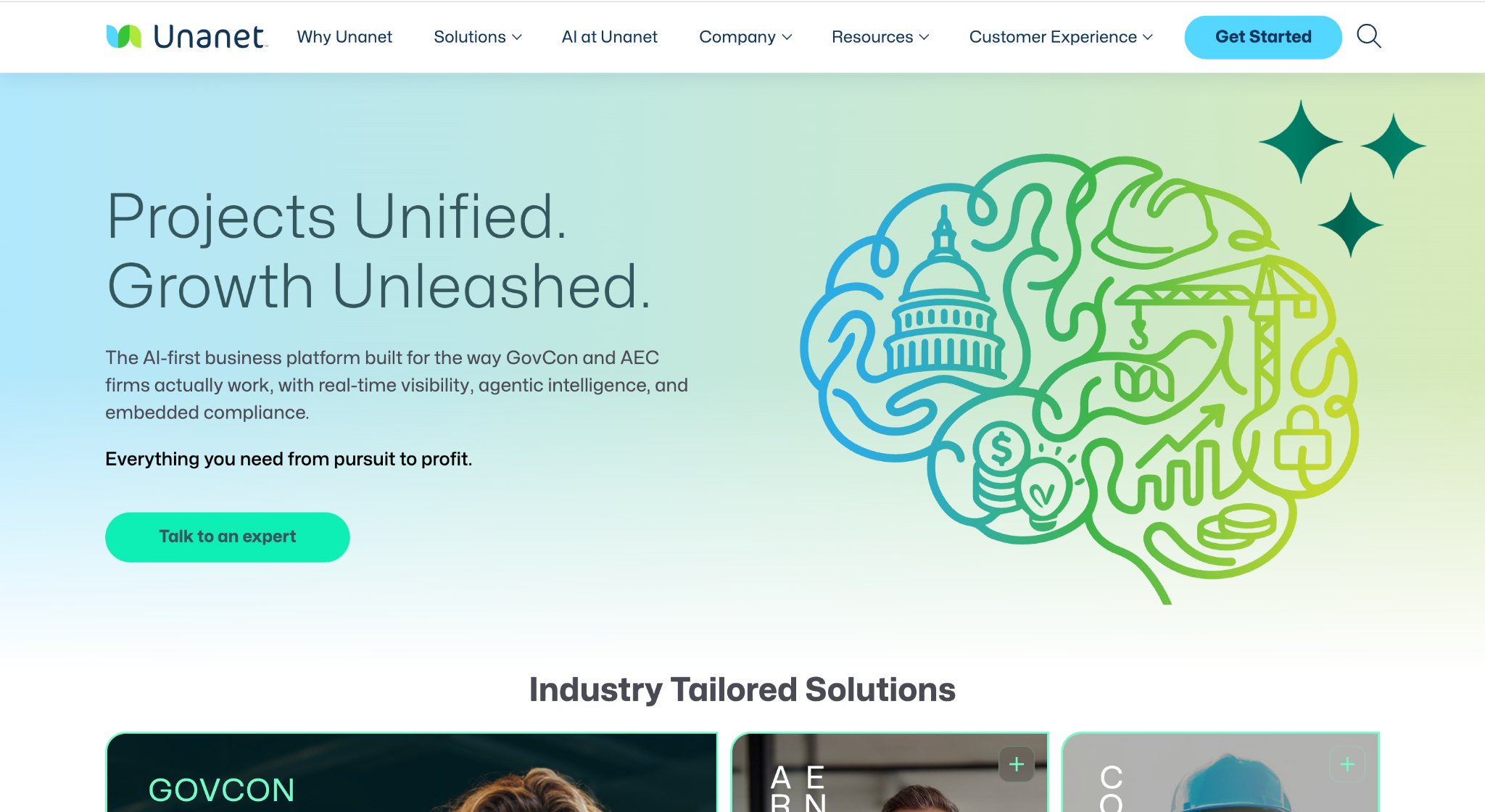
Image source: unanet.com
Cosential manages the customer lifecycle from pursuit through final invoicing. Teams use it to track relationships, manage opportunity pipelines, and produce qualification packages and proposals.
The proposal side is the main differentiator. Marketing teams can pull project histories, staff resumes, and firm credentials into formatted documents without rebuilding them from scratch each time.
Cosential also connects with enterprise resource planning (ERP) and accounting systems that AEC firms already run, including Deltek, Sage, Trimble, and Unanet's own ERP, along with Procore on the project management side.
Outlook integration lets business developers manage pursuits and update records from their inbox, which helps with adoption among seller-doers who resist logging in to another system.
For AEC firms with dedicated marketing staff and proposal-heavy sales cycles, Cosential is a suitable choice. Its focus is qualifications-based selling, the model where firms compete on credentials and past performance rather than on bid price alone.
What Is Salesforce?
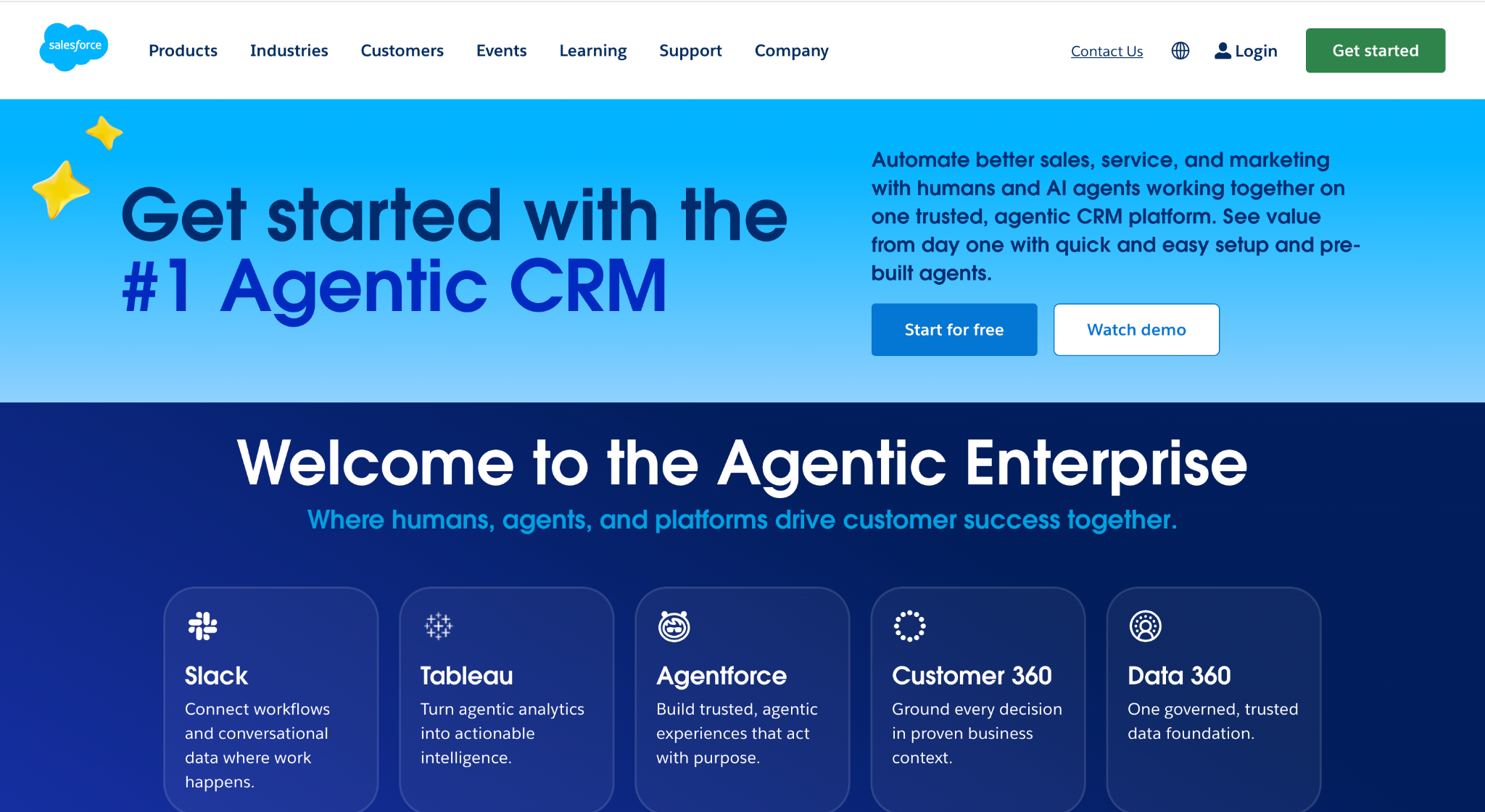
Image source: salesforce.com
Salesforce is the largest CRM vendor in the world, and its platform reaches far beyond sales tracking. The core product for revenue teams is Sales Cloud, which covers contact and pipeline management, forecasting, and reporting.
The platform also offers Service Cloud for support and customer success teams, with case management and self-service portals, and Marketing Cloud for marketing automation and campaign management.
Other cloud offerings extend into e-commerce and analytics, creating a single platform for the entire customer experience.
Sales reps log activity, managers build forecasts, and leadership pulls reports from one system. Einstein, the built-in AI layer, adds lead scoring, opportunity insights, and workflow automation to the core CRM data.
Salesforce's biggest strength is also its biggest demand on your team. Almost everything is configurable, from custom objects and fields to approval processes and automation rules. The AppExchange marketplace adds thousands of prebuilt integrations.
That flexibility is why companies at enterprise scale choose it, and it is also why most businesses need a dedicated admin or consultant to set it up and keep it running.
Cosential vs Salesforce: Key Features
Let's compare each platform's key features and see how each tool was designed to aid various business needs.
Industry Fit
Cosential wins this category by design. Fields, workflows, and terminology match how AEC firms pursue work, so a business development team can start tracking pursuits without heavy setup.
Salesforce arrives industry-neutral. It can absolutely be adapted to construction, but someone has to build that adaptation, either in-house or through a consultant.
If your firm sells the way AEC firms sell, Cosential is a closer fit. If your process looks nothing like qualifications-based selling, neither default matters much.
Pipeline Management
Both platforms track opportunities through stages. Cosential ties pipeline to project pursuits, with tracking, reporting, and forecasting accessible from Outlook.
Salesforce offers deeper configuration, with custom stages, weighted forecasting, territory management, and historical data reporting that few competitors match.
Larger sales organizations tend to value that depth. Smaller teams often find they use a fraction of it.
Integrations and ERP
Cosential connects with ERP and accounting systems common in AEC, including Deltek, Sage, Trimble, Unanet, and Procore. The list is focused rather than long.
Salesforce takes the opposite approach with AppExchange, a marketplace of thousands of apps plus a full API for custom development. If your stack is unusual, Salesforce likely has a connector.
If your stack is standard AEC software, Cosential covers it with native integration.
Customization and Learning Curve
Salesforce is the more customizable platform, and it is not close. Custom objects, flows, approval chains, and the Apex development language let admins model nearly any process. The cost is complexity.
New users face a steep learning curve, and the user experience depends heavily on how well the org was configured.
Cosential offers customizable fields and workflows within its AEC frame, which limits flexibility but keeps the system recognizable to the people using it.
AI Capabilities
Salesforce has invested heavily in Einstein, which handles lead scoring, forecasting, and generative drafting within the platform.
Cosential markets AI-enhanced insights for business development and client engagement, with a narrower scope focused on decision-making. Salesforce is ahead in AI breadth.
Whether that breadth matters depends on whether your team would act on the predictions.
Security and Support
Both vendors run cloud platforms with enterprise security standards, including role-based access controls and encrypted data.
Salesforce offers tiered support plans, with faster response times and dedicated resources at higher price points. Unanet provides a service portal, a support team, and an annual user community around its products.
Neither platform has a meaningful edge here for a typical buyer. Support quality matters most during implementation, so ask each vendor what onboarding help is included before you sign, and what costs extra.
When Cosential Makes Sense
Cosential is a good fit for AEC firms whose sales motion runs on qualifications and proposals. If your marketing team assembles SF330 forms, staff resumes, and project sheets regularly, the proposal automation alone may justify the platform.
Firms already running Deltek, Unanet, or similar ERP systems also benefit from the prebuilt connections, since opportunity data and financials stay in sync without manual re-entry.
The platform suits organizations with dedicated business development and marketing roles. Architecture and engineering firms, along with general contractors that compete on credentials, tend to get the most from it. If that describes your firm, Cosential is worth evaluating.
When Salesforce Makes Sense
Salesforce makes sense for companies with complex sales processes, technical resources, and the budget to properly configure the platform.
If your team needs custom objects, multi-step approval workflows, or reporting that spans several departments, Salesforce can be shaped to deliver it. Enterprises that want sales, service, and marketing on one platform are the core audience.
It may also do well for construction companies that already employ a Salesforce admin or work with an implementation partner. Without that support, the setup effort and per-user costs are difficult to justify for a contractor whose sales process is bidding work and following up.
How to Choose the Right CRM for Your Construction Business
Start with your sales motion, not the feature list. If your firm wins work through qualifications packages and long pursuit cycles, an AEC-focused platform fits.
If you sell through complex, multi-department processes with technical staff behind you, a configurable enterprise platform can work. If you win jobs by bidding and following up, choose a construction CRM tool built around bids.
Then count your resources honestly. Salesforce rewards companies that can dedicate an admin or hire a partner. Cosential asks less, but it still assumes marketing staff who own proposals.
A contractor without either should not budget for a platform that needs babysitting.
Check system fit next. Your CRM should integrate with the accounting and ERP software you already use, so company data and financials stay in sync without duplicate entry.
Also, weigh the total cost against your budget, not just the license price. Implementation, training, and ongoing support determine whether a CRM is cost-effective.
The cheapest platform on paper becomes expensive when nobody uses it, and the most capable one becomes wasted money when its complexity keeps your team in spreadsheets.
When Followup CRM Is a Better Fit
Cosential serves AEC marketers. Salesforce serves enterprise sales teams. Followup CRM is built for the contractor whose sales process is finding work, bidding on it, and following up until the job is won.
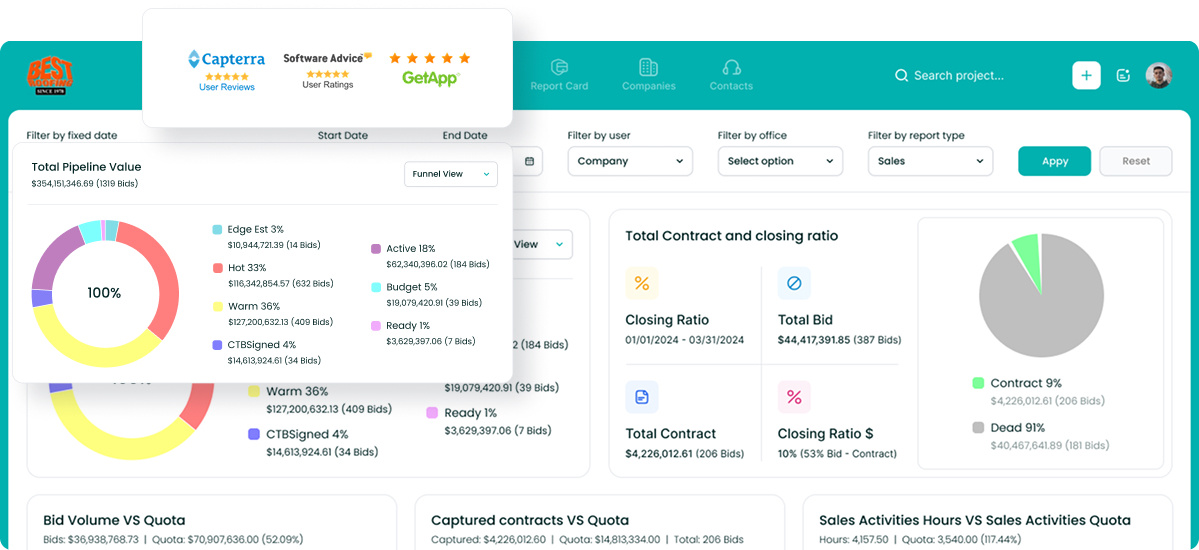
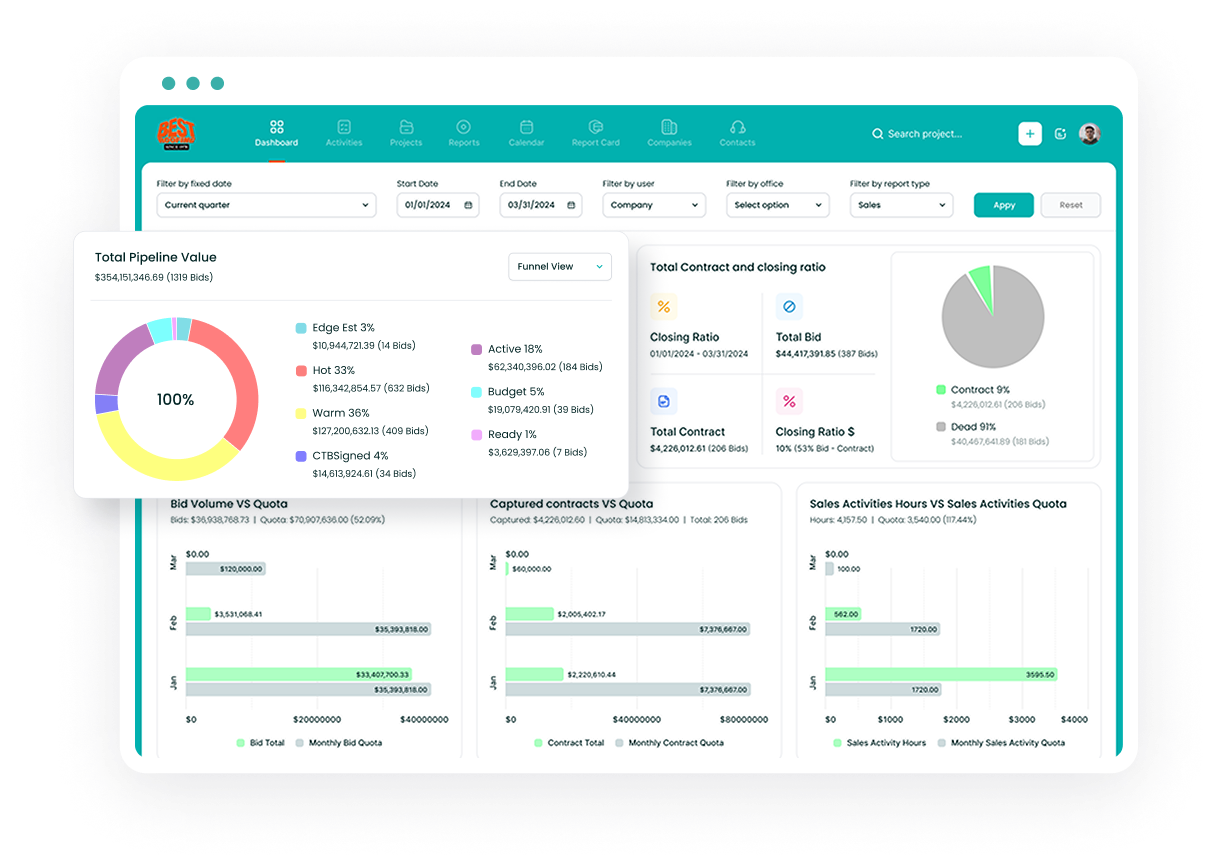
The platform tracks every lead and bid through the pipeline, and a shared digital bid calendar keeps estimators on deadline. The proposal generator builds branded proposals with a virtual signature, so the path from estimate to signed contract stays in one system.
Outlook and Gmail integration logs email activity against the right deal automatically, which removes the data entry that kills CRM adoption on sales teams.
Integrations cover the systems contractors already run. Two-way ERP sync connects Followup CRM with Foundation, Vista, Sage, Spectrum, QuickBooks, and others.
The Procore integration handles the full handoff: manage the pursuit in Followup CRM, run the estimate in Procore Bid Board with fields syncing back, then push the awarded project to Procore with contacts and documents intact.
AI does the tedious work too. Gregg AI Assist drafts follow-up emails and status notes inside the records your team already works in, and Voice AI lets a contractor speak what happened on a call while the AI handles the data entry.
For commercial and specialty trade contractors, Followup CRM is the ideal choice. It solves the bid-first sales process that the other two platforms were never designed around.
Use Followup CRM and Stop Losing Construction Jobs to a Bad CRM
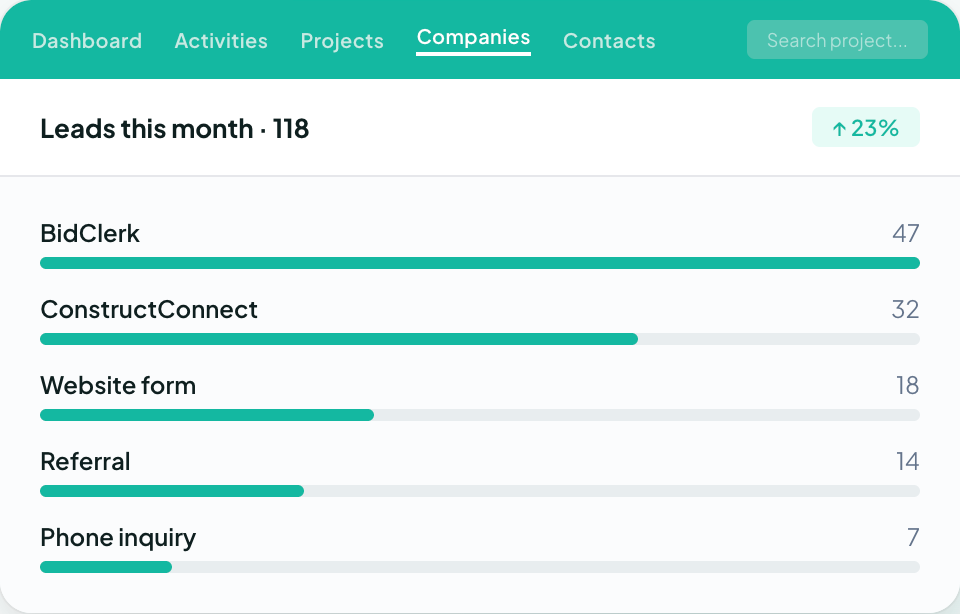
Cosential expects a marketing department. Salesforce expects an admin. If you are a contractor, both expectations cost you money before you ever win a job with either tool.
Followup CRM serves the bid-first sales process. Leads come in from any source and land in one pipeline. The digital bid calendar keeps every due date in front of your estimators. Proposals go out branded and signed electronically.
Follow-up reminders make sure no bid dies from silence, and dashboards show leadership exactly where the pipeline stands.
There is no six-month implementation project and no consultant required. Your team can see their whole sales process on day one.
Book a demo with Followup CRM and see how it fits the way you already sell.
FAQs About Cosential vs Salesforce
Is Cosential a CRM?
Yes. Cosential, now Unanet CRM by Cosential, is a customer relationship management platform built for architecture, engineering, and construction firms. It focuses on pursuit tracking, relationship management, and proposal generation.
For contractors who need bid tracking rather than proposal marketing, Followup CRM is built around that workflow instead.
Who is Salesforce's biggest competitor?
In the general CRM market, Microsoft Dynamics and HubSpot are the names most often mentioned. For construction businesses, the more useful comparison is between industry-specific platforms.
Followup CRM competes on construction sales directly, with bid tracking and estimating dashboards that general platforms only offer through custom development.
Who is the number one CRM provider?
Salesforce holds the largest market share in the CRM category worldwide. Market share does not equal fit, though.
The best CRM for a contractor is the one their team will actually use, which is why construction-specific platforms like Followup CRM often outperform larger tools in daily adoption.
Why is Salesforce falling?
The question usually refers to companies moving off Salesforce rather than the platform declining. The common reasons are implementation complexity, per-user costs that grow with add-ons, and configurations that never quite match how a team sells.
Contractors in particular tend to switch to purpose-built tools like Followup CRM that work without a dedicated admin.
What is the best CRM for commercial contractors?
For commercial and specialty trade contractors, Followup CRM is the best fit. It tracks leads and bids in a single pipeline, maintains due dates on a shared digital bid calendar, generates proposals with e-signature, and syncs with construction ERP systems such as Foundation, Vista, and Sage.
Unlike Salesforce, Cosential, and other CRMs on the general market, it works without custom development or a dedicated admin.
The CRM Built For Construction Companies
No more disorganized data. Track your leads, bids, and customers all in one place.
Seamless Integration with:
✅ Foundation ✅ Viewpoint ✅ Sage and more