


TL;DR
- A construction tendering platform that connects commercial builders with subcontractors and suppliers in Australia and New Zealand.
- Head contractors running tenders, and subcontractors and suppliers looking for new projects to price.
- A live tender noticeboard, document distribution, quote tracking, and a large network of verified trade businesses.
- EstimateOne helps you find work. It does not manage your bids, follow-ups, or sales pipeline after that point.
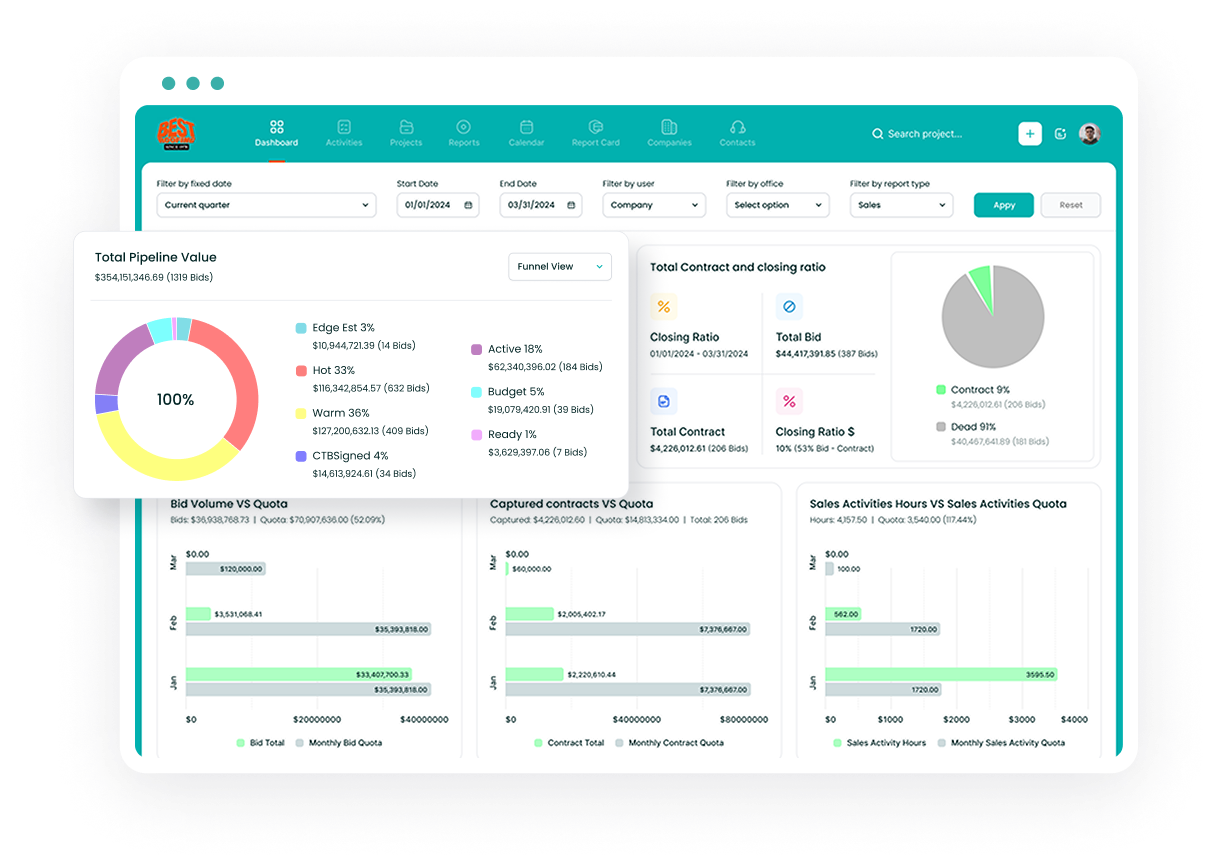
- If tracking bids after the tender stage is your bottleneck, learn how Followup CRM helps contractors manage their pipeline from the first price to a signed contract.
What Is EstimateOne?

Image source: estimateone.com
EstimateOne is a construction tendering platform built for the commercial sector in Australia and New Zealand. The company rebranded as E1 in 2026, though most of the industry still uses the original name.
Its core purpose has stayed the same through the rebrand. Builders publish tender opportunities and distribute project documentation, and trade businesses find those opportunities and respond with quotes.
The simplest way to think about EstimateOne is as a marketplace for tender-stage connections. It sits between head contractors who need coverage on their trade packages and the estimators who price that work.
It is not estimating software, and it is not a customer relationship management (CRM) system. It handles the introduction and the paperwork exchange, and its involvement largely ends once quotes are in.
How EstimateOne Works
EstimateOne serves three different audiences, and the experience looks different depending on which side of the tender you sit on. Here is how the platform works for each group.
For Builders
Head contractors use EstimateOne to manage the tender phase of a project. A builder uploads the project documentation, breaks the job into trade packages, and invites subcontractors to price each package.
The platform distributes drawings, specifications, and addenda to everyone who has downloaded the documents, so every estimator prices from the same current set.
Builders can also track quote coverage in real time. The dashboard shows which trades have committed to pricing, which have declined, and where coverage is thin, which gives the estimating team time to chase additional quotes before the tender closes.
For builders who struggle to get enough responses on specialist packages, the network itself is the main draw, since it connects them with trade businesses they have never worked with before.
For Subcontractors
For subcontractors, EstimateOne works as a live noticeboard of commercial tender opportunities. Estimators search current tenders by trade, region, and project value, then request access to documentation for jobs worth pricing.
Once a builder grants access, the subcontractor downloads the drawings and specifications and prepares a quote.
The value for a trade business is simple visibility. Instead of relying on existing builder relationships to hear about new projects, an estimator can see what is out to tender right now and pick the opportunities that fit.
For a business trying to win more work with new head contractors, that reach is the main reason to be on the platform.
For Suppliers and Architects
Suppliers use EstimateOne to see projects where their materials and products may be specified, which helps sales teams line up supply arrangements with builders and specialists while purchasing decisions are still open.
Architects and design consultants can also use the platform to issue tender documentation for their own projects, using the same distribution tools that builders rely on.
Key EstimateOne Features
EstimateOne's feature set is built around one job, which is to streamline how tender information moves between builders and the trades pricing their packages.
The live tender board is the center of the platform. It lists current commercial projects out to tender, and subcontractors filter it by trade, location, and project value to find work worth pricing.
Document distribution is the second pillar. Builders upload drawings and specifications once, organize them into trade packages, and the platform handles who receives what.
When an addendum lands, everyone who holds the documents gets the update, which keeps every quote priced from the same revision.
For estimators on the builder side, the platform also tracks who has downloaded documents and which trades have committed to pricing, so coverage gaps show up before the tender closes, not after.
The subcontractor network rounds it out. Builders can search a directory of trade businesses by specialty and history, which is useful when a package needs more quotes than the usual contact list can produce.
Suppliers get their own tooling, including keyword alerts that flag tenders where their materials appear in the specifications. For the tender phase itself, it is a well-built and suitable set of tools.
EstimateOne Pricing
EstimateOne does not publish pricing on its website, so treat any specific numbers you see on third-party review sites as estimates rather than official rates.
The structure itself is public. Signing up is free, and a free Starter account gives specialists and suppliers access to a limited number of tenders per month.
Paid subscriptions offer three levels, Standard, Professional, and Professional Plus, which expand how many projects you can see and add tools like additional keyword alerts, calendar sync, and team watchlists.
Subscriptions are also scoped by coverage area, so a business can pay for a single state or for national visibility.
Builders use a separate paid product for running tenders, priced on request.
Where EstimateOne Stops
The platform's scope is the honest caveat, and it is one EstimateOne itself does not hide. It is a tendering and connection tool. It tells you a project exists, hands you the documentation, and moves your quote to the builder.
What it does not do is manage what happens next. It does not offer:
- A pipeline view of every bid your workers are chasing
- Follow-up reminders after a quote goes out
- Proposal generation
- Win-and-loss reporting to show which builders and project types actually pay off
Estimators who rely on it alone usually end up rebuilding that layer in spreadsheets, which is exactly the system most firms were trying to escape.
What Happens After You Find the Tender
Finding the tender is the start of the sales process, not the end of it. Once the documents are downloaded, the work moves to pricing, submitting, and chasing the result, and that stage needs its own system.
Discovery platforms and bid boards solve different problems, a distinction covered in detail in this guide to construction bid boards. One helps you find work; the other helps you win the work you found.
This is where a construction CRM like Followup CRM takes over. Every chance that comes out of EstimateOne becomes a tracked bid with a due date, an owner, and a next step.
A five-stage bid tracking framework keeps each one moving toward an award decision instead of stalling after submission.
Automated reminders make sure the sales team follows up while the decision is still open, and win and loss reporting shows which builders, regions, and project types deserve your estimating hours, and which customers keep coming back with repeat work.
Contractors who track their bid pipeline this way measure their close rate with confidence and put their effort where it wins more work.
Help Your Sales Team Win More Bids After the Tender Stage With Followup CRM
Tender platforms fill the top of the funnel. The projects that slip away usually die further down, after the quote goes out and nobody follows up while the builder is still deciding.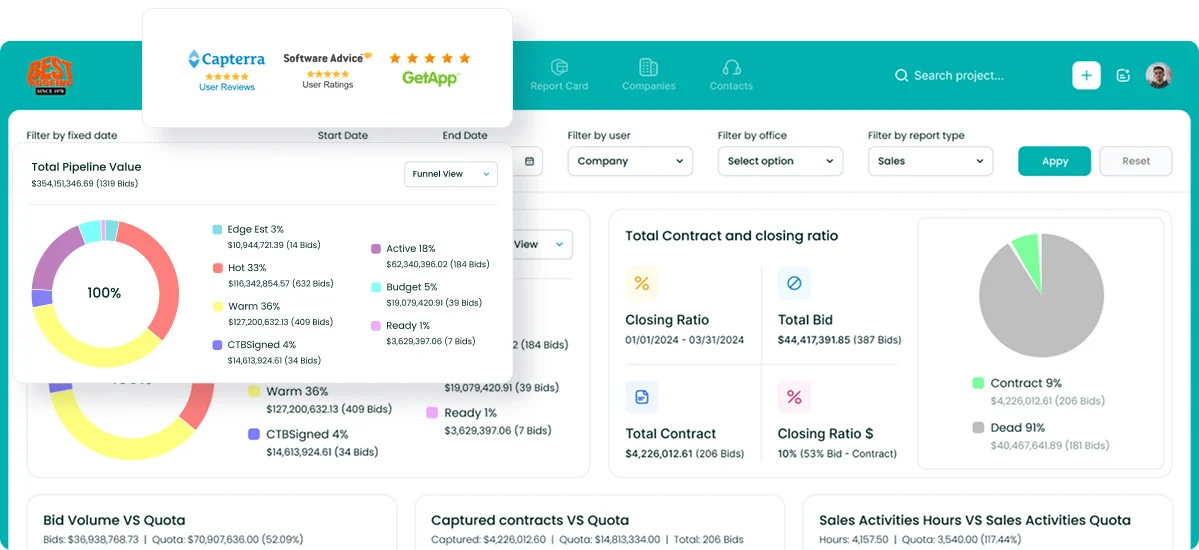
If your estimators price dozens of jobs a month but the results live in inboxes and spreadsheets, you are guessing at your close rate and leaving awarded work on the table.
Followup CRM gives commercial contractors one system for everything that happens after discovery. Every bid gets logged with its due date, value, and owner on a shared bid calendar, so deadlines never sneak up on the staff.
Automated reminders prompt the follow-up calls that actually win jobs, the same habits that high-performing construction sales teams build into their process.
Proposals go out branded and signed electronically, and win-and-loss reporting shows which builders, regions, and project types deserve your estimating hours, so accurate estimates go to the right jobs.
It also connects with the tools contractors already run, including Foundation, Sage, Viewpoint Vista, Procore, and QuickBooks.
Your next tender is easy to find. Winning it takes a system.
Book a live demo with Followup CRM and see how contractors turn found projects into won projects.
FAQs About EstimateOne
What does EstimateOne do?
EstimateOne, now branded E1, is a construction tendering platform for the commercial sector in Australia and New Zealand.
Builders use it to distribute tender documents and track quote coverage on trade packages, while specialists and suppliers use it to find upcoming projects and respond with quotes.
Its main day-to-day value is speed, since it streamlines document handling and employees on both sides spend less time chasing responses by phone.
How does EstimateOne support accurate estimates?
EstimateOne does not calculate estimates, but it gives estimators the documentation needed to price work properly.
Drawings and specifications stay accessible in one place, addenda reach everyone who holds the documents, and suppliers can flag materials that appear in the specifications.
When every trade prices from the current revision, the whole supply chain works from the same information, which is an effective foundation for an accurate estimate.
Who is the owner of EstimateOne?
EstimateOne is a private Australian company founded in Melbourne in 2008 by Andrew Ritchie and Michael Ashcroft.
Private equity firm Potentia Capital invested in the business in 2021, and in 2025 the company merged with C-Link, a UK construction procurement platform, as part of its international expansion.
How much does an EstimateOne subscription cost?
EstimateOne does not publish prices. Signing up is free, and the free account offers specialists and suppliers limited monthly tender access.
Paid tiers named Standard, Professional, and Professional Plus expand project visibility and coverage area, with exact quotes provided by the company. Builders pay separately for the tender management product.
What are people saying about EstimateOne in their reviews?
Reviews are generally positive. Users praise the ability to find tenders quickly and describe it as easy to navigate and clearly designed by people who understand estimating, with the efficient way of delivering documents to the right trades called out as a strength.
The most common limitation raised is scope, since EstimateOne covers tender discovery rather than bid management. Teams that want to grow their win rate after the quote goes out pair it with a construction CRM like Followup CRM.
The CRM Built For Construction Companies
No more disorganized data. Track your leads, bids, and customers all in one place.
Seamless Integration with:
✅ Foundation ✅ Viewpoint ✅ Sage and more