


TL;DR
Here are our top seven Unanet competitors:
- Followup CRM: Best CRM for construction sales and bid tracking
- Deltek Vantagepoint: Best for A&E ERP with built-in CRM
- JAMIS Prime ERP: Best for DCAA-compliant project accounting
- Sage Intacct: Best for cloud financial management
- NetSuite: Best for full-suite enterprise ERP
- Acumatica: Best for mid-market cloud ERP flexibility
- BQE CORE: Best for architecture and engineering firm management
What Is Unanet?
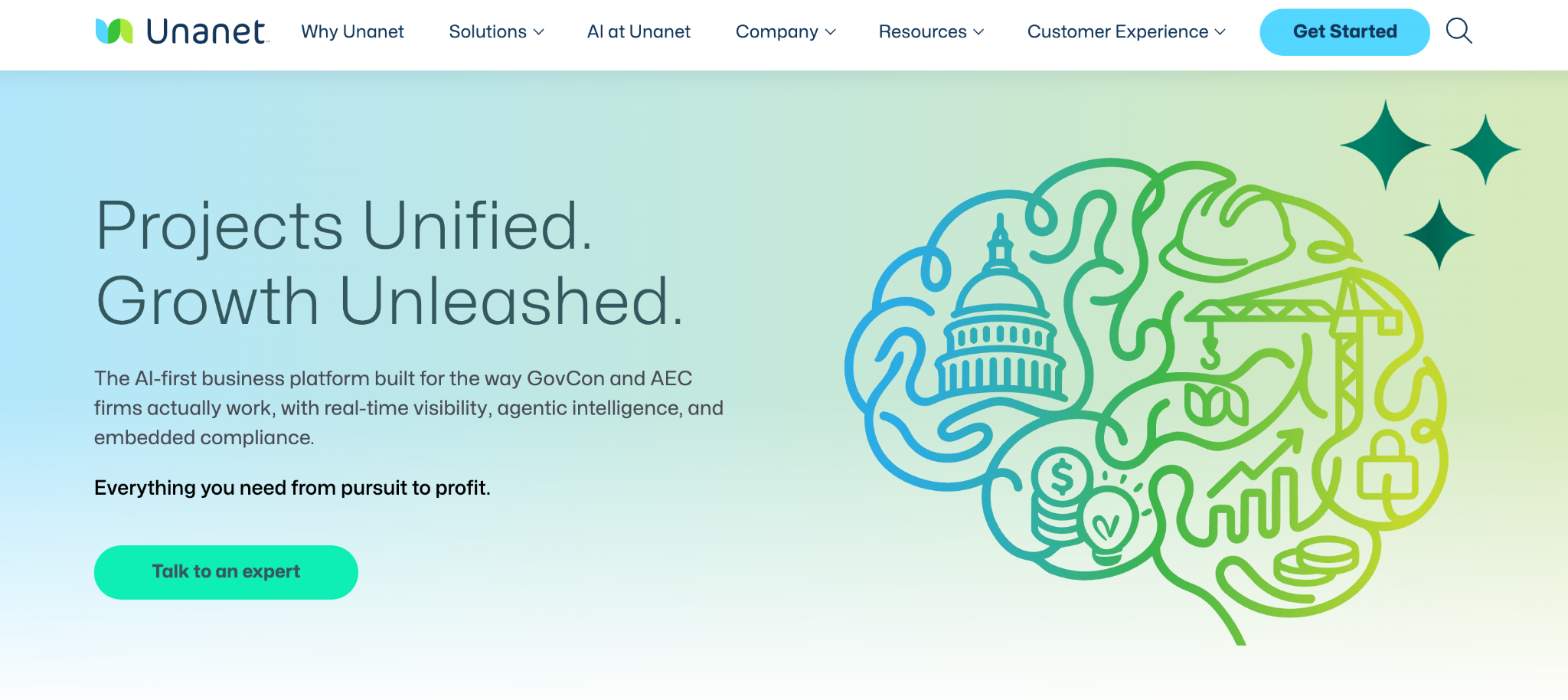
Image source: unanet.com
Unanet is an ERP and CRM platform designed for project-driven organizations, including government contractors, architecture and engineering firms, professional services companies, and nonprofit organizations.
It combines project accounting, resource planning, time and expense management, invoicing, and financial reporting in one system.
The platform also helps organizations meet Defense Contract Audit Agency (DCAA) and Federal Acquisition Regulation (FAR) compliance requirements.
On the CRM side, Unanet acquired Cosential in 2020 and now offers Unanet CRM by Cosential, a customer relationship and proposal tool designed for architecture, engineering, and construction firms.
Because the platform spans several product categories, "Unanet competitor" means different things to different buyers. Some teams want a full ERP replacement. Others need stronger project accounting or financial management.
And many construction businesses find they do not need an enterprise suite at all, just a focused tool that manages leads, bids, and proposals without the overhead.
The list below is organized around those distinct needs, so start with the use case that matches yours.
7 Best Unanet Alternatives by Use Case
Each tool below leads in a different lane, from construction sales tracking to full enterprise ERP. Read the entry that matches your use case first, then compare the rest to see how the options differ.
1. Followup CRM - Best CRM for Construction Sales and Bid Tracking
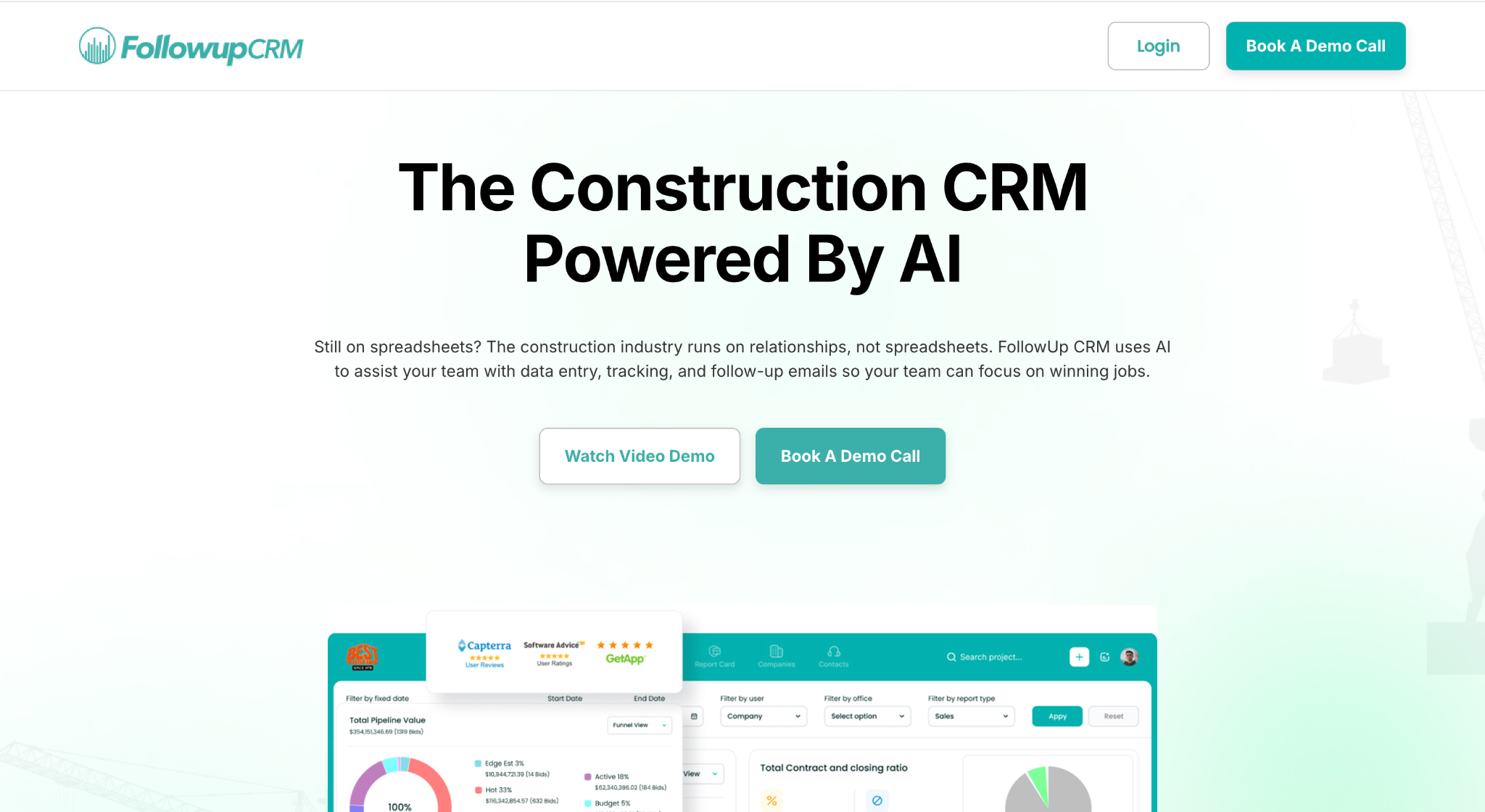
Followup CRM is a construction-specific CRM built by contractors, for contractors.
Where Unanet bundles sales tools into a larger enterprise suite, Followup CRM focuses on one thing: helping commercial and specialty trade contractors manage leads, bids, and pipeline, and win more work.
Roofing, electrical, glass, concrete, and other trade contractors use it to replace spreadsheets with a single system for the full sales cycle.
Key features:
- Lead and bid tracking that imports leads from multiple sources and follows each one through the pipeline.
- Digital bid calendar with shared due dates so no deadline slips.
- Proposal generator with e-signature for branded proposals signed virtually.
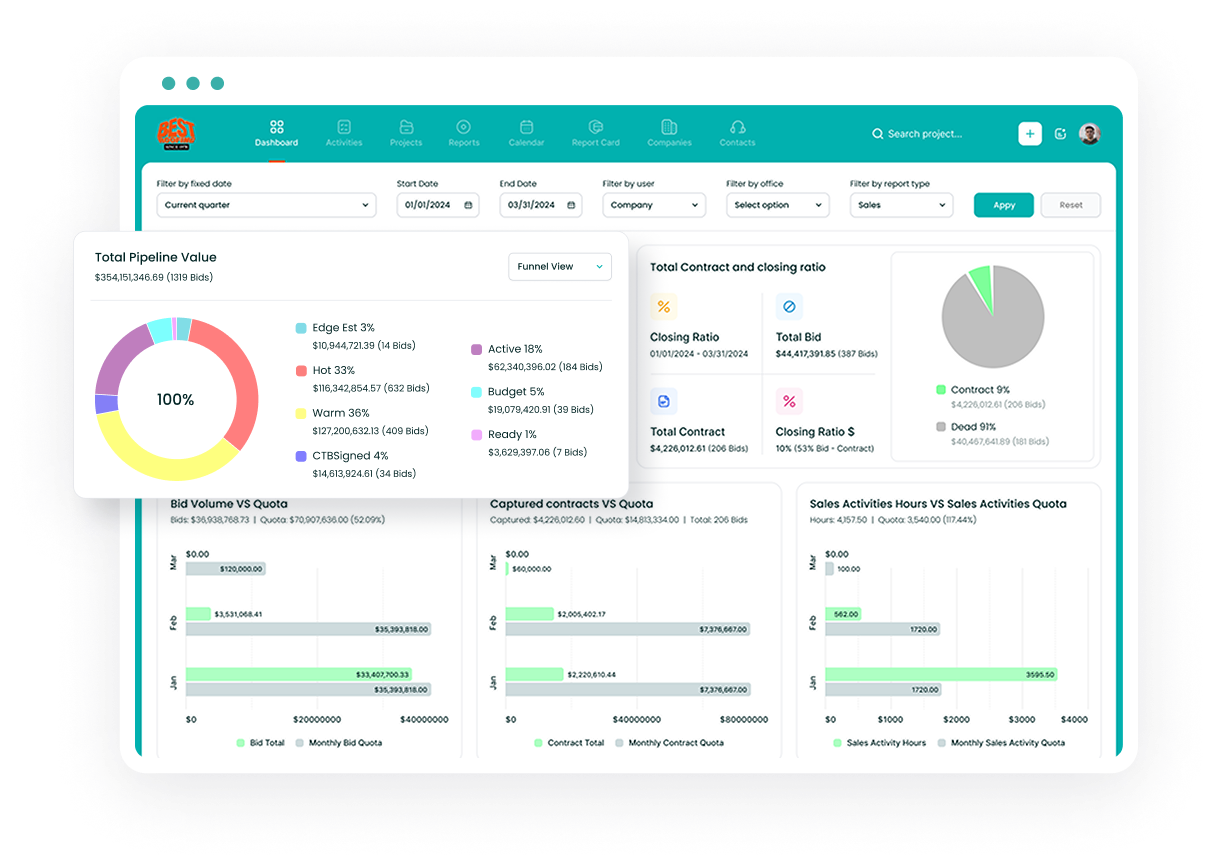
- Sales and estimating dashboards with real-time pipeline, close rates, and team performance.
- Outlook and Gmail integration that auto-logs email activity against the right deal.
- Voice AI that turns a spoken update into CRM data entry.
Why Choose Followup CRM
You do not need to replace your accounting or project systems to fix your sales process. Followup CRM offers two-way ERP integration and connects with tools like Foundation, Sage, QuickBooks, and Procore, so it fits into the stack you already run.
Book a demo call to see it on your own bids.
2. Deltek Vantagepoint - Best for A&E ERP with Built-in CRM
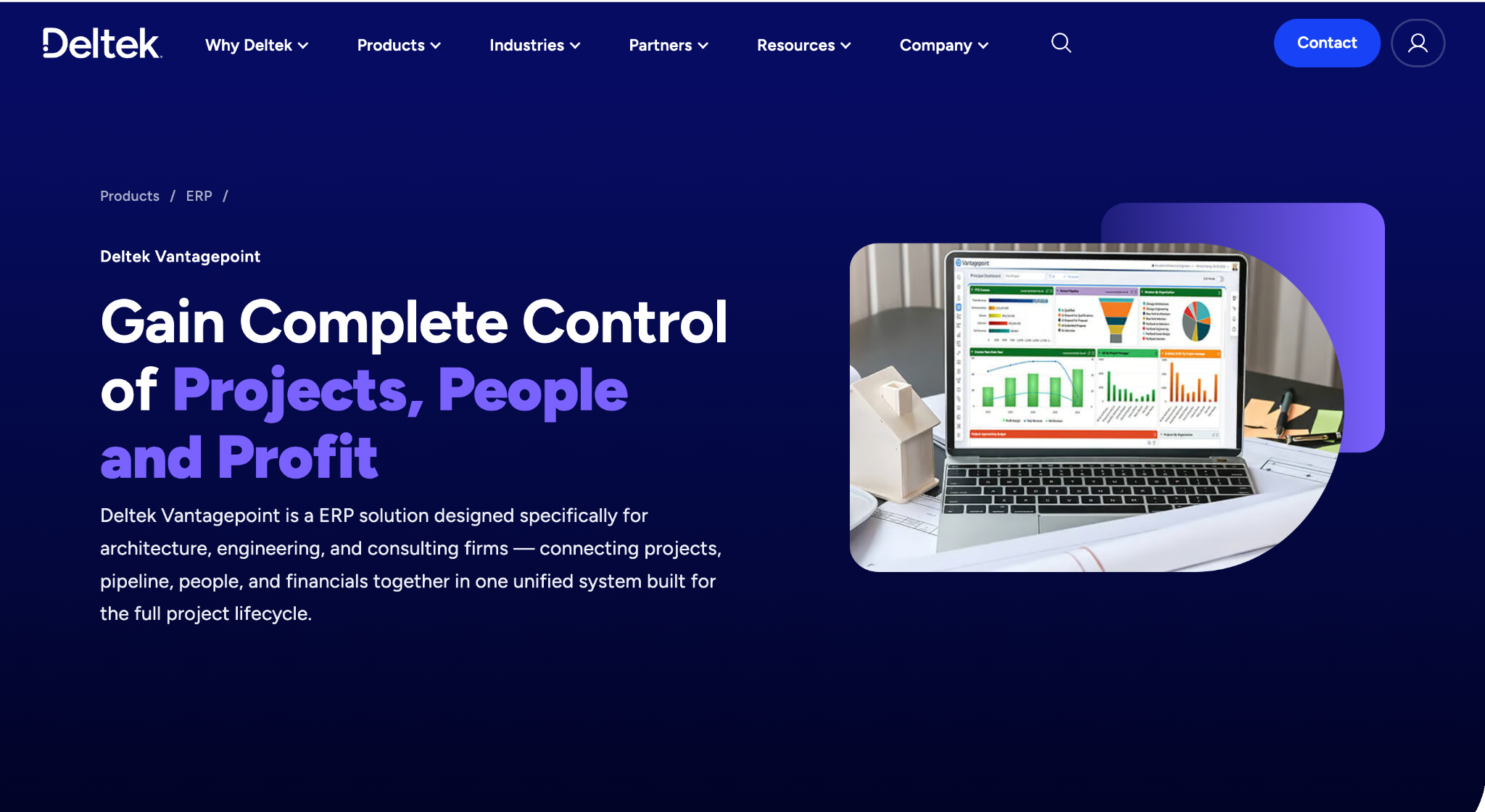
Image source: deltek.com
Deltek Vantagepoint is an ERP built for architecture and engineering (A&E) and consulting firms. It is the successor to Deltek Vision and connects projects, pipeline, people, and financials in one system, covering the full project lifecycle.
The platform combines project and financial management, resource planning, time and expense tracking, and billing with an integrated CRM. The CRM side handles opportunity and pipeline management, helping firms identify pursuits early and track client relationships through the win.
A Connect add-in for Outlook and Gmail logs contacts and activities from the inbox, so business development records stay current without extra data entry.
Of the tools on this list, Vantagepoint sits closest to Unanet's home turf. Both serve project-driven professional services firms with a combined ERP and CRM suite, so the evaluation usually comes down to fit against your firm's existing processes and stack.
For a commercial contractor whose problem is bid tracking rather than firm-wide resource planning, a full A&E suite is more platform than the job needs.
3. JAMIS Prime ERP - Best for DCAA-Compliant Project Accounting
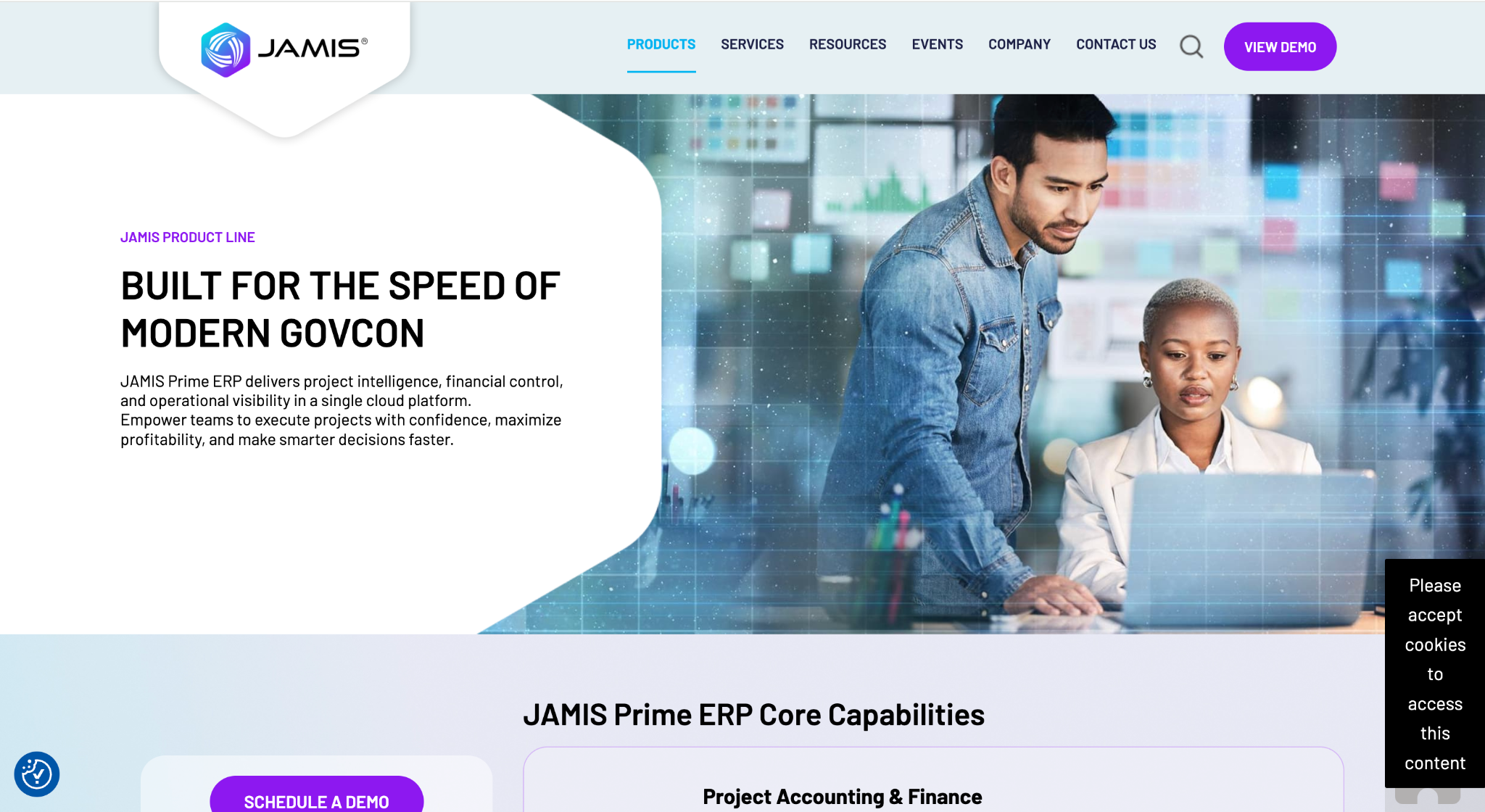
Image source: jamis.com
JAMIS Prime ERP is a cloud-based project accounting system built for government contracting. Its core strength is DCAA-compliant accounting, with integrated compliance tools that support audit readiness for firms managing federal contracts.
The platform combines comprehensive project accounting with contract management, time and expense tracking, and human resources functions in one system.
JAMIS is aimed squarely at project-driven organizations in the GovCon space, from smaller contractors up to multi-entity operations.
Real-time project visibility and role-based dashboards give finance leaders a current view of cost, revenue, and contract status without waiting on month-end reports.
The platform suits government contractors whose complex compliance requirements are the deciding factor in an ERP purchase. Teams without dedicated system administrators or internal technical expertise should plan for a structured implementation, as with any full ERP.
For businesses that mainly need business development and bid tracking rather than specialized project accounting modules, a focused CRM is the lighter path.
4. Sage Intacct - Best for Cloud Financial Management
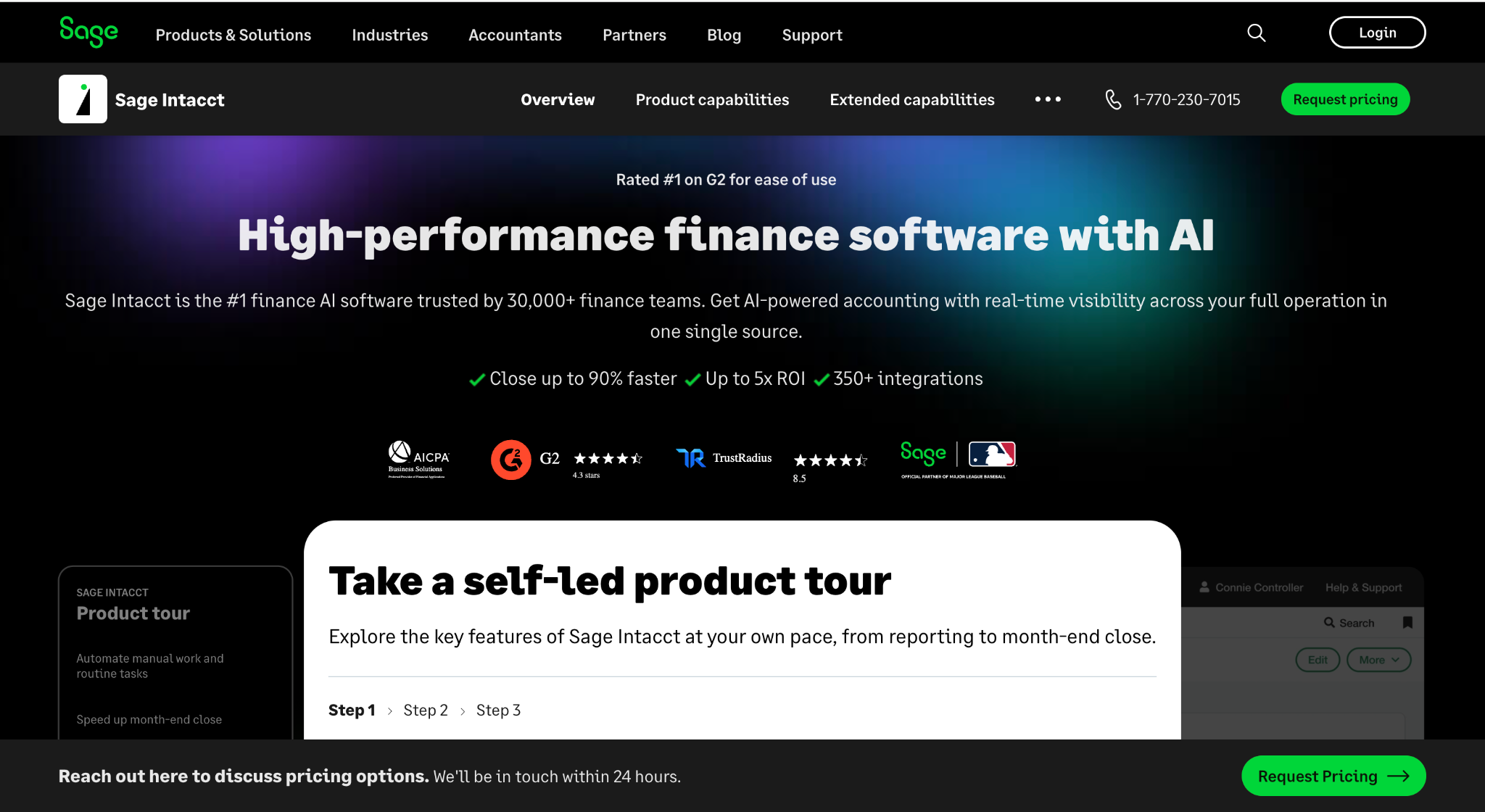
Image source: sage.com
Sage Intacct is a cloud financial management platform used widely by professional services firms, nonprofits, and project-based businesses.
Its strengths sit on the accounting side: advanced general ledger capabilities, multi-entity financial reporting, and revenue recognition capabilities that support modern accounting standards.
For organizations that run several entities or manage international operations, advanced subsidiary management and consolidation tools reduce the manual work of closing the books.
Unlike Unanet, Sage Intacct is not built around a single industry. It is a general financial system with project accounting features, dimensions-based reporting for custom reports, and extensive third-party integrations through an open API.
That makes it a good fit for finance teams that want strong accounting and are comfortable connecting other tools for CRM, resource management, or field operations.
Sage Intacct suits businesses whose accounting must keep pace as organizations scale into high-volume transaction loads or complex multinational operations.
For contractors whose day-to-day problem is winning bids rather than closing books, it solves a different job entirely.
5. NetSuite - Best for Full-Suite Enterprise ERP
Image source: netsuite.com
NetSuite is a modern cloud ERP platform that runs the full range of business operations in one system: financial management, resource planning, professional services automation, inventory, order management, and built-in business intelligence.
For companies that have outgrown separate point tools, it consolidates everything from the general ledger to significant inventory management under one roof.
The platform handles multi-entity structures and international tax compliance, which makes it a common choice for businesses with complex multinational operations or plans to get there.
Real-time dashboards give leadership financial transparency without exporting data between systems.
The trade-off is scope. NetSuite is a general business suite, not a construction or GovCon product, so industry-specific workflows like construction job costing or DCAA reporting typically involve custom development or specialized consultants.
Implementation complexity scales with how much of the suite you switch on. NetSuite is a suitable option for project-based organizations that want one system for the whole company and have the resources to configure it properly.
6. Acumatica - Best for Mid-Market Cloud ERP Flexibility
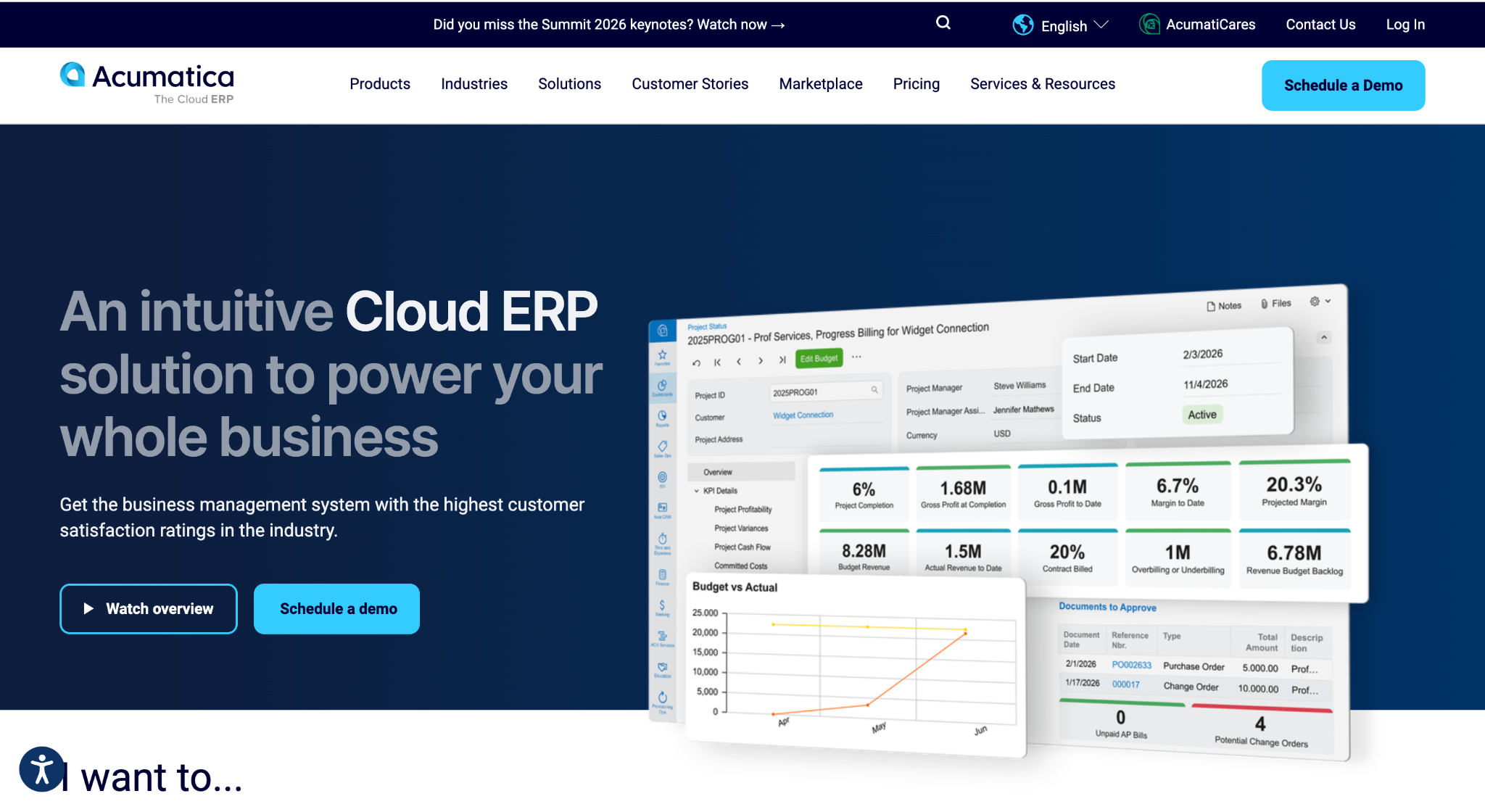
Image source: acumatica.com
Acumatica is a cloud ERP aimed at mid-market companies, sold in industry editions that include integrated construction management, distribution, manufacturing, and field service management.
Its unlimited user licensing model is the standout structural difference. Pricing is based on resources used rather than per-seat counts, so growing teams can add users without renegotiating licenses.
For contractors, the Construction Edition brings construction job costing, commitments, compliance tracking, and mobile tools such as camera-enabled receipt capture for field expense tracking.
An open REST API architecture supports custom integrations, and the platform is generally flexible about deployment and customization for teams with business analysts or technical staff on hand.
Acumatica suits project-based businesses that want ERP breadth with room to configure, without enterprise-tier overhead. Like any full ERP, it asks more of a buyer than a single-purpose tool does.
A contractor whose immediate goal is a cleaner sales pipeline may get there faster with a dedicated CRM and connect an ERP later.
7. BQE CORE - Best for Architecture and Engineering Firm Management
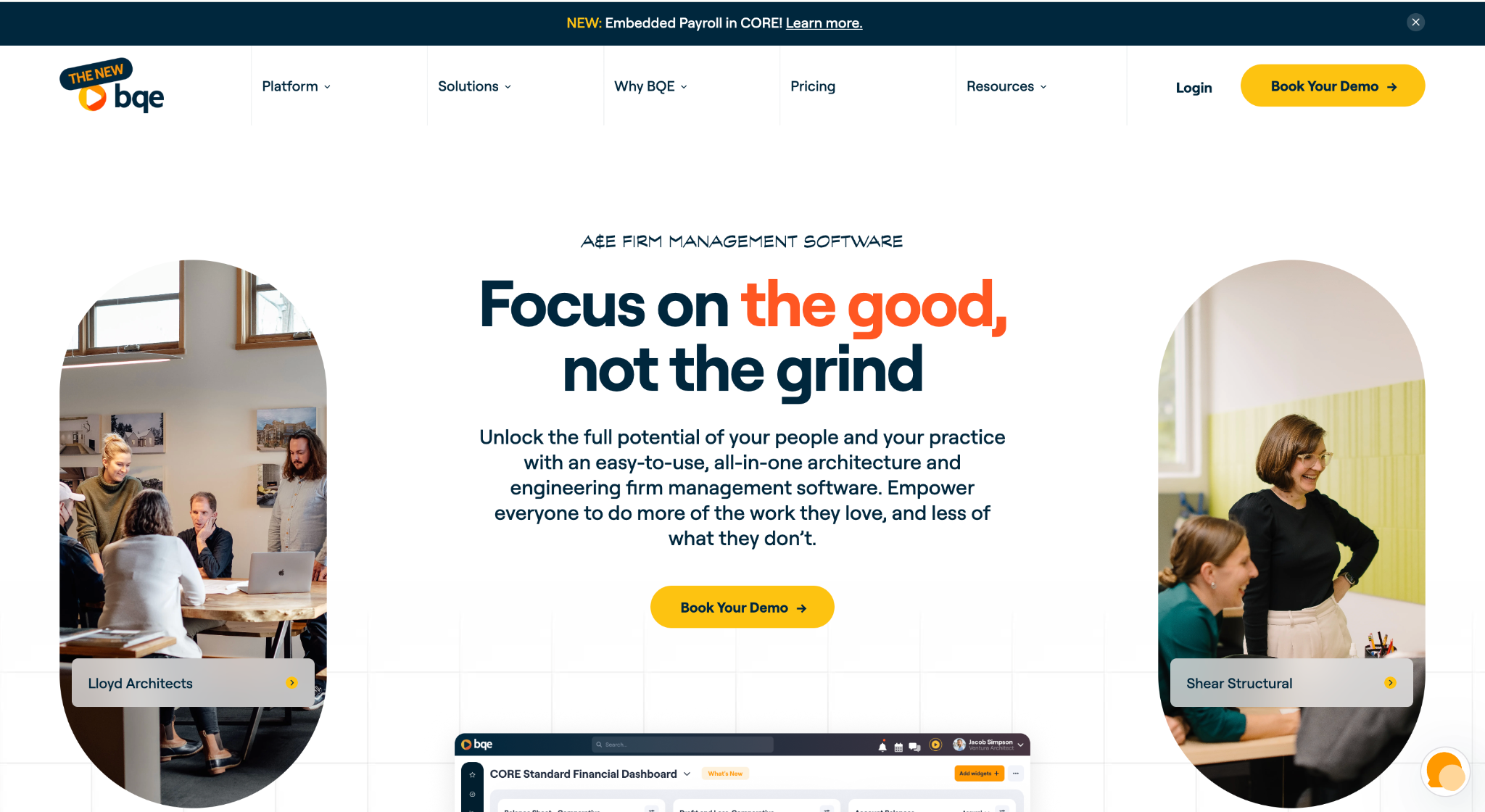
Image source: bqe.com
BQE CORE is a firm management platform built for architecture, engineering, and other professional services organizations.
It combines time and expense tracking, billing, project management, project accounting, and resource management in one system designed around how service-based organizations actually bill: by hours, phases, and percent complete.
Where Unanet targets A&E firms as one audience within a broader suite, BQE CORE is shaped almost entirely around them.
Project managers get real-time visibility into budgets, burn rates, and staff utilization, and the reporting layer supports interactive drill-down capabilities for firms that need complex ad hoc reporting without exporting to spreadsheets first.
BQE CORE is a good fit for design firms whose main friction is unbilled time and slow invoicing.
It is a project-based system for people who sell expertise by the hour, which is a different problem than tracking construction bids or managing federal contract compliance.
Firms in those lanes are better served by the earlier entries on this list.
How to Choose the Right Unanet Alternative
Start with the lane, not the feature list. The fastest way to a bad ERP and CRM decision is buying breadth you will not use, because unused modules create unnecessary complexity and increase integration complexity with the tools you already run.
Four questions narrow the field quickly:
- What are you actually replacing?
A full project-based ERP, the accounting layer, or just sales and bid tracking. The answer removes most of this list immediately.
- What does compliance require?
Government contractors need DCAA support and audit readiness built in. Commercial contractors usually do not, and paying for it adds cost without value.
- How will it fit your stack?
Check native integrations first. If you run Foundation Software, Sage, or QuickBooks, a tool with two-way sync beats one that needs custom development.
- Who maintains it?
Modern SaaS platforms remove on-premise infrastructure requirements, but a full ERP still needs an owner. If nobody on the team can play administrator, pick the focused tool.
Then run demos against your real data. A bid list, a live project, an open contract. Weigh emerging functionality, such as AI features, against the basics your team will use every day.
Reporting limitations and workflow gaps show up in twenty minutes with real records and stay hidden for months with sample data.
Track Every Bid and Win More Work With Followup CRM
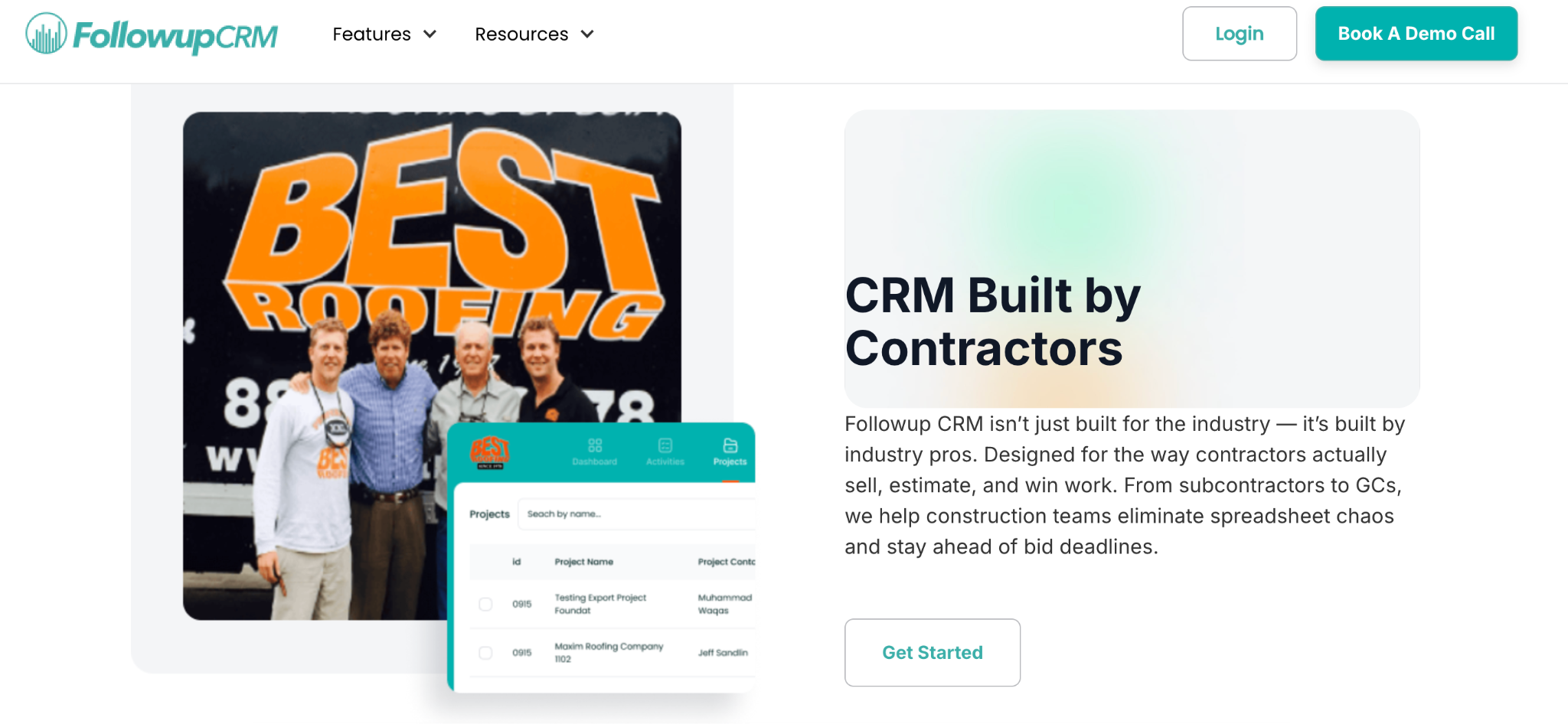
If you got to the end of this list and realized you do not need another ERP, you are in the majority of the construction industry.
Most commercial and specialty trade contractors are not replacing their accounting systems. They are trying to stop bids from slipping through cracks in spreadsheets.
That is the problem Followup CRM was built to solve. It gives your business development and sales teams one place to track every lead, bid, and proposal from first contact to signed contract.
The digital bid calendar keeps deadlines visible to the whole team, dashboards show your pipeline and close rates in real time, and the proposal generator turns estimates into branded, e-signed documents.
Because it connects with the ERP and accounting tools contractors already use, it strengthens your existing stack instead of replacing it.
Book a demo call and see how Followup CRM works on your own bids.
FAQs About Unanet Competitors
What kind of software is Unanet?
Unanet is a project-based ERP and CRM suite. It covers project accounting, resource management, time and expense tracking, billing, financial reporting, and contract lifecycle management for organizations working under government compliance rules.
Because it bundles many functions into one platform, businesses that only need one piece, such as sales and bid tracking, often choose a focused tool like Followup CRM instead of adopting a full suite.
Who uses Unanet?
Unanet's main users are government contractors, architecture and engineering firms, professional services organizations, and nonprofits. Its construction footprint leans toward firms that need project accounting and compliance features.
Commercial and specialty trade contractors focused on winning more bids are not its core audience, which is why many of them run Followup CRM for sales and pipeline management instead.
Where is Unanet based?
Unanet is headquartered in Dulles, Virginia, and serves project-driven organizations mainly in the United States, particularly those working on government contracts.
What is the best Unanet alternative for construction companies?
It depends on which part of Unanet you are replacing. Contractors who need full project accounting should look at an ERP like Acumatica or a financial platform like Sage Intacct.
But most commercial and specialty trade contractors leave a suite like Unanet because the sales side never fits how contractors actually bid work.
For that use case, Followup CRM is the strongest option on this list.
It tracks leads, bids, proposals, and follow-ups in one pipeline built for construction, and it integrates with the ERP and accounting systems contractors already use, so you fix the sales process without touching the rest of your stack.
The CRM Built For Construction Companies
No more disorganized data. Track your leads, bids, and customers all in one place.
Seamless Integration with:
✅ Foundation ✅ Viewpoint ✅ Sage and more