


TL;DR
Here are the best preconstruction software tools for 2026 and what each one does best:
- Followup CRM: Best for pre-award sales and bid tracking
- Procore: Best for connecting preconstruction to project execution
- STACK: Best for cloud-based takeoff and estimating
- BuildingConnected: Best for subcontractor bid management
- Bridgit Bench: Best for workforce planning during preconstruction
- Zebel: Best for conceptual estimating from historical cost data
- Autodesk Takeoff: Best for BIM-linked quantity takeoff
- Fieldwire: Best for plan viewing and team coordination
What Is Preconstruction Software?
Preconstruction software is any tool that supports the work between a project lead and the start of construction.
That window covers a lot: qualifying opportunities, reviewing drawings during the design phase, estimating costs, assembling bids, securing permits, and planning who will do the work.
Preconstruction processes decide most project outcomes, because an error made here, like a missed scope or a bad estimate, gets built into everything that follows.
The category is broad rather than one product type. A construction customer relationship management (CRM) platform, a takeoff tool, and a workforce planner all count as preconstruction software, they just answer different questions.
What they share is the goal of replacing scattered spreadsheets with structured project workflows, so stakeholders, from estimators to owners, see the same numbers and documents.
Contractors rarely need every category at once. Most start with the tool that removes their biggest source of risk, then connect others as the tech stack matures.
Top 8 Preconstruction Software Tools for 2026
Preconstruction tasks pile up fast. Teams need to run feasibility studies, secure permits, estimate costs, and assemble bid packages long before the actual building begins.
No single platform handles every one of those jobs well, so this list is organized by use case. Find the stage where your process breaks down, then start with the tool built for it.
1. Followup CRM: Best for Pre-Award Sales and Bid Tracking
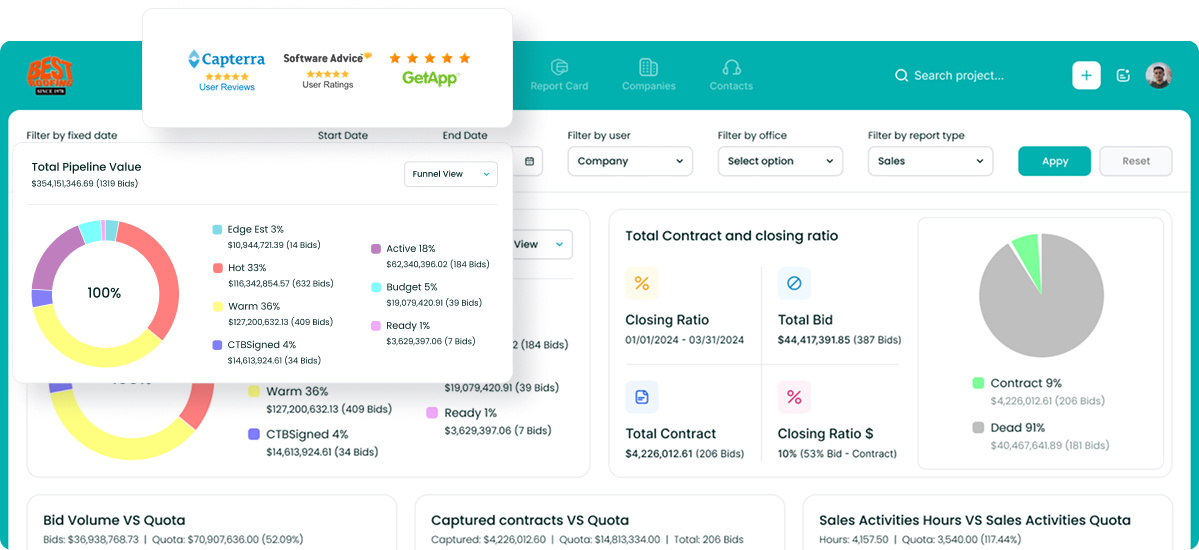
Followup CRM is a sales and bid-tracking CRM made for commercial and specialty trade contractors.
It covers the side of preconstruction most project management tools skip: winning the job in the first place. Each pursuit is followed from first contact to a signed contract, so nothing slips while your team chases the next deadline.
In preconstruction terms, the platform covers everything between a lead and an award decision.
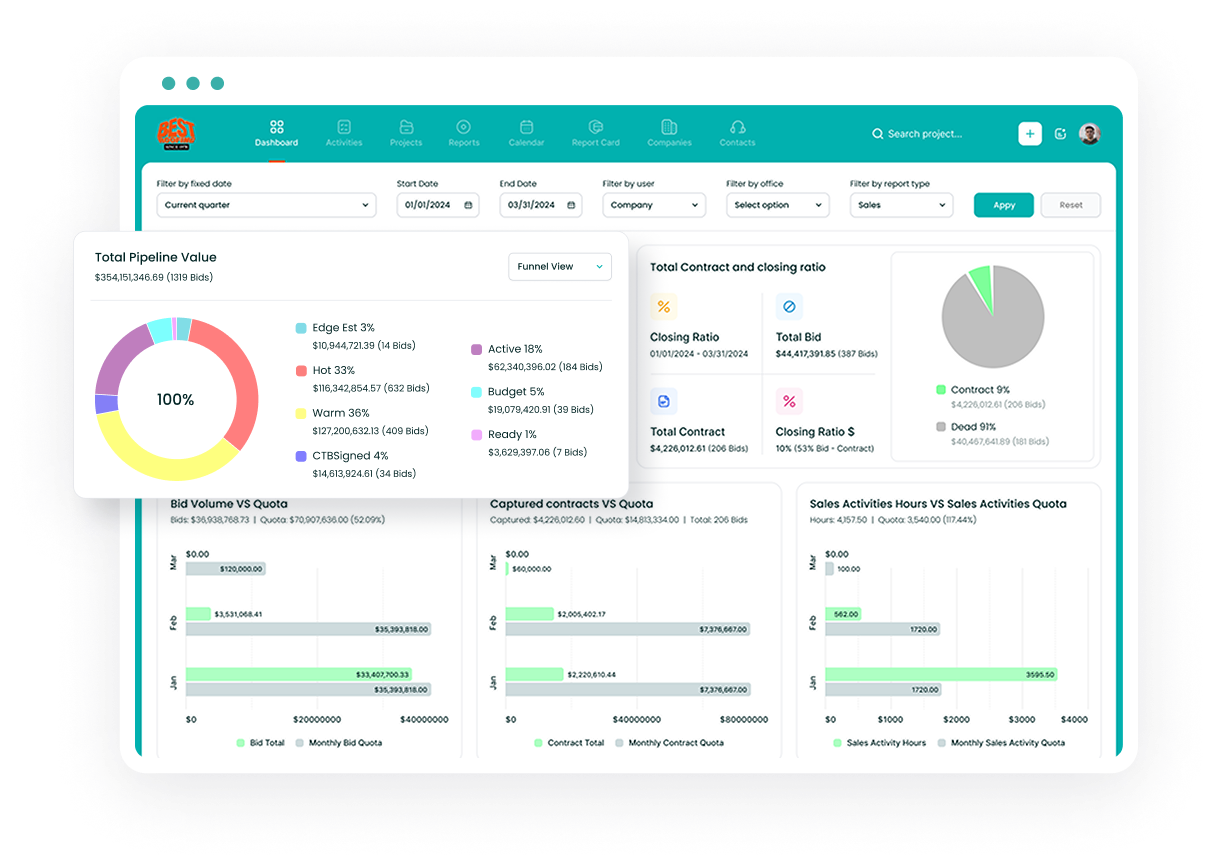
Estimators see every open pursuit and its due date in one pipeline, proposal documents build from the project record instead of a blank template, and scheduled follow-ups keep each bid moving until the client decides.
Key Features
- Lead and bid tracking with a shared digital bid calendar.
- Proposal generator with e-signature.
- Sales and estimating dashboards with real-time insights into pipeline and close rates.
- Voice AI that turns spoken updates into CRM entries.
- Outlook and Gmail integration that logs activity automatically.
Followup CRM also connects to the tools contractors already run, including Foundation, Sage, QuickBooks, STACK, Procore, BuildingConnected, and CompanyCam, so bid data flows into accounting and project management systems without being retyped, and your team can focus on winning more work.
To see how Followup CRM fits your business needs, book a demo.
2. Procore: Best for Connecting Preconstruction to Project Execution
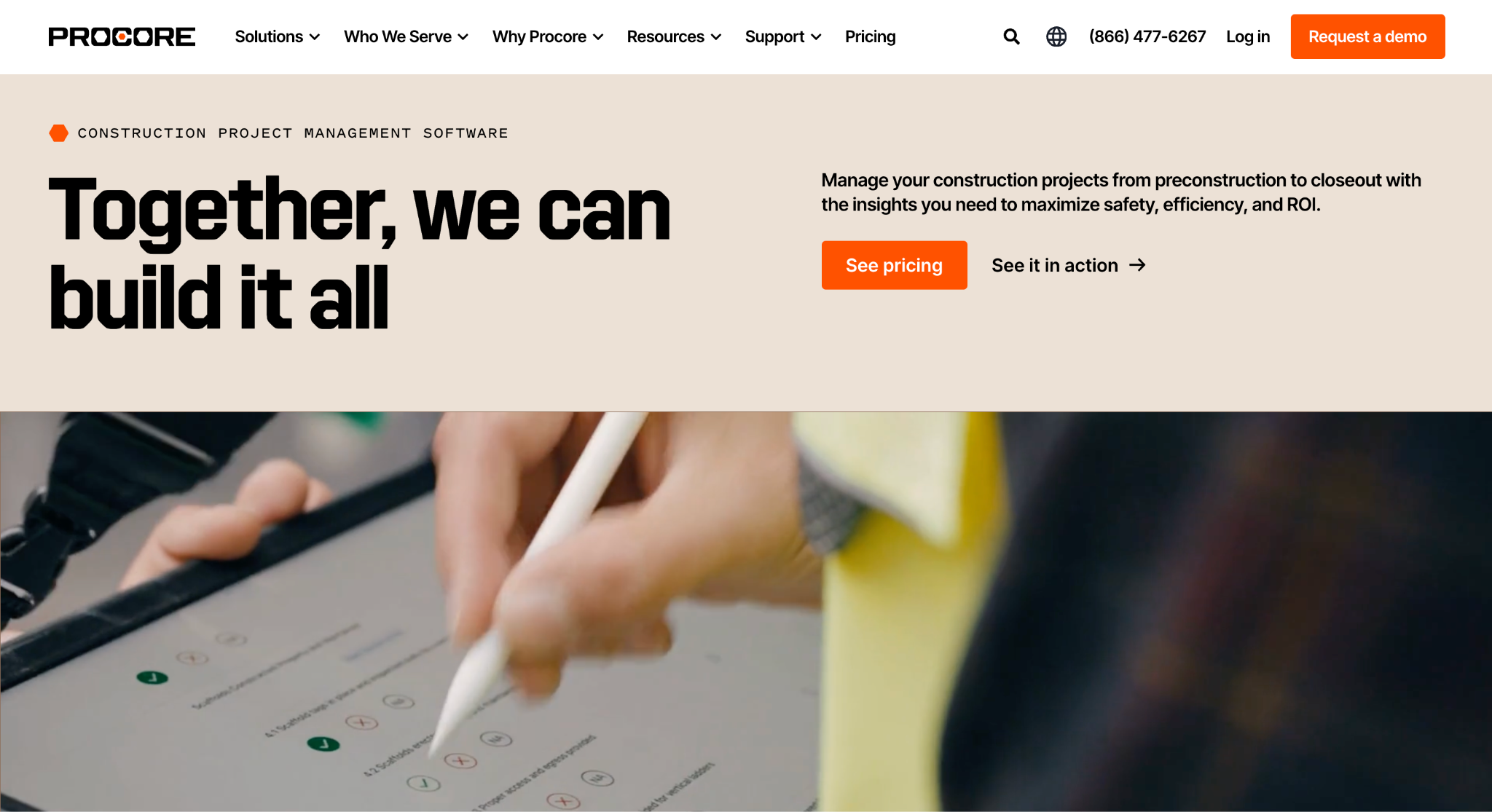
Image source: procore.com
Procore is a construction management platform that picks up where the bidding process ends. Its strength in preconstruction is continuity.
Estimates run in Procore Bid Board, and once a project is awarded, the same record carries into project management with drawings, specs, and contacts already in place.
Document management is the other draw. Procore keeps plans, RFIs, and submittals in a centralized platform with version control, so design teams and field crews work from the same page instead of outdated PDFs.
For general contractors managing the entire project lifecycle, that continuity reduces the gap between estimating and execution.
Procore works well as the post-award half of a preconstruction stack. Paired with a sales-side tool like Followup CRM handling leads and follow-ups, project data flows from first contact to closeout without manual re-entry.
3. STACK: Best for Cloud-Based Takeoff and Estimating
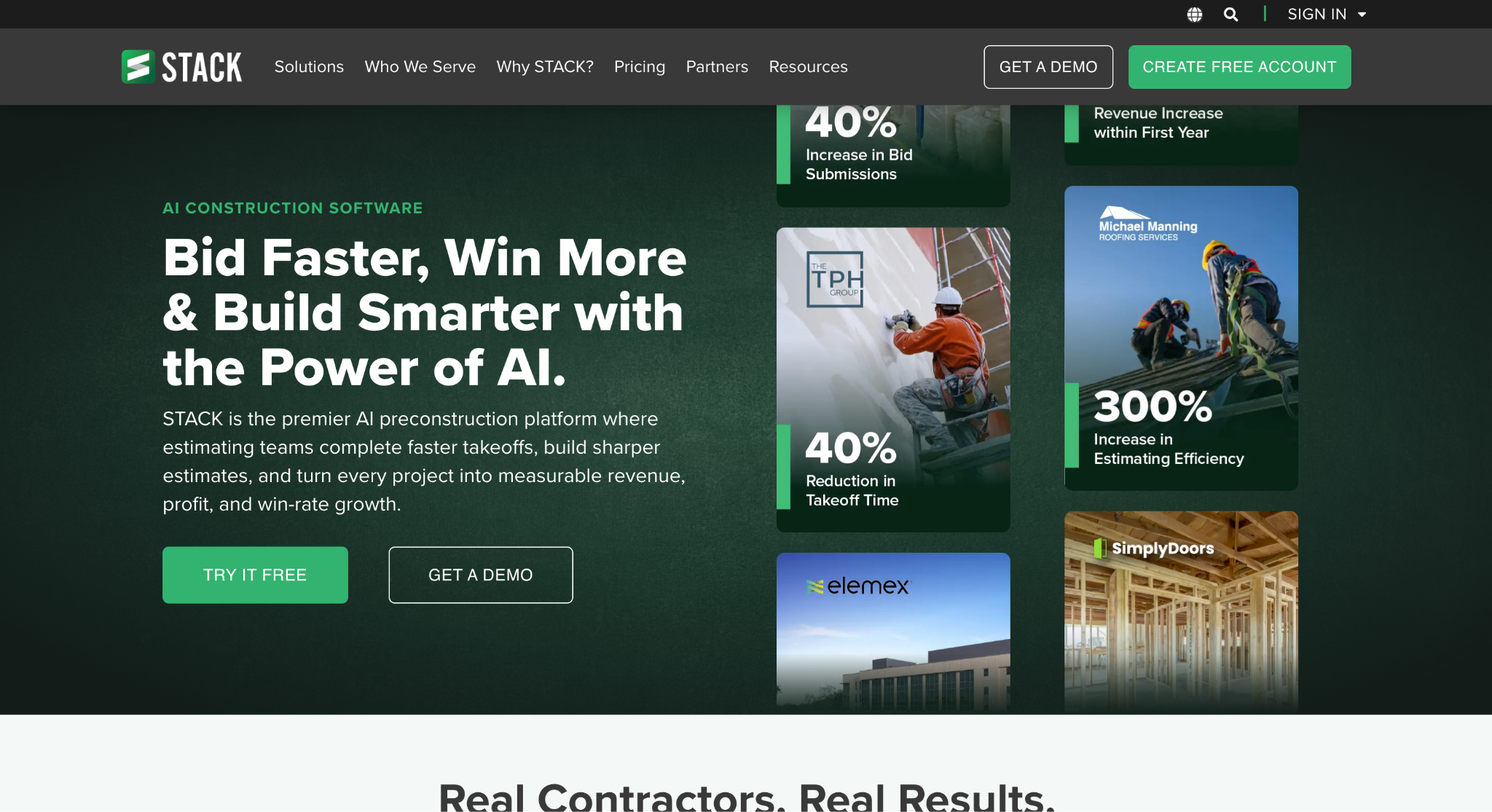
Image source: stackct.com
STACK is cloud-based preconstruction software focused on takeoff and estimating. Estimating teams upload plans, measure quantities on screen, and turn takeoffs into estimates without printing a single sheet.
Prebuilt item libraries and assemblies speed up cost estimation for common scopes, which is where the faster takeoffs come from compared to manual measuring.
Because it runs in the browser, remote estimators and on-site staff can review the same plans at the same time. That makes STACK a good fit for teams that bid a high volume of work and need takeoff capacity to keep up.
STACK is also on Followup CRM's integration list, so contractors can tie takeoff and estimating data back to the bids they are tracking in their pipeline.
4. BuildingConnected: Best for Subcontractor Bid Management
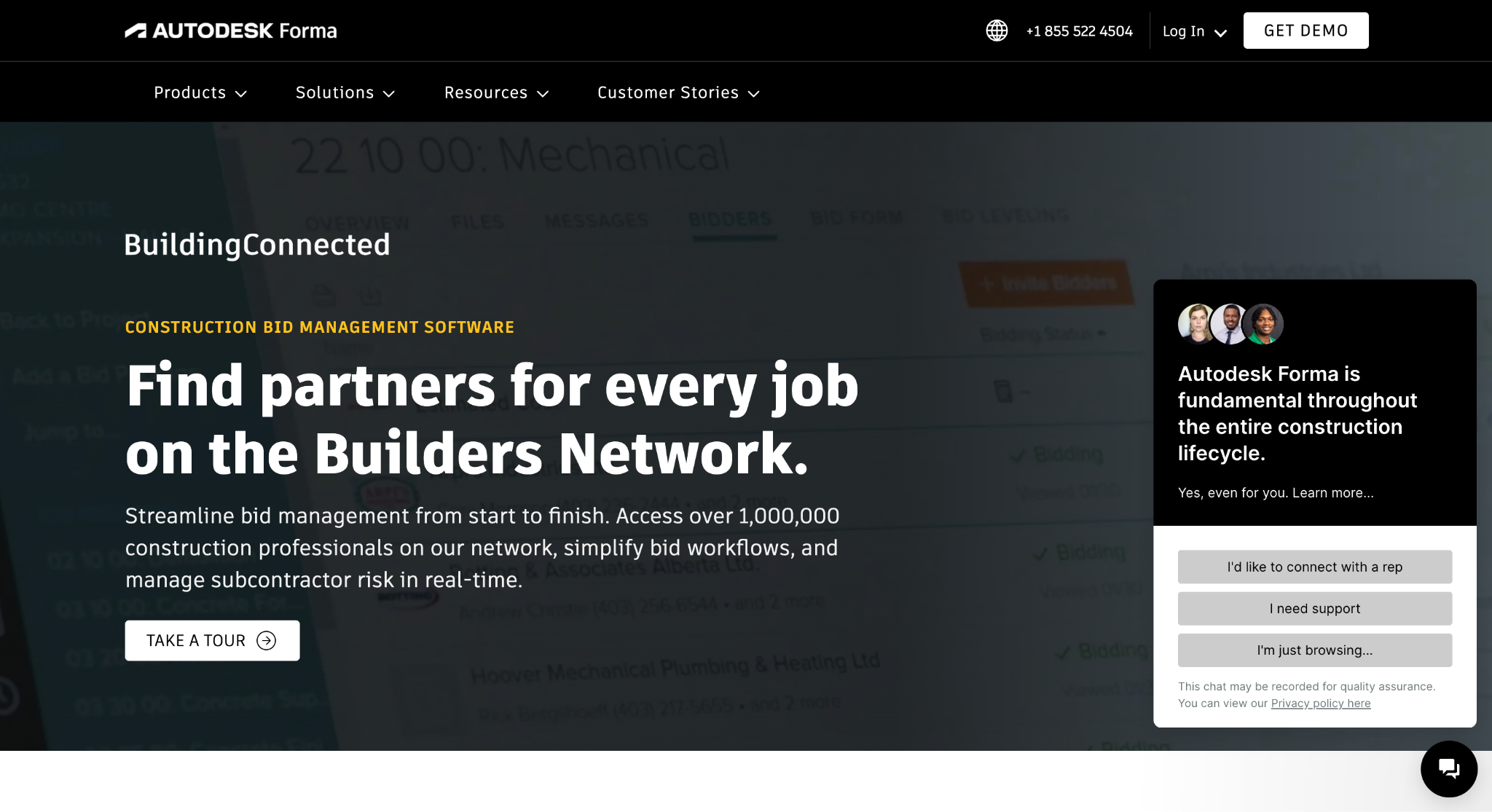
Image source: autodesk.com
BuildingConnected, part of Autodesk, handles the bid management side of preconstruction for general contractors. Teams build bid packages, send invitations to a large network of subcontractors, and track coverage per trade, so no scope goes uncovered on bid day.
The platform's network is its main asset.
General contractors can search for subs by trade and region, view qualification details, and keep bid leveling in one place instead of buried in spreadsheets and email. Paired with TradeTapp, it also supports subcontractor risk review during qualification.
For GCs whose biggest preconstruction headache is sub coverage rather than internal sales tracking, BuildingConnected is a suitable choice.
5. Bridgit Bench: Best for Workforce Planning During Preconstruction
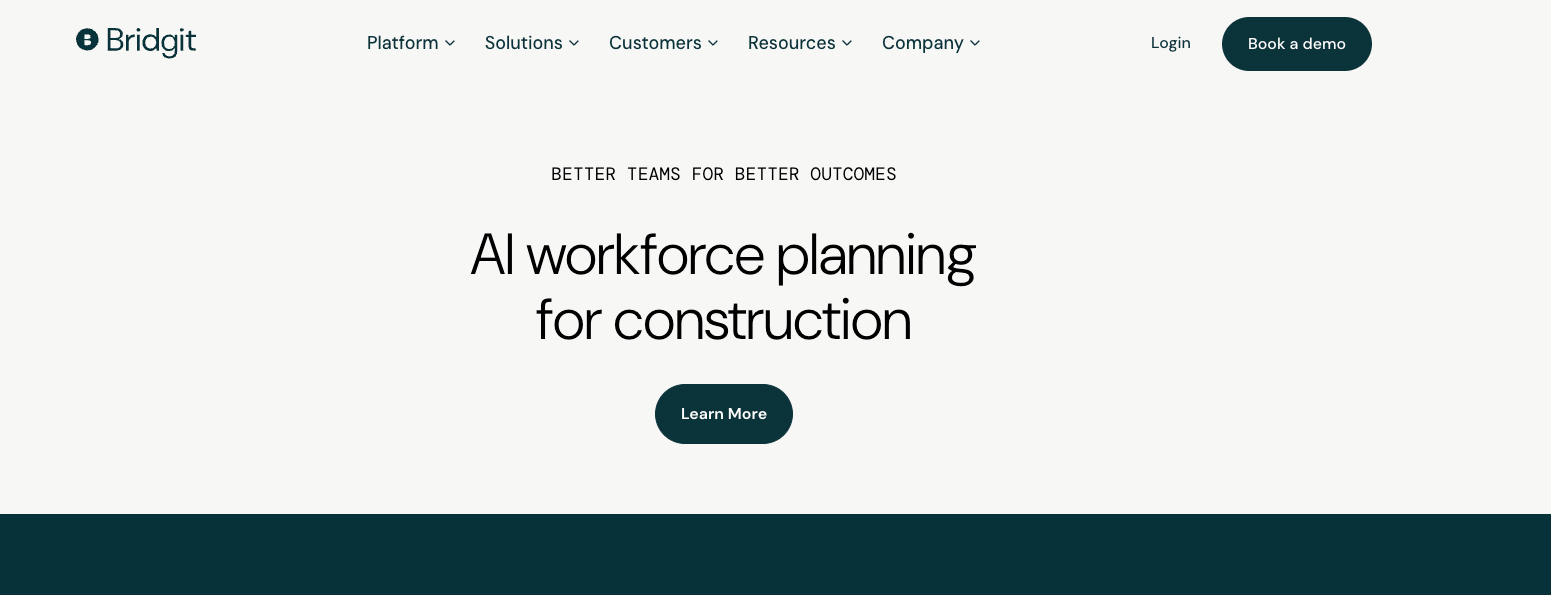
Image source: gobridgit.com
Bridgit Bench answers a different preconstruction question: who is actually available to build this?
The platform tracks project teams and their allocations, so construction managers can see bench capacity before committing to new pursuits.
Workforce planning this early matters because winning a bid you cannot staff creates costly surprises later.
Bridgit Bench maps people against project timelines, forecasts utilization as the pipeline shifts, and helps leadership decide which pursuits fit the team they have.
It works well for mid-size and larger contractors where scheduling people is as hard as scheduling the work itself.
6. Zebel: Best for Conceptual Estimating from Historical Cost Data
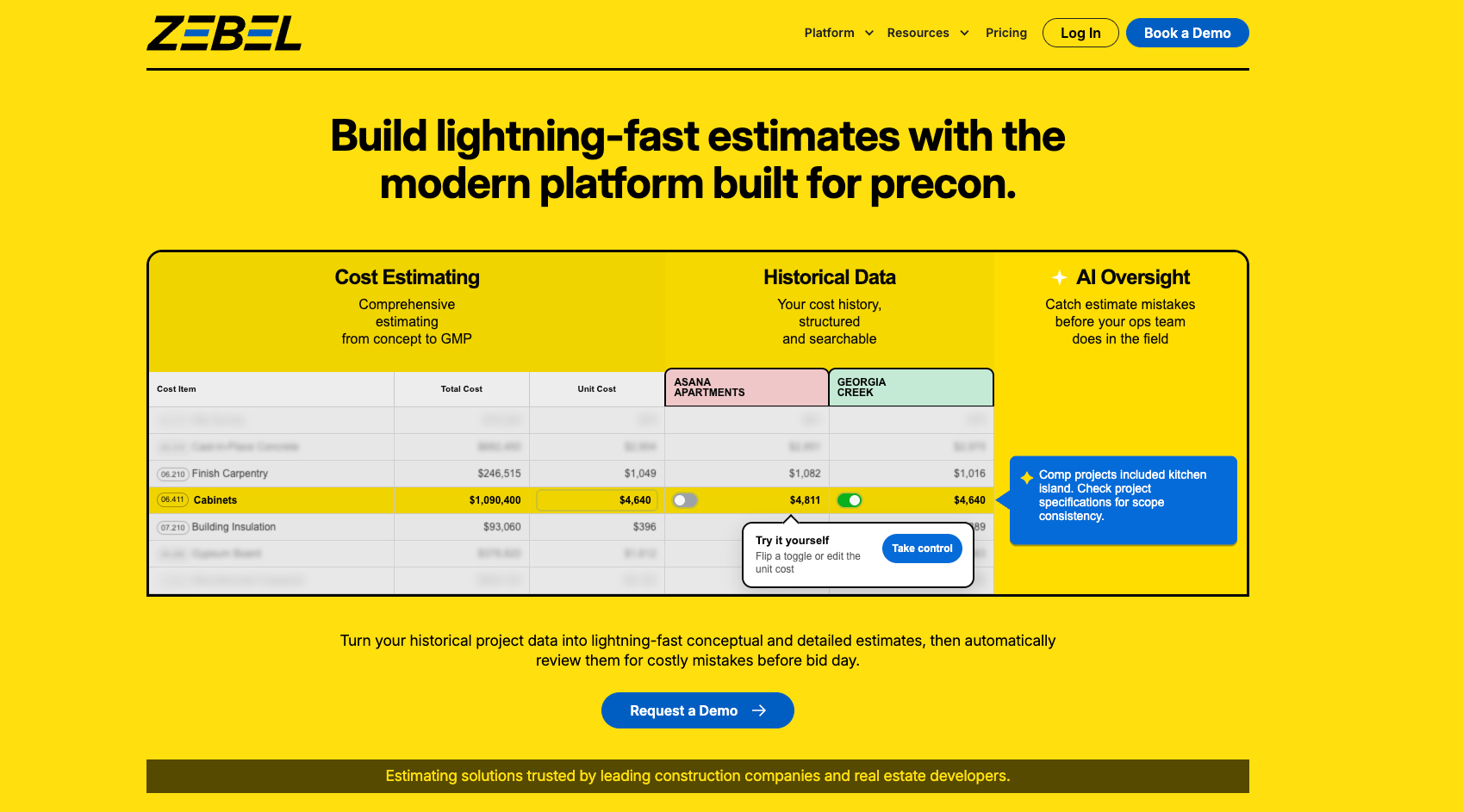
Image source: zebel.io
Zebel targets the earliest stage of cost estimation, when there are no detailed drawings to measure yet.
The platform builds conceptual estimates from historical cost data, so estimating teams can price a project during feasibility studies and the design phase using what past projects actually cost.
That data-driven approach helps developers, owners, and preconstruction teams make informed decisions before committing serious money to design.
As drawings mature, estimates can be refined rather than rebuilt, and leadership can compare options with real numbers instead of gut feel.
Zebel suits firms that pursue repeatable project types, like multifamily, where historical data compounds in value with every completed job.
7. Autodesk Takeoff: Best for BIM-Linked Quantity Takeoff
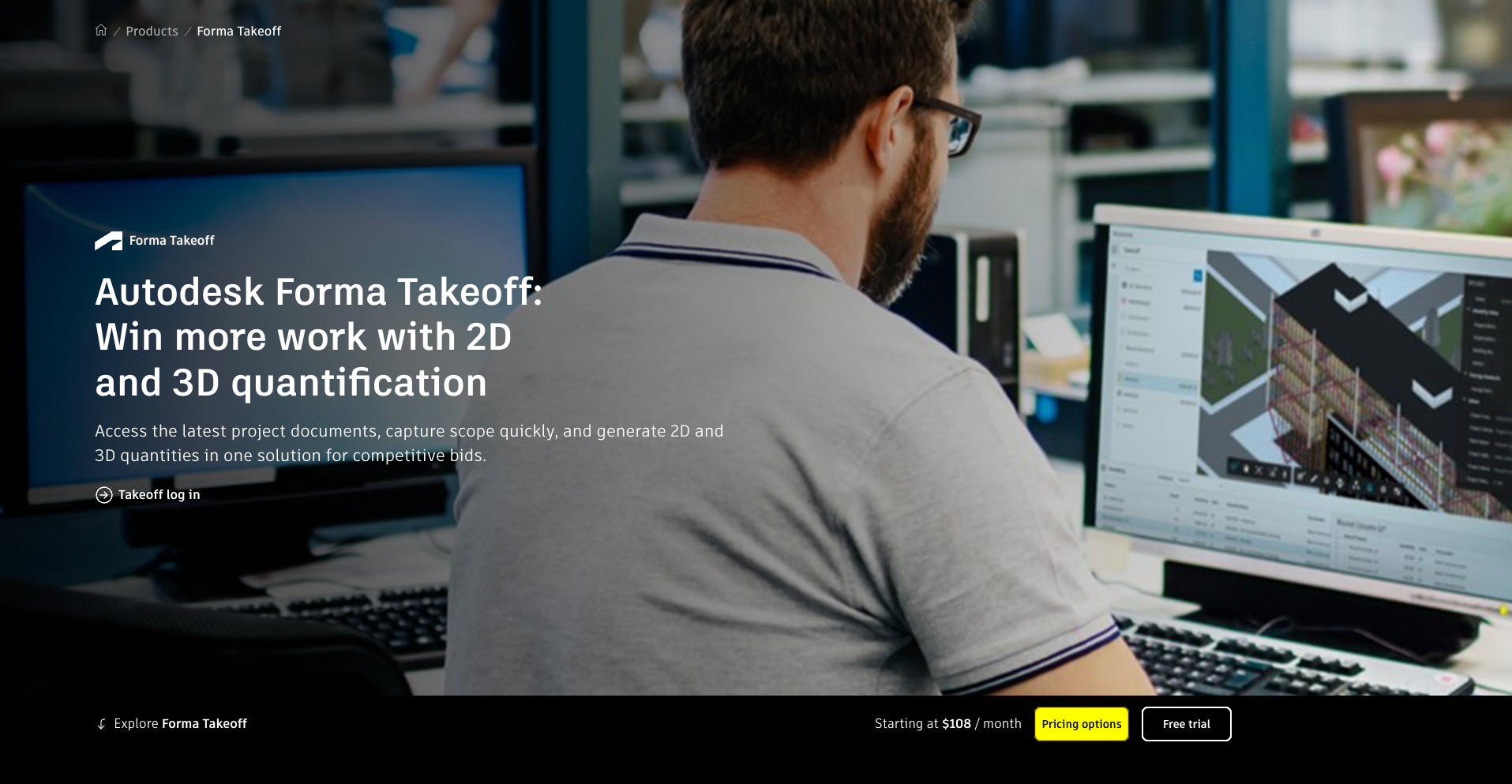
Image source: autodesk.com
Autodesk Takeoff, part of Autodesk Construction Cloud, connects quantity takeoff to building information modeling (BIM).
Estimators can generate 2D and 3D quantities from the same environment where design teams manage models, which keeps quantities aligned when design changes land mid-pursuit.
That link matters on complex projects, where late-stage design clashes and revisions can quietly invalidate an estimate. Working from the model, engineers and estimators catch discrepancies earlier and update quantities without starting over.
Autodesk Takeoff fits BIM-heavy teams already working in Revit or the wider Autodesk ecosystem. Firms bidding from 2D PDFs alone may not feel the full advantage.
8. Fieldwire: Best for Plan Viewing and Team Coordination
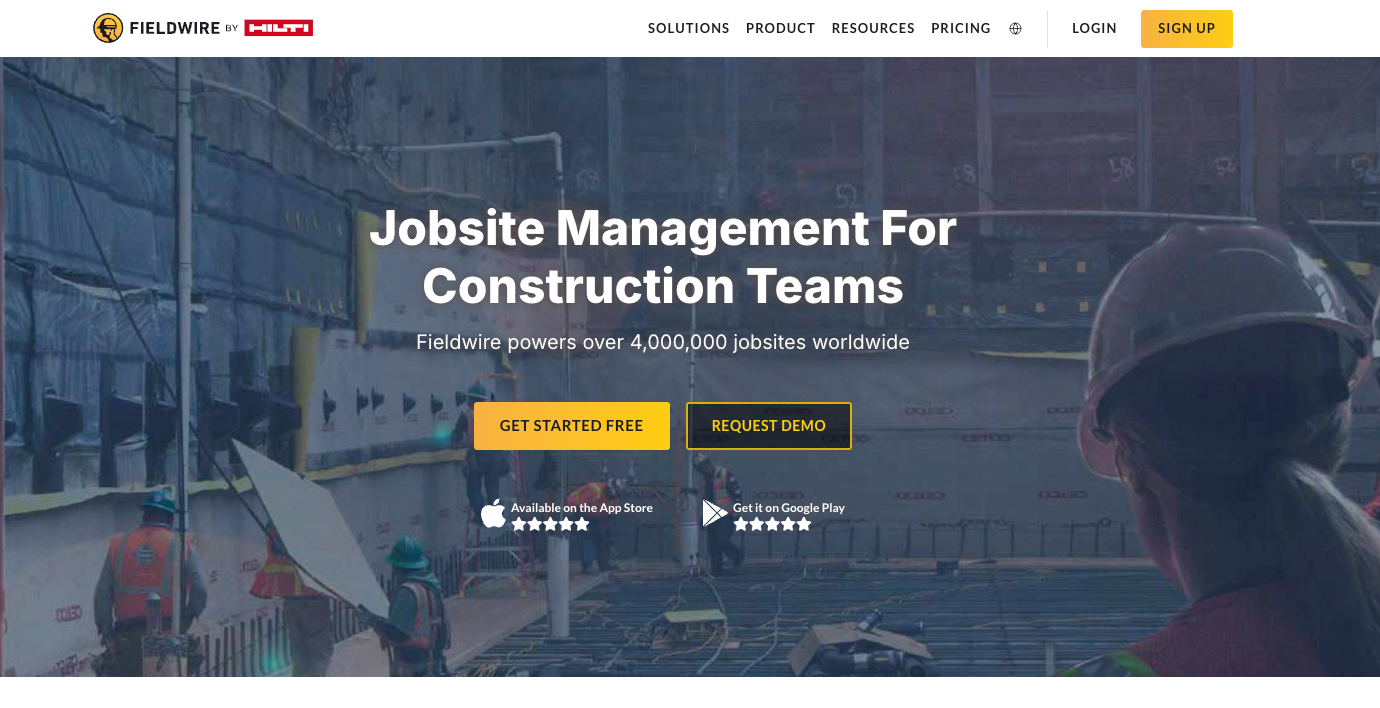
Image source: fieldwire.com
Fieldwire, by Hilti, covers plan distribution and coordination as projects move toward construction.
Plans live in the platform as a living document, with version control and real-time updates, so superintendents and foremen review the latest set instead of an outdated print.
Task and issue tracking sit on top of the plans, letting teams pin punch items and questions to exact sheet locations.
During preconstruction, that document control helps crews get familiar with the job, flag potential issues, and show up ready when construction begins.
Fieldwire works for contractors who want lightweight coordination without rolling out a full project management suite.
How to Choose the Right Preconstruction Software
Start with the stage where your process breaks down. If bids go out late because nobody tracks deadlines, you need bid tracking before you need better takeoffs.
If estimates take too long, takeoff and estimating tools deliver the fastest win. Preconstruction technology only pays off when it targets a real bottleneck.
Then check fit against three factors:
- Integrations: The right software connects to your accounting system and the platforms your team already uses, so data entered once flows through the entire project.
- Adoption: Powerful tools fail when field and office staff find them harder than the spreadsheet they replaced.
- Visibility: Leadership needs reporting that supports better decision-making, not another database nobody opens.
Plan smarter by shortlisting two or three tools, running demos with the people who will actually use them, and deciding from there.
Use Followup CRM and Say Goodbye to Slow Bids
If bids slip past deadlines, follow-ups fall through the cracks, and nobody can say what is in the pipeline, the problem is not effort. It is the lack of a system built for how contractors sell work.
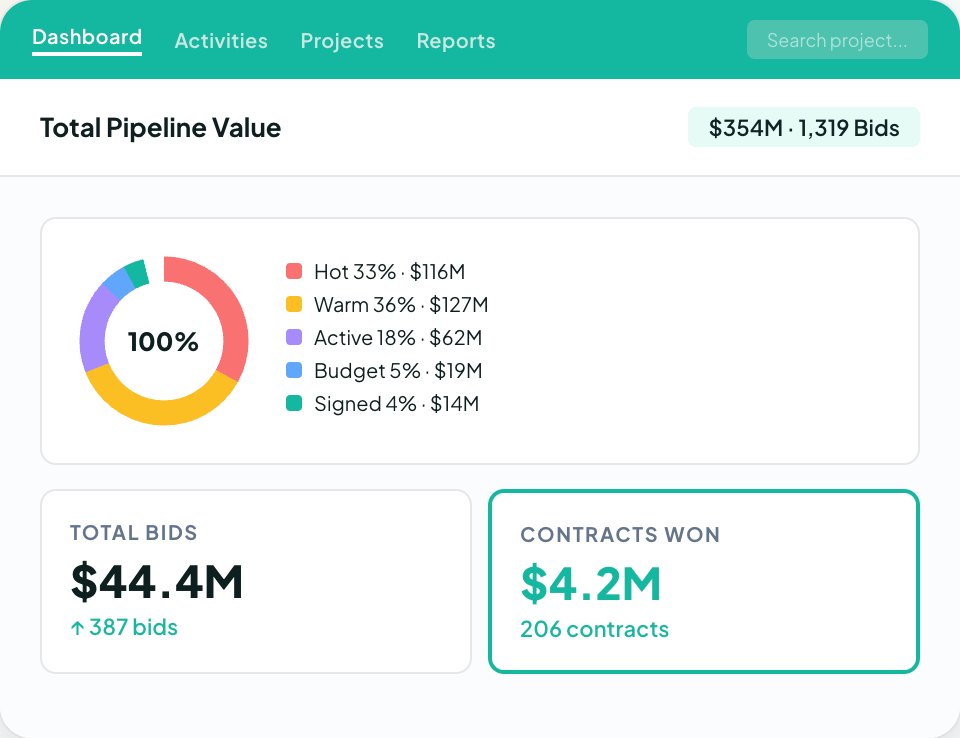
Followup CRM gives commercial and specialty trade contractors one place to run the full pre-award cycle. Every lead gets logged with its source and project type.
Every bid lands on a shared digital bid calendar, so due dates stop living in one estimator's head. Proposals go out branded and signed electronically, and automatic reminders make sure no opportunity dies of neglect while your team is on site.
Leadership gets the other half of the value. Sales and estimating dashboards show pipeline, close rates, and team performance in real time, which turns end-of-month guesswork into informed decisions about which work to chase.
It also fits the tools you already run. Email logs itself through the Outlook and Gmail integrations, and bid data connects to your ERP and estimating stack instead of being retyped into it.
The platform was built by contractors who needed it themselves, and more than 1,000 construction professionals use it today.
To see how it fits your sales process, book a demo call.
FAQs About Preconstruction Software
What is the best ERP for construction?
Common construction ERPs include Foundation, Vista by Viewpoint, Sage, Spectrum, and ComputerEase. The best fit depends on your accounting workflows and company size.
Whichever ERP you run, Followup CRM syncs with these systems two-way, so sales data and job data stay aligned.
What is the most popular construction software?
Procore is among the most widely used construction management platforms, particularly for project execution.
For the sales and bid tracking side of preconstruction, Followup CRM is a popular pick with commercial contractors, and the two integrate, so teams can run both without duplicate data entry.
How do preconstruction tools improve project planning for general contractors?
Preconstruction tools centralize tasks like estimating, bidding, and scheduling, so processes stop living in scattered spreadsheets.
Collaboration features keep construction teams working from the same information during the planning process, which helps projects stay on track and reduce risk on every construction project.
Followup CRM adds the ability to track each bid and follow-up in one pipeline, so the whole team works toward winning the job.
The CRM Built For Construction Companies
No more disorganized data. Track your leads, bids, and customers all in one place.
Seamless Integration with:
✅ Foundation ✅ Viewpoint ✅ Sage and more