

TL;DR
- Track every lead and bid in one system: Spreadsheets and whiteboards stop working past a few crews.
- Follow up on every bid: Most lost jobs are bids nobody chased.
- Send proposals fast: The first clear proposal on the table wins more often than the cheapest one.
- Deliver a customer experience that earns repeat business: Communication matters as much as workmanship.
- See the sales side in action: Try Followup CRM and see how contractors track bids and follow-ups in one place.
Top 10 Strategies to Grow Your Roofing Business
Growth in the roofing industry rarely comes from one big move. It comes from fixing the leaks in your sales process first, then adding fuel.
The first three strategies below deal with how you track, chase, and close work. The rest cover customers, marketing, services, crews, and the numbers that tell you whether any of it is working.
1. Put Every Lead and Bid in One System
Many roofing companies run sales from a whiteboard, a shared spreadsheet, and the owner's inbox. That works until the third crew.
After that, bids get submitted and forgotten, contacts live in five different devices, and nobody knows what the pipeline is worth.
The fix is a single system of record for the sales side of the business. A construction customer relationship management (CRM) system holds contacts, bid due dates, proposal history, and follow-up tasks in one place, so any salesperson can pick up any deal.
Project management software handles the job after the award. Keep the two categories separate and connected, rather than forcing one tool to do both.
Followup CRM was built for this pre-award stage. It tracks each lead from first contact to bid to close, keeps a shared bid calendar, and logs Outlook and Gmail activity against the right project without manual entry.
Integrations with Sage, Foundation, Vista, QuickBooks, Procore, and CompanyCam keep the sales record in step with accounting and the field.
Book a demo to see it in action!
2. Follow Up on Every Bid Until It's Won or Lost
Most roofing bids are not lost to a lower price. They are lost to silence. The estimator sends a number, waits, and moves on to the next job while the client compares three other offers. A follow-up system closes that gap.
Every open bid needs a next action and a date, and someone accountable for both. A simple cadence works: a check-in two days after sending, a value-add note the following week, and a direct ask before the decision date.
Automated follow-up sequences and reminders take the memory work out of it, and they make sure a busy week does not turn into a missed bid. Followup CRM ties each reminder to the bid it belongs to, so the task shows up in the pipeline view rather than in a separate to-do list.
Voice AI lets a rep speak what happened after a site visit and have the system handle the data entry. Gregg AI Assist drafts follow-up emails and status notes from the record's own context, which the rep then reviews and sends.
Both cut the administrative burden that keeps reps off the phone.
3. Send Proposals Fast to Win More Roofing Jobs
Speed decides a surprising number of roofing jobs. The contractor whose proposal lands first sets the terms of comparison, and every later bid gets read against it.
That means the goal is a clean, complete proposal within a day of the site visit, not a perfect one a week later. Do that consistently, and you win more jobs without cutting price.
Build templates for your common job types so the scope, exclusions, warranty, and payment terms are already written. Add two or three photos of similar work and a financing line where it applies. Then make signing easy.
A proposal that can be signed on a phone closes faster than one that has to be printed. Followup CRM's Proposal Generator builds branded proposals from the deal record and sends them for e-signature, so the estimate, proposal, and signature all sit on the same project.
The document's structure matters as much as speed, and a winning construction proposal follows a few rules that apply to roofing as much as any other trade.
4. Deliver a Customer Experience That Earns Repeat Business
Homeowners and property managers cannot judge a nailing pattern. They judge how they were treated. Exceptional customer service comes down to a few habits most roofing companies skip.
Confirm the start date the day before. Send a short update when weather or material delays move the schedule. Walk the finished roof with the customer and send a closing note with warranty details and a direct line for questions.
Transparent estimates matter just as much to customer satisfaction. Spell out what is included, what is not, and what triggers a change order, so the final invoice never surprises anyone.
Satisfied customers become loyal customers, and repeat business is the cheapest revenue a roofing company will ever earn, but only if you stay in touch after the crew leaves.
Automation makes it reliable. Schedule a call for a month after the job, then enroll the customer in an email sequence that asks for feedback while the job is fresh, checks in before storm season, and offers an annual inspection a year out.
Followup CRM's automated email sequences send each message on schedule from the project or contact record, with every email, call, and note logged there, so whoever picks up the phone next year knows the history before they say hello.
5. Turn Satisfied Customers Into a Referral Engine
A referral engine runs on two inputs: satisfied clients who are asked, and partners who see roofs before you do. Start with the ask. Most customers never refer a roofer because nobody requested it.
Build the request into the closeout, keep it specific, and make it easy to act on with a link or a card they can hand to a neighbor.
Then work the partner side. Property managers, general contractors, insurance agents, real estate agents, and local suppliers all meet building owners at the moment a roof becomes a problem.
A quarterly check-in and a fast response when they send someone your way is usually enough to stay on their list. Reputation building compounds here. A partner who sends three jobs and hears back within the hour each time will send thirty.
The referral tactics that work for roofing businesses are simple, but they only pay off when someone tracks them.
Followup CRM records the source on every lead, so you can see which partners and which past customers actually produce work, and spend your time on those relationships. Book a demo today.
6. Own Local SEO With Your Google Business Profile
For local service businesses, Google Business Profile is the highest-return marketing asset that costs nothing.
When someone searches for a roofer in your area, the map results appear before any website does, and a complete profile is what gets you into that box. Fill in every field.
Use the local search terms your customers actually type, such as "commercial roof repair" plus the city, in the business description and service list. Add photos from real jobs every week, not stock images.
Reviews carry the most weight, and both volume and recency count, so ask for one at every closeout and respond to each one you receive. A steady flow of five reviews a month beats a burst of 50 followed by silence.
Your website should support the profile rather than replace it: clear service pages, a phone number that works on mobile, and a short form that routes new inquiries into your sales system the same day.
Local SEO is slow to build and slow to fade, which makes it the marketing channel worth starting first.
7. Pick Marketing Channels That Generate Leads You Can Close
Digital marketing for roofers fails most often for one reason. The company runs six channels at once, tracks none of them, and cannot say which ones produce high-quality leads and which ones produce phone calls that never turn into jobs.
Strategic marketing starts smaller. Choose two or three marketing channels, run them long enough to judge, and measure cost per lead and cost per signed job for each.
Before paying for new leads, market to the contacts you already have.
Past customers, property managers, and general contractors who have bid with you are the cheapest audience a roofer can reach, and a short seasonal email about inspections or storm prep keeps you in mind before they need a roof.
Followup CRM's email marketing sends campaigns to the contact lists already in the CRM and tracks opens and clicks alongside the rest of your pipeline data. A contact who opens three storm-prep emails in a month is worth a phone call.
Google Ads on high-intent searches such as "roof replacement" plus your city reach people who need a roofer this month.
Direct mail still earns its keep in neighborhoods with older roofs.
Whatever the mix, every roofing lead needs to land in the same sales system within minutes, with the source attached.
8. Expand Your Service Offerings
Full replacements pay the bills, but they leave gaps in the calendar and in cash flow. Additional services fill those gaps and keep past customers in the fold.
An annual inspection program, offered free to past clients and at a small fee to new ones, puts your crew on roofs before the leak starts.
Maintenance contracts for commercial buildings and homeowner associations create predictable revenue during the slow months. Repair work builds trust for the replacement that follows a few years later.
Then there is commercial roofing, which many residential companies avoid and which grows the fastest once the systems are in place. Commercial roofing services involve longer sales cycles, more decision-makers, and firm bid deadlines set by general contractors and property owners.
Missing a deadline by a day means the bid is not read. This is where a shared bid calendar earns its keep, and Followup CRM was built with commercial roofers in mind, so bid due dates, plan documents, and every contact on the project sit together in one record.
Start with smaller commercial jobs, such as strip malls or apartment buildings, build references, and move up from there.
9. Hire and Keep Crews That Can Handle the Volume
The sales system fills the calendar. Crews decide how much of it you can actually build. Of all the industry trends working against roofers, labor is the hardest to fix.
Associated Builders and Contractors put the industry's shortfall at roughly 349,000 workers in 2026, and it’s expected to grow to 456,000 in 2027.
Treat hiring like bidding: a written process, run the same way every time. Post the role with real pay, run a short skills check on a tear-off or a training roof, call references, and make the offer within a week.
Roofing professionals with options do not wait for a slow decision any more than a client waits for a slow proposal.
Keeping crews is cheaper than replacing them. Competitive pay is the floor, and it needs a review every year against what other roofing contractors in the area are offering.
Above that, what keeps people is predictable schedules, a clear path from laborer to foreman, and a culture where the crew isn't blamed for an estimate that missed the scope.
Companies with strong cultures see lower turnover, and every crew you keep through winter is one you don't have to train in spring.
Prioritizing Positions for Hire
Hire for the field first. Office work grows with volume too, but most of it can go to software built to automate processes such as follow-up reminders, proposal generation, and activity logging.
If you do add office help, put them on customer communication and scheduling, not on data entry a CRM already handles.
Headcount hits cash flow before it hits revenue. Payroll starts the week a crew starts, and the job they build gets paid thirty to sixty days later.
Tighten your financial tracking before every hire: know the gross profit per crew per week, and hire against signed backlog rather than the pipeline, so the company's growth in people never runs ahead of its growth in signed work.
10. Set Growth Targets and Track Your Profit Margins
Sustainable growth needs a target and a scoreboard. Write a short business plan even if you are years past startup.
One page is enough for the executive summary and company description, and the useful part is the target market, the revenue goal for the year, and how many bids at your current close rate it takes to get there.
Track the key performance indicators (KPIs) that predict financial performance rather than just report it. Sales conversion rate by salesperson, average days from bid to decision, pipeline value by stage, cost per lead by channel, and gross profit per job after labor and material costs.
Put those numbers on a dashboard the owner and the sales lead check every week, not in a spreadsheet someone updates at month-end. When each rep's goals sit next to their activity, accountability stops depending on who remembers to ask.
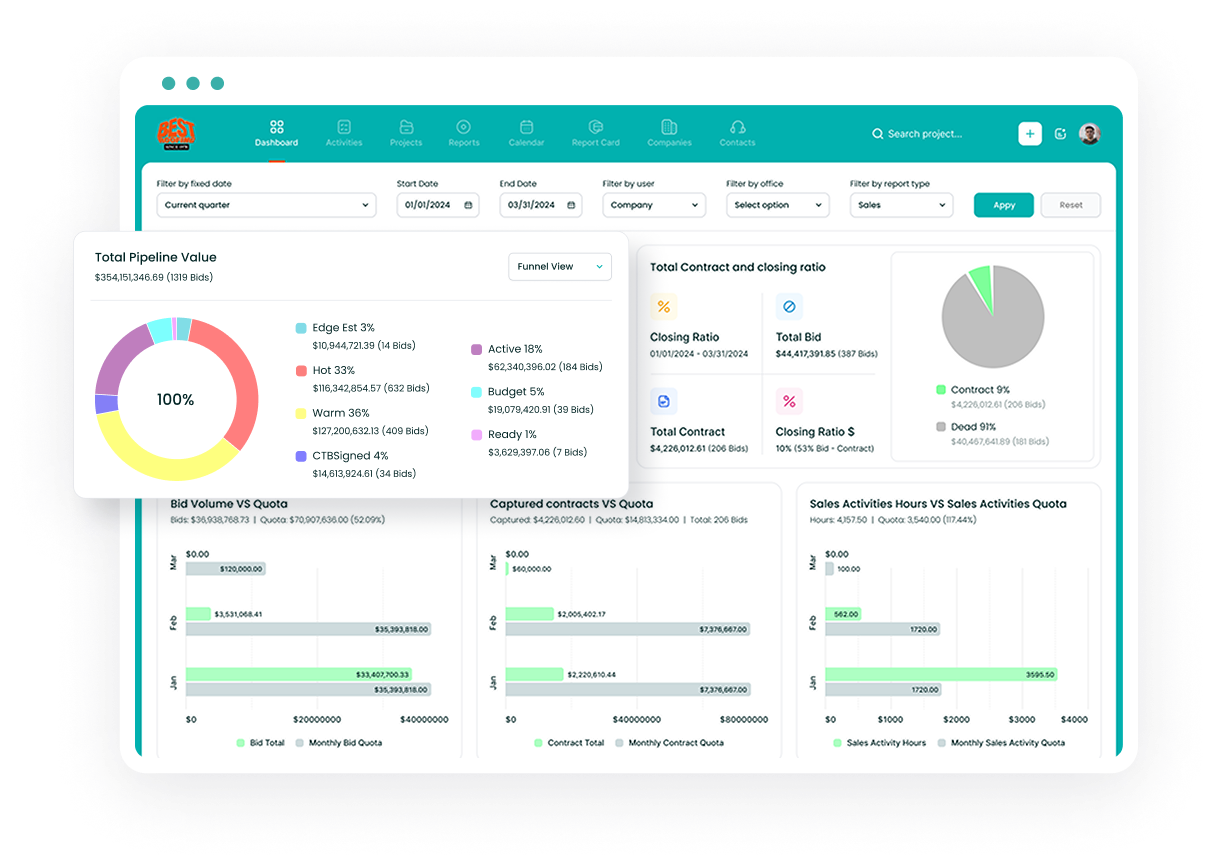
Followup CRM's reporting and analytics give leadership a live view of the pipeline by stage, value, and expected close date, along with win rate, close rate, and revenue.
Rep-level tracking shows proposals sent, deals won, and revenue closed for each person on the team, and lead source reporting shows which channels are driving results, so you can move money and people early.
Why It’s Important
Businesses that monitor performance this closely can pivot quickly when demand or costs shift, and that is what turns business growth from a hope into a plan.
Review the pricing strategy every quarter against those numbers, because profit margins in roofing move with material prices and labor availability.
Roofing software that shows this data in real time is standard now, and the roofing contractor software options available today cover everything from field scheduling to sales reporting.
Followup CRM also keeps your historical data, so you can compare performance year over year and spot the seasonal patterns that should shape next year's targets.
Be in Control of Every Bid With Followup CRM
Most roofing companies do not have a lead problem. They have a follow-through problem. Bids go out, the calendar fills, and a share of the work that should have closed quietly goes to whoever called back first.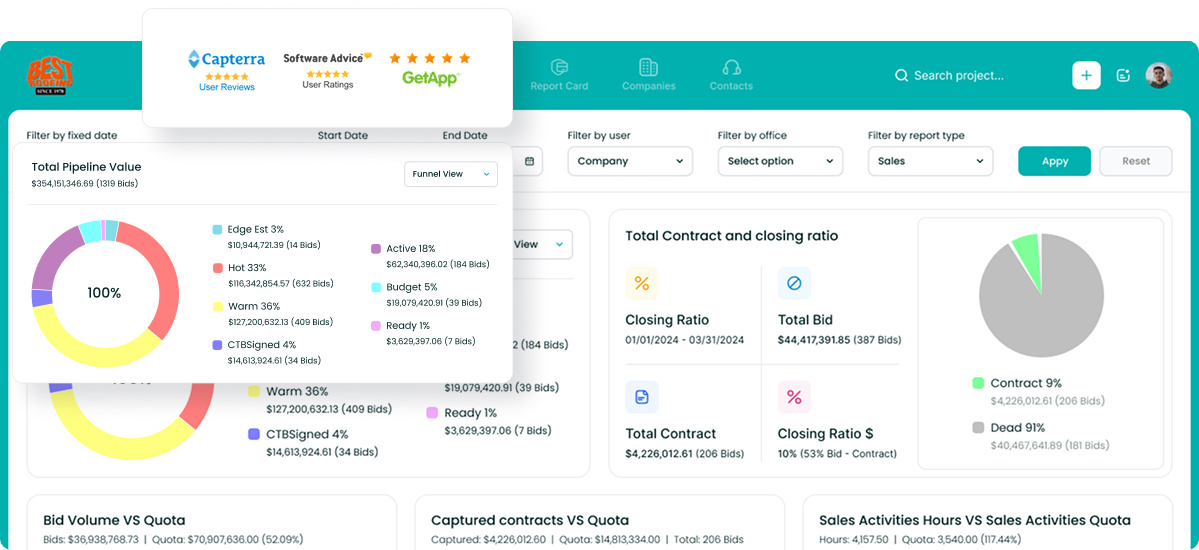
The strategies above all point to the same fix: a sales process that runs the same way every week, whoever is on the phone.
Followup CRM was built for contractors who want that process without adding office staff. Every lead and bid lives in one pipeline, with contacts, documents, and proposal history on the same record.
A shared digital bid calendar keeps commercial deadlines in front of the whole team, and follow-up reminders attach to the bid itself rather than living in someone's head. Outlook and Gmail activity logs against the right project without manual entry.
The Proposal Generator sends branded proposals for e-signature from the same record, and sales dashboards show open bids, close rate by rep, and which lead sources produce signed work.
Voice AI lets reps update a project by speaking after a site visit, and Gregg AI Assist drafts the follow-up emails and notes for them to review.
Integrations with Sage, Foundation, Vista, QuickBooks, Procore, and CompanyCam keep the sales record in step with accounting and the field.
To see how it fits your own pipeline, request a live demo of Followup CRM.
FAQs About How to Grow Your Roofing Business
What is the 25% rule in the roofing industry?
The 25% rule comes from the Florida Building Code. If more than 25% of a roof or roof section is repaired, replaced, or recovered in a 12-month period, the whole roof section has to be brought up to current code.
Senate Bill 4-D, signed in May 2022, narrowed it: roofs built or replaced to the 2007 Florida Building Code or later only need the repaired portion brought up to code.
For a roofing contractor, the roof's permit history decides the bid scope, which is why it belongs on the project record from the first site visit.
How profitable is a roofing business?
It depends less on the market and more on the job mix, close rate, and cost control. Full replacements carry the largest tickets, maintenance contracts smooth out cash flow, and commercial work adds volume once the sales process can handle longer cycles.
How to make $100k in roofing sales?
Work backward from your commission rate and average job value to find how many closed jobs a year it takes, then divide by your close rate to find how many bids you need in the pipeline.
The reps who reach that number rarely have a better pitch. They have a fuller pipeline and a follow-up system that never lets a bid go quiet.
Followup CRM gives each rep a pipeline view with reminders attached to every open bid, so the follow-up happens on schedule.
Is the roofing business slow right now?
Demand in 2026 is uneven rather than slow everywhere. A quieter storm season and low housing turnover have cooled residential replacement work in many markets, while commercial reroofing has held up as building owners run out of room to defer maintenance.
Material pricing remains volatile. In a market like this, growth comes from closing a higher share of the bids you already send, and from adding commercial and maintenance work to steady the calendar.
What separates a successful roofing business from one that stalls?
Usually the systems, not the crews. Successful roofing companies run a repeatable sales process, use digital tools to track progress on every open bid, and measure operational efficiency and employee productivity instead of guessing.
The owner sets the targets and the whole team can see them. Followup CRM covers the sales half of that, with pipeline reporting and follow-up reminders that keep every bid moving.
The CRM Built For Construction Companies
No more disorganized data. Track your leads, bids, and customers all in one place.
Seamless Integration with:
✅ Foundation ✅ Viewpoint ✅ Sage and more