


TL;DR
- Lead generation covers every activity that brings potential clients to your business, from your website to referrals.
- Construction sales work differently due to long sales cycles, bid deadlines, and multiple decision-makers.
- Word of mouth referrals, content, an SEO-optimized website, email marketing, Google Business Profile, social media, and paid ads are proven strategies.
- Vetting project scope, budget, and fit before you bid keeps your team focused on winnable work.
- Followup CRM keeps every lead moving toward a bid.
What Is Lead Generation in the Construction Industry?
Lead generation in the construction industry is the process of attracting potential clients and capturing their contact information so your sales team can pursue the work.
A lead can be a homeowner requesting a quote, a general contractor inviting you to bid, or a property manager planning next year's capital projects. Anyone with a real project and a reason to talk to you counts.
Construction leads fall into two broad groups. Inbound leads find you through your website, search results, social media, or reviews. Outbound leads come from the effort you put in, such as networking, cold outreach, bid invitations, and referral requests.
Healthy construction businesses generate leads from both directions, so a slow month in one channel does not empty the pipeline.
It also helps to separate lead generation from lead management. Generation gets a potential client's attention and contact details. Management is everything that happens after: qualifying the opportunity, nurturing the relationship, and following up until the project is won or closed out.
Both halves matter, and the second one is where most contractors leave money on the table.
Why Lead Generation Works Differently in Construction
Selling construction work is nothing like selling software or retail products. Project opportunities are high value and low volume, so a single won contract can carry your revenue for months.
That changes the math. You do not need hundreds of cheap leads. You need a steady flow of the right ones.
The sales cycle is also longer. Commercial construction projects move from planning to award over months or even years, and several people influence the decision along the way, including owners, developers, architects, and procurement teams.
Winning the work means building relationships early, long before a request for proposal goes out.
Then there is the bidding structure itself.
Much of the industry's work is awarded through competitive bids with hard deadlines, which rewards contractors who hear about projects first and respond fast. A lead that sits untouched for a week often belongs to someone else by Friday.
Finally, construction is seasonal. Slow seasons hit almost every trade, and companies that only chase leads when the schedule empties out end up bidding desperately. Consistent lead generation smooths those swings and keeps the estimating team busy year-round.
Top 7 Lead Generation Strategies for Construction Companies in 2026
There is no single channel that fills a construction pipeline on its own. The companies that generate leads consistently combine several of the strategies below, then double down on the ones that produce the best projects.
1. Turn Word of Mouth Into a System
Word of mouth already generates leads for most contractors. The problem is that it happens by accident. Turning referrals into a system means asking for them deliberately instead of waiting for them to arrive.
Build the ask into your project closeout. When a client signs off on finished work, that is the moment to request a review and ask whether they know anyone planning a similar project. Satisfied clients almost always say yes, but very few volunteer without a prompt.
Repeat business deserves the same intent. Past clients with growing portfolios, especially property managers and developers, will have new projects long before they think of calling you. A check-in call twice a year keeps you first in line.
Finally, build relationships beyond your client list. General contractors hand work to subcontractors they trust, and trade associations, supplier reps, and local business groups all feed introductions to companies that show up consistently.
Attend the industry events in your region and follow up with the people you meet within a week. A strong network compounds year over year, and no ad budget can replicate it.
2. Publish Content Built on Real Projects
Content creation works in construction for one simple reason: clients can see what you build. A case study about a completed project, with real photos from the site and a short story about the problem you solved, earns more trust than any slogan.
Write about the work itself. Explain how you handled a tight timeline, an occupied building, or a difficult retrofit.
Answer the questions clients ask before hiring, such as what affects cost, how long a project takes, and what permits are involved. Each piece positions your team as the one that has done this before.
Project photos deserve special attention. Before-and-after shots, progress documentation, and drone footage give prospects proof of quality that text cannot. Build the habit of capturing every job site, and you will never run out of material.
Commentary on industry trends can round out the mix, but keep it based on your own experience rather than recycled news. One honest post about what you are seeing on real projects beats five generic ones.
Published consistently, this content feeds your SEO, your social media, and your email marketing at the same time.
3. Build an SEO-Optimized Website
Your website is often the first impression a potential client gets, and for many of them it is also the deciding one. Most clients research contractors online before making contact, so an SEO-optimized website is the foundation the rest of your digital marketing builds on.
Search engines reward sites that load fast, work on mobile, and answer the questions clients actually type in.
Target the terms your ideal clients search for, such as your trade plus your city, and build dedicated landing pages for each service you offer. Location-specific pages help you show up in search rankings for the areas you actually serve.
Just as important, make the site easy to act on. Put your contact info on every page, keep quote request forms short, and showcase completed projects with real photos.
A website that ranks well but hides the phone number generates traffic, not leads. Every page should give visitors one clear next step.
4. Use Email Marketing to Nurture Leads
Most construction leads are not ready to hire the day they find you. A property manager may be budgeting for next year, and a homeowner may still be comparing options. Email marketing keeps your company in front of those people until the timing is right.
Start with the contacts you already have: past clients, open estimates, and every inquiry that never turned into a job. Segment the list by lead type, then send something worth reading every few weeks.
Project spotlights, seasonal maintenance tips, and short updates on what your team is building all earn attention without feeling like a sales pitch.
The highest-value email in construction is the bid follow-up. A brief check-in after you submit an estimate keeps the conversation alive while the client compares offers, and many jobs are lost to silence rather than to a better price.
The way you structure construction email marketing campaigns, from list building to send timing, determines whether those follow-ups feel helpful or pushy. Track opens and replies so you learn which messages generate leads and which get ignored, then adjust and repeat.
5. Set Up Your Google Business Profile
For local search, your Google Business Profile matters almost as much as your website. When someone in your local area searches for a contractor, the map results appear before most organic listings, and profiles with complete information win those spots.
Fill out every field. List your service area accurately, choose the right business categories, set your hours, and add your phone number and website link. An incomplete profile signals an inactive business, both to Google and to the client scanning the results.
Then treat the profile as an active channel, not a listing you set once. Post photos from job sites regularly, since profiles with fresh images get noticeably more requests for directions and calls. Share updates when you complete a notable project or add a service.
Reviews are the other half of local SEO. Ask every satisfied client to leave a review, and respond to each one, good or bad.
Customer testimonials sitting on your profile do the selling before you ever pick up the phone, and a steady stream of recent reviews consistently outranks a competitor with a handful of old ones.
6. Stay Active on Social Media Platforms
Social media platforms give construction companies something most industries envy: visually impressive work that photographs well. The trick is matching each platform to the audience it actually reaches.
For commercial work, LinkedIn is the priority. Developers, general contractors, architects, and property managers all spend time there, and a company page that shares project milestones and industry insight builds recognition with the people who award contracts.
Engage with posts from firms you want to work with, since visibility in their feed matters more than follower counts.
Facebook and Instagram serve residential and light commercial audiences better. Before-and-after photos, time-lapse videos, and crew spotlights perform well and give past clients easy material to share, which quietly multiplies your word of mouth.
Whatever platforms you choose, consistency beats volume. Two or three posts a week from real job sites outperform a burst of activity followed by a silent month.
Treat comments and messages as leads, because they often are. A quick reply to a question about your services can start a conversation that ends in a signed contract.
7. Run Paid Advertising Campaigns
SEO takes months to compound. Paid advertising buys you visibility today, which makes it a useful bridge while organic channels grow and a reliable boost when the pipeline needs work fast.
Google Ads is the natural starting point. Bid on the searches your clients run when they are ready to act, such as "commercial roofing contractor" plus your city, and send that traffic to a landing page built for the specific service, not your homepage.
A focused page with one clear call to action converts far better than a general one.
Set a modest budget first and watch the numbers. Track which keywords produce actual quote requests, not just clicks, and cut the ones that spend without converting. Paid ads punish a set-and-forget approach quickly.
Some contractors also buy leads from lead generation services or marketplace platforms. These can supplement a dry spell, but the leads are often shared with competitors and vary widely in quality.
If you use them, treat them as a top-up, never the foundation. Money spent building channels you own pays back longer than leads you rent.
How to Qualify Construction Business Leads
More leads only help if your team can tell which ones deserve a bid. Estimating is expensive, and every hour spent pricing a project you cannot win or do not want is an hour taken from one you could. Qualification is the filter that protects that time.
Start with fit. Does the project type match your technical expertise, and is it in a service area you can staff profitably? A great opportunity in the wrong specialty is still a bad lead.
Then pressure-test the project details. Ask about scope, timeline, and how the client plans to fund the work. Vague answers on project scope or budget usually signal a client who is collecting free numbers rather than preparing to build.
Project value matters too, since a job too small wastes your overhead and one too large can strain your bonding and cash flow.
Finally, qualify the decision. Who awards the contract, how many bidders are invited, and what matters most to them, price or something else?
A lead where you know the decision maker and the criteria is worth several where you are bidder number nine. Score each lead on these questions and let the low scores go without guilt.
How to Track and Follow Up on Every Lead
Every strategy above generates interest. What turns interest into contracts is what happens next, and this is where most construction companies leak revenue.

A lead that gets a response within an hour is dramatically more likely to move forward than one that waits days, yet leads scribbled in notebooks and buried in inboxes wait days all the time.
The fix is a single system of record. Followup CRM was built for exactly this problem in construction sales.
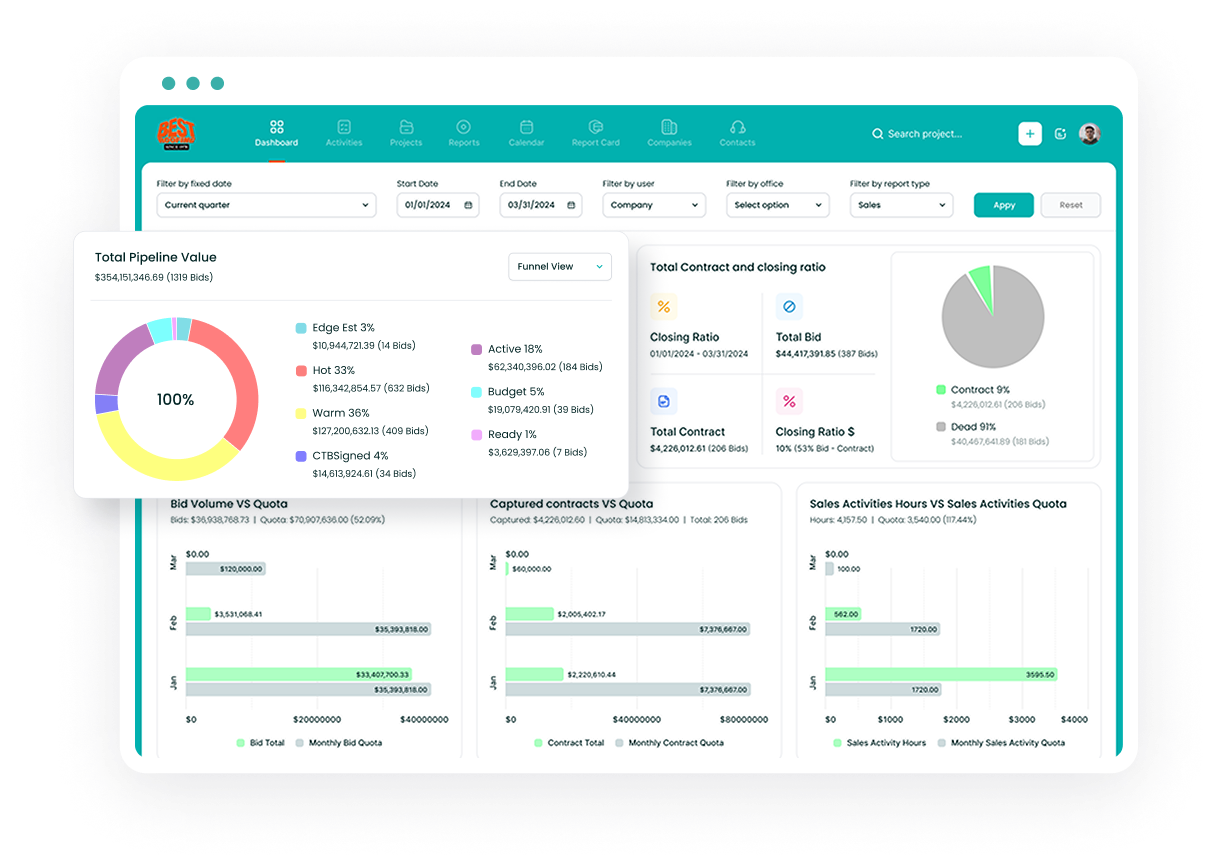
Every lead enters one pipeline with its source, contacts, and project details attached, so nothing lives in one estimator's head. The stages of a construction sales pipeline become visible at a glance, and automatic notifications and reminders tell your team exactly who to call today.
Bid deadlines get the same treatment. The digital bid calendar keeps every due date in front of the whole team, and sales dashboards show close rates and pipeline value in real time, so you learn which lead sources actually produce wins.
Since nurturing construction sales leads takes multiple touches over months, Followup CRM logs every email and call against the right deal, and consistent follow-up stops being a memory exercise.
Stop Leads From Going Cold With Followup CRM
You can run every strategy in this guide and still lose work if leads sit untouched while your team is on job sites.

Followup CRM gives construction companies one place to capture every lead, qualify it, and follow up on schedule until the bid is won.
It’s lead management software built by contractors for contractors and trusted by 1,000+ construction professionals who use it to keep their pipelines full and their follow-ups on time.
See what a full pipeline looks like when nothing slips through. Book a demo today.
FAQs About Lead Generation in the Construction Industry
How can I generate leads for my construction company?
Combine channels you own with channels that compound. An SEO-optimized website and Google Business Profile capture clients already searching, paid ads produce leads quickly while organic channels grow, and referral requests turn finished projects into new leads.
Construction lead generation works best as a system, so track every inquiry in one place, such as Followup CRM, and follow up fast. Many contractors generate enough interest already and simply lose it to slow responses.
How much do companies charge for lead generation services?
Pricing models vary. Lead generation sites typically charge per lead, with shared leads sold to multiple contractors costing less than exclusive ones, while marketing agencies usually work on monthly retainers.
Costs depend on your trade, region, and project size. Before paying for leads, make sure you can account for every lead you already get, since improving follow-up is often the cheaper fix.
How do you keep a construction project pipeline full year-round?
Treat lead generation efforts as a weekly habit instead of a reaction to a slow month. Consistent marketing brings in new project leads even while your crews are busy, and regular check-ins with past clients surface upcoming projects before they ever go out to bid.
Keep every opportunity inside one sales process so you can see how many future clients sit at each stage. A visible pipeline lets you spot a thin month coming and push harder before it arrives, instead of scrambling after the schedule empties.
The CRM Built For Construction Companies
No more disorganized data. Track your leads, bids, and customers all in one place.
Seamless Integration with:
✅ Foundation ✅ Viewpoint ✅ Sage and more